Corner Fire Pit Ideas for Small Backyards That Finally Use the Dead Corner
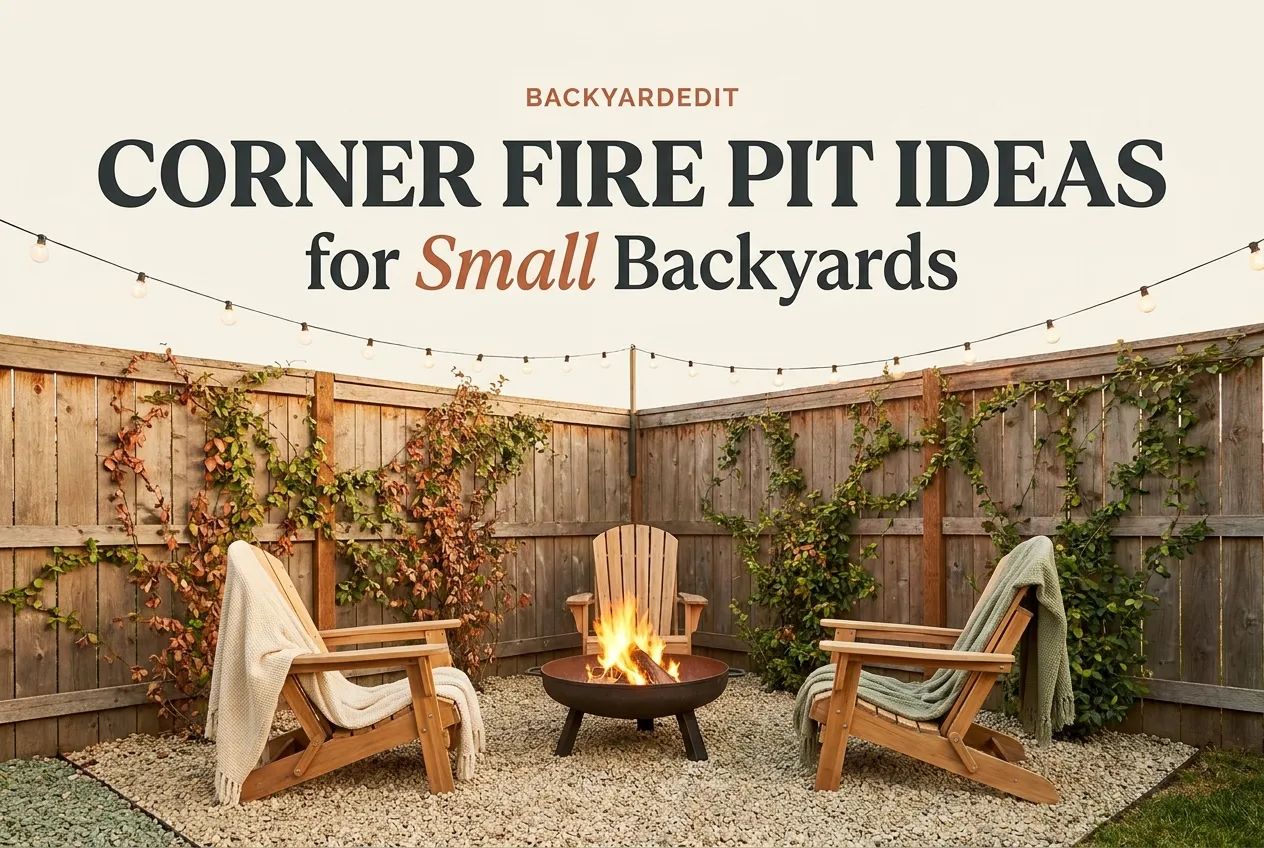
Corner fire pit ideas for small backyards solve a problem most yard designs ignore: the dead triangle where two fence lines meet. That 4×4 ft patch of struggling grass nobody mows around can hold a $69 Walmart Mainstays steel pit, a pea gravel apron, and two Adirondack chairs without crowding the rest of your yard.
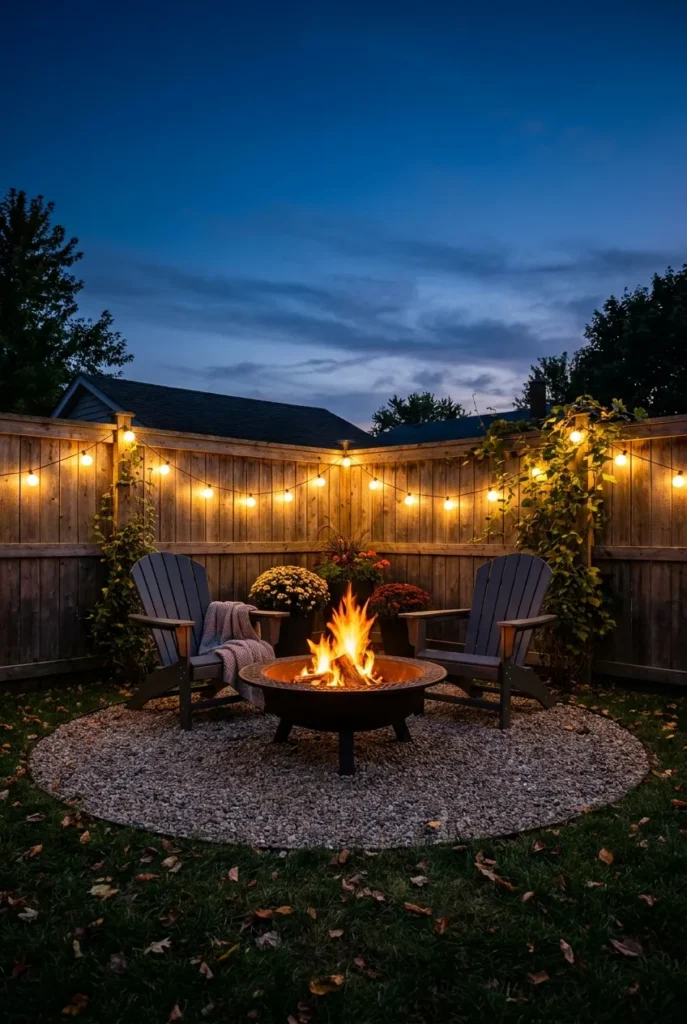
We tried our first fire pit on bare grass for one weekend and the dead ring stayed visible for 11 months. Skip our mistake. This guide covers the setback math nobody quantifies, seven layouts that actually fit a small yard, a side-by-side budget breakdown across three price tiers, and the two-fence heat reflection problem every corner pit has. If you want more compact yard inspiration first, our small backyard layout ideas cover the bigger picture this article slots into.
Why a Corner Wins in a Small Backyard
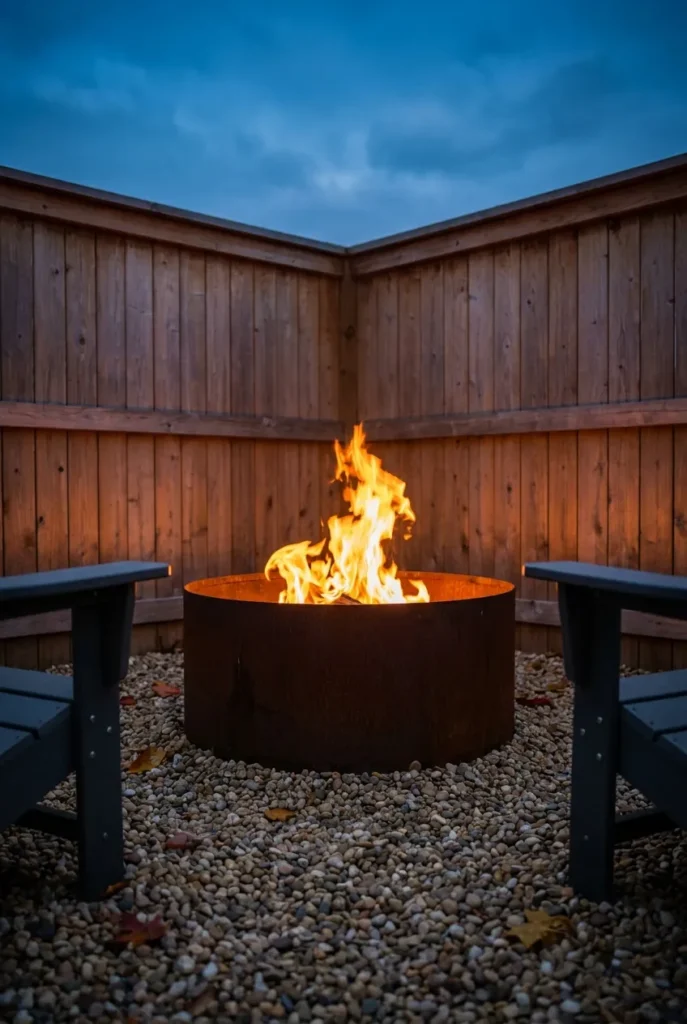
A corner traps the fire pit in the spot most yards waste. The triangle where two fence lines meet is almost always dead space. Grass struggles there because mowers miss it. Hose drag avoids it. Patio furniture rarely reaches it. Drop a pit in that gap and you reclaim 30 to 50 sq ft without losing anything you were already using.
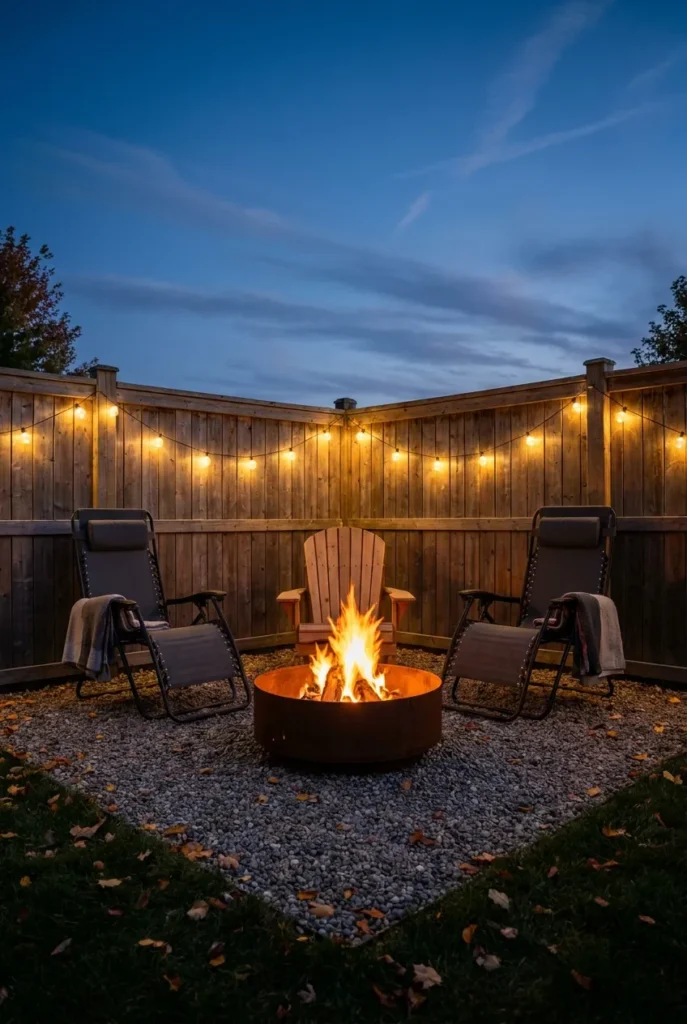
Corners also do something open-yard pits cannot. They create a backstop. Two fence lines on two sides of the seating means radiant heat throws forward into the chairs instead of dissipating in a 360 degree halo. You get a warmer seating experience with less heat loss. The same fact creates a separate problem covered below, but for raw comfort, a corner pit beats a center-yard pit on a cool September evening every time. In USDA zones 5 through 7, peak fire pit season runs from late September through mid-November. That is six full weeks of patio time the corner setup makes useable.
One more honest case for the corner. Sightlines. A pit in the middle of a 400 sq ft yard chops the lawn into two unusable halves. A corner pit keeps the open lawn intact for kids, the dog, or a future zero-gravity Costco Sunbrella chair you have not bought yet.
The Corner Setback Math Most Articles Skip
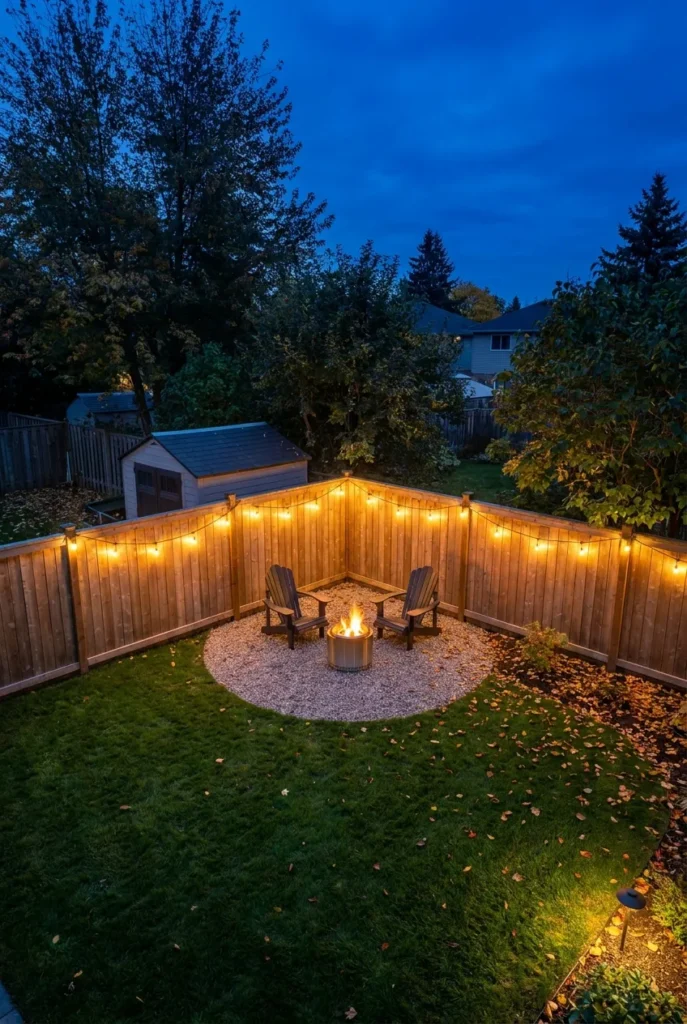
Here is the part nobody writes about. A wood-burning fire pit needs a minimum of 10 ft of clearance from any structure, per general outdoor fire safety guidance from the NFPA on recreational outdoor fires. A corner gives you two structures to worry about at once: the house wall and the two fence lines meeting at the corner.
If you tuck a pit hard into the corner with the burn ring 18 inches off the fence, you have violated the clearance from your fence and likely from any low branches overhanging that corner. The 10 ft rule is not optional. It protects the wood of your fence, the lacquer on your siding, and your homeowners policy.
The geometry works like this. Measure 10 ft straight out from one fence line. Measure 10 ft from the other. The intersection of those two arcs is the safe start of your fire pit center. That puts the center of a 36 inch pit roughly 11.5 ft into the corner triangle, which means you actually need a corner with about 14 to 16 ft of open space along each fence to run a wood burner the right way. Smaller corners need a smokeless or propane pit (lower clearance, sometimes 3 ft per manufacturer) or a portable setup.
Local codes override both. Call your township or county office before you dig.
7 Corner Fire Pit Layouts That Actually Fit a Small Backyard
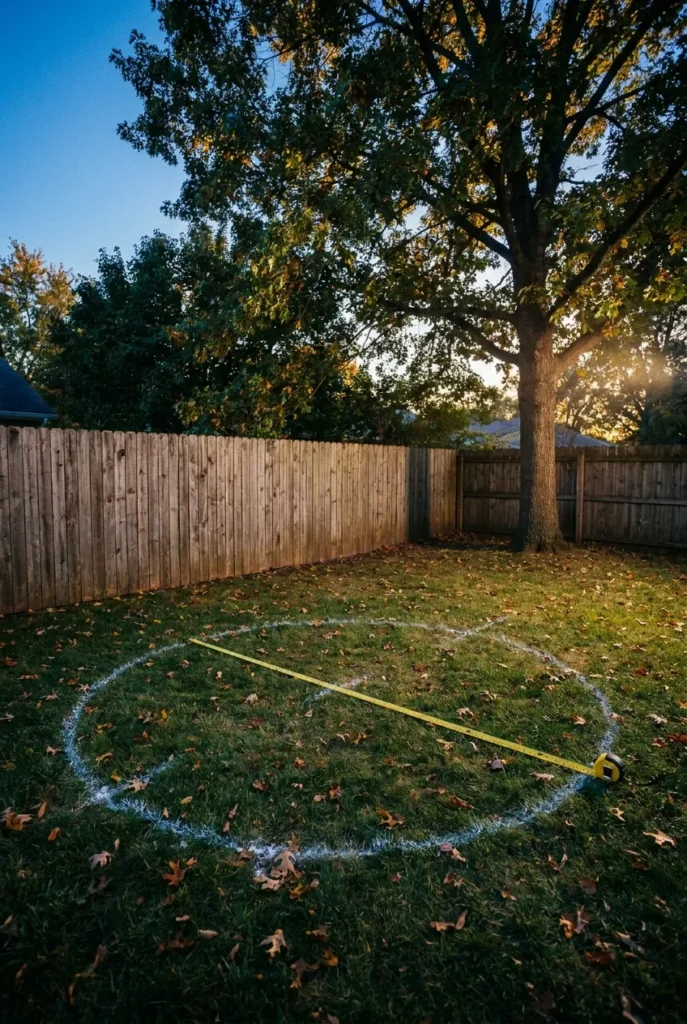
These are the seven setups I keep coming back to after years of testing in our own yard and helping friends plan theirs. For yards even tighter than these, our narrow backyard layout ideas cover the under-12 ft wide scenarios where corners do most of the heavy lifting.
The Pea Gravel Corner Apron
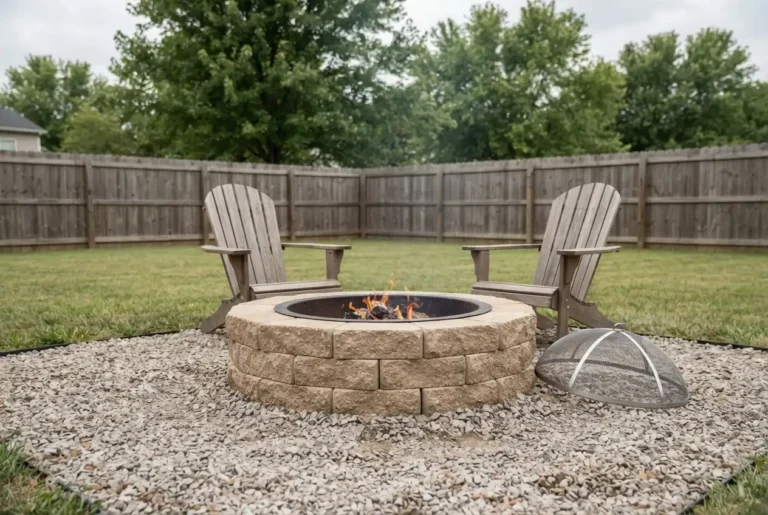
A 10×10 ft pea gravel pad in the corner with a 30 inch steel ring centered creates a finished look for under $200. Pea gravel under our DIY ring keeps the surrounding lawn safe and dries out fast after rain. Two yards of pea gravel from Home Depot runs about $90, edge restraint another $40, and the ring itself can be a $69 Mainstays from Walmart or a $120 Sunnydaze cast iron.
The Built-In Bench Banquette
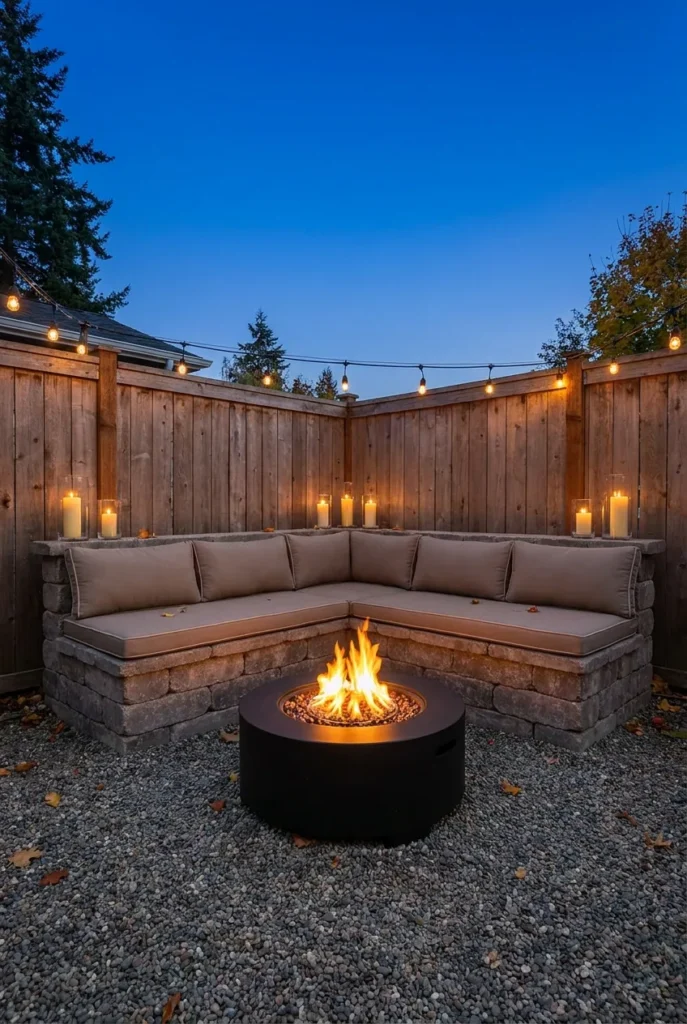
L-shaped seating that hugs the two fence lines doubles as a bench and a heat-deflector wall. Stack two courses of retaining wall block from Lowe’s at $3 to $5 a block, run the L along both fence sides, cap it with a 14 inch tall finished surface, and you have permanent seating that fits six adults around a 36 inch propane pit. Block cost runs about $300 to $450. Add Sunbrella cushions at $80 each.
The Floating Solo Stove Corner
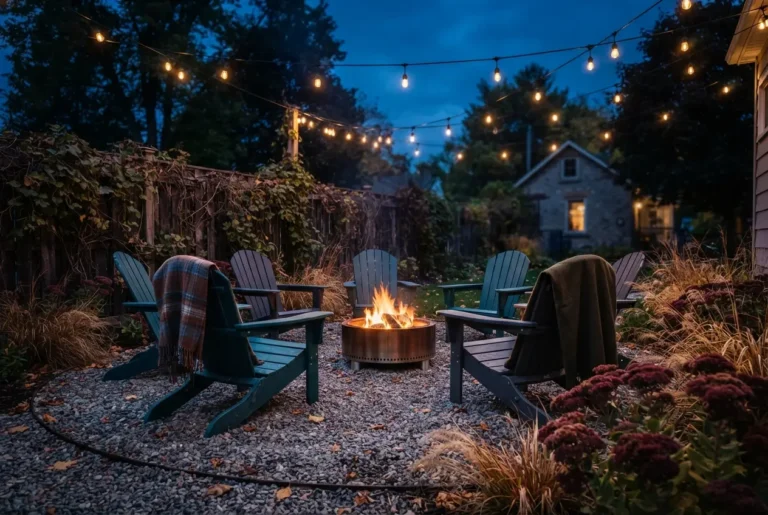
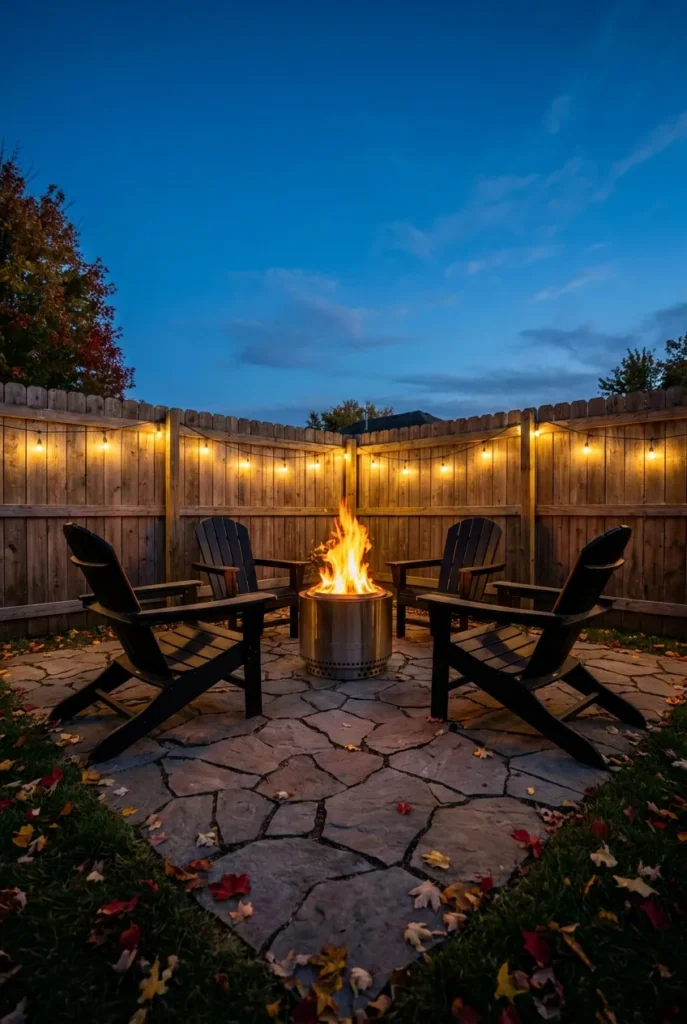
A Solo Stove Bonfire 2.0 ($349) sits on a concrete paver pad in the corner with nothing built around it. No bench, no surround. Just a gravel apron and two Polywood Adirondack chairs ($249 each). This is the lowest-commitment version. Pack it into the garage for winter or leave it under a fitted cover. Worth every penny if you rent.
The Sunken Corner Pit
If you can dig, a sunken corner pit drops the burn ring 8 to 12 inches below grade. The lower profile means heat throws sideways into the seating, the fence is shielded by the surrounding gravel, and the setup nearly disappears when not in use. Skip this if you have clay soil or a high water table. Both turn the pit into a bowl that holds standing water.
The DIY Retaining Wall Block Ring
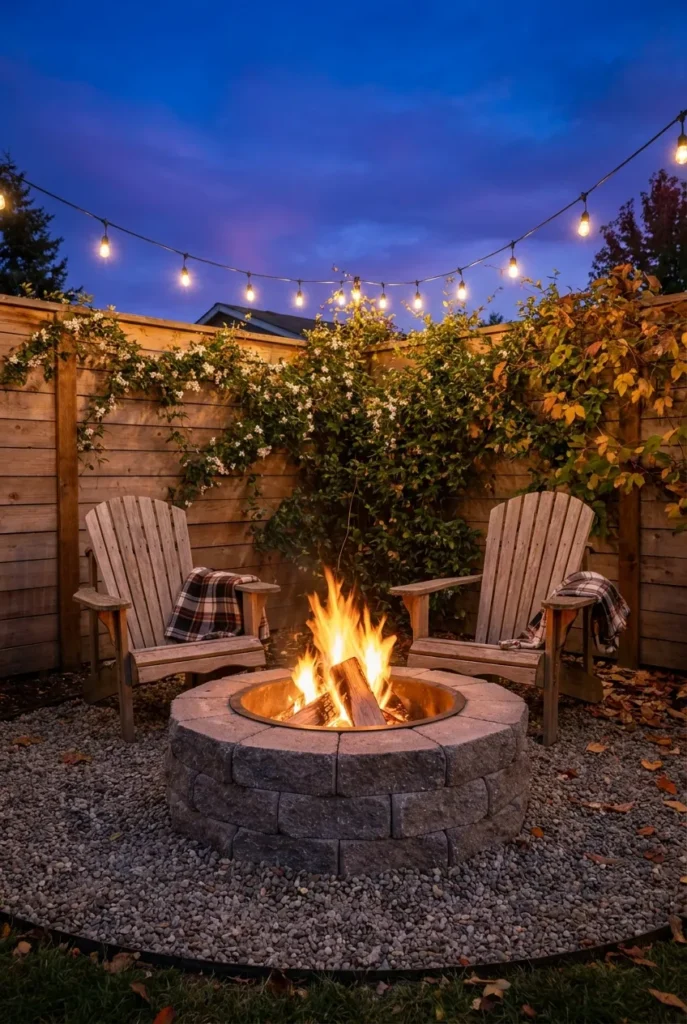
Three rings of trapezoidal retaining wall block (about $3 to $5 each at Home Depot) stacked into a 36 inch circle gives you a classic stone fire pit for $120 to $180. No mortar required if you pick blocks with built-in tongues. The corner placement lets the ring sit against a fence-line backdrop of climbing jasmine or evergreen for the cottage look that ranks all over Pinterest.
The Tabletop Corner Setup
Small corners under 8×8 ft cannot fit a full ring. A tabletop propane fire pit on a teak side table tucked into the corner with two folding bistro chairs gives apartment-balcony level coziness in 25 sq ft. Total cost about $250 to $350 including the table.
The Corner Conversation Pit
Wrap a 12×12 ft paver patio into the corner with the pit centered 6 ft from each fence. Four Adirondack chairs in a quarter circle around the pit face the open yard. This is the most polished version and the most expensive at $1,200 to $2,000 all-in.
Materials That Survive Two Fence Lines of Reflected Heat
This is content gap number two and worth its own section. A corner pit reflects radiant heat off two fence surfaces back into a compact zone. Three things suffer when you ignore this. The fence wood scorches. The burn ring rusts faster. Surrounding gravel discolors.
For wood-burning pits in a corner, pick a thick-gauge steel ring (3 mm or heavier). The cast iron I got from Walmart for $69 lasted three full seasons before the bottom rusted through, mostly because the corner placement kept the metal hotter longer than a center-yard pit would have been. A $150 Sunnydaze cast iron outlasts the thin Mainstays bowl by years in a corner.
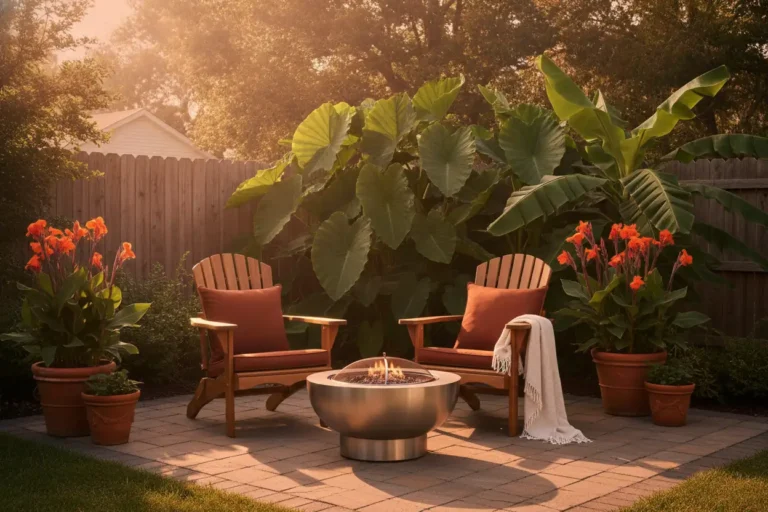
For propane in a corner, the heat throw is lower and more consistent. A TIKI Brand smokeless propane pit ($299) or a similar enclosed unit puts out less radiant blast against the fences. Less fence damage over years.
Skip untreated cedar fence panels within 4 ft of the pit unless you seal them with a fire-retardant coating. Composite vinyl handles heat better. A masonry knee wall (one course of retaining wall block) along the fence-side of the pit blocks direct radiant heat for the bottom 8 inches of the fence, which is where scorching shows up first.
Your Corner Fire Pit Cost Breakdown Across 3 Budget Tiers
The same 8×8 ft corner layout (30 to 36 inch pit, two seats minimum, gravel base) priced three ways. Screenshot this before you head to Home Depot.
| Line Item | Bare Bones | Mid Range | Splurge |
|---|---|---|---|
| Fire pit | Mainstays 28 in ($69) | Sunnydaze cast iron ($150) | Solo Stove Bonfire 2.0 ($349) |
| Base | 1 yard pea gravel ($45) | 2 yards gravel + edging ($130) | 8×8 ft paver patio ($600) |
| Seating | 2 plastic Adirondack ($35 ea) | 2 Polywood Adirondack ($249 ea) | 4 Polywood Adirondack ($996) |
| Fence protection | None | 1 course block knee wall ($60) | Full masonry knee wall ($250) |
| Ambience | $14 Walmart string lights | $45 Brightech G40 string lights | $80 Govee smart string lights |
| Total | $198 | $643 | $2,275 |
The Bare Bones tier fits a renter or a first summer. The Mid Range survives 5 to 7 seasons of weather. The Splurge becomes a permanent yard feature that returns a chunk of its cost at resale.
Seating That Fits the Corner Geometry
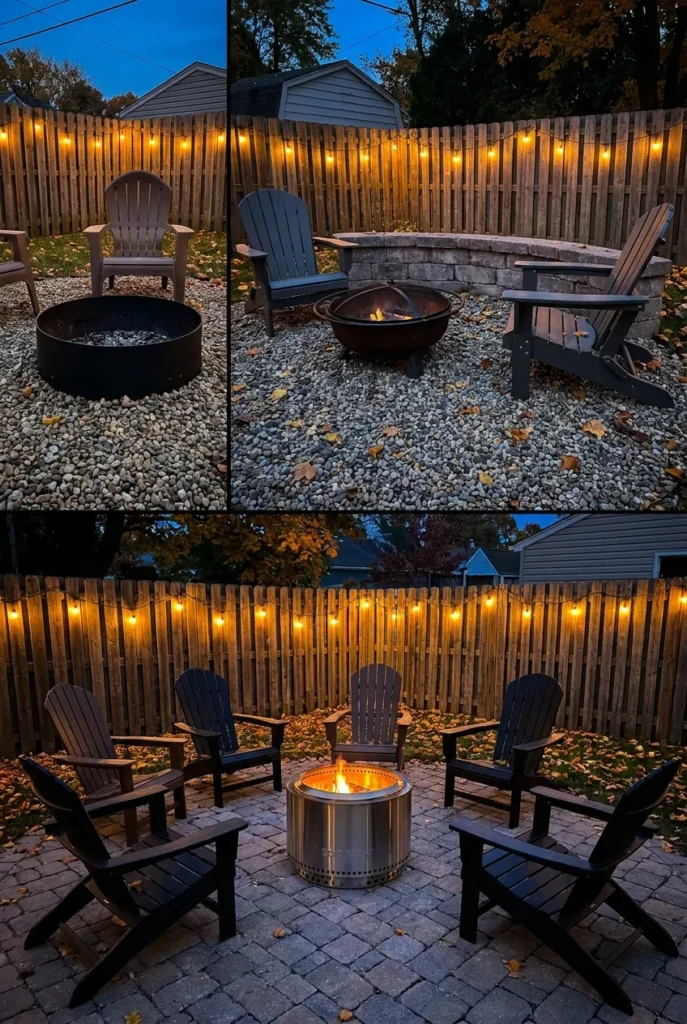
A corner pit loses one side of the seating circle. Open-yard pits seat 6 to 8 in a full ring. Corner pits seat 3 to 5 in an arc. Plan for the arc.
Two zero-gravity Costco Sunbrella chairs ($79 each) facing the fire from the open side work better than three chairs crammed in a tight semicircle. If you need more seats, run an L-shaped low bench along the two fence sides (the banquette from earlier) and add two chairs facing in. Five seats max for a corner pit in a small yard. Anything more turns intimate into crowded.
Skip outdoor sectionals in a corner setup. Sectionals are built for open patios. The arms get hot. The fabric scorches. A chair-and-bench combo handles the geometry without melting a $1,400 Article Hyland sofa.
Wood-Burning vs Propane in a Corner Setup
Two-fence reflection changes this calculation. Wood-burning throws bigger radiant heat and drops embers, which makes a corner with overhanging branches or cedar panels risky. Propane throws lower heat with no embers, which makes it the safer corner pick 9 times out of 10 in small yards.
The trade-off is ambience. Wood crackles. Propane hisses. For most small-backyard corners with under 14 ft of clearance each direction, propane is the right call. For larger corners with masonry backstops and clear airspace above, wood wins on vibe.
A hybrid solution exists. A smokeless wood-burner like the Solo Stove Bonfire 2.0 uses double-wall combustion that cuts radiant throw and ember release compared to a basic ring. Best of both worlds for a tight corner.
Five Corner Fire Pit Mistakes to Skip
- Putting the pit hard against the fence. Bare minimum 36 inches from any fence surface for propane, 10 ft for wood-burning per CPSC outdoor fire safety guidance.
- Laying the pit on bare grass. The burn ring kills the lawn in one weekend and the dead spot stays for a year.
- Skipping edge restraint on a pea gravel pad. Gravel migrates into the lawn within 8 weeks without a $40 plastic edge.
- Using untreated cedar as the corner backdrop without a sealer or knee wall. Scorch marks show in the first month.
- Buying a 28 inch pit for a corner that fits a 36 inch pit. Bigger ring, better arc seating, more usable heat. Size up if the geometry allows.
Corner Fire Pit FAQs
How close can a corner fire pit be to a wood fence?
The minimum is 10 ft from any structure for a wood-burning pit. A smokeless or propane pit can sit as close as 3 ft if the manufacturer allows. Add a masonry knee wall for any setup tighter than 6 ft.
Do I need a permit for a corner fire pit?
Most counties allow recreational fire pits under 36 inches without a permit, but corner placements often trigger setback violations that do require a variance. Call your township office before you dig.
What is the best base for a corner fire pit?
A compacted gravel base with a 4 inch crushed-stone foundation and a 2 inch pea gravel top layer. Concrete pavers work for permanent installs. Bare grass and bare dirt do not.
Can I put a corner fire pit on a wood deck?
Only with a Solo Stove or TIKI smokeless model rated for deck use, on a fire-resistant pad, with manufacturer-stated clearance. Most wood-burning pits cannot sit on wood decks.
What size fire pit fits a small backyard corner?
A 28 to 30 inch pit fits corners between 8×8 ft and 10×10 ft. A 36 inch pit needs a corner with at least 12×12 ft of open space.
How do I protect my fence from a corner fire pit?
A single course of retaining wall block (8 inches tall) along the fence-side of the pit blocks the bottom of the fence from direct radiant heat. Fire-rated cement board cut to size and painted to match works for renters who cannot build permanent block.
What is the cheapest corner fire pit setup that still looks good on Pinterest?
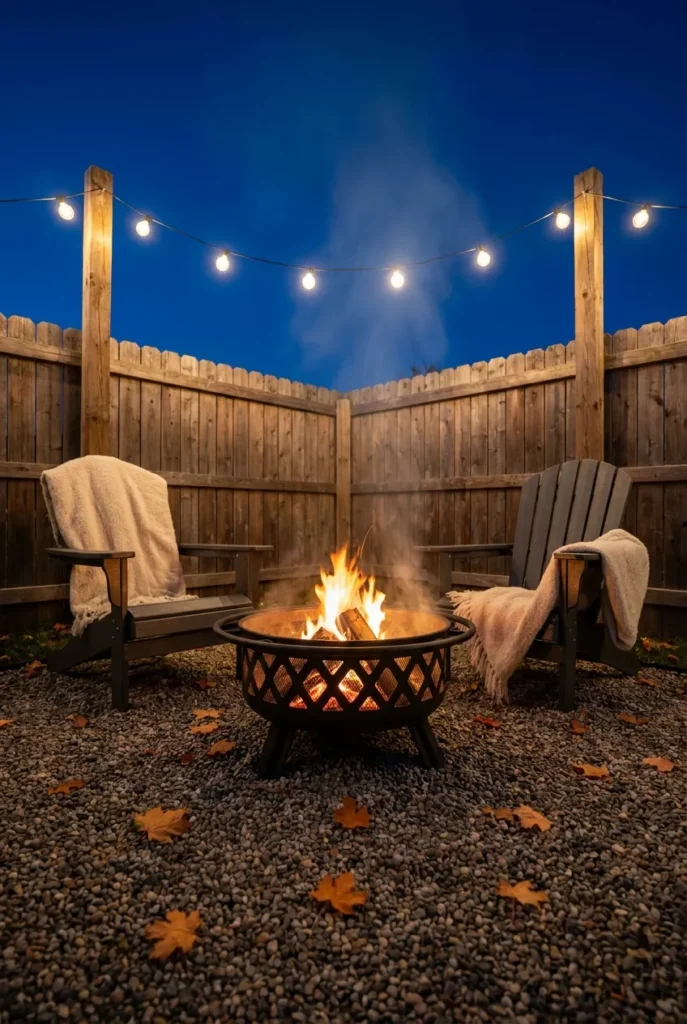
A $69 Walmart Mainstays steel pit on a 1 yard pea gravel pad with two $35 plastic Adirondack chairs and $14 of warm-white string lights. Under $200 total and indistinguishable from a $600 setup in photos.
Putting It in Your Own Corner
A corner fire pit reclaims the dead triangle of every small backyard and turns it into the seat of the house. Start with the setback math. Pick the layout that fits your corner geometry. Match materials to the two-fence heat problem. Seat for an arc instead of a full ring. The cozy Pinterest version costs less than $200. The forever version costs less than $2,500. Either way, the wasted corner finally pulls its weight. For the bigger picture on stretching every dollar, our budget patio playbook covers the rest of the build that wraps around the pit.