Small Backyard Ideas: Make a Tiny Yard Feel Twice as Big
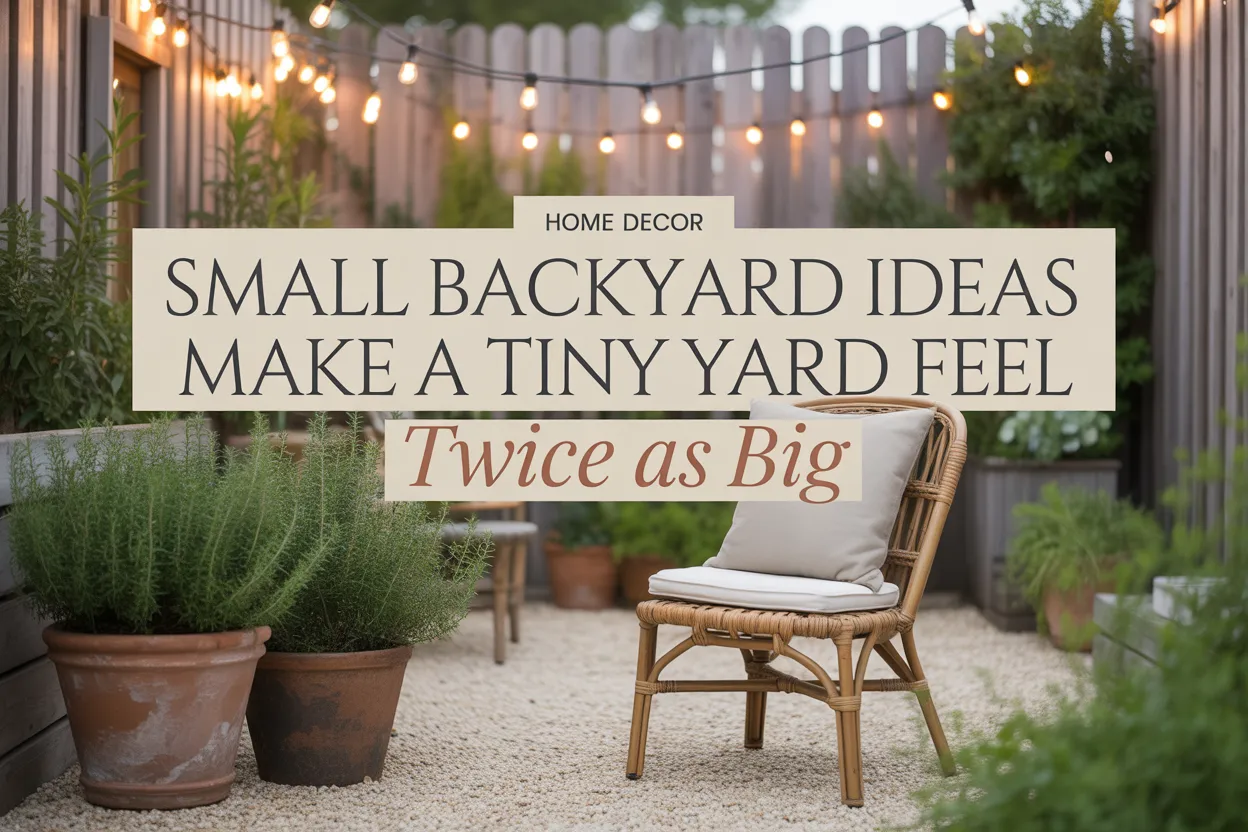
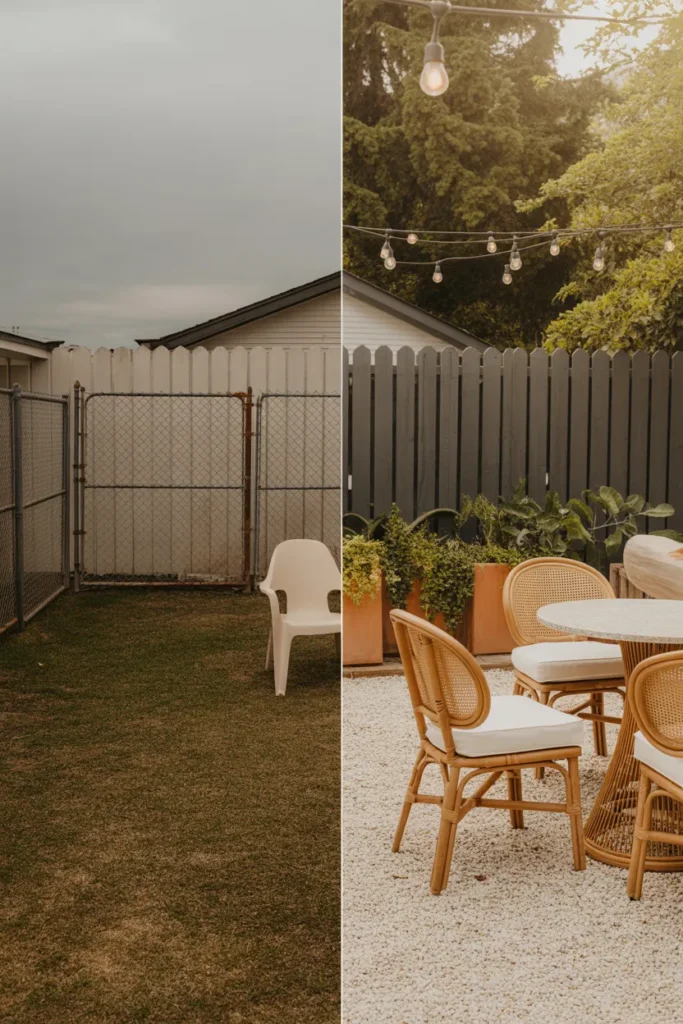
You walk out the back door with your iced coffee and there it is again. A patchy 14 by 16 foot rectangle of grass, one rusty grill, the neighbor’s chain-link fence staring back at you, and a single plastic chair sun-bleached to the color of oatmeal. The yard isn’t broken. It’s just doing absolutely nothing for you. We’ve all stood there.
Here’s the good news. Most small backyard ideas you see on Pinterest aren’t about square footage. They’re about three small tricks: tricking the eye into seeing more space, layering function so every foot pulls double duty, and adding warmth so the yard finally feels like a room you want to sit in. After testing dozens of layouts in our own 12 by 18 foot rental yard last summer (and a friend’s 20 by 25 patio the summer before), we’ve narrowed down what actually works versus what just photographs well.
This guide is organized by zone and price tier, so whether you’re working with a renter’s slab or a homeowner’s full yard, you’ll find ideas you can act on this weekend.
Who This Guide Is For
Before we get into the ideas, here’s who we wrote this for:
- Renters with a slab patio, a tiny lawn strip, or a townhouse plot you can’t drill into
- First-time homeowners with a yard that looked great in the listing photos and weirdly small in person
- Small-space dwellers working with anything under 400 square feet of usable outdoor area
- Budget-conscious decorators who want a $100 weekend refresh, not a $10,000 reno
- Families with kids who need play space without losing the grown-up corner
If you’re in any of those camps, you’ll find something here.
The Two Rules Every Small Yard Should Follow
Before you buy a single planter, internalize these two design rules. The top Google searches keep asking about them, and most articles never explain them clearly.
The Rule of 3 in Landscaping
Group plants, planters, and decor objects in odd numbers, ideally threes. Three rosemary topiaries in graduated heights look intentional. Two look matched. Four look crowded. The eye reads odd-number groupings as natural and even-number groupings as forced. Apply it to pots flanking a doorway, plants on a shelf, and decor on a coffee table outdoors.
The 70/30 Garden Rule
Roughly 70% of your yard should be soft, living material (plants, lawn, groundcover, vines) and 30% hard surfaces (patio, gravel, decking, walkways). In a small yard, people tend to flip this and end up with a concrete box. Aim for the 70/30 split and the same square footage will breathe.
These two rules will guide most of what follows.
Tier 1: Budget-Friendly Small Backyard Ideas (Under $25 Per Item)
These are the dollar store, thrift store, and Amazon basics tier. Every idea here has been tested and costs less than dinner out.
1. Cream Pea Gravel Over That Sad Bare Patch
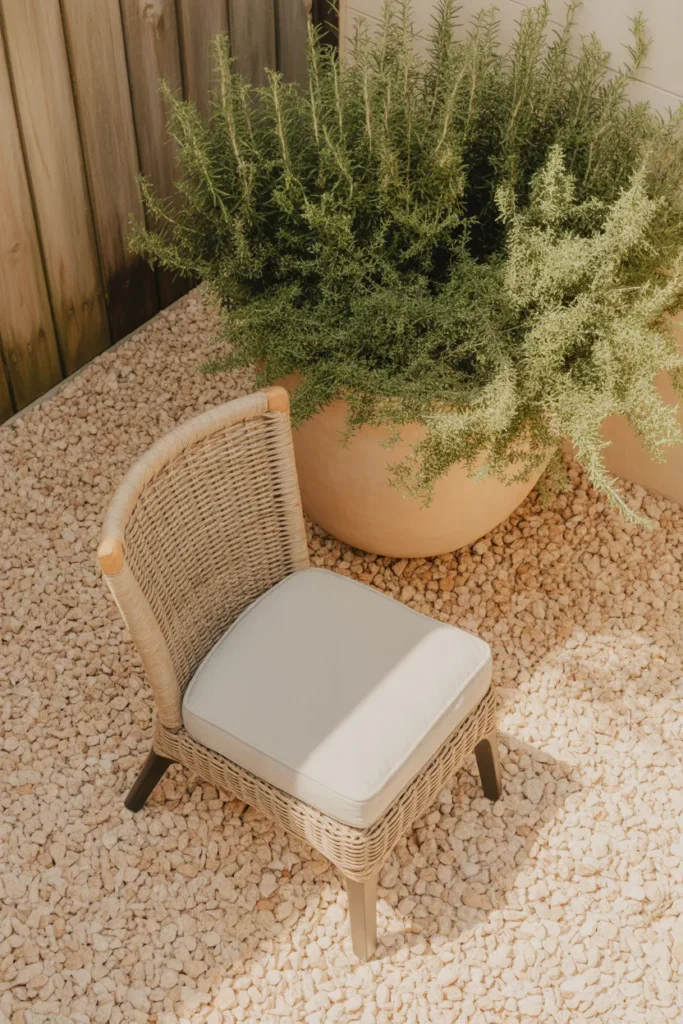
What it is: A 30-pound bag of pea gravel from Home Depot ($6 to $9) poured over a cleared 4 by 4 foot patch.
Why it works: Gravel reads as “designed” instantly. It also drains better than mulch, doesn’t blow away like bark, and visually pushes the eye outward, which makes the yard feel wider.
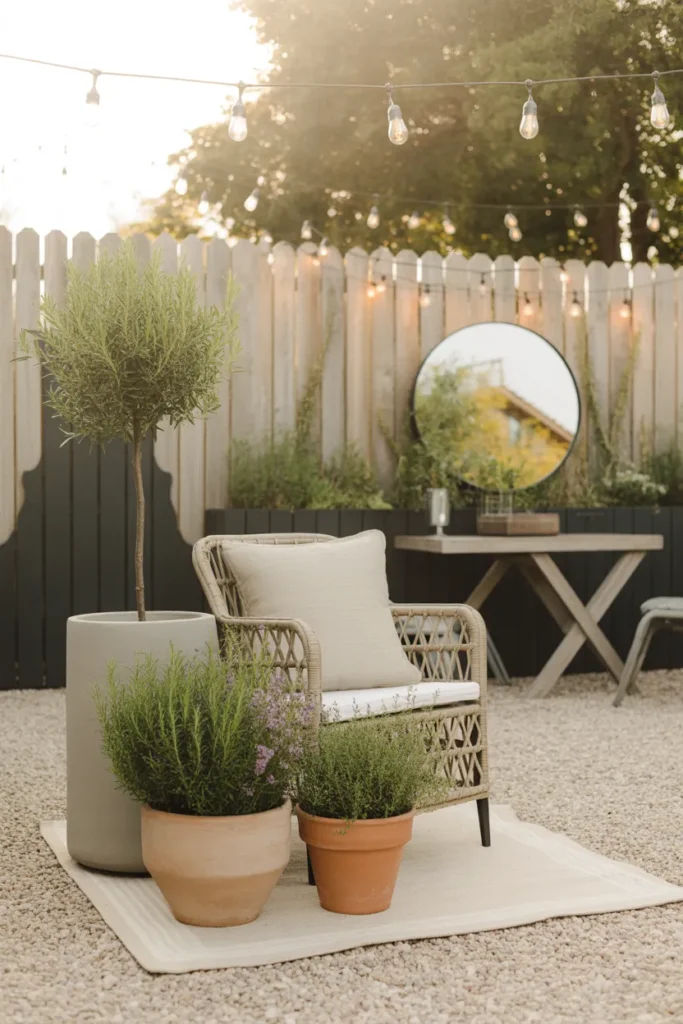
How to execute: Clear the patch, lay down a $10 weed barrier from Lowe’s, pour the gravel about 1.5 inches deep, then place a single bistro chair and one terracotta pot on top. Done in under an hour.
2. The $15 Mirror Trick on the Fence
What it is: A weatherproof outdoor mirror (Dollar Tree has plastic options at $5, HomeGoods has nicer 18-inch round ones for $15 to $20) hung on the fence opposite your seating area.
Why it works: Mirrors double the visual depth of a yard. The eye reads the reflection as more space. This is the single highest-impact trick you can do for under $20.
How to execute: For renters, use heavy-duty 3M outdoor command strips rated for 15 pounds. For homeowners, screw it directly into a fence post. Tilt it slightly downward so it reflects the lawn or patio, not the sky (sky reflections look like blank holes).
3. Solar String Lights Across the Top
What it is: A 48-foot strand of solar Edison-bulb string lights ($18 to $22 on Amazon).
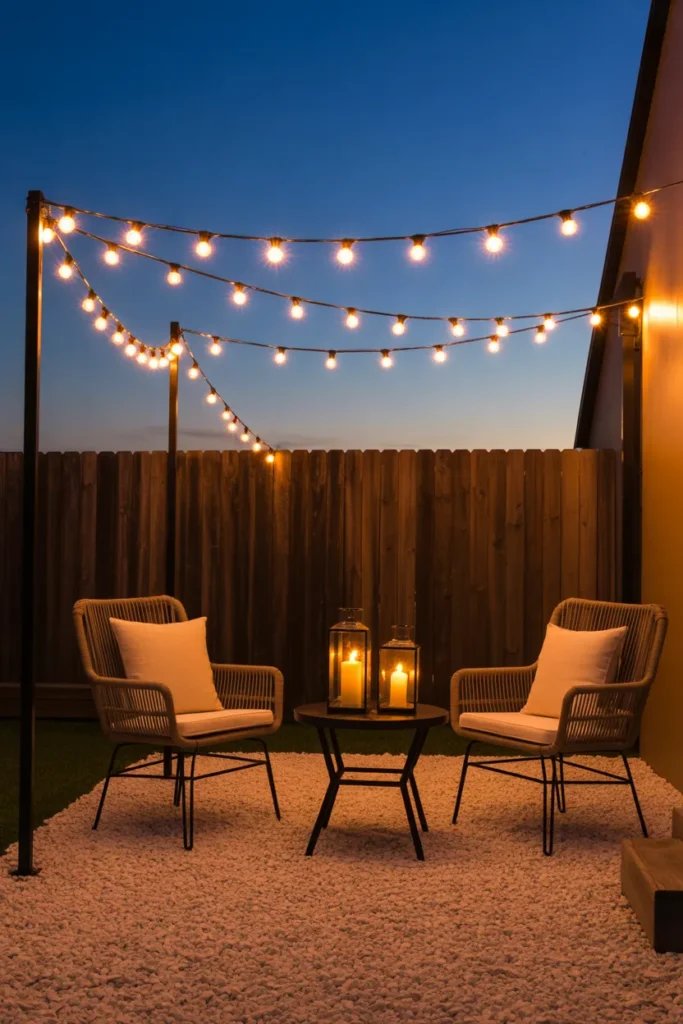
Why it works: Overhead lighting creates a “ceiling” effect that defines the outdoor room and pulls the eye up. It also extends the usable hours of the yard from 7 PM to 10 PM in summer.
How to execute: Renters, use removable adhesive hooks rated for outdoor use on the house siding and the fence post. No drilling required. Crisscross the lights for that café look. The solar panel charges in a sunny spot and runs about 8 hours per night.
4. Thrifted Terracotta Pot Cluster
What it is: Three to five mismatched terracotta pots from thrift stores, garage sales, or Facebook Marketplace ($2 to $8 each).
Why it works: Terracotta ages beautifully and reads as designed even when mismatched. Grouping them in odd numbers (rule of 3) creates instant focal points without spending $40 per planter at West Elm.
How to execute: Cluster three pots of different heights in a corner. Plant the tallest with a single dwarf rosemary or lavender, the medium with trailing thyme, the smallest with a colorful annual like calendula or marigold.
Tier 2: Mid-Range Small Backyard Ideas ($25 to $100)
This is the IKEA, Target, HomeGoods, and Amazon mid-tier sweet spot.
5. The Bistro Set That Defines the Whole Yard
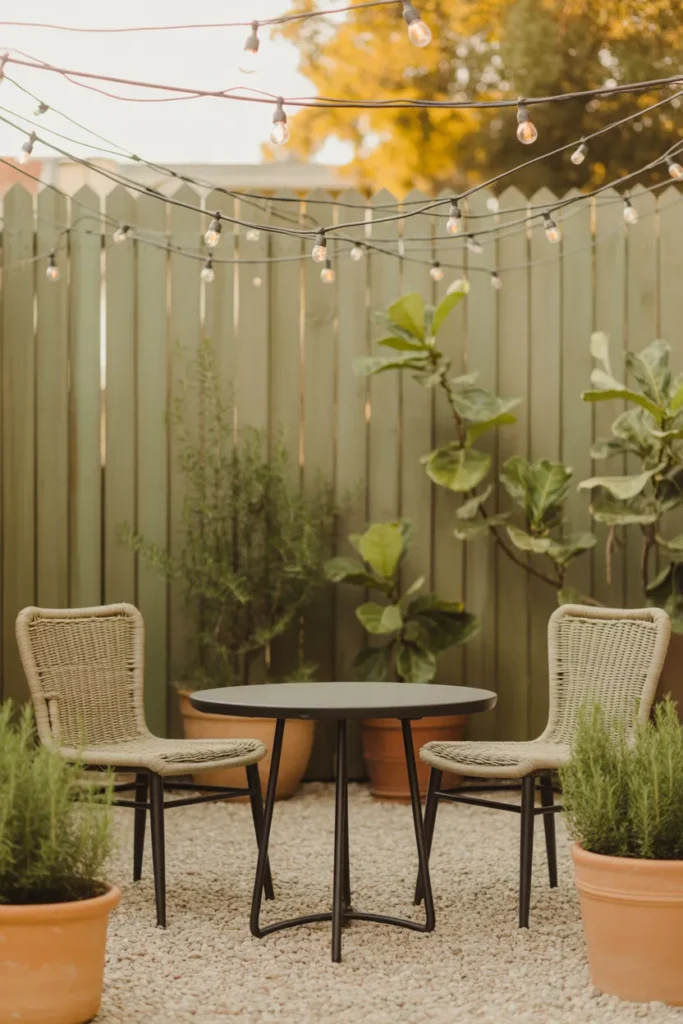
What it is: A 3-piece outdoor bistro set, typically two folding chairs and a 24-inch round table, $79 to $99 at Target, IKEA, or Walmart.
Why it works: A small yard needs furniture scaled to the yard. A full sectional eats the space. A bistro set creates a defined “outdoor dining room” in as little as 4 by 4 feet.
How to execute: Place it at a slight angle to the fence (not parallel) because angled furniture makes a plot look wider, a designer trick from the Gardening Know How research. Add two cream linen-look cushions ($15 each from HomeGoods) for warmth.
6. A Vertical Living Wall Planter
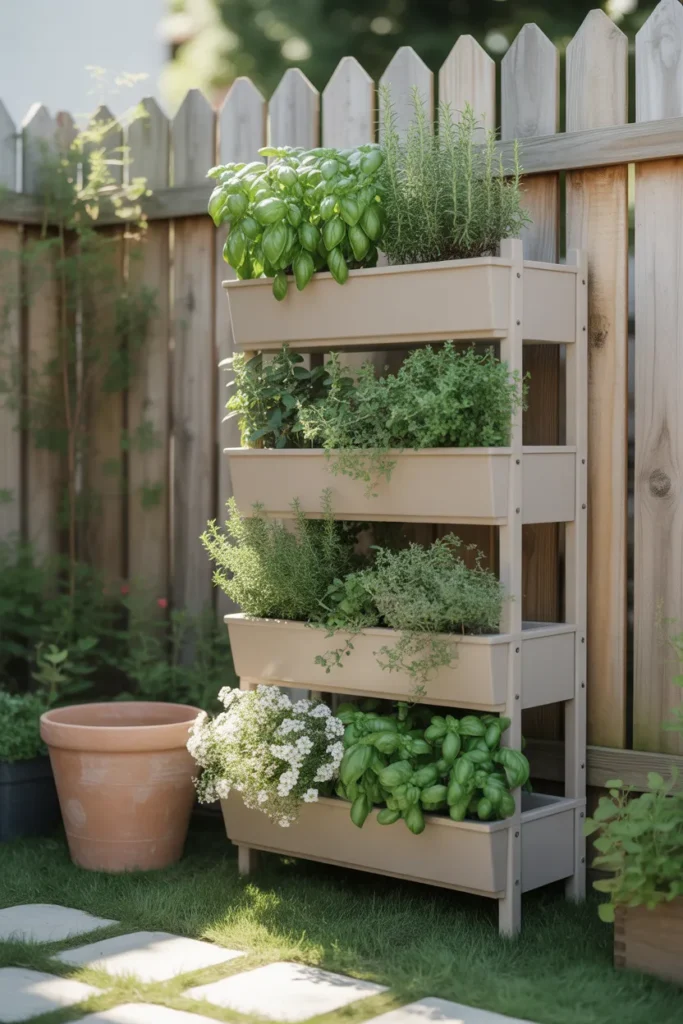
What it is: A 5-tier wood or galvanized steel vertical planter ($45 to $80 on Amazon or at Home Depot).
Why it works: When floor space is gone, you go up. Vertical gardening adds living material to a fence or wall without sacrificing patio square footage. Works in spaces as narrow as 14 inches deep.
How to execute: Place it against a south-facing or east-facing fence for max sun. Plant herbs (basil, mint, thyme, rosemary, parsley) on the lower tiers and trailing flowers (sweet alyssum, ivy geranium) on top. For more on what to grow in tight spots, our small space container garden guide walks through the exact plant pairings.
7. Outdoor Rug to Anchor the Seating Zone
What it is: A 5 by 7 foot polypropylene outdoor rug ($45 to $80 at Target, Amazon, or Wayfair).
Why it works: A rug instantly defines a “room” boundary in an open yard. It also softens hardscape and adds the warmth that makes a yard feel like a finished space, not a leftover patch.
How to execute: Choose a low-pile, mildew-resistant rug in cream, beige, or natural jute-look. Place it under your bistro set or seating cluster so the front legs of the chairs sit on it. That’s the rule that makes the rug feel intentional.
8. A Single Statement Tree in a Planter
What it is: A dwarf olive tree, citrus tree, or Japanese maple in a 16 to 20 inch planter ($60 to $90 at Lowe’s, Home Depot, or your local nursery).
Why it works: One mature-looking tree adds vertical drama and “borrows” sky into the yard. Dwarf varieties (under 6 feet) won’t outgrow the space. Per the University of Maryland Extension’s guidance on container trees, choose varieties matched to your USDA zone for the best survival rate (UMD Extension).
How to execute: Place the planter in a corner so the tree fills vertical space without crowding the floor. Underplant with creeping thyme or a single trailing succulent.
9. Renter-Friendly Privacy Screen
What it is: A freestanding 6-foot bamboo or willow roll privacy screen ($35 to $70 at Home Depot or Amazon).
Why it works: Solves the “neighbor staring at me” problem without drilling, painting, or fence modifications. Lightweight enough to take with you when the lease ends.
How to execute: Attach to existing fence with zip ties (totally removable) or stand it inside a wood plant box with sandbags for weight. For a softer look, plant a $12 bag of climbing morning glory seeds at the base and let the vines weave through.
Tier 3: Splurge Small Backyard Ideas ($100+)
This is the West Elm, Crate & Barrel, CB2, and Anthropologie Home tier. These pieces become the yard’s anchors and last for years.
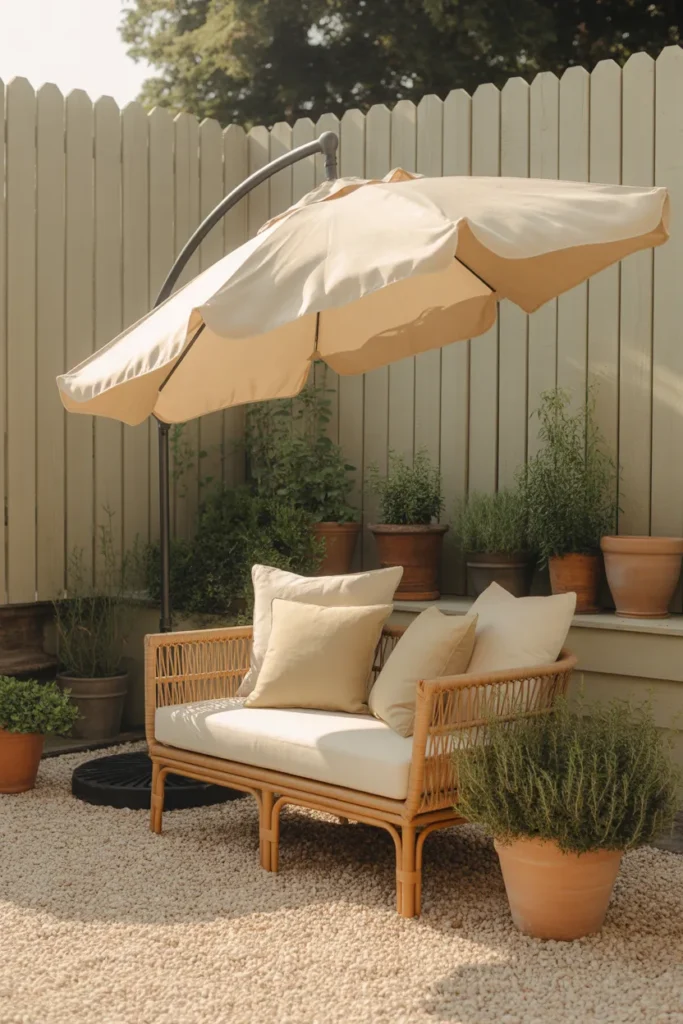
10. A Cantilever Umbrella for Adjustable Shade
What it is: A 9-foot cantilever offset umbrella ($150 to $300 at Wayfair, Crate & Barrel, or Costco).
Why it works: A traditional center-pole umbrella eats your table real estate. A cantilever pole stays out of the way and the canopy sweeps where you need it as the sun moves. Crucial for tiny patios where every inch of seating counts.
How to execute: Get the heavy base (often sold separately, $40 to $80). Position it so the canopy covers your seating without blocking the view from the kitchen window. Cream or natural linen color blends best.
11. A Real Fire Pit (Not the $40 One)
What it is: A solid steel or stone wood-burning fire pit, 28 to 32 inches across ($180 to $400 at CB2, West Elm, or Solo Stove).
Why it works: Becomes the year-round centerpiece. Pulls people outside in October when nothing else will. Smaller diameter pits work in yards as tight as 12 by 12 feet (with proper clearance, see manufacturer guidelines).
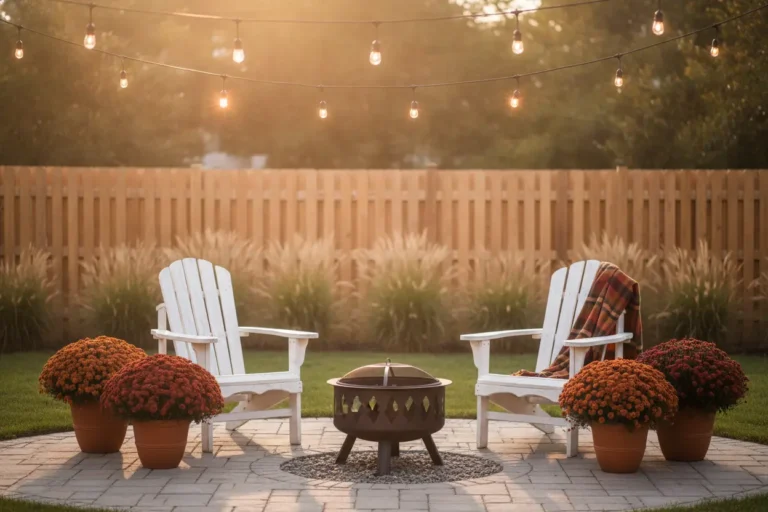
How to execute: Set it on a heat-safe surface (gravel, pavers, concrete, never directly on a wood deck). Surround with three Adirondack chairs in a U shape. Keep at least 7 feet of clearance from any structure. Check local fire codes; some HOAs and cities restrict open flames.
12. A Pergola or Sail Shade Anchor
What it is: A modular pergola kit (Toja Grid system, $400 to $800 plus lumber) or a 16 by 16 foot triangular sail shade ($120 to $250).
Why it works: Adds an architectural ceiling to the yard and casts the dappled shade that turns a sunny rectangle into an outdoor room. The pergola pays for itself in usable summer hours.
How to execute: For homeowners, anchor the pergola posts in concrete footings. For renters, use the freestanding planter box anchor method, where each post sits in a heavy planter filled with concrete (the planter holds the post upright and looks intentional).
Smart Small Backyard Ideas by Zone
If you’d rather organize by zone than by price, here’s how to break a tiny yard into useful sections without crowding it.
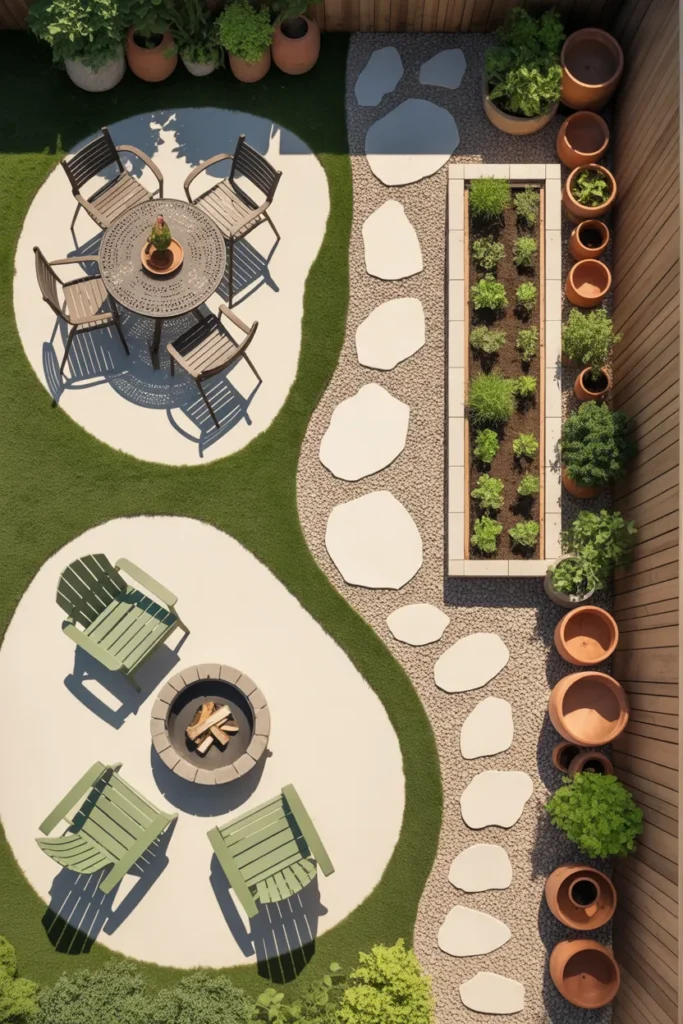
The Dining Zone
Anchor with the bistro set or a 4-person small dining table. Hang string lights overhead. Add one large potted herb so dinner smells like the rosemary you’re brushing past.
The Lounge Zone
A loveseat or two Adirondack chairs around the fire pit or a low coffee table. Outdoor rug underneath. Soft throw on the back of the chair (linen, cream, washable).
The Garden Zone
A small raised bed (3 by 6 feet works in most yards), the vertical planter, or a row of containers along the fence. If you want a real layout plan, our raised garden bed layout ideas post breaks down the exact dimensions for small yards.
The Kid Zone (If You Need One)
A 4 by 4 foot patch of artificial turf or pea gravel for a sand-and-water table, a chalkboard mounted to the fence (or leaning against it for renters), and a low storage bench that doubles as seating. Per the Bower & Branch design team, kid zones go vertical too: a fence-mounted climbing wall takes zero floor space.
Plant Choices That Make a Small Yard Feel Bigger
Not all plants are equal in a tiny space. The right ones expand the yard. The wrong ones crowd it.
Plants That Open the Space
- Climbing vines (clematis, climbing hydrangea, star jasmine) on a trellis pull the eye up and add privacy without floor footprint
- Tall, narrow grasses like feather reed grass (Karl Foerster) add height in 12-inch-wide planting strips
- Dwarf trees (Japanese maple, dwarf olive, Meyer lemon) bring scale without overgrowth
- Trailing plants (creeping thyme, sweet potato vine) soften hard edges of patio and pots
Plants to Avoid in a Small Yard
- Anything that grows over 8 feet wide unless you have a clear plan to shape it
- Aggressive spreaders (mint planted directly in the ground, bamboo without a barrier)
- Big-leaf tropicals if you live somewhere with real winter; they’ll just die annually and leave gaps
For low-maintenance picks that actually survive, the EPA’s WaterSense program has a solid landscape design guide focused on regional native plants (EPA WaterSense Landscaping Tips).
Color and Material Choices That Visually Expand a Small Yard
This is the part most articles glaze over. Color choice on hardscape and fences can make a yard feel 30% bigger or 30% smaller.
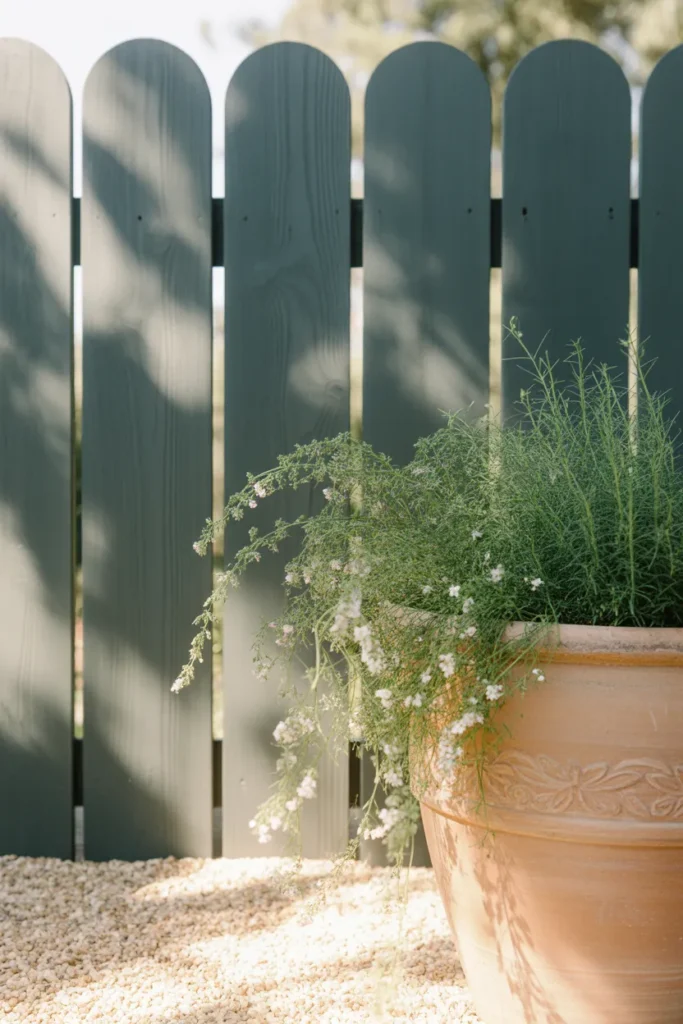
Paint the Fence Dark
Counterintuitive but true: a fence painted soft black, deep charcoal, or rich forest green visually recedes. Pale fences scream “boundary.” Dark fences disappear, and your plants pop in front of them. Sherwin-Williams Tricorn Black or Behr Black Suede are the go-to picks.
Use One Accent Color, Repeated
Pick a single accent color (terracotta, sage green, soft mustard) and repeat it 3 times in 3 places: a cushion, a planter, a throw. The eye reads the repetition as cohesion, which makes the yard feel curated, not cluttered.
Stick to Warm Neutrals on Hardscape
Cream pea gravel, sand-toned pavers, weathered cedar, light terracotta. These warm neutrals reflect light and feel like an extension of the indoors. Cool gray concrete reads as cold and small.
Budget vs Splurge: Side-By-Side Picks for the 5 Biggest Items
Save this mini-table to your phone before your next Target run.
| Item | Budget Pick (Under $50) | Splurge Pick ($150+) |
|---|---|---|
| Bistro set | Target Threshold 3-piece, ~$89 | Crate & Barrel rattan set, $499+ |
| Outdoor rug | Amazon polypropylene 5×7, $45 | Pottery Barn Chilewich, $299 |
| Fire pit | Walmart steel 24-inch, $45 | Solo Stove Bonfire 2.0, $349 |
| Planter (large) | IKEA Daksjus, $25 | West Elm fluted concrete, $189 |
| String lights | Solar Edison 48ft Amazon, $22 | Brightech LED commercial-grade, $79 |
The honest answer? In our testing, splurge fire pits and planters earn their price (they last 5+ years and look better year 3 than year 1). String lights and outdoor rugs do not; the budget versions hold up just fine for 2 to 3 seasons.
Common Mistakes to Avoid in a Small Backyard
These are the traps we see Pinterest readers fall into every season.
1. Buying furniture sized for a normal yard. That 7-foot sofa from your living room collection? It will eat 60% of your patio. Scale down ruthlessly. Loveseats, bistro sets, and folding chairs are your friends.
2. Going too symmetrical. Matching pots flanking everything makes a small yard feel formal and boxy. Cluster in odd numbers and let asymmetry do the work.
3. Ignoring the vertical plane. Most readers furnish at floor level only. The fence, the wall, and the air above the table are real estate too. Hang planters, mount shelves, string lights overhead.
4. Choosing too many materials. Three different paver patterns, plus a wood deck, plus river rocks, plus brick edging. The eye reads chaos. Pick two materials max and repeat them.
5. Forgetting the lighting layer. A yard with one porch light is a yard nobody uses after 8 PM. Layer string lights overhead, a path light or two, and one lantern on the table.
6. Skipping the soft layer. Hardscape only is a parking lot. Add cushions, a throw, an outdoor rug, and at least three live plants per 100 square feet. The 70/30 rule again.
A Weekend-by-Weekend Plan to Refresh a Small Yard for Under $200
If you want a clear path, here’s the exact order we’d run it:
Weekend 1 ($60): Clear the yard, pour pea gravel on the worst patch, hang the outdoor mirror, plant 3 thrifted terracotta pots with herbs.
Weekend 2 ($70): Hang solar string lights, add a 5×7 outdoor rug, paint the fence dark (one quart, $25, covers about 100 square feet).
Weekend 3 ($70): Add the bistro set or two folding chairs with cushions, place one statement planter with a dwarf tree, hang a vertical planter with herbs.
Total: under $200 for a full visual refresh.
How to Make a Small Backyard Feel Private
Privacy is the second-biggest small yard problem after square footage.
- Bamboo or willow roll screens attached with zip ties (renter-safe) along the worst-exposed fence line
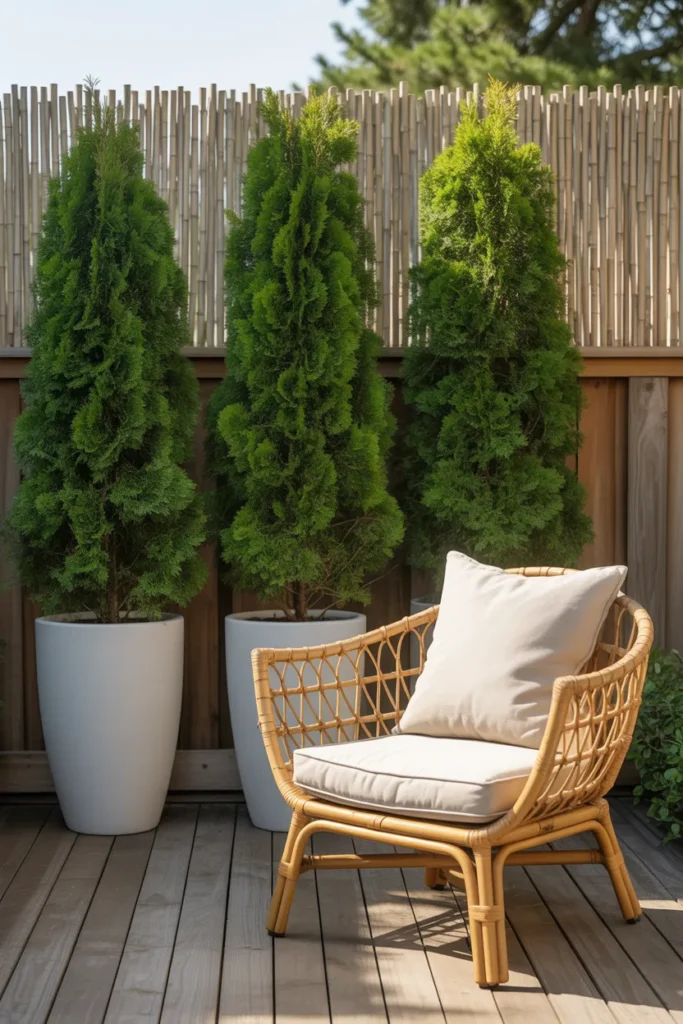
- Tall planters with arborvitae or dwarf cypress as a living wall, 6 feet tall in 24-inch planters
- A pergola with climbing vines that creates a roof and side coverage at once
- Strategic outdoor curtains on a tension rod under a covered patio (Amazon, $30 to $50)
For renters, the planter-and-bamboo combo gives you 6 to 7 feet of privacy without touching the fence.
Seasonal Notes for a Small Backyard
Your yard should shift across 4 seasons in a small space because there’s nowhere to hide a “dead zone.”
- Spring (March to May): Refresh cushions, plant cool-season herbs (parsley, cilantro, lettuce), pressure-wash the patio
- Summer (June to August): Peak string-lights season, run the cantilever umbrella, swap cushions to lighter linens
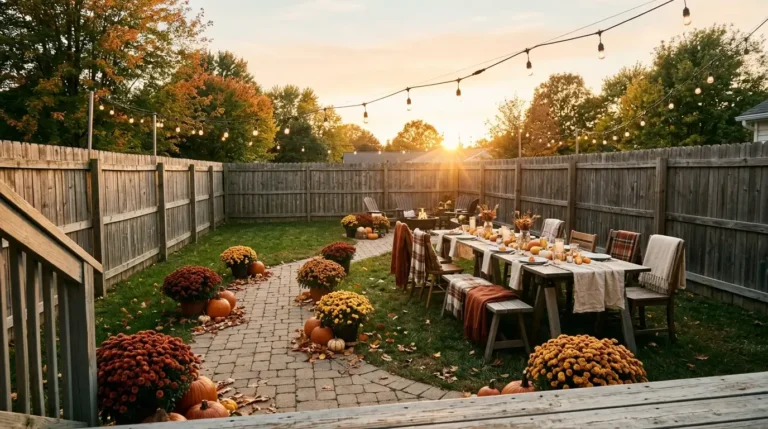
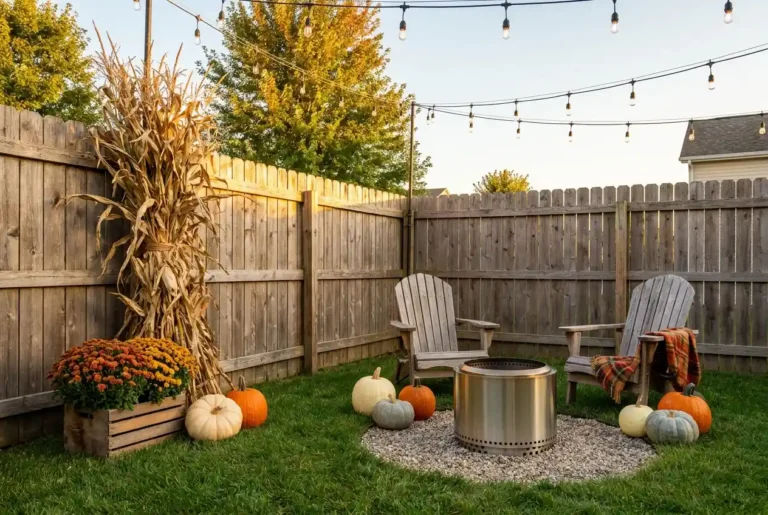
- Fall (September to November): Fire pit comes out, add a wool throw or two, switch herbs to chrysanthemums and ornamental kale
- Winter (December to February): Add evergreen wreaths to the fence, keep solar lights running, store cushions in a deck box
FAQ
How do I make a small backyard feel bigger?
Use four design tricks together for the strongest effect: paint the fence a dark recessive color, hang a mirror on the fence opposite seating, set furniture at an angle (not parallel to the fence), and follow the 70/30 rule (70% soft material, 30% hardscape). Layered lighting overhead also creates an “outdoor ceiling” that makes the space feel like a defined room rather than a leftover strip.
What is the rule of 3 in landscaping?
The rule of 3 means grouping plants, planters, and decor objects in odd numbers, ideally threes. Three pots in graduated heights, three matching lanterns, three repeated plants along a border. The eye reads odd-number groupings as natural and intentional. Even numbers feel forced. It’s the fastest way to make a yard look professionally styled with zero design training.
What is the 70/30 garden rule?
The 70/30 rule is a small-yard design guideline where about 70% of the visible space is soft, living material (plants, lawn, groundcover, vines, climbing greenery) and 30% is hard surfaces (patio, gravel, decking, walkways). In tiny yards, people tend to flip this and pave over too much, which makes the yard feel like a parking lot. Aim for 70/30 and the same square footage feels twice as alive.
How do I do this in a small space or rental?
Every idea in this guide has a renter-friendly execution. Use heavy-duty 3M outdoor command strips for mirrors and string lights, freestanding bamboo screens with zip ties for privacy, freestanding planters instead of in-ground beds, and a Toja Grid pergola system that’s removable. Skip anything that requires drilling into the fence, slab, or siding. Most of these ideas pack into a U-Haul when the lease ends.
What is the budget version of a small backyard makeover?
Under $200 in three weekends: pea gravel ($9), outdoor mirror from HomeGoods ($15), solar string lights ($22), thrifted terracotta pots ($15), 5×7 outdoor rug ($45), bistro set from Target ($89). That’s roughly $195 and covers the highest-impact changes (gravel patio, depth illusion, lighting, plants, rug, seating). Add cushions and herbs over time as budget allows.
What if I do not have a fence?
Use freestanding privacy elements instead. Three to five tall planters with arborvitae or dwarf cypress create a living wall. A pergola with climbing vines defines vertical edges. A bamboo screen anchored in a heavy planter box gives you 6 feet of privacy without touching a property line. A “garden room” defined by an outdoor rug and an umbrella also tricks the eye into reading boundaries that aren’t structurally there.
How long does a small backyard refresh take?
A weekend-by-weekend approach gets a tiny yard fully refreshed in 3 weekends, roughly 12 to 18 hours of total work. A single-day refresh (gravel, mirror, string lights, three pots, one bistro set) takes about 6 hours including a Home Depot run. Bigger projects like installing a pergola or paving a full patio run 2 to 4 weekends depending on whether you DIY or hire help.
The Takeaway
A small backyard isn’t a smaller version of a normal yard. It’s its own design problem with its own rules. Stick to the 70/30 ratio, group in threes, paint the fence dark, layer your lighting, and let one or two splurge anchors (the fire pit, the cantilever umbrella) do the heavy lifting while everything else comes from Target, Amazon, and the thrift store.
Save this post to your “Backyard 2026” Pinterest board so you can come back to the budget vs splurge table on your next Home Depot run. And if you want help styling the rest of the space, our trending garden inspiration ideas for 2026 post covers what’s actually working in real yards this year.
Now go pour the gravel. Your future iced-coffee mornings will thank you.