
Small Backyard Patio Ideas That Make 100 Square Feet Feel Like 200

Most small backyard patio ideas fail for the same boring reason. The patio isn’t too small. It’s too full.
You can lay gorgeous bluestone, hang the prettiest lights on the block, and still end up with a space that feels like a waiting room. Meanwhile your neighbor with the identical 10×10 slab somehow hosts six people and it feels roomy. The difference is almost never budget. It’s floor.
Here’s the promise. You’ll get a measurable rule for how much furniture your patio can actually hold, plus real 2026 costs for three surface options. You’ll also get fixes that work if you rent and can’t put a shovel in the ground. No mood board vagueness. Numbers you can take outside with a tape measure.
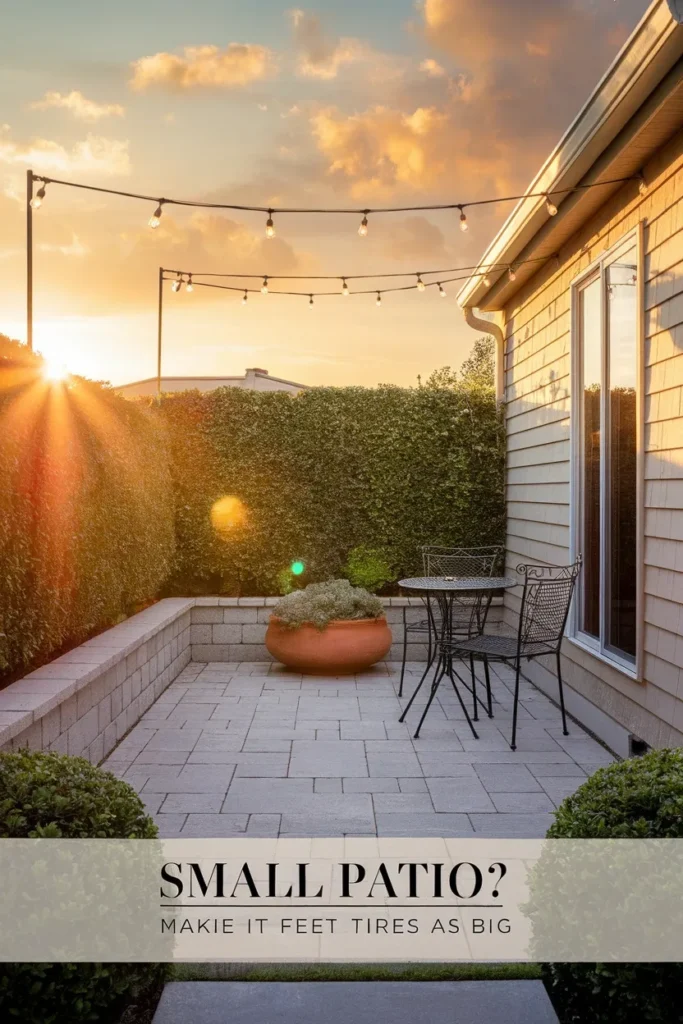
The One-Third Floor Rule: The Only Small Patio Math You Need
Why Small Patios Feel Cramped, and the Fix Nobody Measures
Walk onto a crowded patio and your brain does something specific. It looks for the floor, finds none, and reports back that the room is small. That’s it. That’s the whole mechanism.
Designers call it visual weight. You don’t need the jargon. You just need to know that the eye measures a space by how much uninterrupted ground it can see, not by the property line.
Angi classifies a small patio as 50 to 100 square feet and says that footprint comfortably handles dining for two to four people. Sounds tight. It isn’t, as long as the furniture respects the floor.
Which brings up the thing every competing article skips. They all tell you to “create a functional layout” and then show you a photo. Nobody hands you a number.
The Rule Itself
So here’s the number.
The One-Third Floor Rule: on any patio under 200 square feet, at least one third of the paved surface stays completely clear. No furniture legs, no planters, no grill, no cooler. Everything you own shares the other two thirds.
That’s it. It sounds almost too simple to matter, and it is the single change that makes the biggest visual difference in a tight yard. The clear third is what your eye reads as “room.” Fill it and the patio shrinks, no matter how nice the pavers are.
Grab a tape and check yourself against this:
| Patio size | Total sq ft | Furniture gets (2/3) | Clear floor to protect (1/3) | What honestly fits |
|---|---|---|---|---|
| 8 x 8 | 64 | 42 sq ft | 22 sq ft | Two chairs, one small side table |
| 10 x 10 | 100 | 66 sq ft | 34 sq ft | Bistro set for two, or a loveseat plus two stools |
| 10 x 12 | 120 | 80 sq ft | 40 sq ft | Four-seat dining set, and that’s the whole program |
| 12 x 14 | 168 | 112 sq ft | 56 sq ft | Dining set plus one narrow lounge chair |
Measure your furniture footprint the lazy way: length times width of each piece, including the chairs pushed in. Add it up. If the total crosses two thirds of your slab, something goes.
Most people are shocked by that last column. A 10×12 patio can hold a four-top dining set and nothing else. Not a dining set plus a lounge chair plus a plant stand plus a bar cart. The rule is unglamorous and it works.
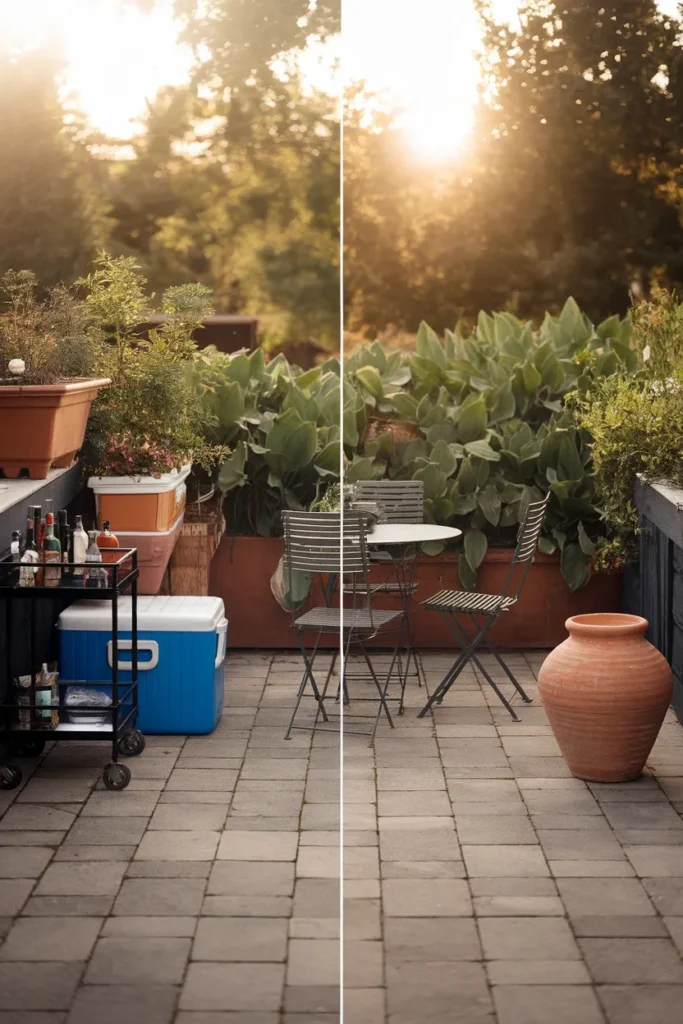
Start With the Floor: What Three Surfaces Actually Cost in 2026
Before the pretty stuff, the ground. A patio surface sets the ceiling on how finished the whole space reads, and the price gap between options is wider than most people expect.
Concrete pavers. A DIY paver patio runs $5 to $10 per square foot in 2026, according to HomeGuide’s cost data. On a 10×10 that’s $500 to $1,000 in materials. Hiring it out roughly doubles the number: $950 to $1,700 for the same 100 square feet. Pavers give you the crispest edges and the best resale read.
Pea gravel. The budget champion by a mile. Bagged pea gravel runs $5 to $8 per half cubic foot bag, or $45 to $80 per cubic yard in bulk. That shakes out to roughly $0.50 to $1.50 per square foot in material. A 10×10 gravel patio can land under $150 if you haul it yourself. It drains beautifully. It also migrates into the grass if you skip the edging, so budget for steel or composite edging from the start.
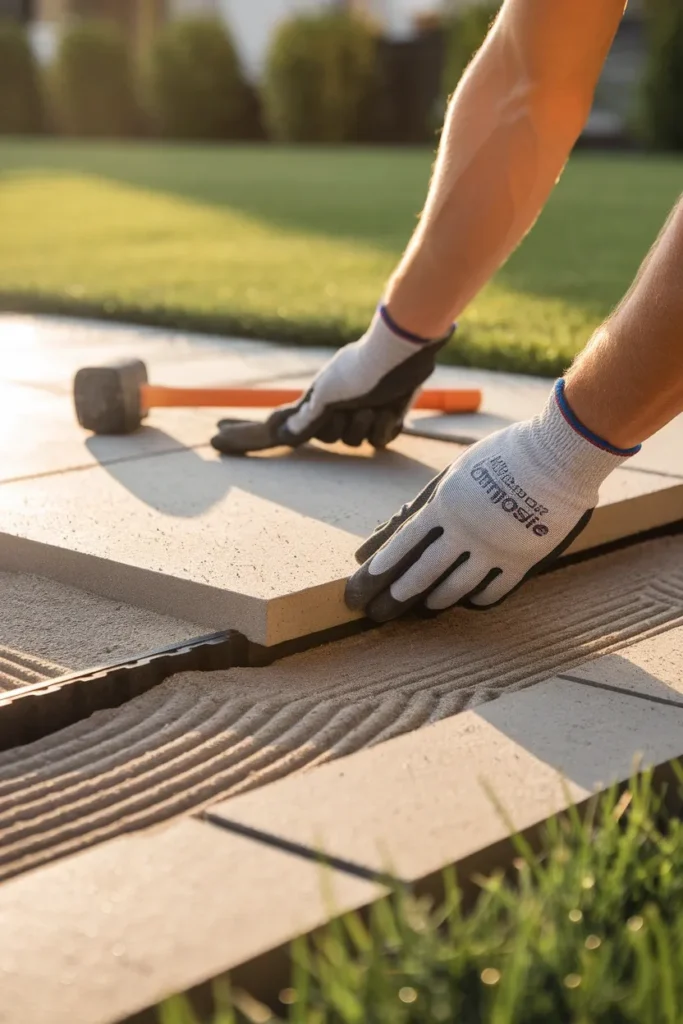
Interlocking deck tiles. The renter answer. They snap over existing concrete with no adhesive, no mortar, no permission slip. Expect roughly $3 to $8 per square foot depending on whether you go acacia wood or composite. They pop up in an afternoon when you move.
A quick honest take that runs against most of the internet: for a patio under 120 square feet, gravel often looks better than budget pavers. Cheap concrete pavers in a small space read as cheap concrete pavers. Gravel reads as intentional. If your budget forces a compromise, compromise toward gravel with good edging rather than toward the thinnest paver on the pallet. There are other cheaper patio surfaces worth pricing out if neither of those three fits your yard.
One more floor decision that matters more than the material: keep it one material. Two surfaces on a small patio chop the space into pieces, and every seam your eye lands on makes the patio read smaller.
Furniture That Earns Its Square Footage
Every piece on a small patio has to justify the floor it eats. That’s a harsher standard than most people apply at the store.
Three rules that survive contact with reality:
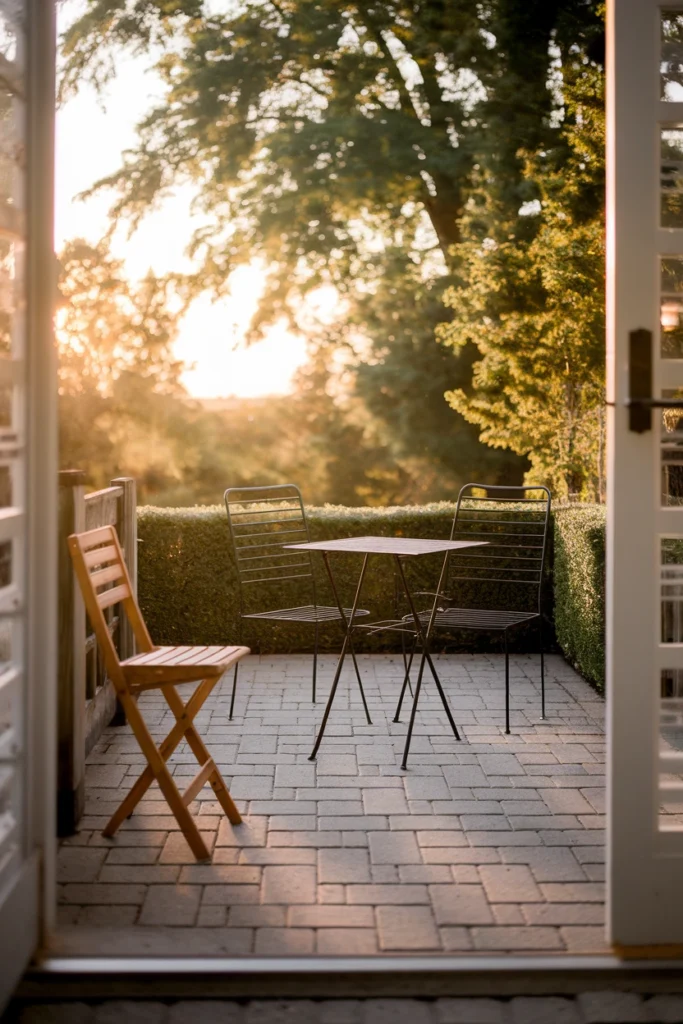
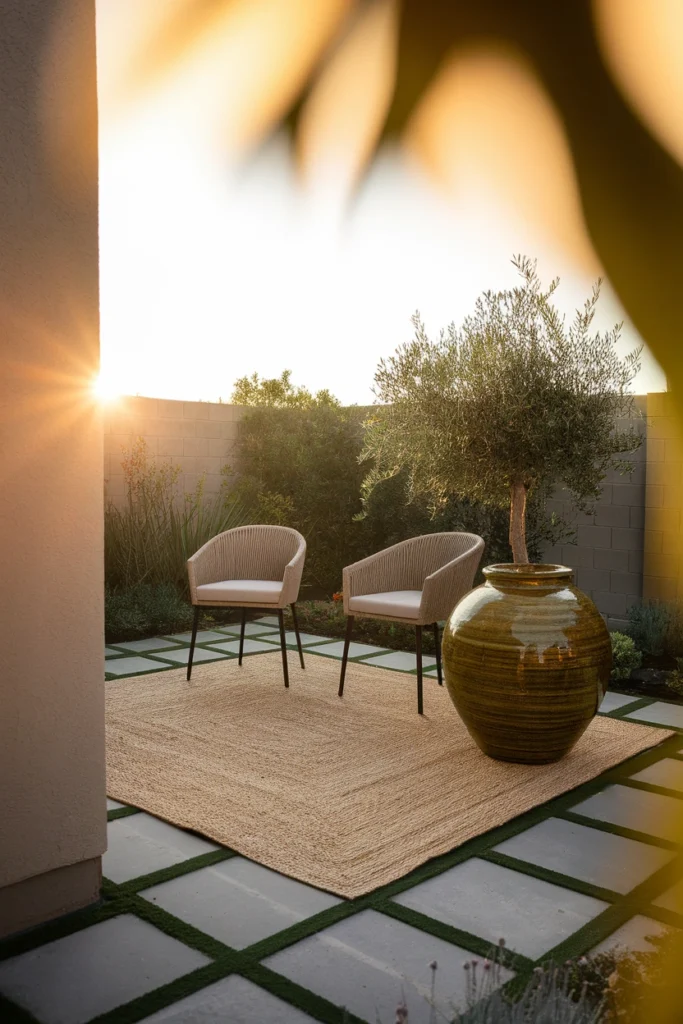
Legs beat skirts. Furniture you can see under makes a patio feel bigger, because your eye keeps traveling to the floor beyond. A solid-base sectional stops the eye dead. A slim metal bistro set with visible legs lets it run. This single swap does more for perceived space than any paint color.
Round beats rectangular in tight corners. A 36-inch round table seats four in less usable floor than a 36×60 rectangle, and it kills the corner-bump problem when someone squeezes past. Rectangles win only when the patio is long and narrow.
Nesting and folding beats permanent. Two folding chairs stored against the fence are two chairs you deploy when guests come and remove when they leave. Your everyday patio stays at two seats and feels generous. Your party patio expands to six.
Skip the sectional. I know it’s what the catalogs push for outdoor lounging, and on a patio under 120 square feet it’s the fastest way to lose your clear third. A loveseat plus two lightweight stools gives you the same seat count with half the visual mass.
The pieces matter less than the arrangement, honestly. How you arrange outdoor furniture determines whether a 100 square foot patio feels like a room or a hallway.
Go Vertical Without Crowding the Walls
Plants are where small patios get greedy. A row of pots along the perimeter feels like the right move and quietly steals four square feet of your clear third.
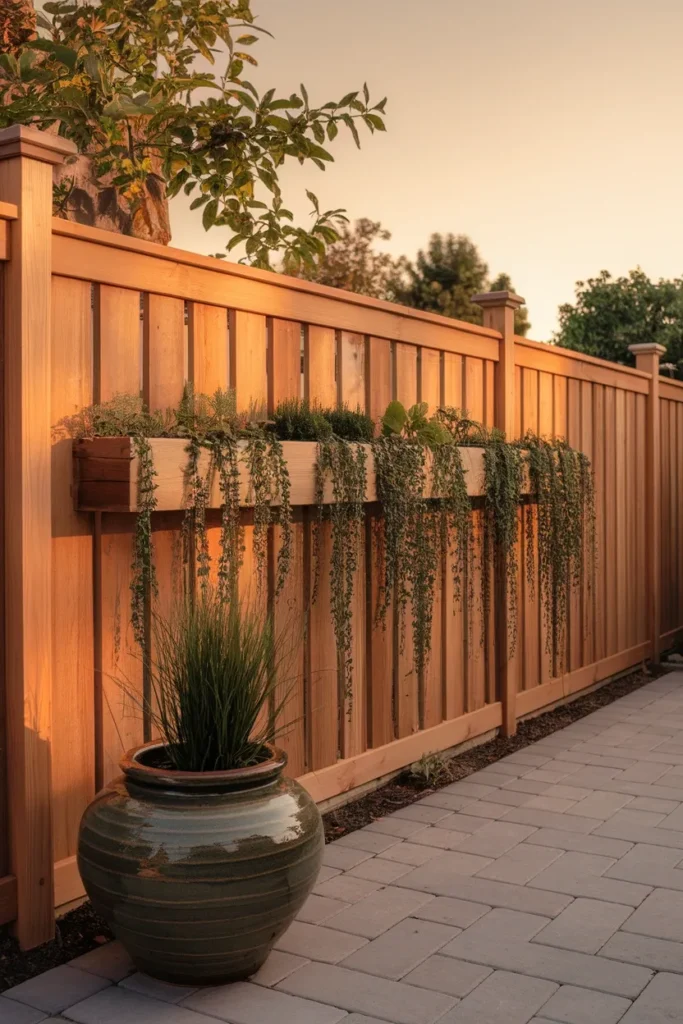
Go up instead. A wall-mounted planter rail, a narrow ladder shelf, or a trellis with a climbing vine gives you the same green volume while the floor stays open. Vertical planting is the one competitor tip that’s genuinely right, and every one of the top-ranking articles mentions it.
Where they stop short is size. A too-small container is the number one reason patio plants sulk and die by August. The container sizing guidance from Colorado State Extension is blunt about minimums. Tomatoes, peppers, and cucumbers want five-gallon containers. Lettuce, carrots, and green onions manage in three-gallon pots. Their watering rule is just as useful. Water until roughly ten percent drains out the bottom, which flushes the salt buildup that kills container plants slowly.
Pick plants that suit your climate rather than your mood board. Check your USDA hardiness zone before you buy anything perennial, because a Zone 7 plant in a Zone 5 pot is a one-season purchase. Containers also run colder than ground beds through winter, so most gardeners treat a container perennial as roughly one zone less hardy than the tag claims.
Two or three large containers beat eight small ones. Fewer, bigger pots read as intentional and hold moisture far longer between waterings. A cluster of tiny terracotta pots reads as clutter, and it needs watering every single day in July.
Light It Low, and Shade It Smart
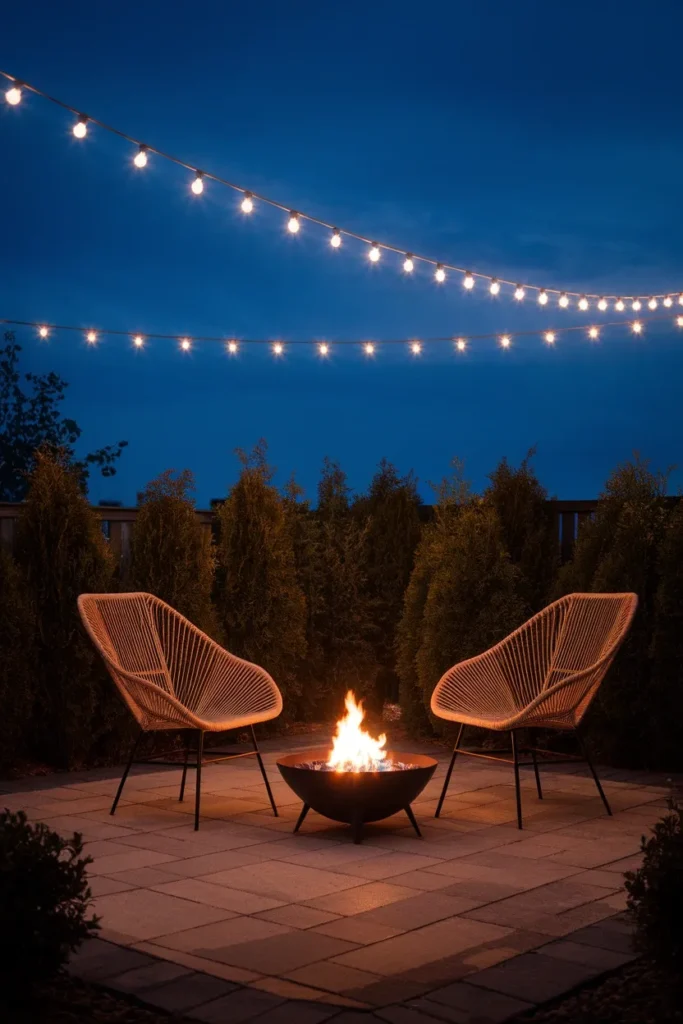
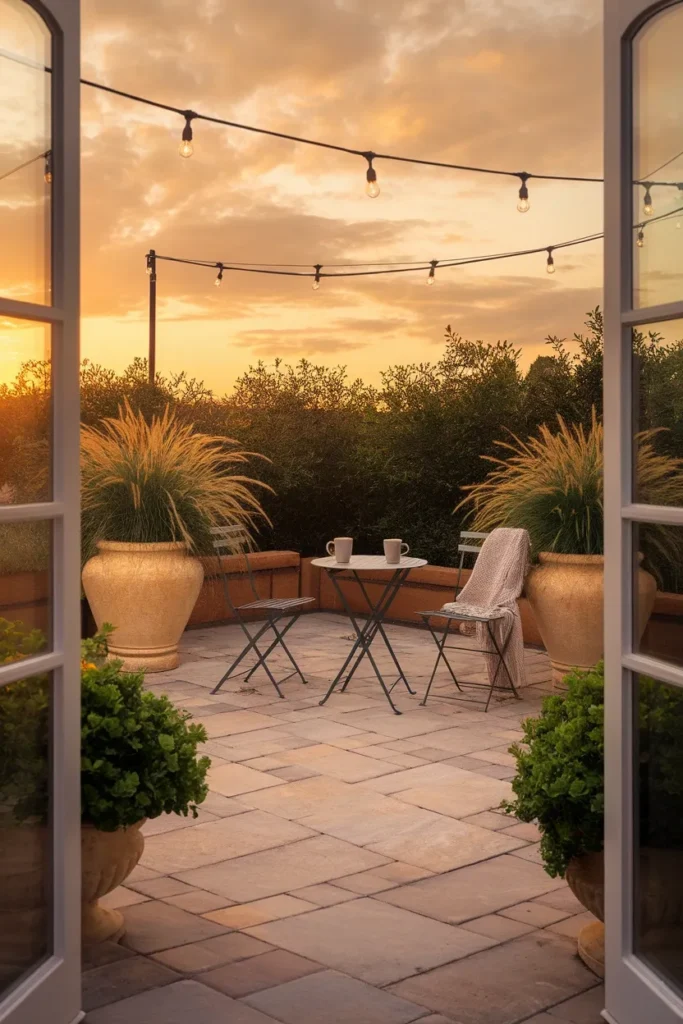
Lighting is the cheapest square footage you will ever buy. A patio lit from above at head height gains a ceiling, and a space with a defined ceiling reads as a room rather than a leftover corner of the yard.
String lights do this better than anything else at the price. A Brightech Ambience Pro solar set, 27 feet with 12 warm white Edison bulbs, runs about $27 at Home Depot and needs no outlet at all. Two sets crossed over a 10×10 patio in an X pattern will cover it completely for under $60.
Hang them at seven to eight feet. Higher and the ceiling effect disappears. Lower and tall guests wear them.
Then break the one lighting mistake almost everyone makes: skip the bright white bulbs. Warm white in the 2200K to 2700K range makes skin and wood and terracotta look good. Anything cooler turns your patio into a parking garage and flattens every texture you paid for.
Layer a second light source at floor level. A pair of solar lanterns tucked at the patio edge, or a low fire feature, pushes light outward and makes the boundary feel further away than it is. A Solo Stove Bonfire 2.0 measures 19.5 inches across and 14 inches tall, weighs about 23 pounds, and runs roughly $175 at Target. It’s small enough for a 100 square foot patio and light enough to carry off when you want the floor back. Keep any fire feature on a non-combustible surface with clearance on all sides, and check your city’s open-flame rules before the first burn.
Daytime Shade Without a Roof
Shade is the flip side of the same problem, and it’s where small patios go wrong in the opposite direction. A full pergola on 100 square feet eats the sky and drops the ceiling to eight feet everywhere at once. The patio gets cooler and noticeably smaller.
Cheaper and lighter options that keep the space open:
- A triangular shade sail, roughly $30 to $70, anchored at three points with one corner high and one low. The diagonal line adds movement and only covers the part of the patio that actually bakes.
- A cantilever umbrella, in the $120 to $300 range. The offset pole means no table leg fighting for your clear third, and it swings out of the way by dinner.
- A single deciduous tree in a large container. Japanese maple and serviceberry both stay small enough for a patio pot. You get summer shade and winter sun, which matters more than people expect in Zones 5 and 6.
Shade only where the afternoon sun lands. Track it for one weekend before you buy anything, because most people shade the wrong half of the patio and then wonder why they still can’t sit out at four o’clock.
Privacy That Doesn’t Shrink the Room
Here’s the tension nobody resolves well. You want privacy from the neighbor’s second-floor window, and every privacy solution is a wall, and walls make small spaces smaller.
The fix is depth, not height. A solid six-foot fence three feet from your chairs feels like a box. The same fence with a slim planted layer in front of it feels like a garden edge, because your eye now reads two planes instead of one flat barrier.
Practical versions, cheapest first:
- Outdoor curtains on a tension rod or cable. Roughly $25 to $60 a panel. They move in the breeze, which keeps them from reading as a wall, and they pull open when you want the space back.
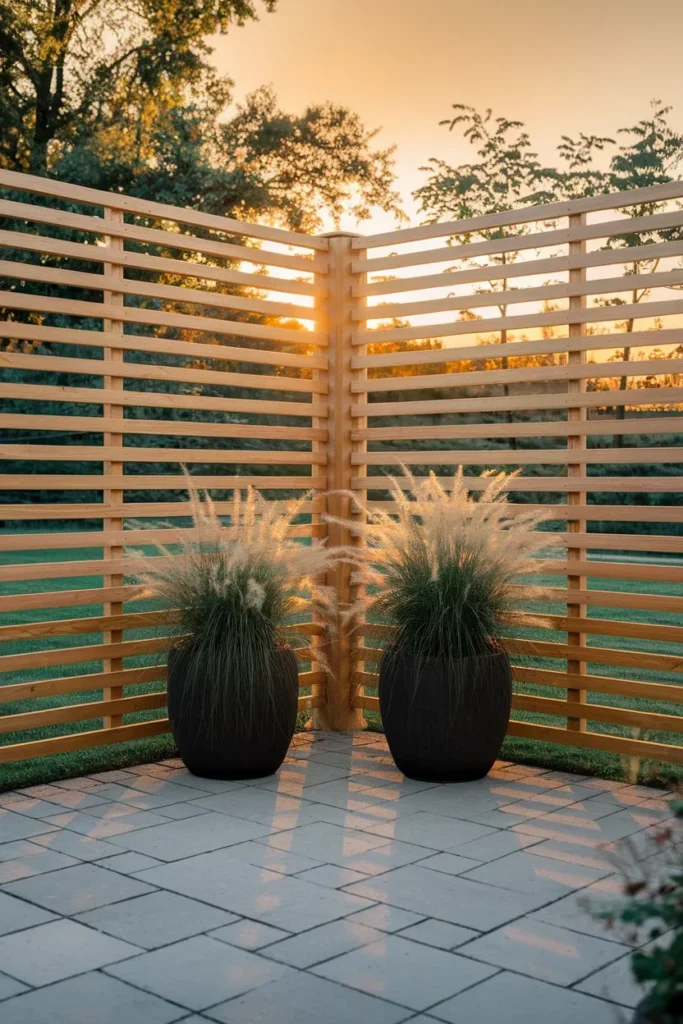
- Tall grasses in narrow pots. Miscanthus or feather reed grass in a 14-inch pot gives you five feet of soft screening that sways. Costs a fraction of fencing and takes up eight inches of floor.
- A single slatted panel, not a full run. Screen only the sightline that actually bothers you. Most people fence the whole perimeter when one six-foot section aimed at one window would have done it.
- A climbing vine on wire. Slowest and cheapest. Star jasmine or clematis on a wire grid gives full coverage in two to three seasons for under $40.
That third one is worth sitting with. Walk out to your patio, sit down in the chair you actually use, and look up. Note the one or two spots where you feel watched. Screen those. Leaving the rest open is what keeps the patio breathing, and it’s the difference between a private patio and a bunker.
The Renter and HOA Playbook
Every article ranking for small backyard patio ideas right now assumes you own the concrete and can dig into it. Plenty of readers can’t. Here’s the version that leaves no trace.
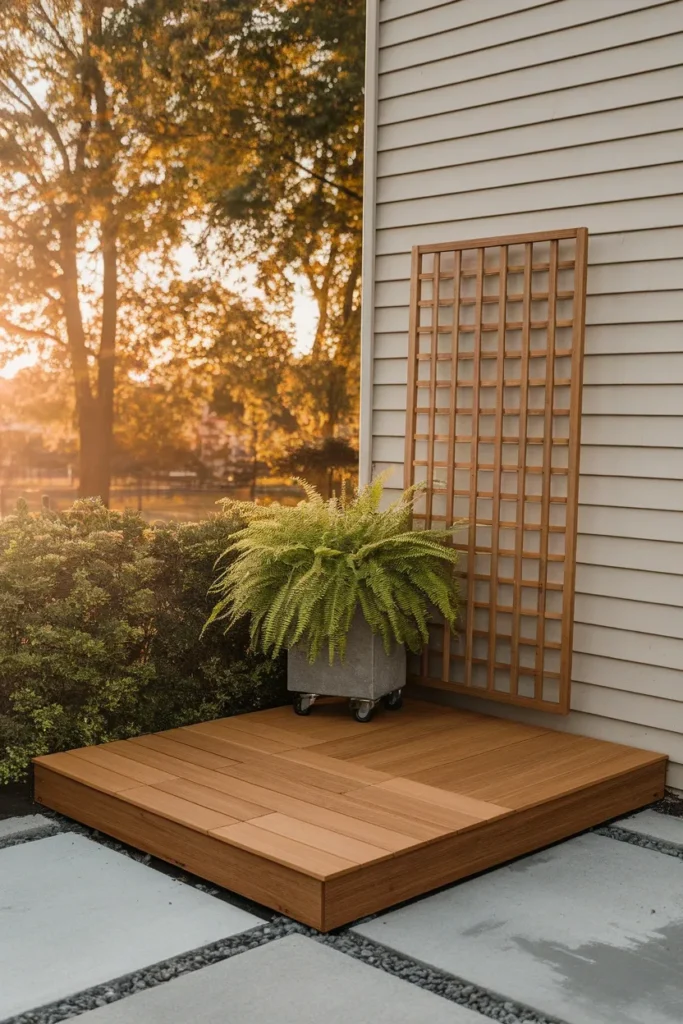
Floor: interlocking deck tiles over the existing slab. They snap together, they need no adhesive, and they lift out in an hour on move-out day. Acacia wood tiles warm up an ugly gray concrete pad faster than anything else at the price.
Walls: freestanding trellis panels weighted in planters, or tension-rod curtains inside an existing balcony frame. Nothing screwed into siding, nothing anchored to a fence you don’t own.
Lighting: solar string lights hung on adhesive outdoor hooks rated for the weight, or draped over an existing railing. No drilling, no electrician, no HOA form.
Green: everything in containers on casters. Casters mean you can roll the whole garden to the truck.
Fire: a propane fire bowl instead of wood burning. Many HOAs and most rental leases permit propane where they ban wood, since there are no embers and no smoke complaint from the unit next door. Read your lease before you buy, though, because a few ban open flame outright.
The whole renter kit lands somewhere between $400 and $900 depending on how much floor you’re covering, and every dollar of it leaves with you. If you’re working with a narrow rental footprint, these townhouse patio setups run on the same reversible logic.
Six Mistakes That Quietly Cost You Square Footage
Some of these will sting a little.
- Pushing all the furniture to the walls. It feels like it opens the middle. It actually draws a hard rectangle around the perimeter and announces exactly where the patio ends. Pull seating in four to six inches and the boundary softens.
- An undersized outdoor rug. A 4×6 floating in the center of a 10×10 patio chops the floor into a small island surrounded by leftovers. Either go big enough that the front furniture legs sit on it, or skip the rug entirely.
- Too many small pots. Covered above, and worth repeating because it’s the most common one. Three big containers, not nine little ones.
- Mixing three surface materials. Pavers plus gravel plus a wood platform on 100 square feet reads as chaos. Pick one, maybe two.
- Cool white lighting. 5000K bulbs will undo a $1,000 paver install in one evening.
- Buying furniture before measuring the clear third. The most expensive mistake on the list, and the easiest one to avoid with ten minutes and a tape measure.
Number one surprises people the most. Perimeter furniture is such a strong instinct, and it’s the same instinct that makes small living rooms feel like waiting areas.
Your First Weekend, In Order
If you want a sequence rather than a menu, run it in this order. Each step makes the next one cheaper.
Saturday morning. Empty the patio completely. Everything off, including the pots. Measure the slab, calculate your clear third, and write both numbers on your phone.
Saturday afternoon. Bring back only what fits in two thirds. Live with the gap for an hour before you decide it’s too empty, because a bare patio always looks bare until the lights go up.
Saturday evening. Hang the string lights at seven to eight feet. This is the step where the space stops being a slab and starts being a room, and it takes about forty minutes.
Sunday. Add green. Two or three large containers, sized per the extension guidance above, placed at the edges rather than the middle.
The following weekend. Solve exactly one privacy sightline. Then stop. Most small patios are finished at that point and the owners keep buying anyway.
Total spend if you already own furniture: usually under $200. If you’re starting from a bare concrete pad and buying seating too, the realistic range is $600 to $1,400, with the floor being the swing factor.
Frequently Asked Questions
How do I make my small patio look bigger?
Clear the floor. Keep at least one third of the paved surface completely open, choose furniture with visible legs instead of solid bases, and stick to a single surface material. Hanging string lights at seven to eight feet adds a perceived ceiling, which makes the whole space read as a room rather than a leftover corner.
What size should a small patio be?
Angi puts the small category at 50 to 100 square feet, which handles dining for two to four people. A 10×10 is the most common size and works well. Below about 60 square feet you’re choosing between dining and lounging, not fitting both.
What is the cheapest way to build a small patio?
Pea gravel, by a wide margin. Material runs roughly $0.50 to $1.50 per square foot, so a 10×10 can land under $150 if you spread it yourself. Budget for edging on top of that, because gravel without a hard edge migrates into the lawn within a season.
What is the cheapest patio material overall?
Pea gravel first, then decomposed granite, then interlocking deck tiles at $3 to $8 per square foot. DIY concrete pavers sit higher at $5 to $10 per square foot in materials, and professional paver installation roughly doubles that.
How do I make my small patio cozy?
Warm light under 2700K, one soft textile like an outdoor rug or a throw, and a defined overhead line from string lights or a shade sail. Cozy is mostly a lighting and texture problem, not a furniture problem, and it’s cheap to solve.
How do I get privacy on a small patio without making it feel closed in?
Screen one sightline instead of the whole perimeter. Sit in the chair you actually use, look up, find the one or two spots where you feel watched, and screen only those with a slatted panel, a curtain, or tall grasses in pots.
Can I do any of this if I rent?
Yes, all of it. Interlocking deck tiles over the existing slab, freestanding trellis panels weighted in planters, solar string lights on adhesive hooks, and containers on casters. Nothing drills, nothing digs, and the whole kit moves with you.
Start With the Tape Measure
The best small backyard patio ideas aren’t about buying better things. They’re about buying fewer things and giving them room to breathe.
So before you order anything, go outside with a tape. Measure the slab, do the one-third math, and see how much furniture your patio can actually carry. Most people find they’re already over budget on floor and under budget on light, and fixing that costs about $30 and one Saturday evening.
Try the clear-third test this weekend and see what your patio looks like with a little air in it. If you end up with an arrangement you love, that’s the layout worth building the rest of the space around.
One Comment