Garden Wall Ideas That Add Real Structure and Privacy

Most garden wall ideas floating around Pinterest are gorgeous photos with zero build information attached. You save fourteen of them. Then you stand in your actual yard on a Saturday holding a tape measure, and none of it helps.
So this one is built backward. Materials first, real costs second, the pretty part third. You’ll get nine wall styles that work in a normal American backyard, the four-foot rule that decides whether you need a permit, and what each material actually runs per square foot. If a wall turns out to be more than you want to take on right now, there are other budget privacy solutions for a backyard that get you most of the way there for a fraction of the effort.
A wall is the most permanent thing you can put in a yard. Worth getting right.
Freestanding or Retaining: Which Garden Wall Are You Actually Building?
Everything downstream depends on this one distinction, and almost nobody explains it before showing you photos.
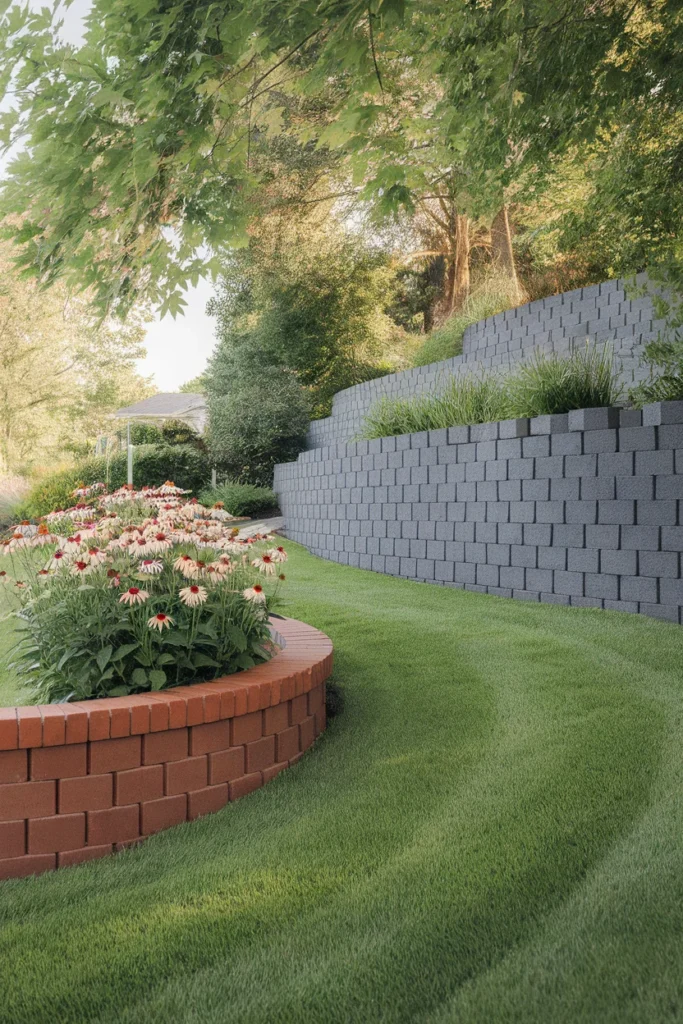
A freestanding wall holds up nothing but itself. Both faces are exposed. It divides space, blocks sightlines, or gives a border something to lean against. Think of a low brick edge around a rose bed, or a five-foot stucco panel screening a hot tub from the neighbors.
A retaining wall holds back earth. One face is exposed and the other is buried against soil that wants to move downhill. That soil gets heavy when it rains, and water trapped behind a wall generates pressure that will eventually push the whole thing over. Colorado State University Extension is blunt about it: most retaining wall failures trace back to water or soil moisture behind the wall, not to the blocks themselves.
Here’s the practical difference. A freestanding garden wall two feet tall is a weekend project with a shovel and a level. A retaining wall two feet tall needs a compacted gravel base, drainage stone, and probably a perforated pipe. Same height, completely different job.
Most yards need both, in different spots.
The Four-Foot Fork: Three Questions Before You Move a Single Stone
I use a quick test I call the Four-Foot Fork. It sorts any wall project into one of three lanes in about ninety seconds, before you’ve spent a dollar. Answer three questions, take the most cautious result you land on, and build accordingly.
| Question | Answer | Your lane |
|---|---|---|
| Is soil pushing against one face? | No | Green |
| Yes, and exposed face is under 4 ft | Yellow | |
| Yes, and exposed face is over 4 ft | Red | |
| How tall is the exposed face? | Under 3 ft | Green |
| 3 ft to 4 ft | Yellow | |
| Over 4 ft | Red | |
| Where does water behind it drain? | Nowhere, it’s freestanding | Green |
| Gravel backfill plus weep holes or pipe | Yellow | |
| Onto a neighbor’s lot, a foundation, or a drive | Red |
Green lane. Build it yourself over a weekend. No permit in most towns.
Yellow lane. Buildable by a confident DIYer, but call your building department first and plan drainage before you plan looks.
Red lane. Hire an engineer, then a contractor. This Old House puts the common threshold plainly: many jurisdictions require permits for walls over four feet tall, and a structural assessment above that height is standard advice. Colorado State University Extension says the same thing about engineered design above four feet.
Four feet is not a national law. It’s the number that shows up most often in municipal code, which is why it’s a useful trigger for picking up the phone. Your town might say three. Your HOA might say two and have opinions about color.
Working on a grade changes the math again, and if that’s your situation, the full approach to terracing a sloped yard with retaining walls covers the slope-percentage measuring and stepped-terrace planning that a single wall post can’t.
Stone Garden Wall Ideas That Look Older Than the House
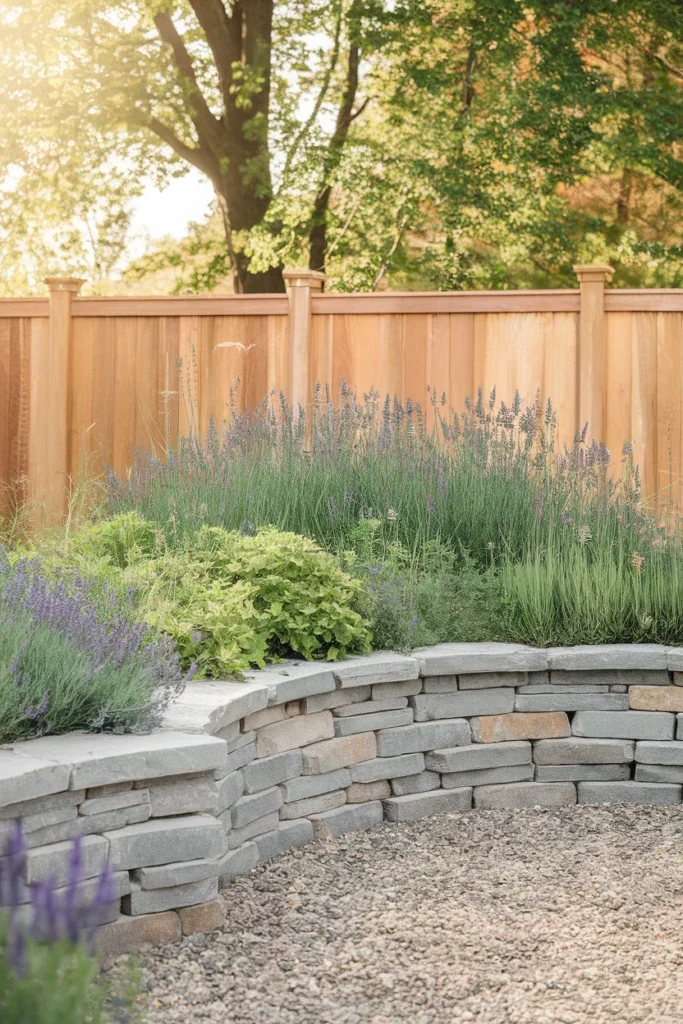
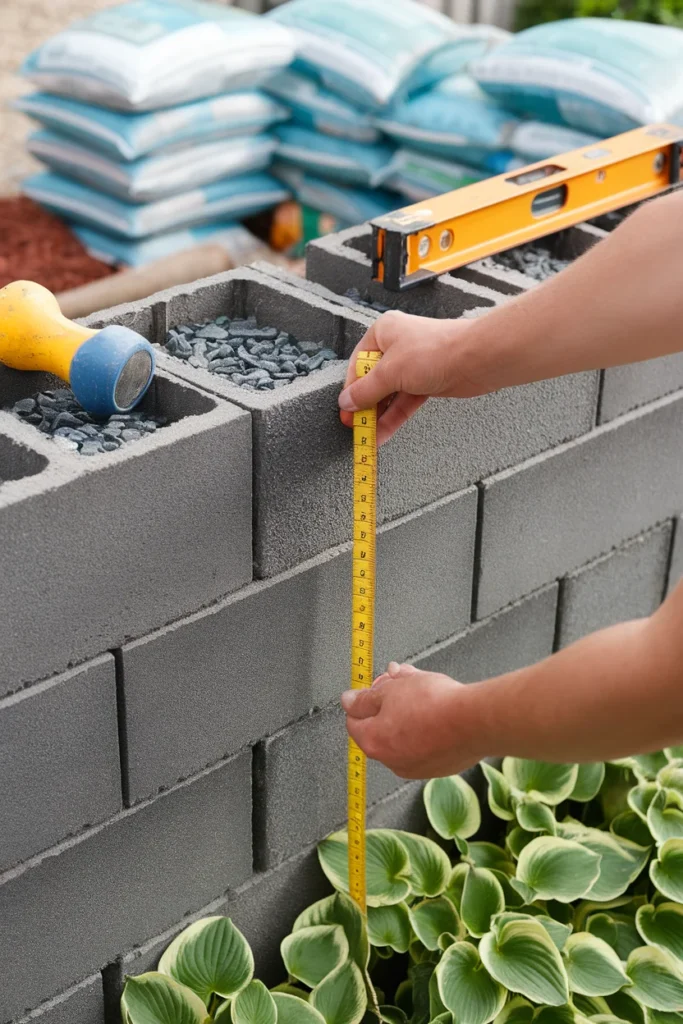
Of all the garden wall ideas here, stone is the one that makes a new yard feel settled fastest. A dry-stacked fieldstone wall reads like it’s been there since the property was farmland, and it costs less than people assume because you’re skipping mortar, footings, and a mason.
The University of Connecticut’s Stone Wall Initiative publishes the technique, and it comes down to three rules worth memorizing.
Batter the faces. Slant each face inward one inch for every twelve inches of height. The two faces lean toward each other and gravity locks the wall together.
One stone over two. Every stone you set must bridge the joint of the two beneath it. Continuous vertical seams are where walls split.
Heart the middle. Build two faces back to back and fill the core with the odd stones that aren’t good enough to be face, top, or end pieces. Nothing goes to waste.
The trench is shallower than you’d guess. Roughly three inches deep with about two inches of gravel for seating and drainage. Top stones should be large and flat, because they’re what keeps rain from working into the courses.
Fieldstone runs $70 to $200 per ton, and one ton covers seven to ten square feet of wall face. I ordered by the pallet the first time instead of by the ton and ended up two tons short on a nine-foot run, which meant a second delivery fee for a very small pile of rock. Order fifteen percent more than the math says.
Style variations worth stealing: a curved stone wall instead of a straight one (curves read as intentional and hide uneven grade), a wall with one deliberate gap for steps, or mixed stone sizes with the biggest pieces at the base for visual weight.
Brick and Concrete Block Garden Wall Ideas for Clean Lines
If stone reads rustic, brick and block read architectural. They also make the most sense for anyone who wants a predictable result, because the units are identical and the courses stack level without any sorting.
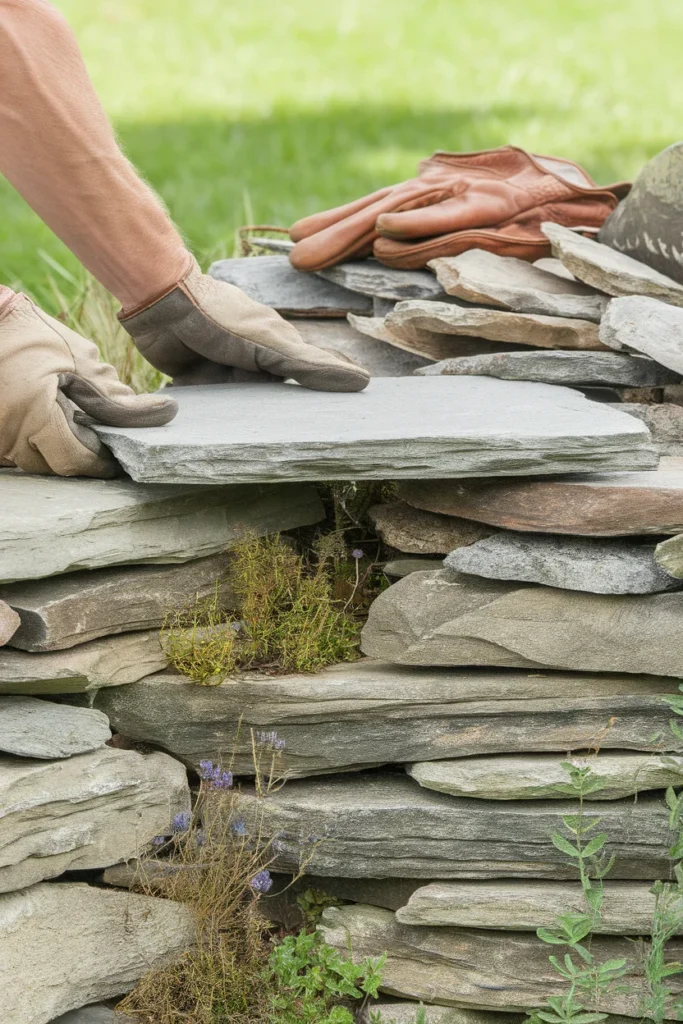
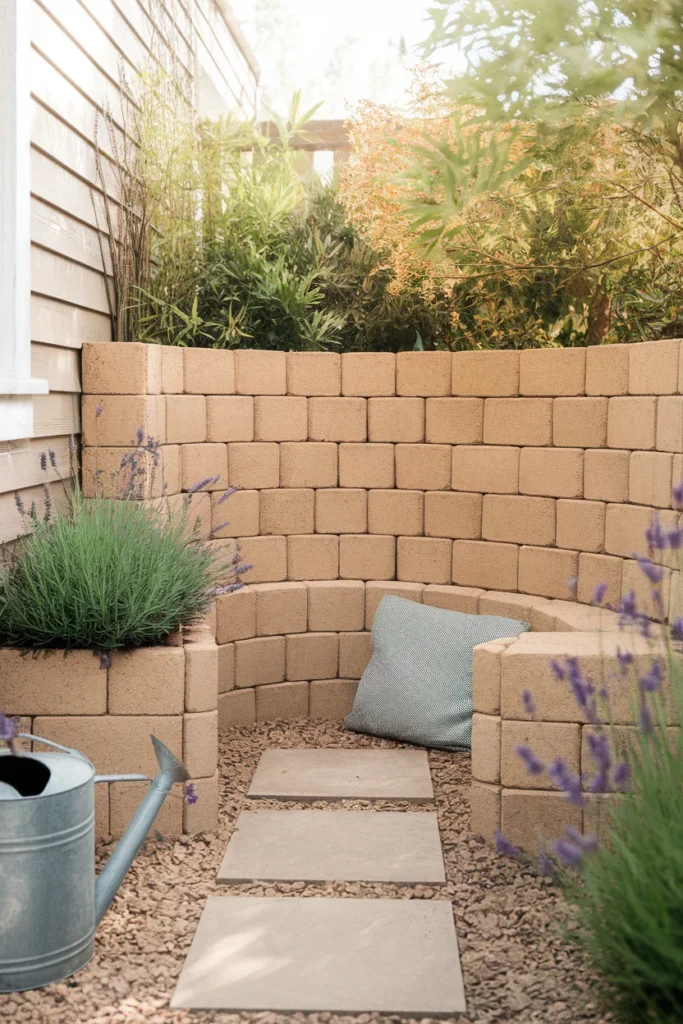
Segmental concrete block is the workhorse. Lowe’s carries Pavestone RumbleStone in a 3.5-inch by 10.5-inch by 7-inch tumbled unit in gray slate and tan brown, and the same aisle stocks RockWall, Garden Wall, Legacy, Insignia, and Hewn lines. Menards and Home Depot carry comparable systems. The tumbled edges matter more than people think: a crisp-edged block reads as commercial, while a tumbled one reads as garden.
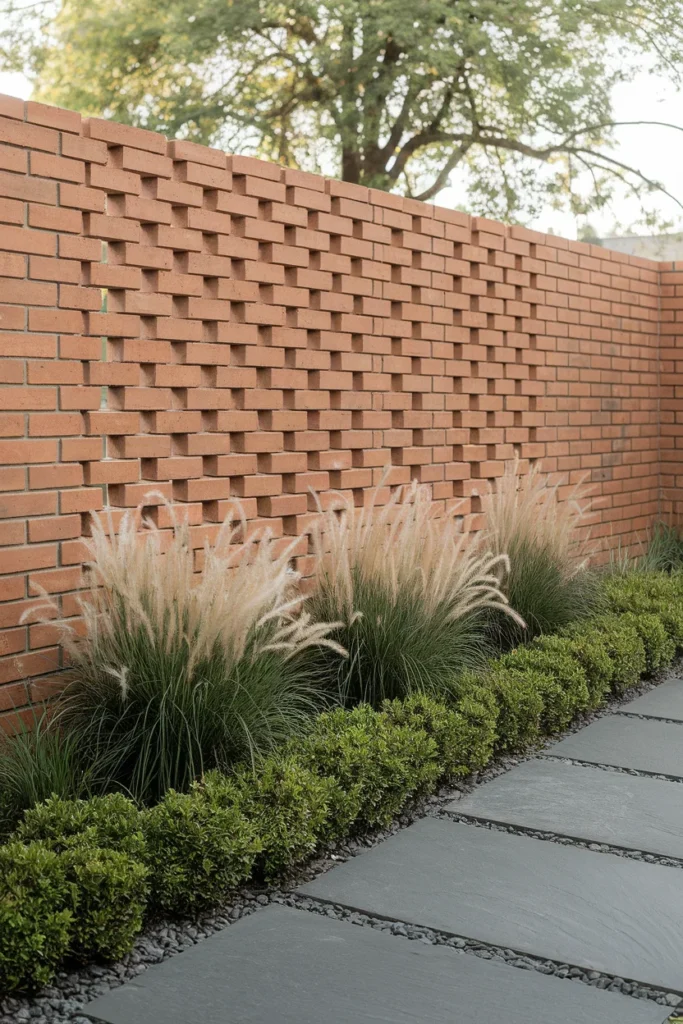
Brick garden wall ideas worth trying: a soldier course along the top for a finished cap, a slanted or stepped brick wall that follows a grade change, or a pierced brick pattern where every fourth brick is omitted to let light and breeze through. That last one is a beautiful privacy solution because it screens sightlines without turning your yard into a box.
For the base, Oregon State University Extension is specific. Lay a four to six inch layer of three-quarter-inch minus crushed base in the trench, then a one-inch layer of coarse sand on top of that. Bury the first course one inch for every eight inches of finished wall height. Their full walkthrough on how to build a landscape retaining wall is the best free build guide I’ve found, and it covers the geogrid requirement above four feet that most blog posts skip entirely.
Painted block deserves a mention. A concrete block wall finished in warm white or soft charcoal costs almost nothing to change and completely resets the mood of a small yard.
Gabion, Corten, and Timber: The Materials Most Lists Skip
Scroll ten roundups of garden wall ideas and you’ll see stone, brick, and block on every single one. These three barely show up, which is exactly why they make a yard look like nobody else’s.
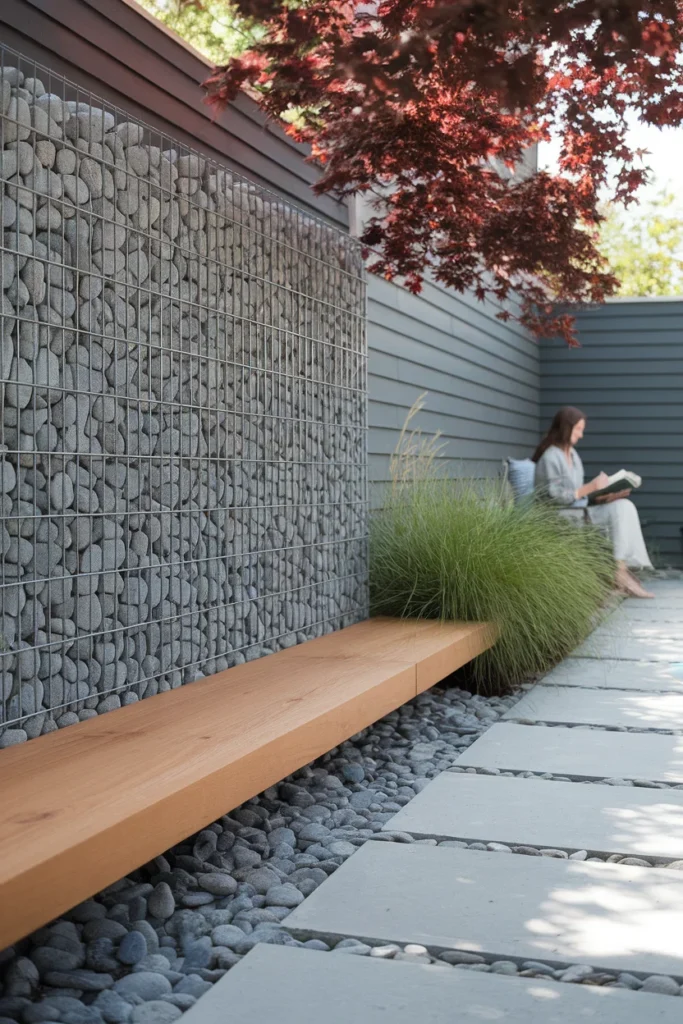
Gabion walls. Galvanized wire cages filled with stone. They’re the cheapest real wall you can build, running $10 to $40 per square foot of face or roughly $20 to $160 per linear foot, and they drain themselves by design because water passes straight through the rock. No weep holes, no pipe, no hydrostatic pressure. Fill them with river cobble for a soft look or crushed granite for a sharp one. My first gabion run taught me that a ton of fill stone does not go nearly as far as it sounds like it should, so measure the cage volume in cubic feet and buy accordingly rather than eyeballing it.
Corten steel. Weathering steel that rusts to a stable orange-brown patina and then stops. It gives you a two-inch-thin wall profile where a block wall would eat eight inches, which matters enormously in a narrow side yard. Metal walls sit at the top of the price range, $40 to $150 per square foot, so this is usually a short accent run rather than a full boundary.
Timber. Pressure-treated landscape timbers or reclaimed sleepers, $15 to $30 per square foot. Warm, fast to install, and honest about its lifespan: expect fifteen to twenty years, less where soil stays wet. Good for raised planting terraces, less good as a forever wall.
One combination worth trying: gabion base with a thick cedar cap that doubles as bench seating. It costs a fraction of a masonry seat wall and looks deliberate.
Living Garden Wall Ideas for Privacy Without the Bulk
A masonry wall tall enough to give real privacy is expensive, heavy, and in a lot of towns illegal above six feet without review. Plants solve the same problem for less money and no permit.
Three approaches, in order of effort.
Climbers on a trellis. The cheapest privacy screen there is. Star jasmine, clematis, and climbing hydrangea will cover a six-foot panel in two to three growing seasons. Mississippi State University Extension makes one point that saves a lot of grief: keep trellis and wire systems standing six to eight inches off the wall face so air can circulate behind the foliage. I mounted a set of panels flat against a fence years ago and spent the following summer looking at black mildew streaks and half-rotted stems.
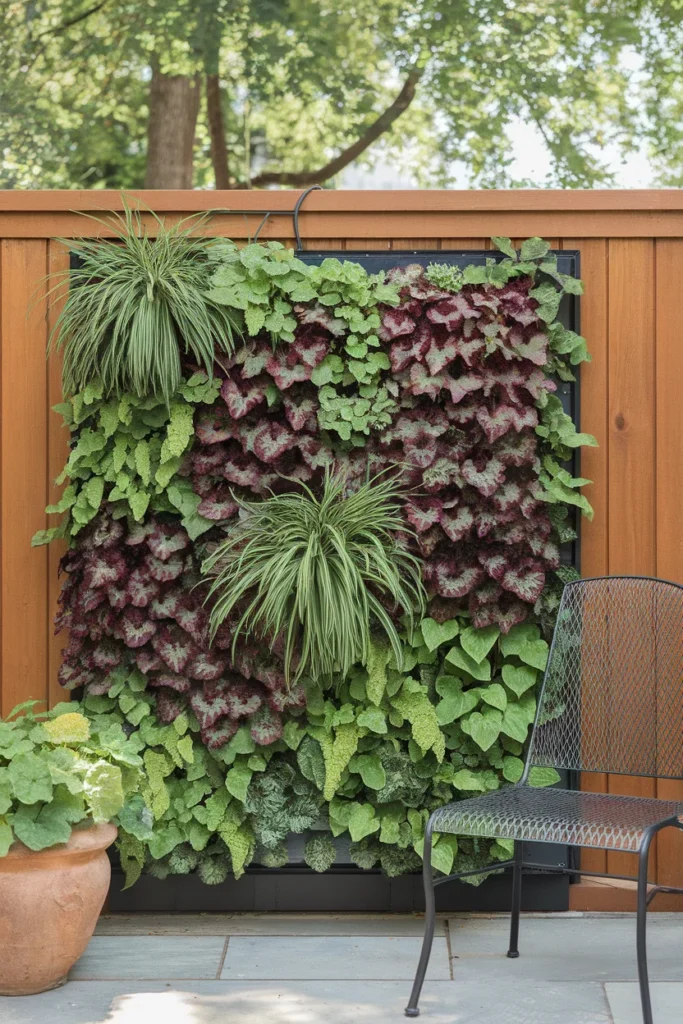
Modular green wall panels. Planted pockets or trays mounted to a structure. Extension guidance recommends lightweight soil, supplemental drip irrigation, and plants that stay under a foot tall so the panel doesn’t get top-heavy. Their guide to choosing plants for a green wall also notes the felt-fabric systems that swap soil entirely and suit ferns, mosses, sedums, and epiphytes like bromeliads.
Planter walls. Stacked or built-in planters that function as a wall while holding soil. A row of tall Bloem or fiberglass planters filled with columnar arborvitae reads as a wall from ten feet away and can be rearranged whenever you want.
If the living option is the direction you’re leaning, the full method for building a living plant wall covers the no-drill mounting, irrigation, and shade-versus-sun plant selection in more depth than fits here.
Cheap Garden Wall Ideas: What Every Material Actually Costs
Not one of the top-ranking articles on this topic prints a single dollar figure, which is strange given that “cheap garden wall ideas” is one of the most common ways people search for this. So here’s the table.
These are 2026 US ranges per square foot of exposed wall face, materials plus professional installation. Halve the low end if you’re doing the labor yourself.
| Material | Cost per sq ft installed | Best for |
|---|---|---|
| Gabion | $10 to $40 | Cheapest real wall, self-draining |
| Concrete block | $15 to $40 | Predictable, DIY friendly |
| Timber | $15 to $30 | Warm look, 15 to 20 year life |
| Poured concrete | $20 to $45 | Modern, needs a contractor |
| Dry-stack stone | $20 to $85 | Rustic, no mortar, high labor |
| Boulder | $25 to $50 | Fast coverage, needs machinery |
| Brick | $30 to $60 | Classic, best for low walls |
| Corten steel | $40 to $150 | Thin profile, accent runs only |
Two reference points that make the numbers concrete. A retaining wall averages $35 to $65 per square foot all in. A ten-foot run at two feet tall lands somewhere around $700 to $1,300 professionally installed, and a four-foot version of the same run roughly doubles that.
Labor is typically $40 to $80 per hour, or $10 to $30 per square foot, which is where DIY savings actually live. Buying stone yourself runs $10 to $55 per square foot or $60 to $550 per ton depending on type.
Renter friendly walls you can take with you
Nobody covers this, and plenty of people renting a house with a yard still want the privacy.
Skip anything with a footing. Stack RumbleStone or similar units dry on a compacted gravel pad without mortar, and you can pull the whole thing apart in an afternoon. Freestanding gabion cages work the same way. So do rows of heavy planters, which read as a wall visually and move with a hand truck. None of it touches the structure, none of it needs a landlord conversation, and all of it goes in the moving truck.
Drainage, Frost Line, and the Unglamorous Details That Keep It Standing
This is the section that decides whether your wall is still straight in five years. Skip it and you’ll rebuild.
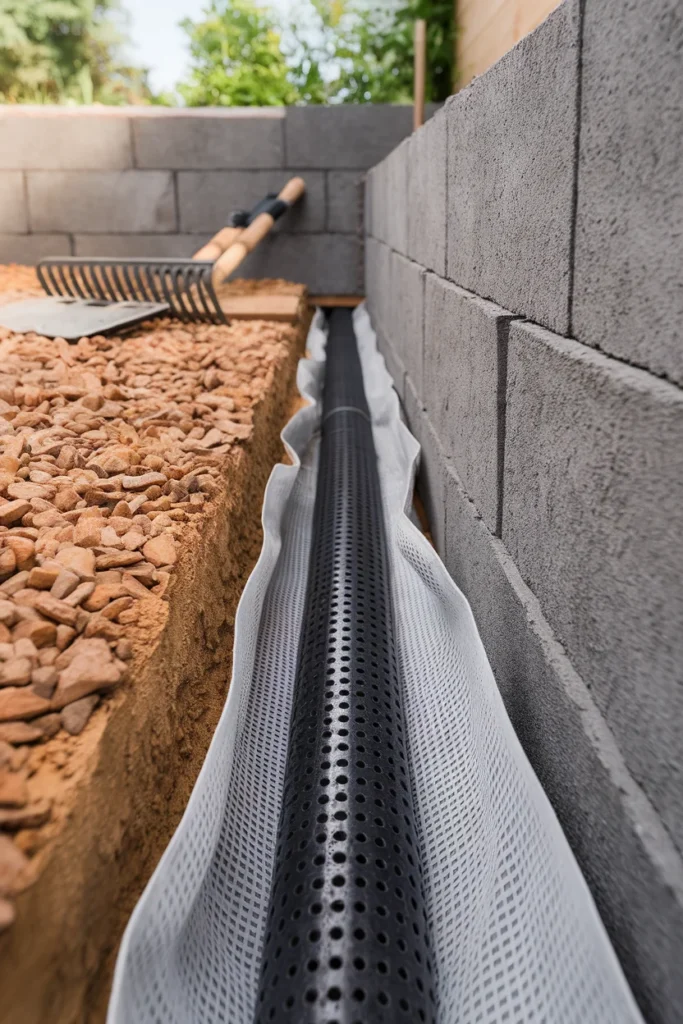
Give water an exit. Behind any retaining wall, backfill with clean crushed gravel rather than the soil you dug out. Gravel lets water drop straight down instead of pooling and pushing. Add a perforated drain pipe at the base wrapped in filter fabric, or leave weep holes in the bottom course, and give the water somewhere to actually go once it arrives.
Dig below your frost line. Footings that sit above the frost line get lifted every winter by expanding soil, and a wall that lifts unevenly cracks. Frost depth varies enormously across the country, from a few inches in the Gulf South to five feet or more in northern Minnesota. Your county building department publishes the number for free.
Compact, then compact again. Loose base material settles under load. Run a plate compactor over the gravel in two-inch lifts rather than dumping six inches at once and hoping.
I learned the frost lesson the expensive way. My first low wall went on bagged sand instead of compacted crushed gravel because it was easier to carry, and by the following April the middle third had risen almost an inch and the top course was visibly wavy. Took a weekend to pull apart and redo properly.
One more from Colorado State University Extension for anyone building taller: foundation material should extend at least one foot beyond both the front and back of the base width, and gravity walls want roughly one deadman anchor per sixteen square feet of exposed face.
What to Plant On Top, In the Face, and at the Base
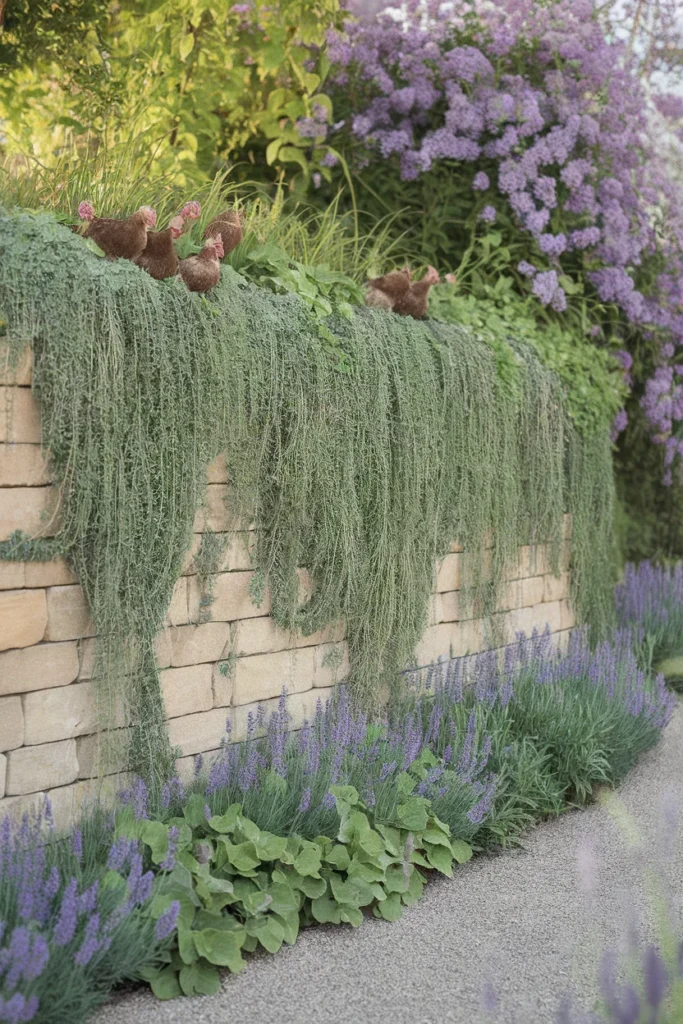
Plant lists in garden wall articles tend to be decorative suggestions with no logic behind them. A wall actually creates three separate growing conditions, and matching plants to the right one is what makes the whole thing look designed instead of decorated.
Before you buy anything, check your zone. The USDA Plant Hardiness Zone Map was updated in 2023 using weather data from 1991 through 2020, and a ZIP code search on the map site takes about ten seconds. Zones run 1 through 13 in ten-degree bands, each split into an “a” and “b” half zone.
On top: spillers. You want plants that cascade over the edge and soften the hard line. Creeping thyme, trailing rosemary, sedum ‘Angelina’, and creeping phlox all work in Zones 5 through 9 and tolerate the fast drainage of a wall top. Feed lightly with Espoma organic granular in early spring and otherwise leave them alone.
In the face: crevice plants. Dry-stacked walls have gaps, and those gaps are prime real estate. Hens and chicks, sempervivum, small ferns in shade, and lewisia will colonize the joints and make a new wall look decades old. Tuck a pinch of potting mix into the crevice, wedge the plant in, and keep it damp for the first month.
At the base: match the exposure. A south-facing wall base bakes because masonry radiates stored heat well into the evening, which suits lavender, salvia, and Mediterranean herbs. A north-facing base stays cool and shaded, so hosta, hellebore, astilbe, and Japanese forest grass are the better call. This is the single most common mistake I see: identical plantings on both sides of the same wall, half of which are struggling by July.
Layer heights so the wall becomes a backdrop. Something tall at the back, mid-height in front of it, spillers at the very front edge.
Frequently Asked Questions
Do I need a permit to build a garden wall?
Usually not for a freestanding wall under three feet, but retaining walls are a different story. Many US jurisdictions require a permit for any wall over four feet of exposed face, and often an engineered drawing on top of that. Height thresholds, setback distances from property lines, and surcharge rules all vary by municipality, so a five-minute call to your local building department before you buy materials is worth it. HOAs frequently have their own rules about height and finish.
What materials are best for building garden walls?
For a first build, segmental concrete block is the most forgiving because the units are uniform and the systems are designed to lock together. Dry-stacked stone gives the best character but takes real patience. Gabion is the value pick and drains itself. Brick suits low, formal walls. Corten steel is for thin accent runs where you cannot spare the width. Match the material to your house so the wall reads as part of the property.
Do you need foundations for a garden wall?
Some form of prepared base, yes, though “foundation” is heavier than what most garden walls need. A dry stone wall wants a shallow trench roughly three inches deep with about two inches of gravel. A block retaining wall wants four to six inches of compacted three-quarter-inch minus crushed base topped with an inch of coarse sand, with the first course buried one inch for every eight inches of finished height. Poured concrete footings below the frost line come into play for tall mortared walls.
How can I make an ugly garden wall look nice?
Paint is the fastest fix, and warm white, soft charcoal, or deep green all read as intentional. Beyond that: mount a slatted cedar screen a few inches off the face, run a wire trellis with star jasmine or climbing hydrangea up it, add a horizontal cedar cap to give the top a finished edge, or hang wall planters and a few Brightech outdoor string lights along the top for evening interest.
Can I build a garden wall on a slope?
Yes, and stepped construction is the standard method. Rather than following the grade at an angle, you build in level sections that step down, keeping each course horizontal. On steeper ground, terracing into two or three shorter walls is usually cheaper and safer than one tall one, since shorter walls often stay below the permit threshold and each terrace gets its own drainage.
How much does a garden wall cost per foot?
Materials plus professional installation run about $35 to $65 per square foot of wall face on average, with gabion at the low end around $10 to $40 and natural stone or steel at the high end. A ten-foot run two feet tall typically lands between $700 and $1,300 installed. Doing your own labor removes roughly $10 to $30 per square foot.
What is the cheapest way to build a garden wall?
Gabion cages filled with locally sourced stone, or dry-stacked concrete blocks set on a compacted gravel pad with no mortar. Both skip the two biggest cost drivers, which are skilled masonry labor and poured footings. Sourcing your fill stone from a local quarry rather than by the bag makes a substantial difference on a longer run.
Where to Start This Weekend
Pick the shortest wall in your yard and build that one first.
Run the Four-Foot Fork on it. If you land in the green lane, you can have a two-foot dry-stacked or block wall finished in a weekend for a few hundred dollars in materials, and you’ll learn more in those two days than in a month of saving photos. Start with the wall that solves an actual problem: a crumbling bed edge, a sightline into a neighbor’s kitchen, a slope that keeps washing mulch onto the patio.
The prettiest garden wall ideas are the ones sitting on a properly compacted base with somewhere for water to go. Everything else is finish.
Which wall are you starting with? Save this one for when you’re standing in the yard with the tape measure, because that’s when the numbers matter.