The Busy Person’s Guide to a Low Maintenance Backyard You Actually Enjoy
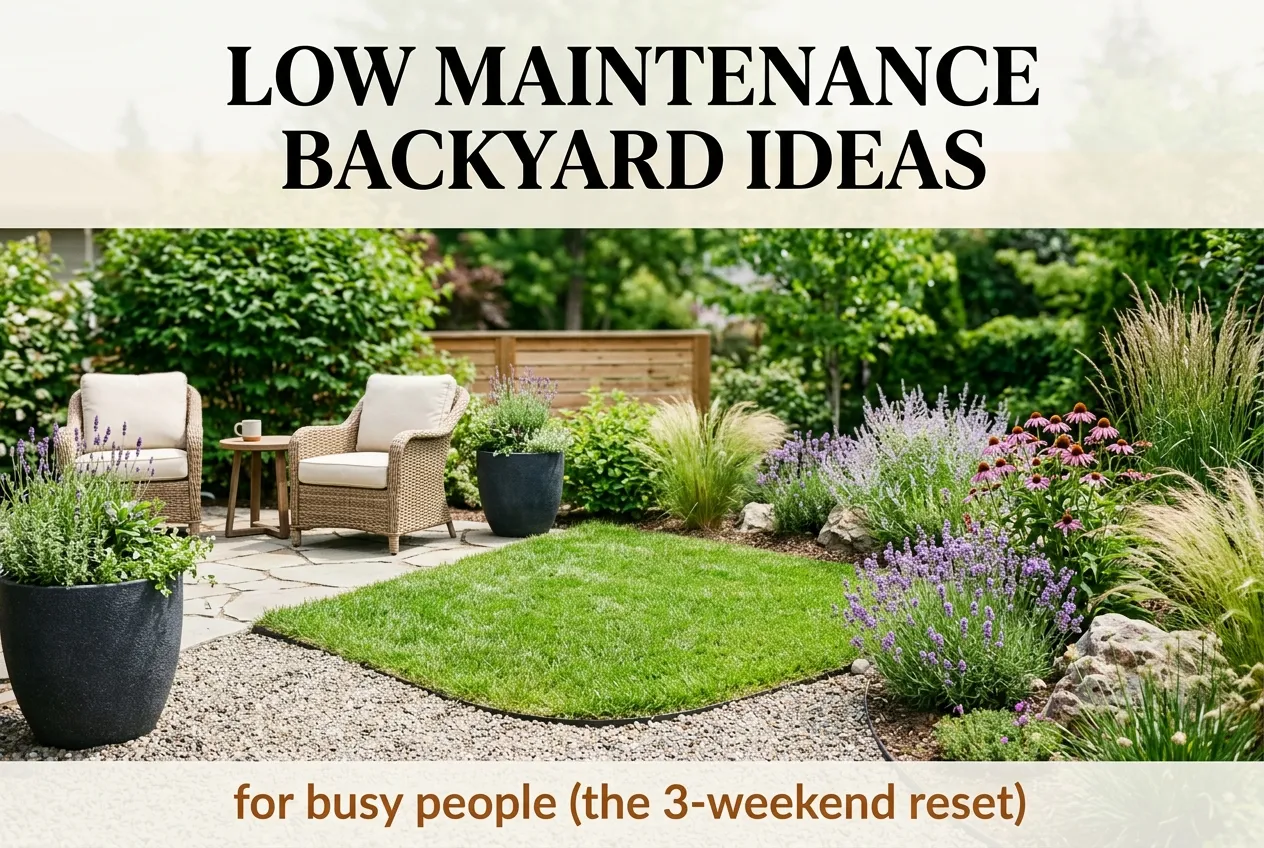
You want a yard that looks great in photos and feels great on a Friday evening. You do not want to spend every Saturday behind a mower. That tension is the whole reason a low maintenance backyard has become one of the most searched outdoor goals for people who work full time, raise kids, or just refuse to hand their weekends to a lawn.
Good news. You can have the pretty part without the punishing part.
This guide is built for the perpetually busy. We will show you which changes cut the most work, which ones look expensive without costing much, and the exact order to tackle them so you finish in three weekends instead of dragging it out all season. No fluff, no filler, just the moves that pay you back in free time.
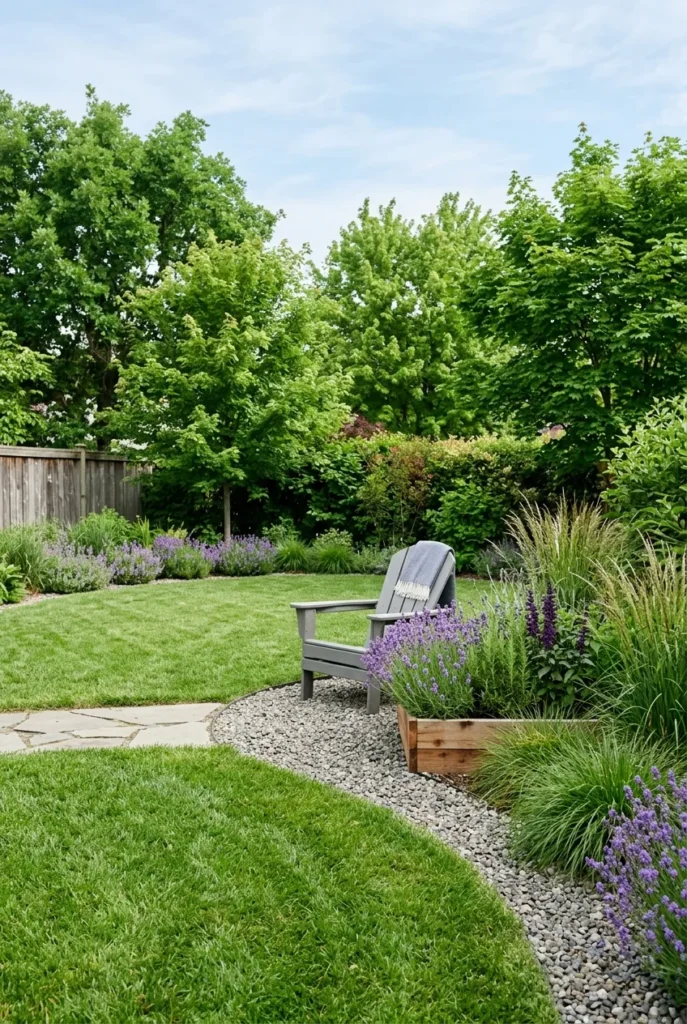
What Makes a Backyard Truly Low Maintenance
Low maintenance does not mean no maintenance. It means you design out the chores that eat time and design in the things that mostly take care of themselves. The trick is knowing which is which.
Three levers do most of the heavy lifting. Shrink the stuff that needs constant care (thirsty lawn, fussy annuals). Replace it with things that hold their looks on their own (hardscaping, native plants, mulch). Then automate the little that remains, like watering.
Here is a quick gut check. If a feature needs weekly attention in summer, it is high maintenance. If it needs a touch-up a few times a year, it is low. Aim to flip as much of your yard as possible into that second bucket.
Before you buy a single plant, check your USDA hardiness zone. The 2023 USDA map divides the country into 10-degree Fahrenheit zones based on 30-year average winter lows, and matching plants to your zone is the single biggest predictor of whether they thrive on autopilot or die on you by August. Most of the US backyard audience gardens somewhere in Zones 5 through 9.
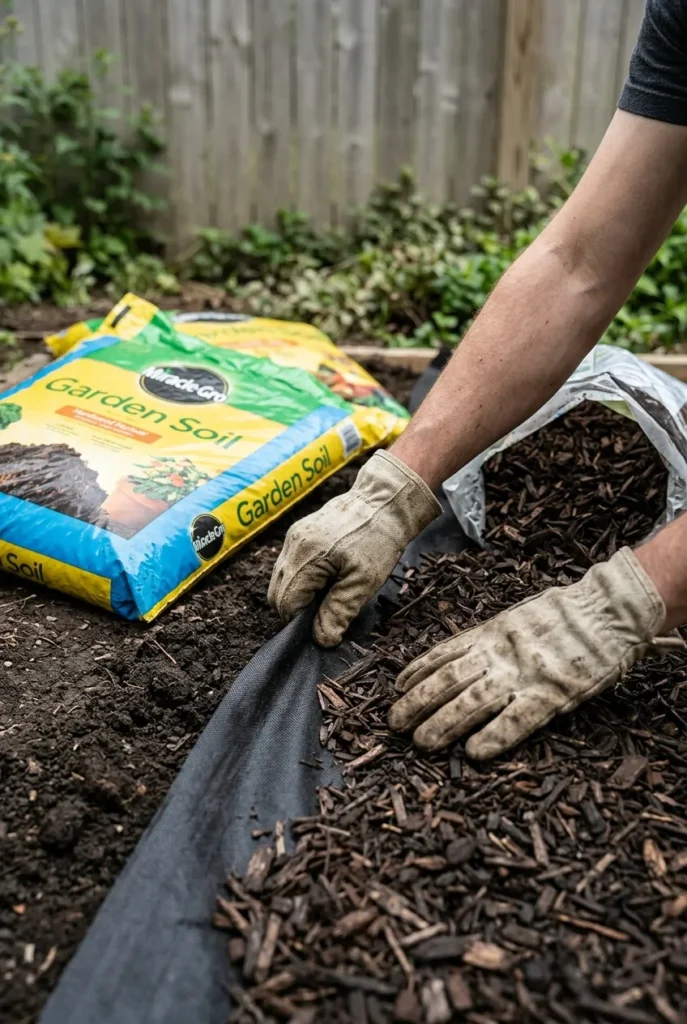
The 3-Weekend Yard Reset (Our Original Framework)
Most guides dump twenty ideas on you and wish you luck. Busy people need an order of operations. So here is the framework we use, and the one we keep coming back to: the 3-Weekend Yard Reset. Weekend one is subtraction, weekend two is structure, weekend three is softening. Do them in that sequence and each step makes the next one easier.
Weekend One is subtraction. You remove the highest-effort stuff first: rip out a chunk of lawn, pull the fussy annual beds, clear the clutter. Nothing new goes in yet.
Weekend Two is structure. You lay the bones that stay put and need almost no care: gravel, pavers, a mulch border, a defined seating spot.
Weekend Three is softening. Now you add the green: native shrubs, ornamental grasses, a few easy-care containers. Because the structure is already down, planting goes fast and looks intentional.
The first time we reset our own yard we skipped weekend one and planted before clearing, and we spent an entire Sunday moving plants we’d put in the wrong spot.
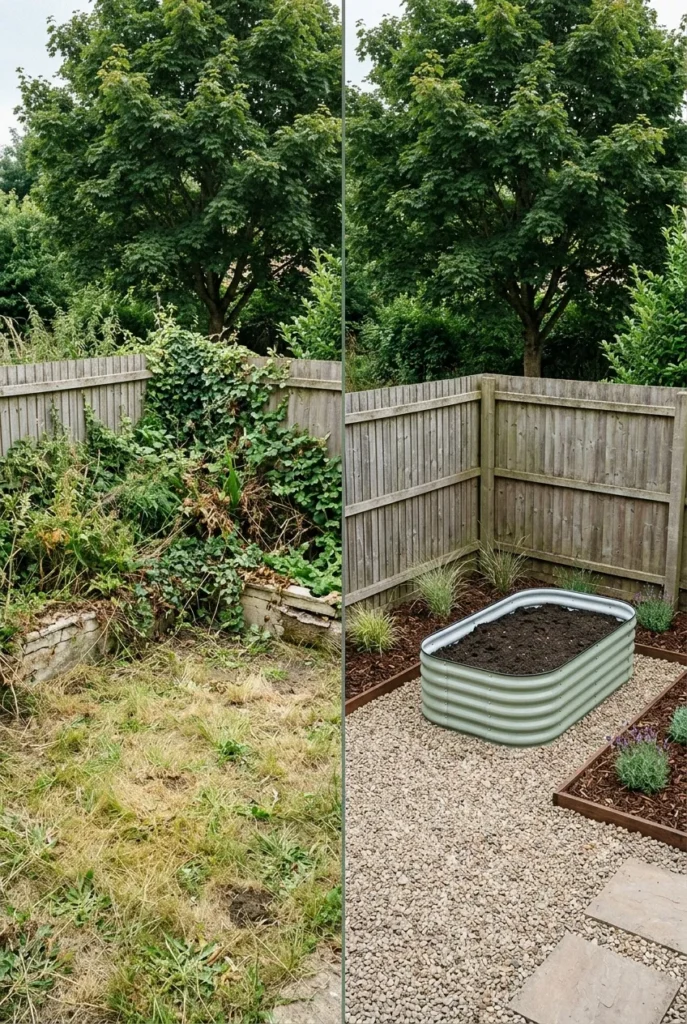
Shrink the Lawn Before You Do Anything Else
Lawn is the single biggest time sink in most yards. It needs mowing, edging, watering, feeding, and weeding all summer long. Every square foot you remove is time you get back.
You do not have to kill all of it. Keep a small, usable patch for kids or dogs and convert the rest. Converting to a water-smart layout genuinely pays off: the EPA notes in its water-smart landscape design guidance that thoughtful plant selection and design can cut outdoor water use by 20 to 50 percent.
What goes where the grass was? Gravel and mulch are the fastest, cheapest swaps. A load of decomposed granite or pea gravel runs modestly per cubic yard, and it never needs mowing. For a bigger commitment, artificial turf gives you the green look with zero watering, though the upfront cost is real.
If your space is tight, this is where a smart layout matters most, and our guide to small backyard landscaping ideas walks through squeezing style out of a compact footprint.
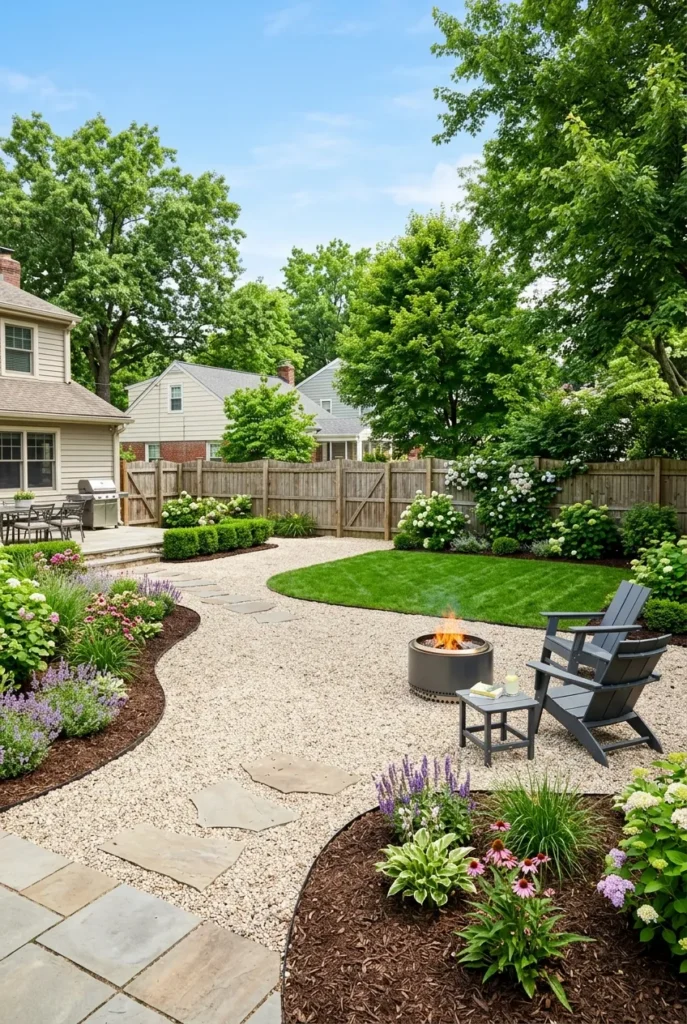
Choose Plants That Basically Raise Themselves
The right plants are the difference between a yard that thrives while you ignore it and one that guilt-trips you. You want tough, regionally suited, and slow-growing.
Native plants top the list. They evolved in your climate, so they shrug off local heat, cold, and pests with little help. Drought-tolerant picks like lavender, Russian sage, coneflower, sedum, and ornamental grasses (think feather reed grass) hold their looks through a dry August.
This is also where the 70/30 rule earns its keep. Garden designers suggest planting about 70 percent reliable, low-maintenance backbone plants and saving roughly 30 percent for the seasonal color or experiments you fuss over. For a busy person, that ratio is your sanity: most of the yard runs itself, and you only babysit a small corner.
Skip the thirsty annuals that need replanting every year. Perennials and shrubs are a one-time job that pays out for seasons.
We planted three Russian sage in our Zone 6 bed two springs ago and honestly forgot about them; they came back fuller each year with zero effort.
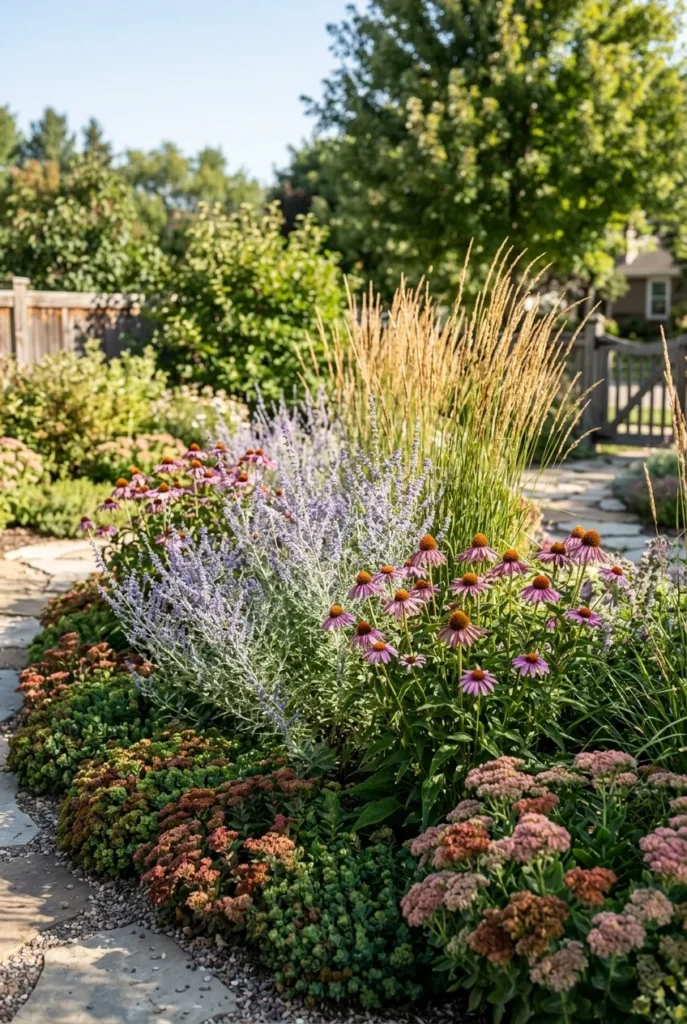
Let Hardscaping Do the Heavy Lifting
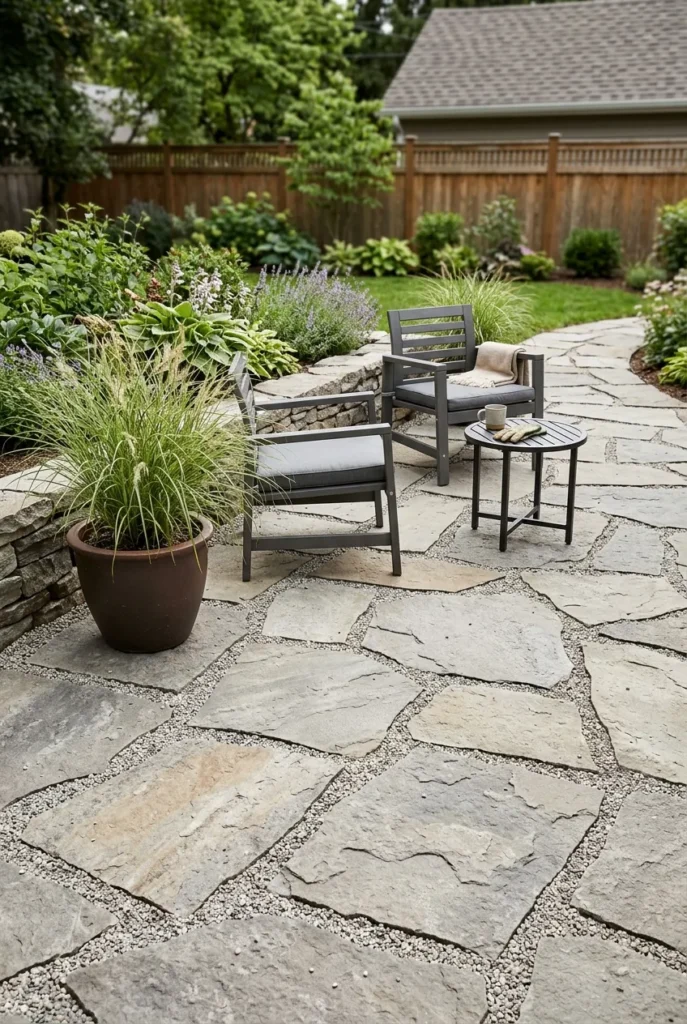
Here is a small truth most guides tiptoe around: the lowest maintenance surface is the one that was never alive. Hardscaping (pavers, gravel, flagstone, decking) looks polished and asks for almost nothing in return.
A paver patio or a flagstone seating area turns a chunk of yard into usable space that never needs mowing or watering. Gravel paths link zones and suppress weeds when you lay fabric underneath. Composite decking gives you the wood look without the annual staining that real wood demands.
Rock gardens and a dry creek bed pull double duty: they look designed and they solve drainage in spots where grass always drowned anyway. If you want the expensive look on a real budget, our post on landscaping with rocks that sips water breaks down how to get there.
Budget note: a small DIY paver patio kit from Home Depot or Lowe’s typically lands in a mid-hundreds range for materials, while a bag of quality landscape fabric runs under $30. Those two moves alone erase a surprising amount of weekly work.
Automate the Little Work That’s Left
Once you have shrunk the lawn, chosen tough plants, and laid your hardscaping, only a sliver of upkeep remains. Automate that and you are basically done.
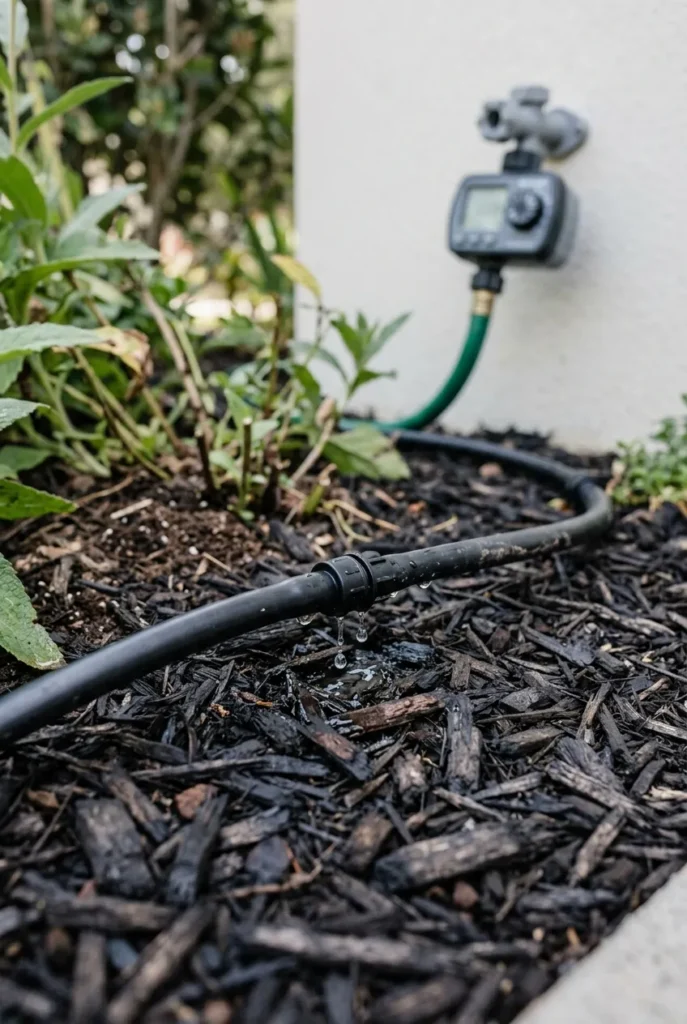
Watering is the big one. A simple hose-end timer or a drip irrigation kit delivers water straight to plant roots on a schedule, so you never think about it. Drip is also far more efficient than a sprinkler spraying the fence.
Mulch is your quiet helper. A two to three inch layer of mulch locks in moisture, blocks weeds, and slowly feeds the soil, which means less watering and almost no weeding. Refresh it once a year and move on.
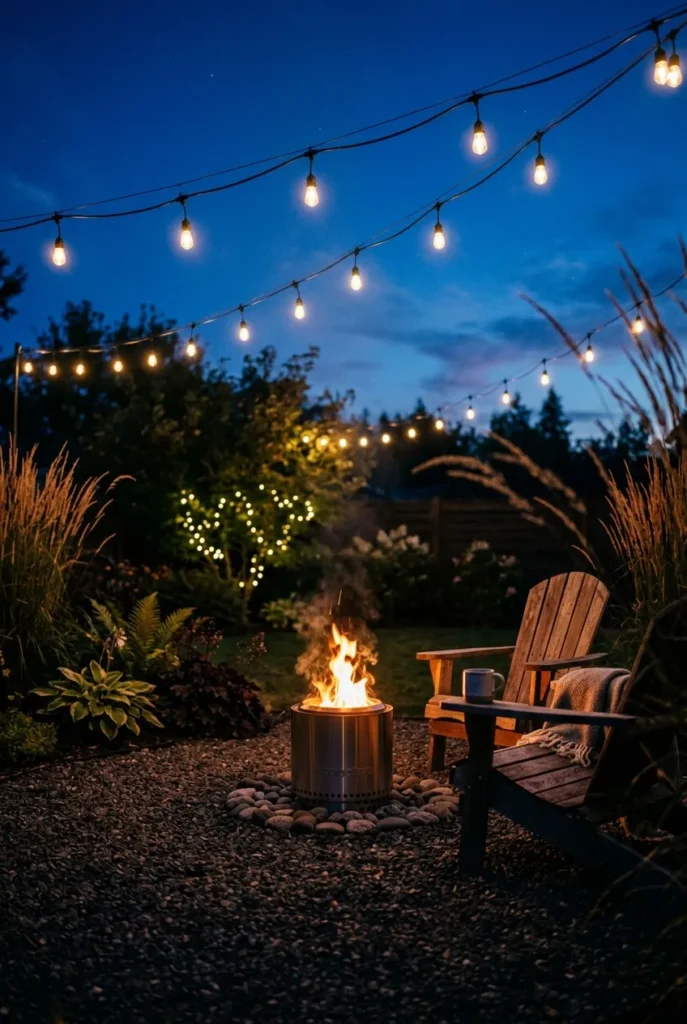
For lighting, solar path lights and Brightech string lights need no wiring and switch themselves on at dusk. Set them once, enjoy them for years.
Design for Privacy Without the Upkeep
A yard you can actually relax in feels private. The catch is that classic privacy hedges need constant trimming, which is the opposite of low maintenance.
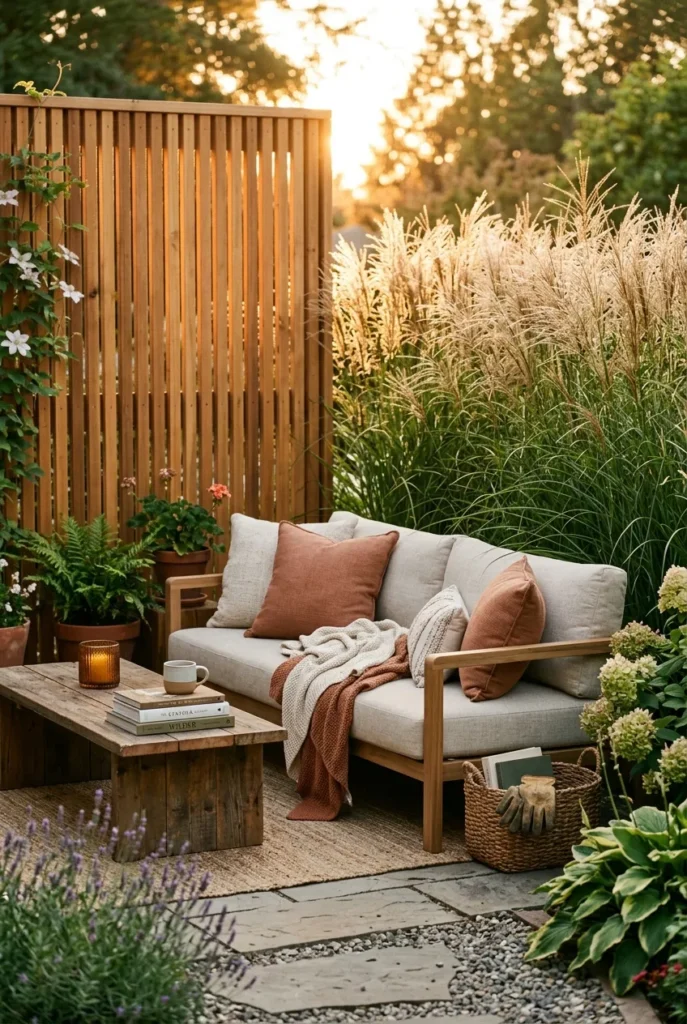
Skip the fussy hedge. A slatted wood or composite privacy screen gives you instant seclusion and never needs pruning. Tall ornamental grasses like miscanthus create a soft green wall that fills in fast and only gets cut back once a year.
Climbing plants on a simple trellis are another one-and-done move. Pick a well-behaved perennial vine, give it a structure, and let it do the work.
For a full rundown of screens, panels, and plant walls that will not run up your weekends, see our budget backyard privacy ideas.
Easy-Care Furniture and Containers That Look High-End
The finishing touches can either add chores or add zero. Choose the zero kind.
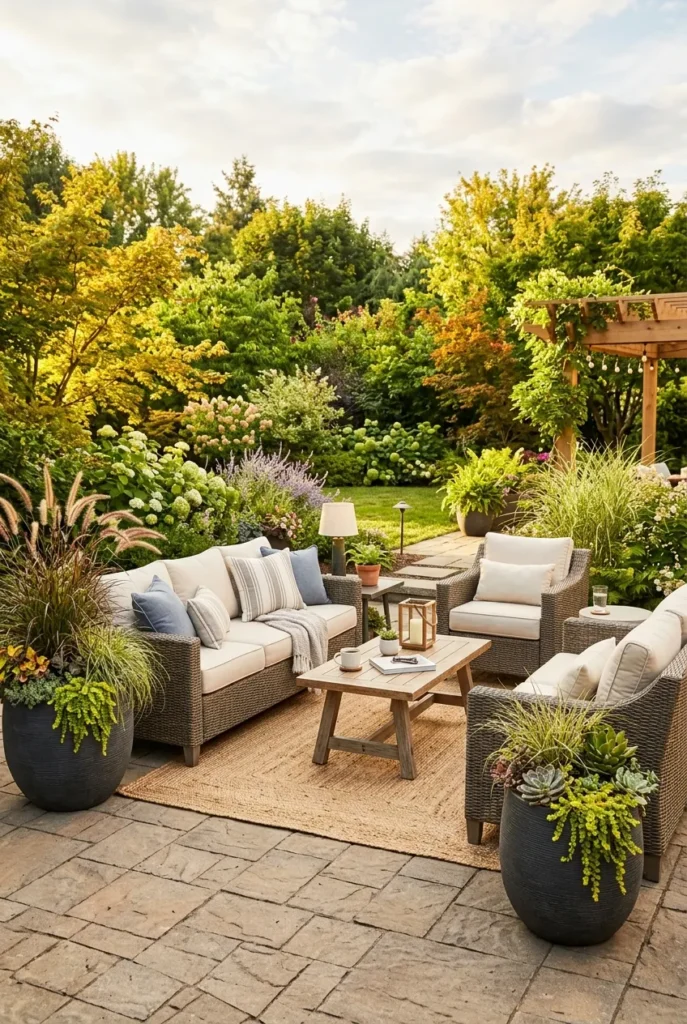
For seating, all-weather materials win. Powder-coated aluminum, resin wicker, and Polywood recycled-plastic furniture shrug off sun and rain, so you skip the covers-on-covers-off routine. A resin wicker set from Target or Wayfair gets you the resort look for a fraction of teak.
For plants, oversized containers beat scattered little pots. One big Bloem or fiberglass planter holds moisture longer than five small ones and needs watering far less often. Fill it with a drought-tolerant grass and a trailing sedum and you are done for the season.
Group your containers near the hose or the drip line. Small thing, big time savings.
Keep It Effortless Season After Season
A low maintenance backyard is not a one-time project so much as a smarter baseline. Once the bones are in, the yearly rhythm is light: a spring mulch refresh, a fall cut-back of grasses, and a quick check of the irrigation timer. That is genuinely most of it.
Match your few tasks to your zone’s calendar. In Zones 5 through 9, the last spring frost usually lands somewhere between mid-April and early May depending on where you are, so that is your cue to refresh beds and swap in any seasonal color. Confirm your own date against the USDA map or your local extension office, since micro-climate matters.
The payoff is the part that is easy to forget while you are hauling gravel: you get to actually sit in the yard. That is the whole point.
Our first fall after the reset, the only real chore was cutting back the grasses one Saturday morning, and I remember thinking the yard had finally started working for us instead of the other way around.
Frequently Asked Questions
What is the lowest maintenance yard?
The lowest maintenance yard replaces most or all of the lawn with hardscaping (gravel, pavers, decking) and native, drought-tolerant plants, then automates watering with drip irrigation. A xeriscaped or gravel-and-native-plant yard needs only occasional seasonal cleanup rather than weekly care.
How do you make your backyard low maintenance?
Work in three moves. Shrink the lawn and remove fussy annuals, lay durable structure like gravel and pavers, then add tough native and drought-tolerant plants with mulch and drip irrigation. Doing it in that order keeps the project fast and the upkeep minimal.
What is the 70/30 rule in gardening?
It is a planting ratio many designers use: roughly 70 percent of your plants should be reliable, low-maintenance backbone species (often natives or proven perennials) and about 30 percent reserved for seasonal color or the plants you enjoy fussing over. It keeps a yard both easy and interesting.
What is the lowest maintenance outdoor plant?
Hardy natives and succulents are hard to beat. Sedum, ornamental grasses, Russian sage, coneflower, and lavender (in the right zone) all tolerate heat and drought with little care. Match the pick to your USDA zone so it thrives without babysitting.
Is a low maintenance backyard expensive to set up?
It can be budget-friendly. Gravel, mulch, and native perennials are inexpensive, and DIY paver or fabric work saves labor costs. The upfront spend on hardscaping and drip irrigation is offset by lower water bills and years of saved weekend time.
How do I keep a low maintenance backyard looking good without grass?
Layer textures so the space still feels lush: mix gravel, mulch beds, ornamental grasses, and a few evergreen shrubs. Add a dry creek bed or rock garden for structure, and use large containers for pops of color that are easy to swap.
How much time does a low maintenance backyard actually save?
Most of the weekly work in a typical yard is mowing, edging, and watering. Removing lawn and adding drip irrigation can drop ongoing upkeep to a spring mulch, a fall cut-back, and a quick irrigation check, which for many people means reclaiming most summer Saturdays.
Your Weekend Starts Now
A low maintenance backyard is not about giving up on a beautiful outdoor space. It is about being smart with the one resource you cannot buy back: your time. Start with a single change this weekend, maybe shrinking one corner of lawn or adding a big easy-care planter, and let the momentum build. Save this guide, pin the ideas that fit your yard, and come back when you are ready for the next step. Which idea are you trying first?