Clematis Trellis Ideas That Turn a Plain Fence Into a Wall of Blooms
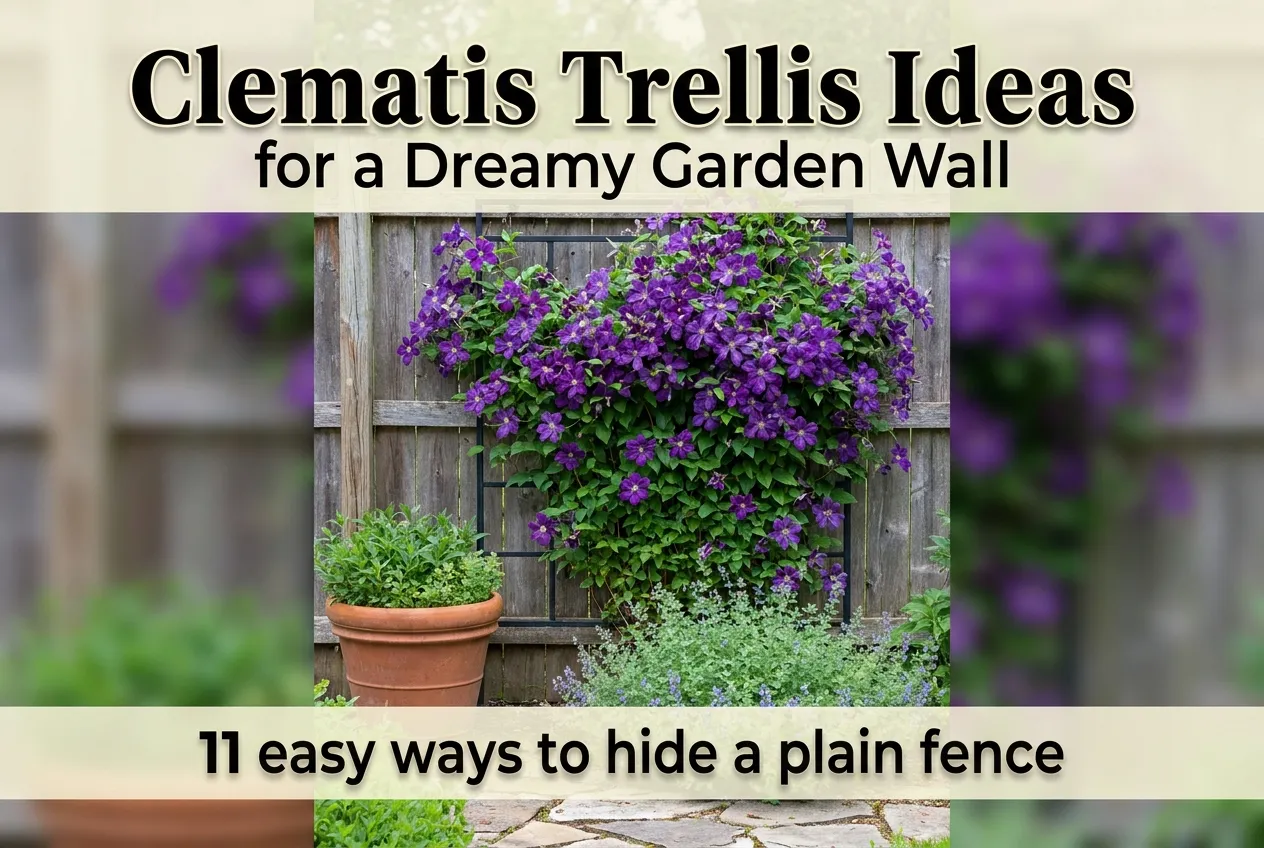
Picture the far corner of your yard right now. Odds are it is a flat run of fence doing absolutely nothing. Now picture it dripping in purple stars from May through September. That is the whole promise of good clematis trellis ideas, and the gap between those two pictures is smaller (and cheaper) than you think.
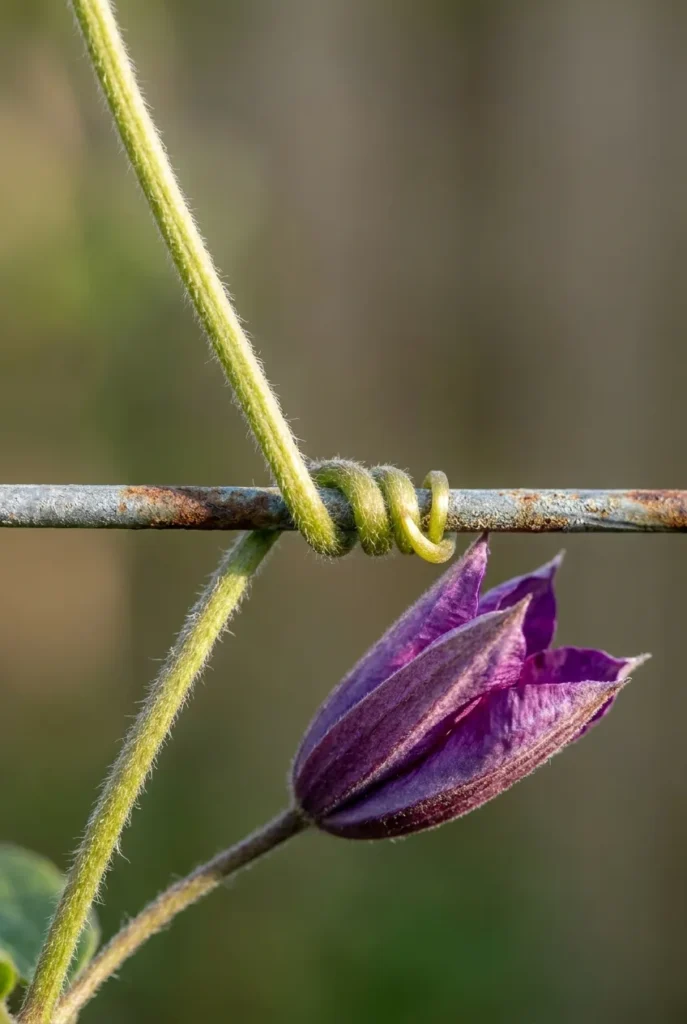
Here is the thing nobody tells beginners. Clematis will not climb just anything. Those famous blooms hang on delicate little leaf stems that reach out, touch a support, and coil around it, but only if the support is thin enough to grab. Give it a fat 4×4 post and it slides right off, sad and floppy.
So this guide does two jobs. First, a pile of real trellis ideas you can copy this weekend, from a $12 fix to a showpiece obelisk. Second, a simple way to match the support to your specific plant so it actually thrives. Let’s get your wall of flowers going.
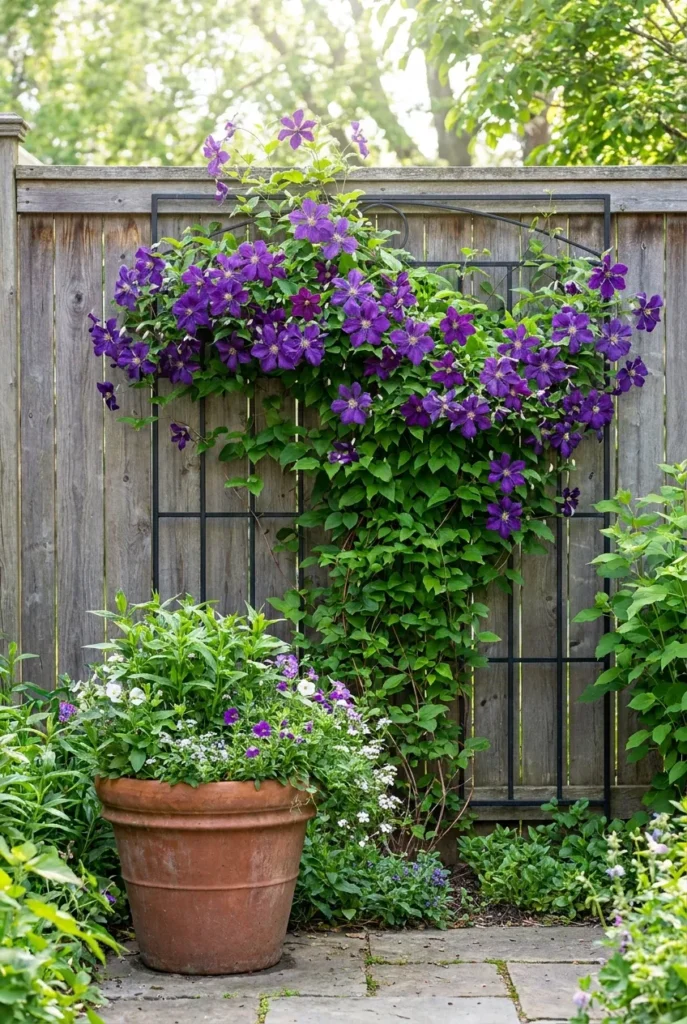
What Makes the Best Trellis for Clematis (Read This First)
Let’s answer the question everyone types into Google: what is the best trellis for clematis? The short version is anything with grabbing points no thicker than about half an inch, spaced so the vine can weave without turning into a knot.
Metal grid panels, thin wooden lattice, wire, string, netting, twiggy branches. All of those work. A chunky pergola beam or a smooth pipe does not, at least not without you adding wire or twine for the tendrils to catch.
Height matters too. Most garden clematis climb 6 to 10 feet, so a support in that range keeps the show at eye level and above. Vigorous types like sweet autumn clematis can hit 15 to 20 feet, which is why people aim them at whole fences and arbors instead.
One habit changed my success rate more than any product. I check the plant tag for the mature size before I buy the support, not after. A tag that says 8 feet needs an 8-foot plan, and squeezing that onto a 3-foot obelisk just means a frustrated plant and a summer of tucking.
The Bloom-Wall Match Method (Our Copy-This Framework)
Most articles hand you random ideas and wish you luck. We use a quick three-check filter we call the Bloom-Wall Match Method. Run any trellis idea through it before you buy or build, and you skip the classic beginner flops.
Check one is grip: are the bars, wires, or slats thin enough for tendrils, roughly half an inch or less? Check two is height: does the support match the tag’s mature height, not the cute size in the nursery pot? Check three is access: can you still reach in to prune and tie without wrecking stems? If an idea passes all three, it will carry your clematis for years.
Keep that little filter in your back pocket. Every idea below already passes it, so you can shop the look you love and trust the function underneath.
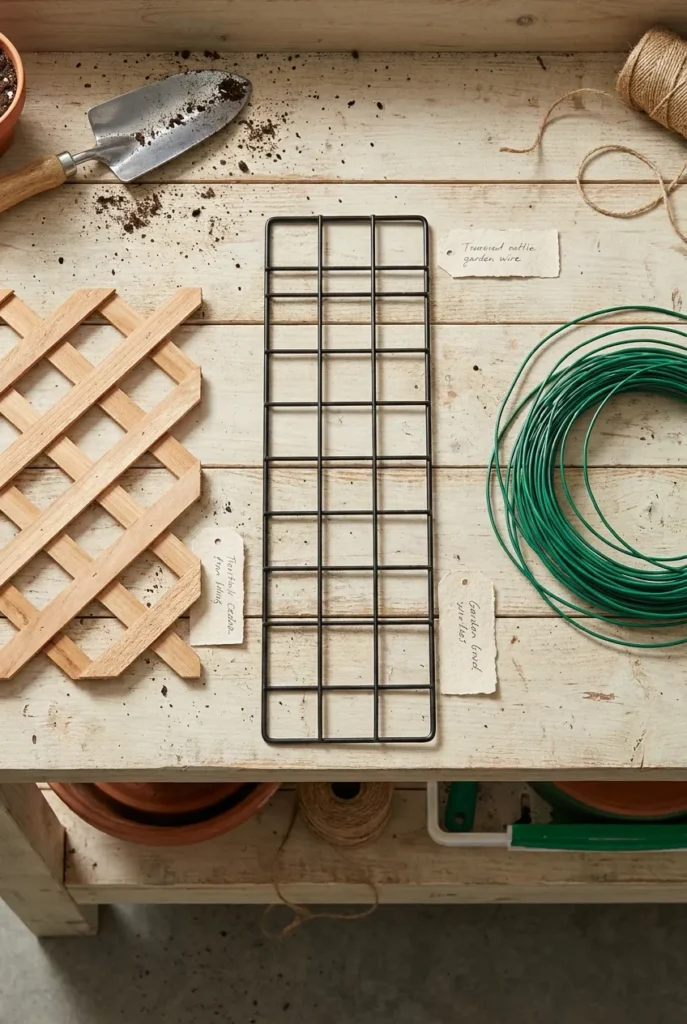
Easy DIY Clematis Trellis Ideas (Cheap and This-Weekend Doable)
You do not need a kit. Some of the prettiest supports cost less than lunch. These clematis trellis ideas lean on stuff at Home Depot, Lowe’s, or already in your garage.
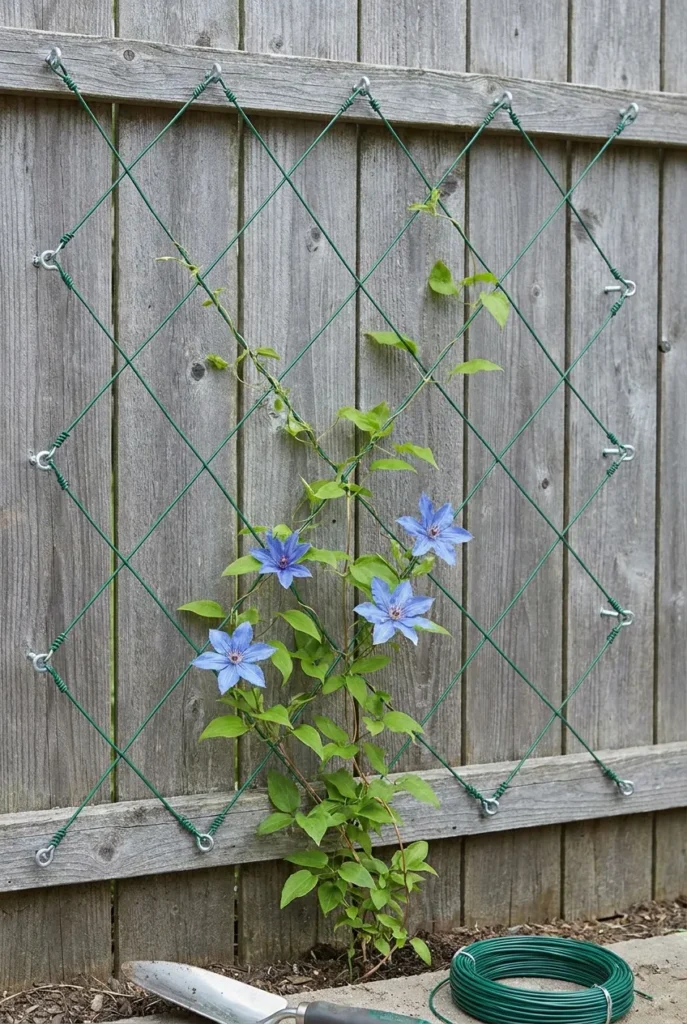
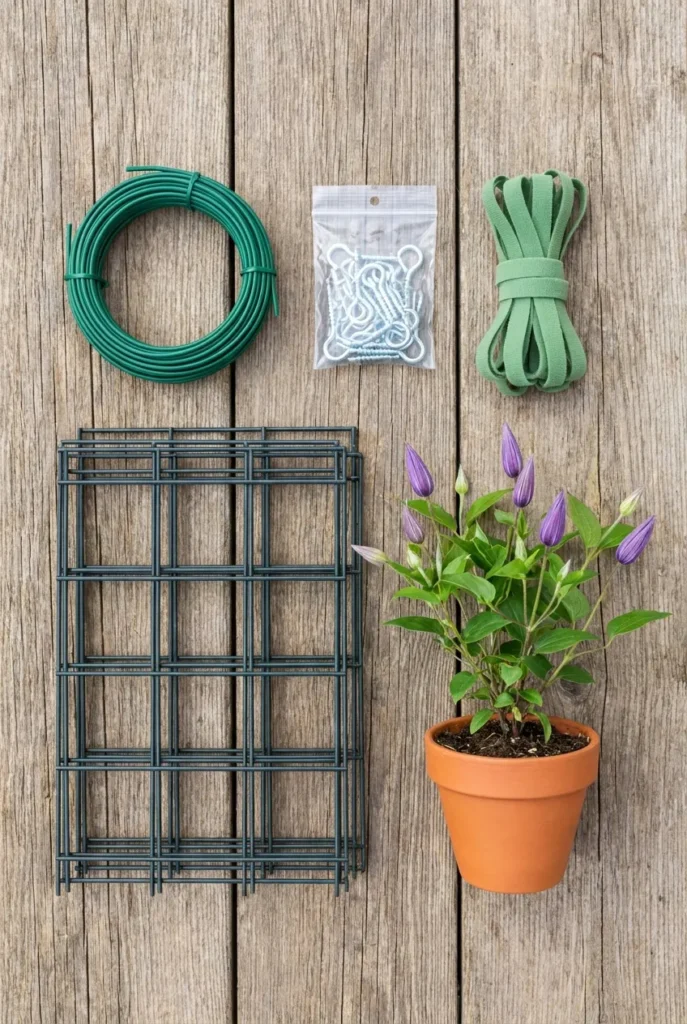
Start with the classic wire-and-eye-hook wall grid. Screw small eye hooks into your fence in a grid, then run garden wire or fishing line between them. The vine climbs invisibly and the fence looks like it grew flowers on its own. A spool of green garden wire runs around $8, and a bag of eye hooks is a few dollars more.
Next, the cattle panel arch. One 16-foot galvanized panel bent into a curve between two beds gives you a walk-through tunnel of blooms. Panels run in the $30 to $50 range at Tractor Supply, and honestly it is the best drama-per-dollar in this whole list.
Love a rustic look? Lash together fallen branches into a simple fan or teepee with twine. It costs nothing, it composts when it wears out, and clematis grabs twiggy wood beautifully. Bamboo stakes from the garden center do the same job for a couple bucks a bundle.
Here is my no-drill favorite for renters. A freestanding obelisk dropped into a big planter needs zero fence damage and moves when you do. If you want the full menu of ways to dress a wall without holes, our guide to turning a bare fence into a living green wall pairs perfectly with any trellis here.
Freestanding Trellis and Obelisk Ideas for Pots and Borders
No fence to work with? No problem. A freestanding trellis for clematis lets you park a flowering column anywhere, on a patio, mid-border, or flanking a path.
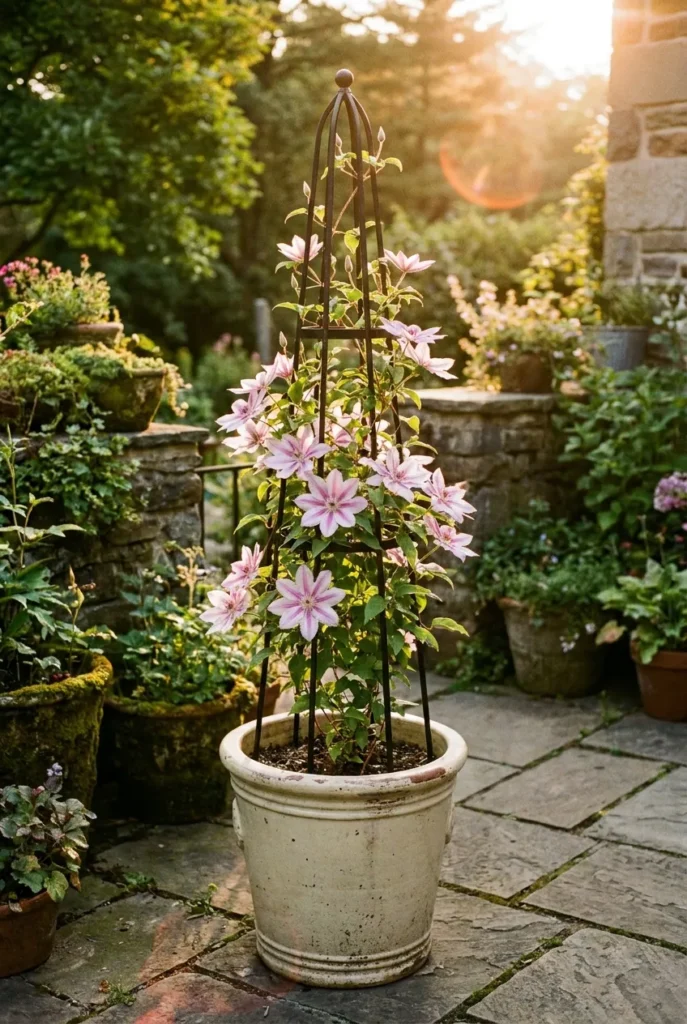
Garden obelisks are the go-to here. A metal or wooden obelisk sunk into a large container turns a single clematis into a living sculpture. Gardener’s Supply sells sturdy powder-coated ones in a wide price band, roughly the $40 to $180 range depending on size, and they last for years outdoors.
If you are potting up, follow a simple ratio. Your support should stand at least two-thirds of the total height, container included. So a 1-foot pot wants a support around 2 feet tall or more. Skimp here and the plant looks top-heavy fast.
Pairs of obelisks flanking a bench or gate read instantly high-end, which is why they show up in every dreamy cottage garden border you have ever pinned. Repetition is the cheat code for that designed, expensive look.
Trellis Ideas for Fences, Walls, and Small Spaces
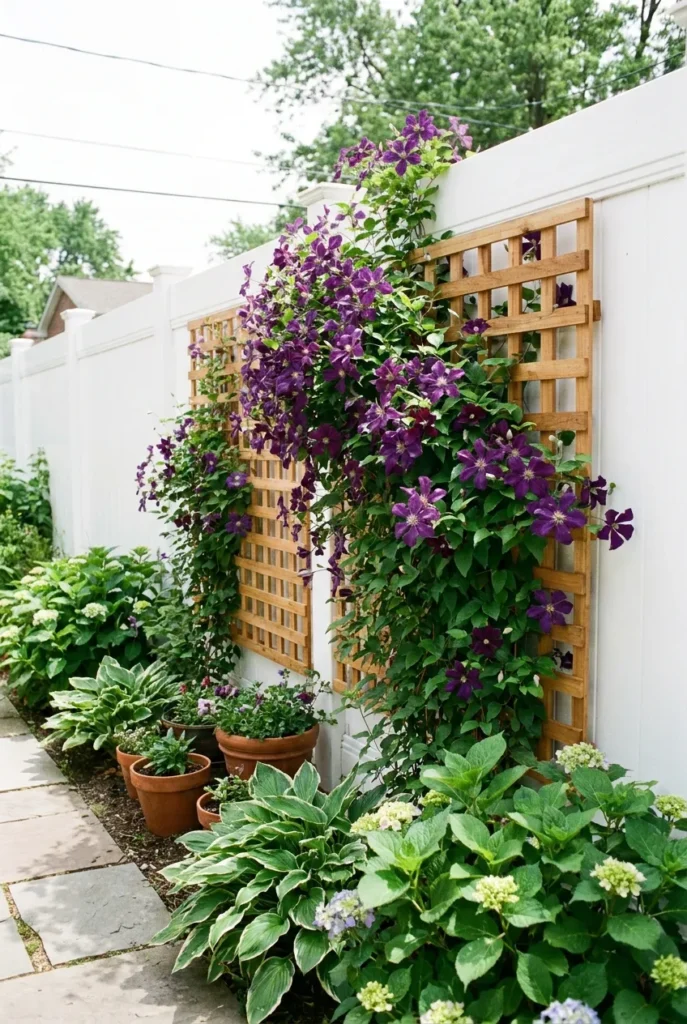
A fence is a clematis waiting to happen, and it fixes the ugliest surfaces you own. Got chain-link? Clematis was practically invented for it. The mesh is already the perfect grabbing size, so the vine threads right through and swallows the eyesore in a season or two.
For a solid wood or vinyl fence, mount a lattice or metal grid panel a few inches off the surface using spacers or blocks. That gap is not optional. It lets the vine wrap around both sides and keeps air moving so the leaves stay healthy.
Working with a narrow side yard or balcony? Go vertical and thin. A single tall fan trellis or a wall of vertical wires takes up almost no floor space while giving you serious height. This is the same logic behind smart budget backyard privacy screening, where climbers do double duty as living cover.
Quick honesty note (to be fair): a west or south wall bounces a lot of heat, so keep that root zone mulched and watered or your plant will crisp. Clematis love sun on top and cool feet below, always.
How Tall Should a Clematis Trellis Be?
This one comes up constantly, so let’s nail it. Match the trellis height to the mature height on the plant tag, then add a little breathing room.
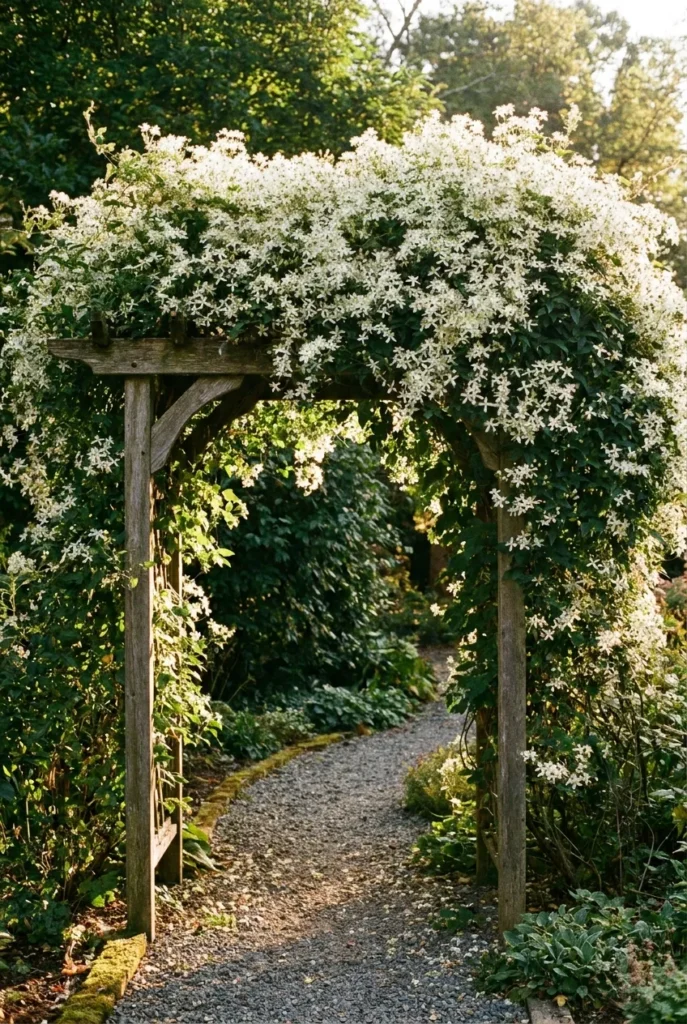
Compact patio types in the 4 to 6 foot range are happy on a short obelisk or a small wall panel. Standard garden clematis at 6 to 10 feet want a full-height fence panel, a tall obelisk, or an arch. The monsters, like sweet autumn clematis at 15 to 20 feet, need a whole fence run, a big arbor, or a pergola.
Here is the quick reference table you can screenshot:
| Clematis size (mature) | Best support | Rough height |
|---|---|---|
| Compact / patio (4 to 6 ft) | Small obelisk, wall panel | 5 to 6 ft |
| Standard garden (6 to 10 ft) | Tall obelisk, full fence panel, arch | 8 to 10 ft |
| Vigorous (15 to 20 ft) | Arbor, pergola, whole fence run | 12 ft plus |
When in doubt, size up. A slightly tall support just gives the vine room to show off, while a short one leaves you fighting droopy overflow all summer.
Match Your Trellis to Your Clematis Pruning Group
Here is the angle almost every other article skips, and it will save your blooms. Clematis fall into three pruning groups, and the group quietly changes which trellis works best for you.
Group 1 blooms early on old wood and gets barely any pruning, so it builds a big permanent framework. Give it something sturdy and permanent it can occupy for years, like a fence run or a large arbor. Group 2 blooms on both old and new wood and gets light shaping, so a wall panel or obelisk you can reach into easily is ideal. Group 3 blooms on new wood and gets cut nearly to the ground each spring, which means you want a support that is easy to strip bare and reset every year, like a freestanding obelisk or simple wire grid.
If you are not sure which group you have, the plant tag usually says, and a university extension guide can help you confirm it by variety. Knowing your group also tells you when to prune, which is the real difference between a plant that blooms and one that just makes leaves.
This is also where your climate comes in. Clematis grow happily across a wide band, generally USDA zones 4 through 9, though the exact varieties that thrive vary by zone. It is worth confirming your zone on the USDA map before you fall for a variety that will not overwinter for you.
Get-the-Look Shopping List and Rough Costs
Want to skip the guesswork? Here is a starter kit that covers most yards, with prices kept as rounded tiers because they drift by season and store.
For a no-drill container column, grab one large planter, one bag of quality potting mix like Miracle-Gro, and one metal obelisk (plan for the $40 to $180 range depending on height). For an invisible fence wall, a spool of green garden wire (around $8), a bag of eye hooks (under $10), and a pack of soft plant ties. For instant drama, one 16-foot cattle panel from Tractor Supply (roughly $30 to $50) plus two T-posts.
Add a small bag of mulch to keep those roots cool and you are done. That is a flowering wall for well under the cost of a single patio chair, which is the kind of math I genuinely love.
Seasonal Timing: When to Set Up Your Trellis
Timing is the quiet detail that separates a great first season from a rough one. Put the trellis in before or at planting time, never after.
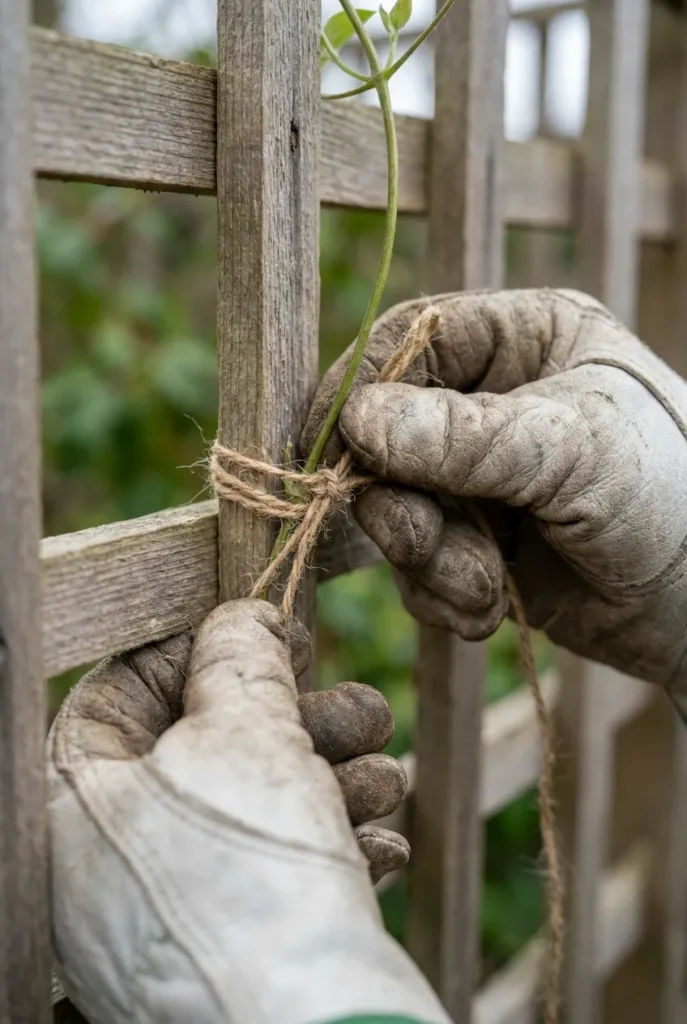
Once a clematis has a few feet of growth, those brittle stems snap the moment you try to slide a support behind them. Set the structure first, plant at its base, then guide the earliest shoots on with a loop of twine. Early spring, right around your last frost, is prime planting time across most of the country.
In warmer zones you can plant in fall too, giving roots a head start before summer heat. Whatever the season, mulch the base well so the roots stay cool while the top climbs into the sun it craves.
Frequently Asked Questions
What is the best trellis for clematis?
The best trellis has thin supports, roughly half an inch or less, so the delicate tendrils can wrap and grip. Thin metal grids, wooden lattice, wire, netting, and twiggy branches all work well. Skip fat posts and smooth pipes unless you add wire or twine for the vine to catch.
How tall should a clematis trellis be?
Match it to the mature height on the plant tag. Compact types are fine at 5 to 6 feet, standard garden clematis want 8 to 10 feet, and vigorous varieties like sweet autumn clematis need a full fence, arbor, or pergola. When unsure, size up.
Do clematis do better in pots or in the ground?
Both work if you meet their needs. In the ground they get more root room and grow larger with less babysitting. In pots you get flexibility and portability, but you must water more often and use a big container with a support at least two-thirds of the total height.
How do you make a trellis for clematis?
The simplest DIY is a wire grid: screw eye hooks into a fence in a grid pattern and string garden wire between them. Other easy builds include a bamboo teepee, a branch fan lashed with twine, or a cattle-panel arch bent between two beds.
Will clematis climb a trellis by itself?
Mostly, but it needs a nudge early on. Tendrils only grab what they touch, so loosely tie the first shoots to the support with soft twine and check every week or so during active growth to guide stragglers.
What can I use instead of a trellis for clematis?
Plenty. Let it scramble through a shrub or climbing rose, cover a chain-link fence, wind up an obelisk in a pot, or clothe an arbor, pergola, or even an old ladder. Anything thin enough to grip counts.
Your Wall of Blooms Starts With One Weekend
Here is the honest truth. The hardest part of any of these clematis trellis ideas is picking one and starting. The plant does the showing off; you just give it something thin to hold onto and a sunny spot with cool roots.
So run your favorite idea through the Bloom-Wall Match Method, grab a support that fits your plant’s grown-up size, and get it in the ground this weekend. By next summer that dead stretch of fence could be the prettiest thing in your yard. Which idea are you trying first? Pin the one that made you smile so you have it ready on planting day.