Sloped Backyard Landscaping Ideas That Actually Tame the Hill
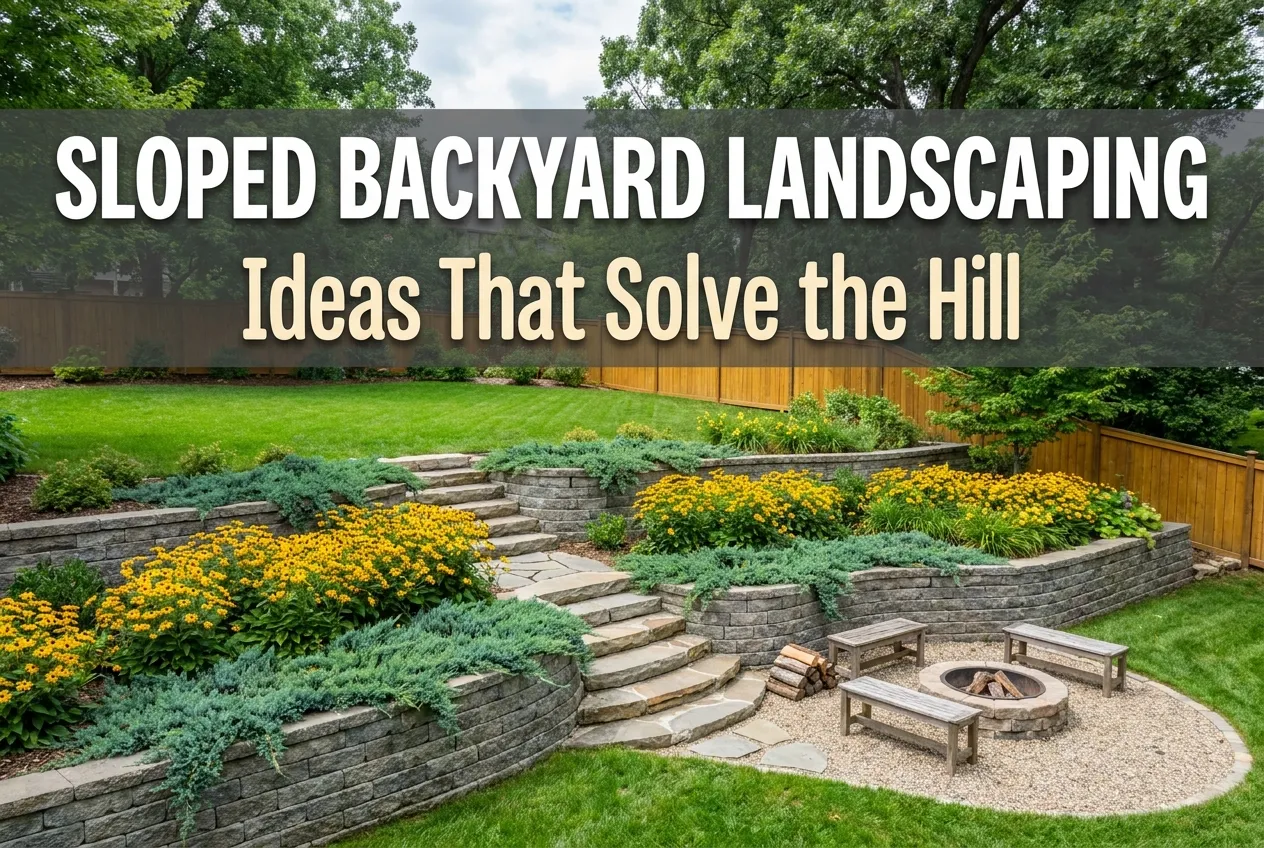
That awkward hill behind your house is not a problem. It is the most interesting yard on the block waiting to happen. Good sloped backyard landscaping turns a patch you avoid mowing into terraced beds, a firepit nook, and a path that makes the whole grade feel intentional. This guide walks you through it the way we would talk it through over coffee, with real materials, real budget tiers, and the one measurement that decides everything.
Here is the promise. By the end, you will know how steep your slope actually is, which fix fits it, and how to plant it so the soil stays put. If your lot is also tight on space, our guide to small backyard landscaping ideas pairs nicely with everything here.
Let us get into it.
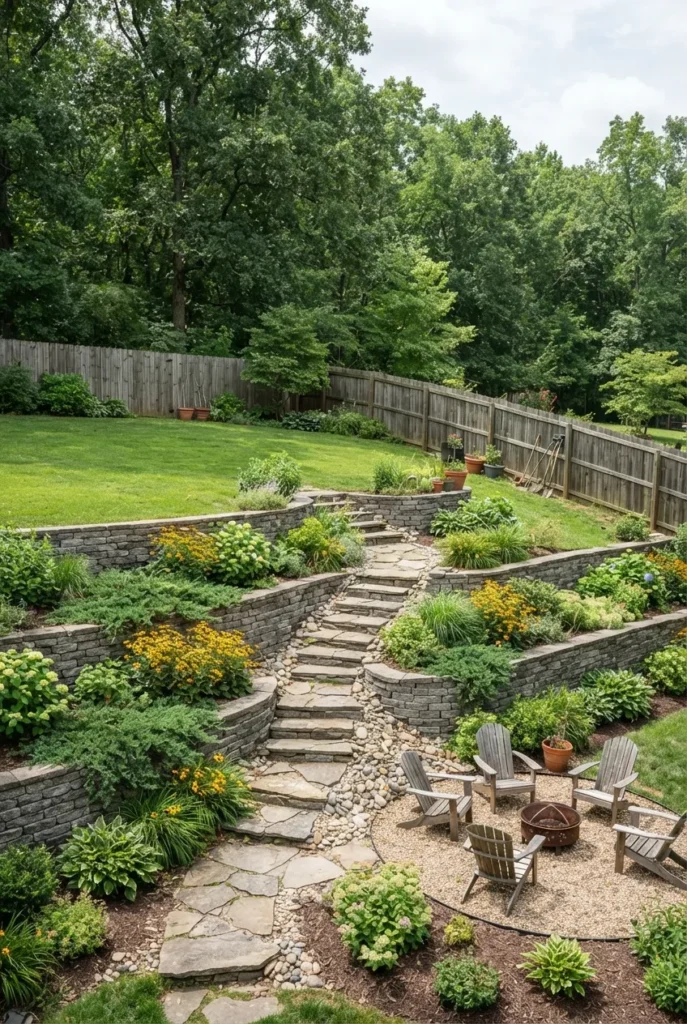
First, Measure the Slope (This One Number Decides Everything)
Before you buy a single paver, figure out your slope percentage. It sounds fussy. It saves you hundreds of dollars in wrong guesses.
Here is the quick version. Drive a stake at the top of the slope and one at the bottom. Run a level string between them, measure the horizontal distance (the run) and the vertical drop (the rise), then divide rise by run and multiply by 100. A 2-foot drop over 10 feet is a 20 percent slope.
Why it matters: gentle slopes under about 15 percent take almost any treatment, moderate slopes around 15 to 33 percent usually want terracing or a retaining wall, and anything steeper leans on serious walls, deep-rooted plantings, or a pro. Most competitor articles skip this step entirely, which is exactly why so many DIY slopes fail by year two.
Real experience: “The first time I skipped measuring, I ordered enough Pavestone block for a 12-inch wall and my grade actually needed 24 inches. I ate the cost and a Saturday. Measure first.”
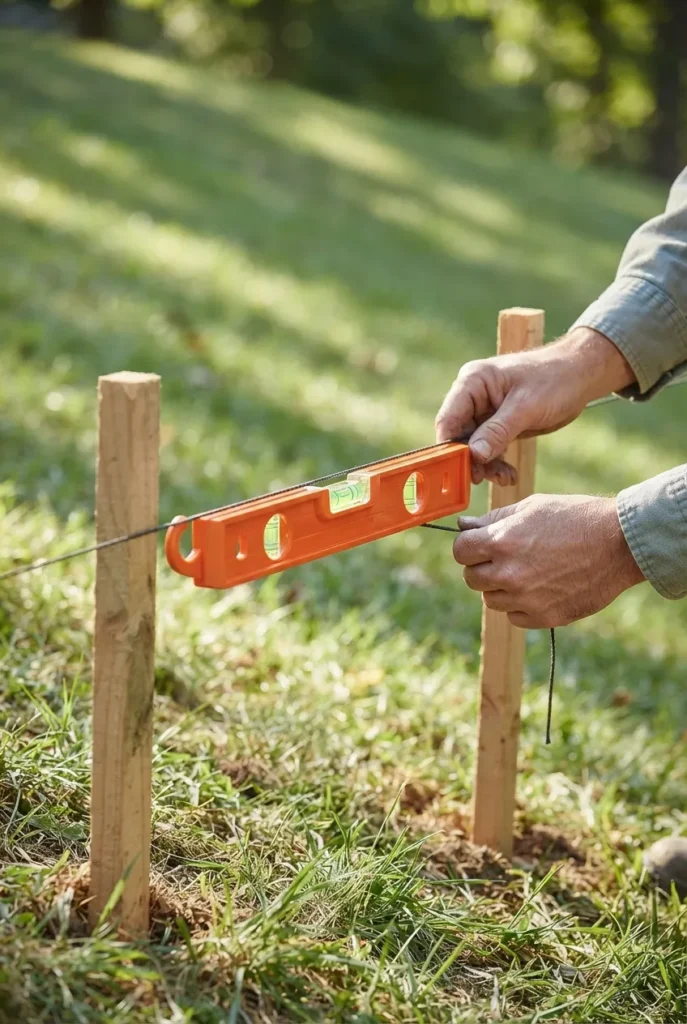
The Slope-Fit Rule (our simple decision anchor)
We call it the Slope-Fit Rule, and it runs the whole article. Match the fix to the number, not to the Pinterest photo you fell in love with. Under 15 percent, plant and mulch. From 15 to 33 percent, terrace or wall it. Over 33 percent, engineer it or green it with deep roots. Keep that in your back pocket and every idea below slots into place.
Retaining Walls: The Workhorse of Sloped Backyard Landscaping
Retaining walls are the classic answer for a reason. They hold soil, carve out flat space, and give you a built-in bench line if you plan it right.
For a low wall under about 3 feet, interlocking concrete block (think Pavestone or Belgard) is genuinely DIY-friendly and runs in the budget tier of roughly $4 to $8 per block at Home Depot or Lowe’s. Natural stacked stone costs more and reads more high-end. Anything over 3 to 4 feet, or any wall holding back a big load, is where you stop and call a pro, because failed walls are dangerous and often need a permit.
A few tips that separate a wall that lasts from one that bulges:
- Build on a compacted gravel base, never bare soil, so water drains and the wall does not heave.
- Add gravel backfill and a perforated drain pipe behind tall walls so hydrostatic pressure has somewhere to go.
- Step tall grades into two or three shorter walls instead of one giant one. Safer, cheaper, and it looks like terracing on purpose.
Real experience: “We built our first block wall two courses too short and the bed behind it slumped after one wet spring. The second version, on a 6-inch compacted paver-base gravel bed, has not moved in three seasons.”
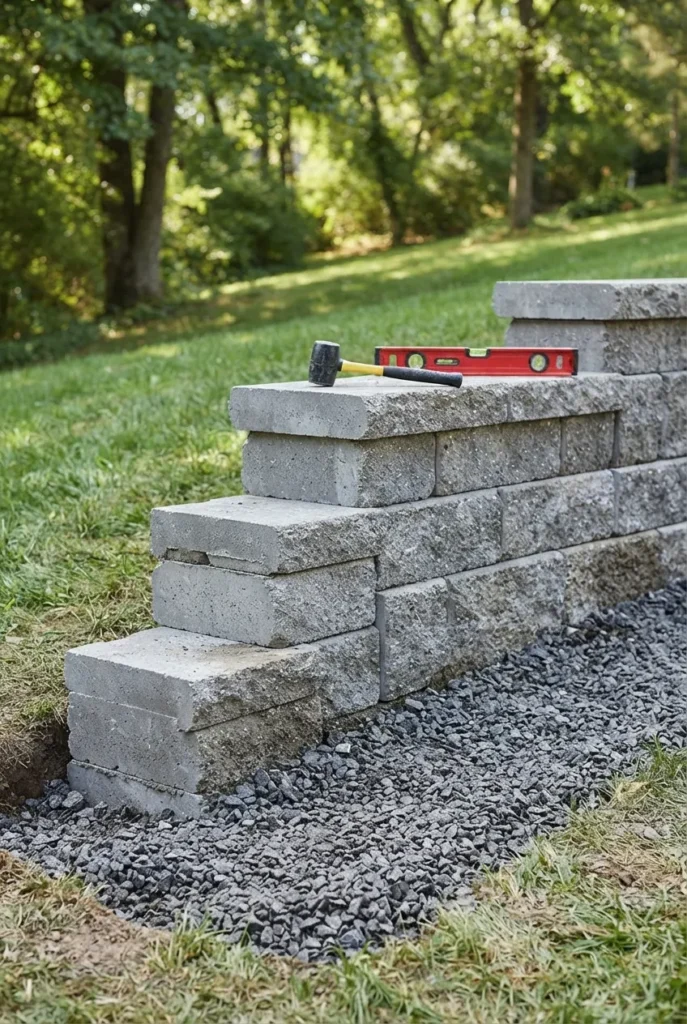
Terracing: Turn One Steep Hill Into Several Usable Rooms
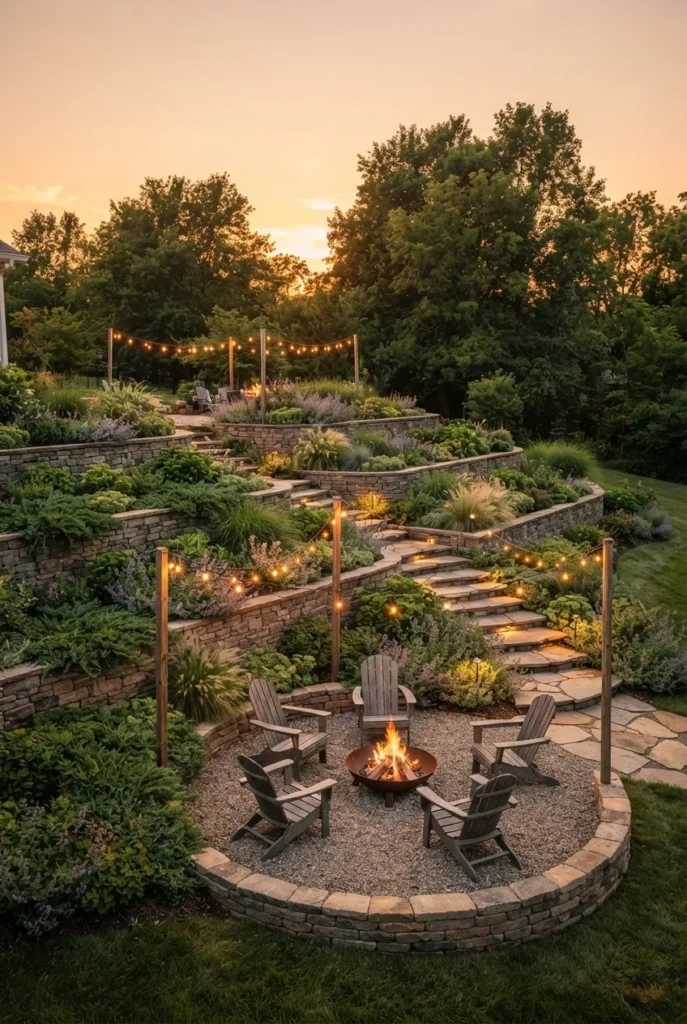
Terracing is retaining-wall thinking taken to its prettiest conclusion. Instead of one tall wall, you cut the slope into a staircase of flat planting shelves. Each level becomes its own little room: herbs up top, cutting flowers in the middle, a seating pad at the base.
On a moderate grade, timber terraces made from pressure-treated 6x6s or landscape ties are the fast, affordable route. Stone or block terraces cost more but last decades. The magic of terracing is that it fixes erosion and gives you flat ground in the same move, which is the whole reason hillside gardeners swear by it.
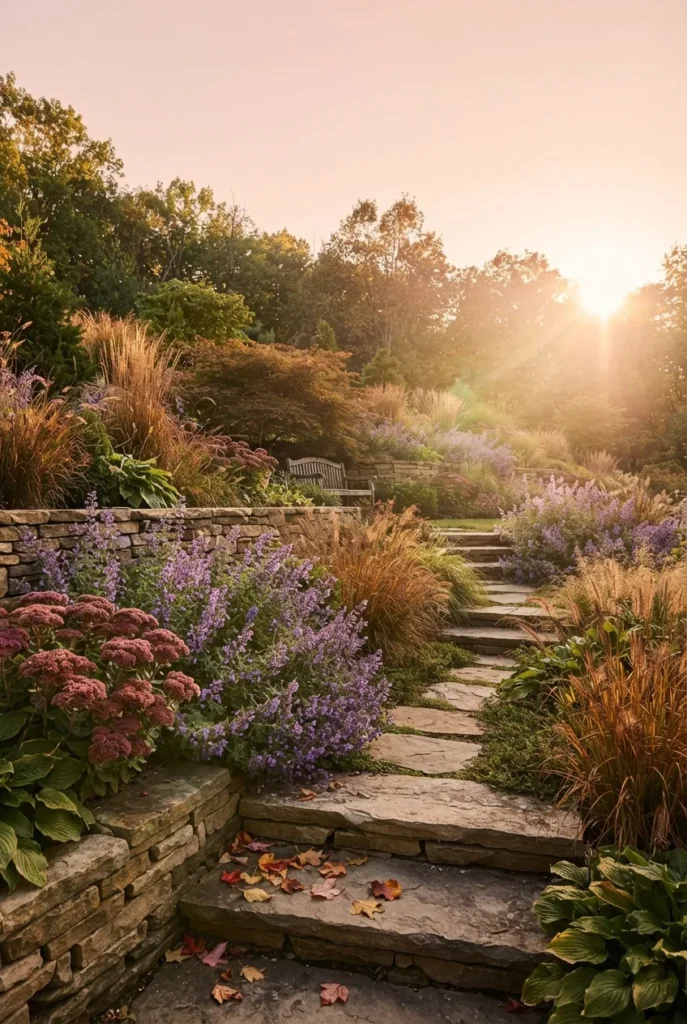
Try planting the terrace faces, not just the tops. Trailing rosemary, creeping thyme, or ornamental grasses spilling over each edge hides the hard lines and softens the whole grade fast.
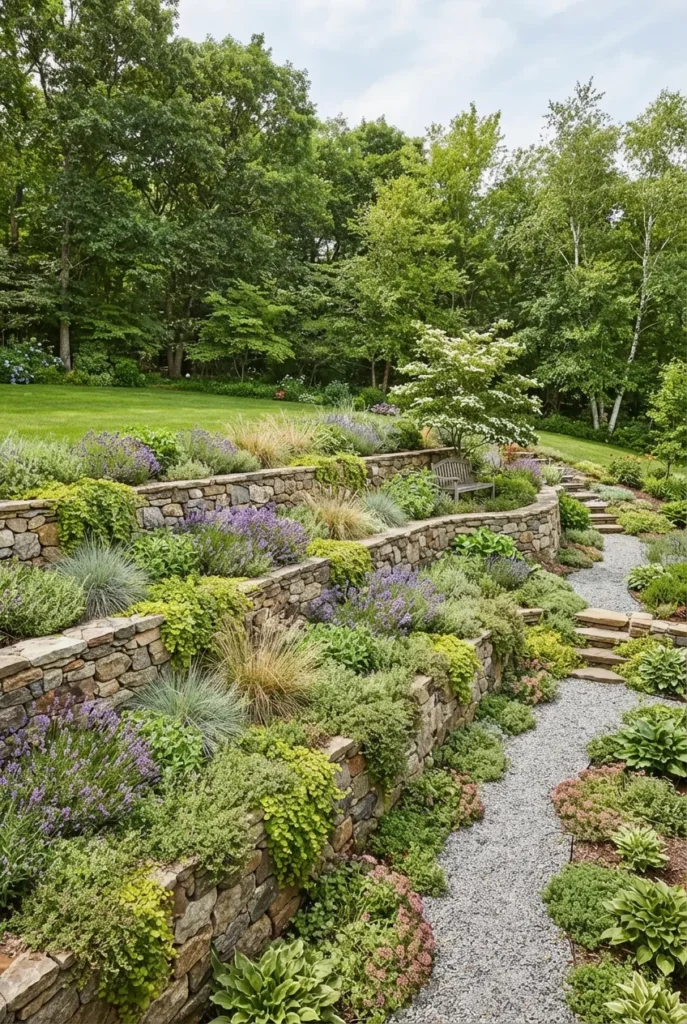
Plants That Hold a Slope Together (Erosion Control That Looks Good)
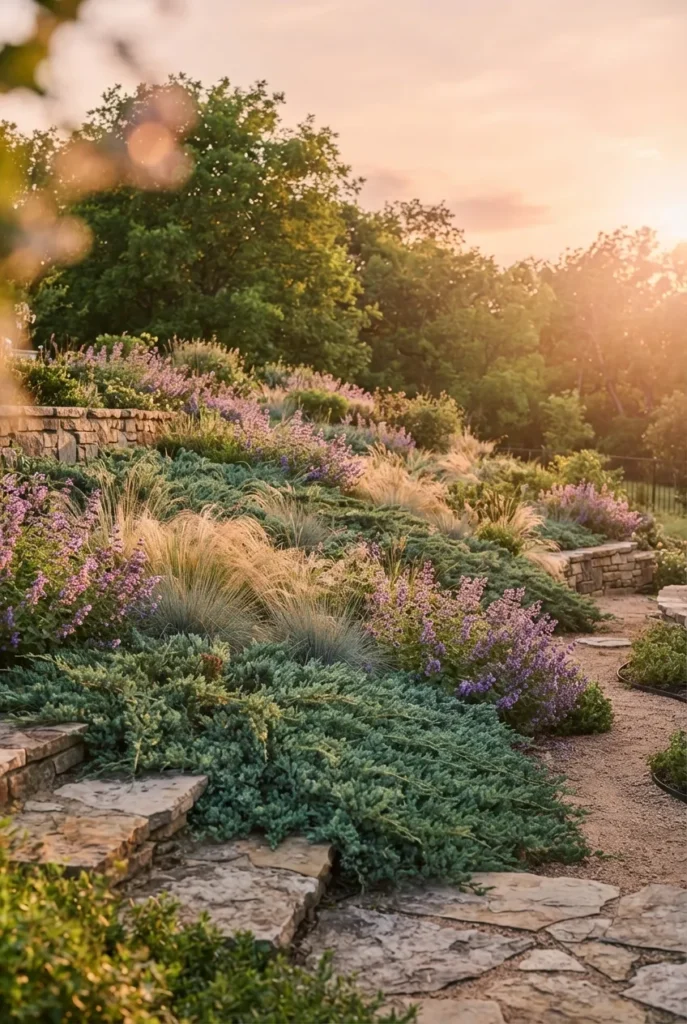
Roots are free rebar. The right groundcover and deep-rooted plants knit loose soil into a mat that stays put through a downpour, which is why planting is the single cheapest erosion fix you have.
Reach for tough, spreading performers. Creeping juniper, liriope, catmint, daylilies, and native ornamental grasses like little bluestem all grip a slope while looking intentional. For deep shade, try epimedium or pachysandra. Match your picks to your growing zone so they actually survive winter. This is where I would send you to the USDA plant hardiness zone map to confirm your band before you buy anything.
A layered approach beats a single groundcover. Mix a low mat-former, a mid-height clumping grass, and a few anchor shrubs so the roots occupy different soil depths. Nature does not plant in monoculture, and neither should you.
Real experience: “I planted a bare Zone 6 slope with plain fescue first, watched half of it wash into the driveway, then reseeded with creeping juniper plugs and little bluestem. Two summers later the soil finally stopped moving.”
Landscape a Steep Slope Without Retaining Walls (the gap angle)
Not every hill needs a wall, and this is the question competitors keep dodging even though people search it constantly. If your budget is tight or your slope is gentle, you have real options.
Groundcover blankets are the first move, as covered above. Beyond that:
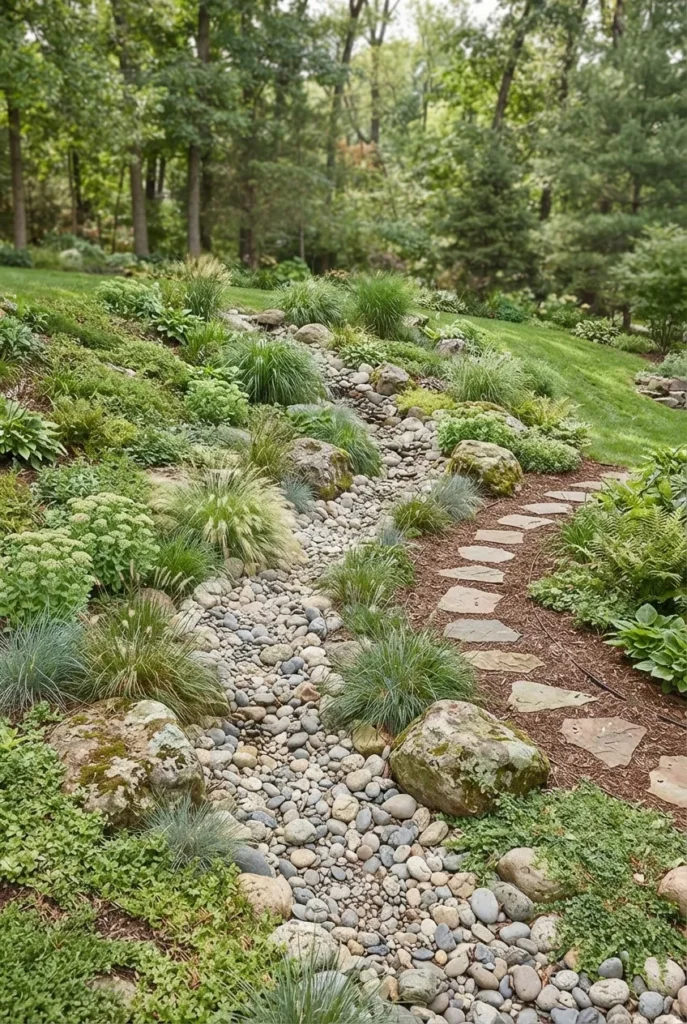
- Lay a dry creek bed of river rock down the natural runoff line so heavy rain has a designed path instead of gouging your yard. Our take on front yard landscaping with rocks shows the same rock-first idea in action.
- Build a switchback path of stepping stones or bark mulch so you can actually walk the slope without a wall in sight.
- Anchor big boulders in staggered clusters. They slow water, break up the grade visually, and cost far less than a full wall.
- Use erosion-control matting or jute netting on bare dirt while new plants root in, then let it biodegrade.
Honestly, some of the best-looking hillsides we have seen never used a single block. They just leaned into the slope instead of fighting it.
Fix Drainage Before It Fixes You
Water is what turns a slope into a mudslide, so drainage is not optional. Rain naturally runs downhill and pools at the base, and ignoring that is how basements flood and beds wash out.
Grade the soil to slope away from your house foundation, aim for a drop of about 6 inches over the first 10 feet. Add a dry creek bed or a French drain along the runoff line. On planted terraces, tuck gravel and a drain pipe behind any wall taller than a couple of feet. The EPA and most extension offices are blunt about this: manage runoff at the top of the slope and the rest of your landscaping lasts far longer.
Quick reference you can screenshot:
| Slope percentage | Best-fit approach | Typical budget tier |
|---|---|---|
| Under 15% | Groundcover, mulch, simple beds | Lowest |
| 15% to 33% | Terracing or low retaining walls | Mid |
| Over 33% | Engineered walls, deep-root planting, pro help | Highest |
Add a Destination: Firepit, Patio, or Seating Nook
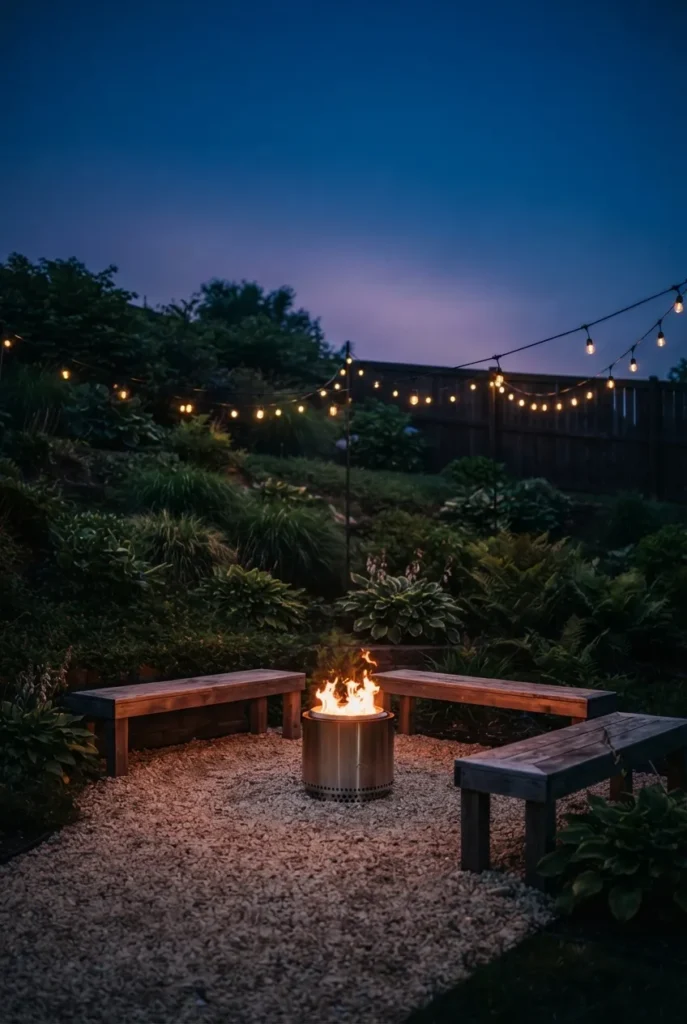
A slope earns its keep when it gives you somewhere to sit. Once you have one flat terrace or a leveled pad at the base, drop in a destination and the whole yard suddenly has a point.
A pea-gravel patio with a Solo Stove or a simple paver firepit reads cozy and costs a fraction of a full hardscape. String a few Brightech or Feit outdoor lights overhead and the lowest terrace becomes the spot everyone gathers after dark. Keep any open flame well clear of dry plantings and fences, and check your local firepit rules first.
Budget-First Sloped Backyard Landscaping
You do not need a five-figure hardscape to make a slope beautiful. You need a plan and a phase order.
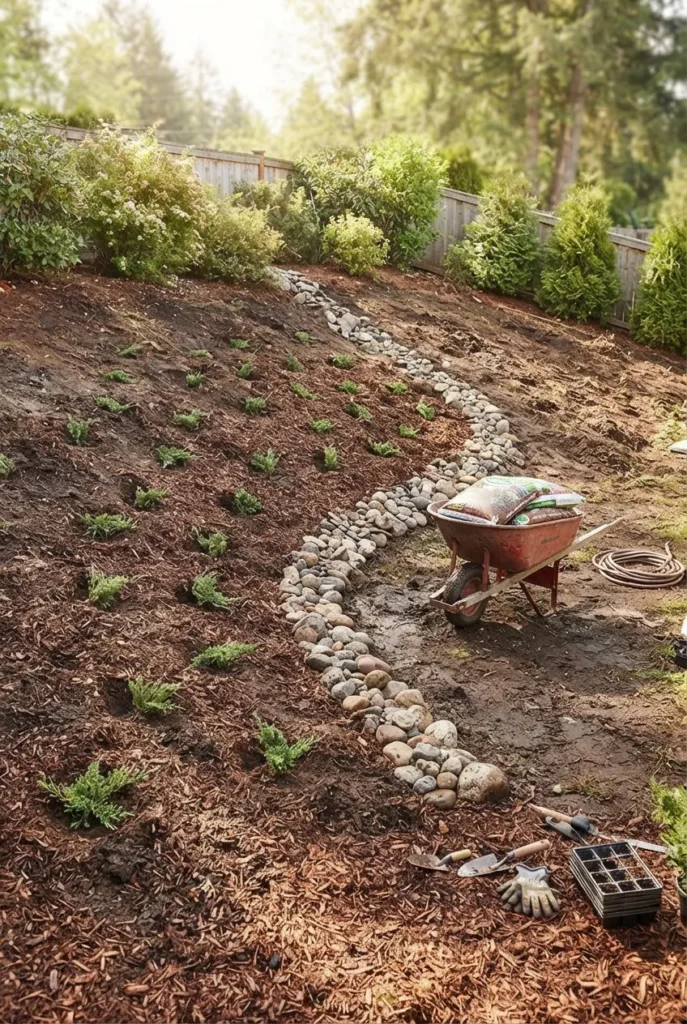
Start with the free and cheap wins: regrade, mulch, and plant the erosion-control layer first. Add a boulder cluster or a dry creek bed next. Save the retaining wall or terrace hardscape for last, when you can budget it properly. Dollar Tree and Dollar General fillers, secondhand pavers from Facebook Marketplace, and bagged Kellogg or Miracle-Gro soil (usually in the under-$15 per bag tier) stretch a small budget a long way.
Real experience: “We did our slope in three summers, not one. Year one was mulch and juniper plugs, year two the dry creek bed, year three the block terraces once we had saved for them. Doing it slow beat doing it wrong.”
Seasonal Timing for Zones 5 to 9
Timing matters on a slope because new roots need to grip before heavy weather hits. In Zones 5 to 9, the sweet spots are spring (after your last frost, usually mid-April to mid-May depending on your zone) and early fall, when soil is warm and rain does the watering for you.
Avoid planting a bare slope right before your region’s heaviest rain season, since young roots cannot hold soil they have not gripped yet. Frost dates swing by year and micro-location, so confirm yours against the USDA map or your local extension before you commit a planting weekend.
Pull It All Together
The best hillside yards feel like they were always meant to be that way. Run the Slope-Fit Rule, fix drainage first, plant for roots, then add the terrace or wall and the seating spot that make it yours.
Frequently Asked Questions
How do you landscape a sloped backyard?
Start by measuring your slope percentage, then match the fix to the grade. Gentle slopes take groundcover and mulch, moderate slopes want terracing or low retaining walls, and steep slopes need engineered walls or deep-rooted planting. Handle drainage first, plant for erosion control, then add hardscape and a seating destination.
Can you fix a sloping backyard?
Yes, and you rarely need to flatten it completely. Terracing, retaining walls, and smart planting turn a slope into usable, good-looking space. Regrading to move water away from the house plus a groundcover layer fixes most everyday slope problems without heavy machinery.
What is the best landscape edging for slopes?
Heavier, anchored edging wins on a slope because lightweight plastic strips slide downhill. Steel or aluminum edging staked deep, natural stone, or timber ties hold their line best. On steeper grades, terraced edging that doubles as a mini retaining edge outperforms any single strip.
How do you landscape on an incline?
Work with the grade instead of against it. Cut flat shelves with terraces, run paths as switchbacks rather than straight up, anchor boulders to slow water, and blanket bare soil with deep-rooted plants. Add erosion matting while new plants establish.
How can I landscape a steep slope without retaining walls?
Lean on plants and rock. Deep-rooted groundcovers, a dry creek bed down the runoff line, staggered boulder clusters, a mulched switchback path, and biodegradable erosion matting can stabilize and beautify a slope with zero block. It is cheaper and, on gentler grades, just as durable.
What plants are best for erosion control on a slope?
Spreading, deep-rooted picks like creeping juniper, liriope, catmint, daylilies, and native grasses such as little bluestem knit soil together well. Match every plant to your USDA zone, and layer low mat-formers with mid-height grasses and anchor shrubs for roots at multiple depths.
Your Slope Is Waiting
Your hill is not a headache. It is the yard with the best view, the most character, and the most potential on your street. Pick one idea from this guide, measure your slope this weekend, and start with the layer you can afford right now. For inspiration on how far a yard can come, our roundup of backyard makeover before and after is a great place to dream before you dig. Save this one to your garden board so it is handy when you are ready to start.