Front Yard Landscaping With Rocks That Looks Expensive and Sips Water
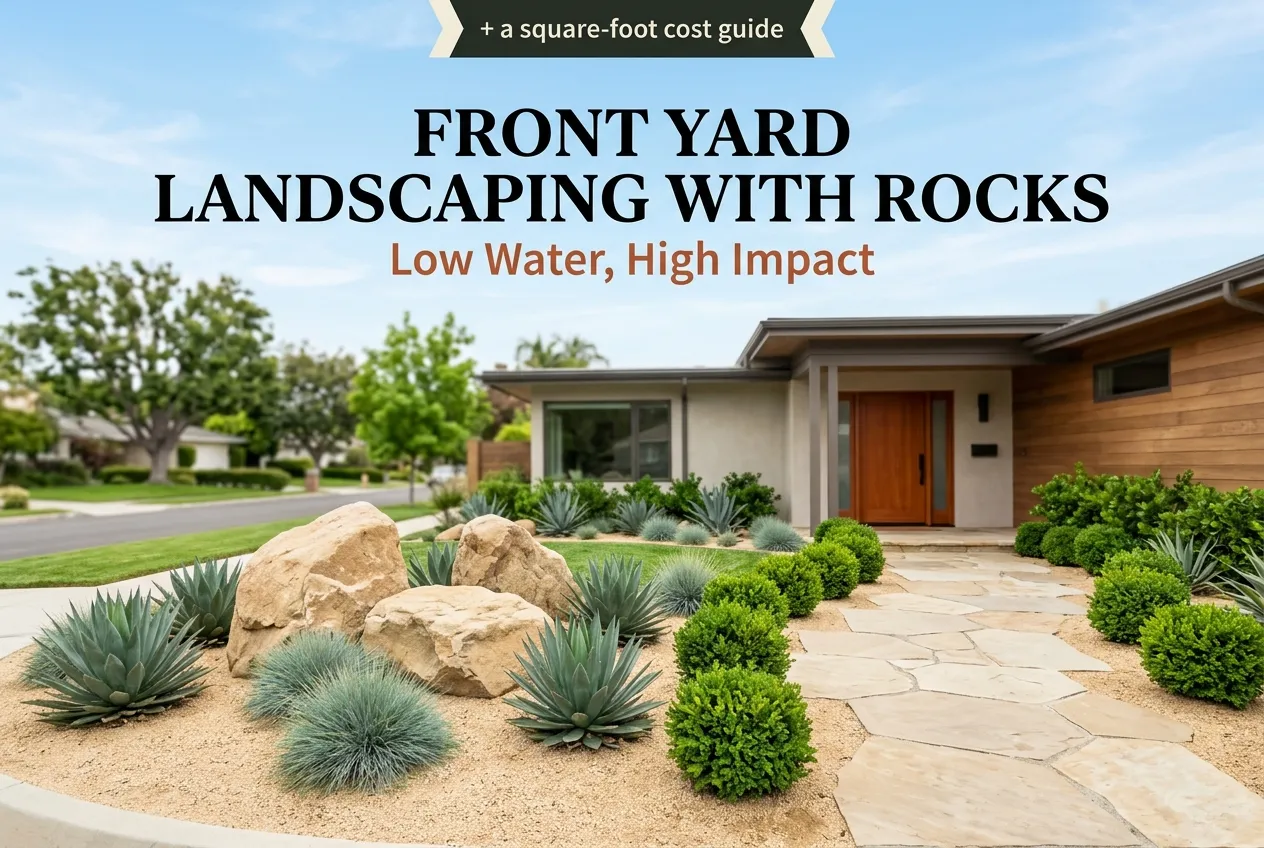
Rocks did something to our front yard that mulch never could. They made it look finished. Front yard landscaping with rocks is the fastest way we know to turn a tired grass strip into low-water, high-impact curb appeal, and you can start this weekend. No irrigation system. No weekly mowing. Just stone, a few tough plants, and a plan.
Here’s the promise. By the end of this, you’ll know which rocks to buy, how much they cost per square foot, where to place a boulder so it looks intentional, and the one mistake that quietly wrecks most rock beds within two years.
We learned some of this the hard way.
The first rock bed we built, we skipped the edging to save money. By the next spring, half our 3/8-inch pea gravel had migrated into the lawn and the mower flung it at the front window. We paid more fixing that than the steel edging would have cost up front, roughly $60 for a 4-foot stretch.
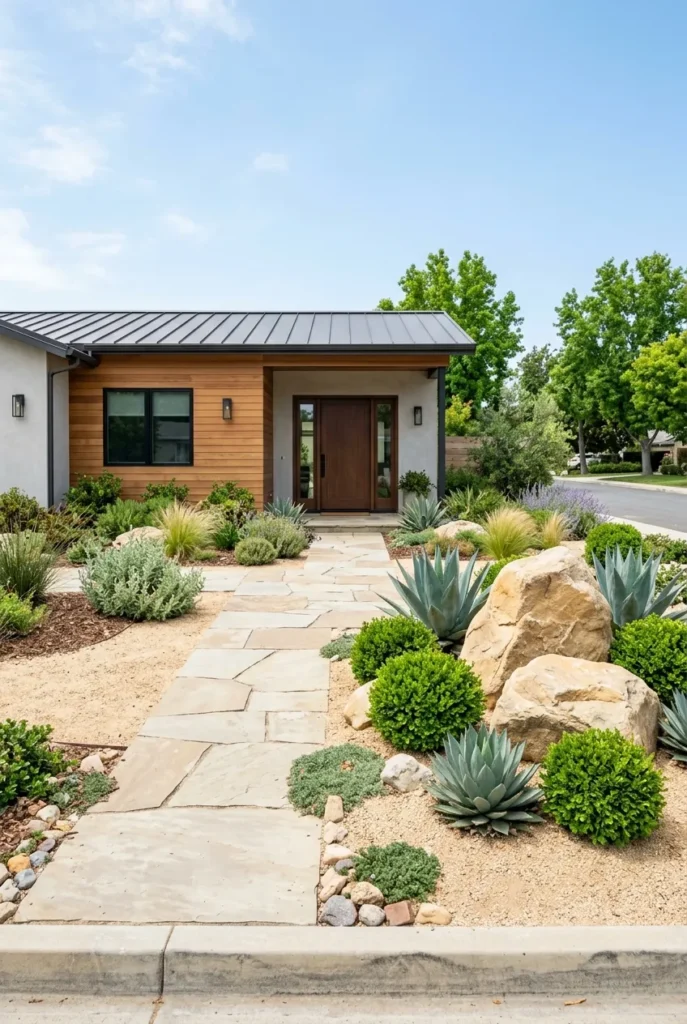
Why Rocks Beat Grass for Low-Maintenance Curb Appeal
Grass drinks water, needs mowing, and browns out in a July heat wave. Rock does none of that.
Swapping thirsty turf for stone is the core idea behind low maintenance front yard landscaping with rocks, and it pays off in three ways: less water on the bill, almost zero weekly upkeep, and a crisp, designed look that reads as expensive even when it wasn’t. The EPA points out that outdoor watering is a huge chunk of household use, so trading turf for stone and drought-tough plants follows the same logic as their water-smart landscaping guidance.
Stone also solves problems grass can’t. It holds a slope. It drains a soggy low spot. It gives you a clean, permanent border between the driveway and the flower bed.
One honest caveat, though. Rock is not truly “zero maintenance.” Leaves still fall on it. We rake ours twice a year and blow it off now and then. To be fair, that beats mowing every Saturday from April through October.
If you want the broader curb-appeal playbook beyond stone, our guide to budget front yard landscaping ideas covers plants, lighting, and the foundation line in more depth.
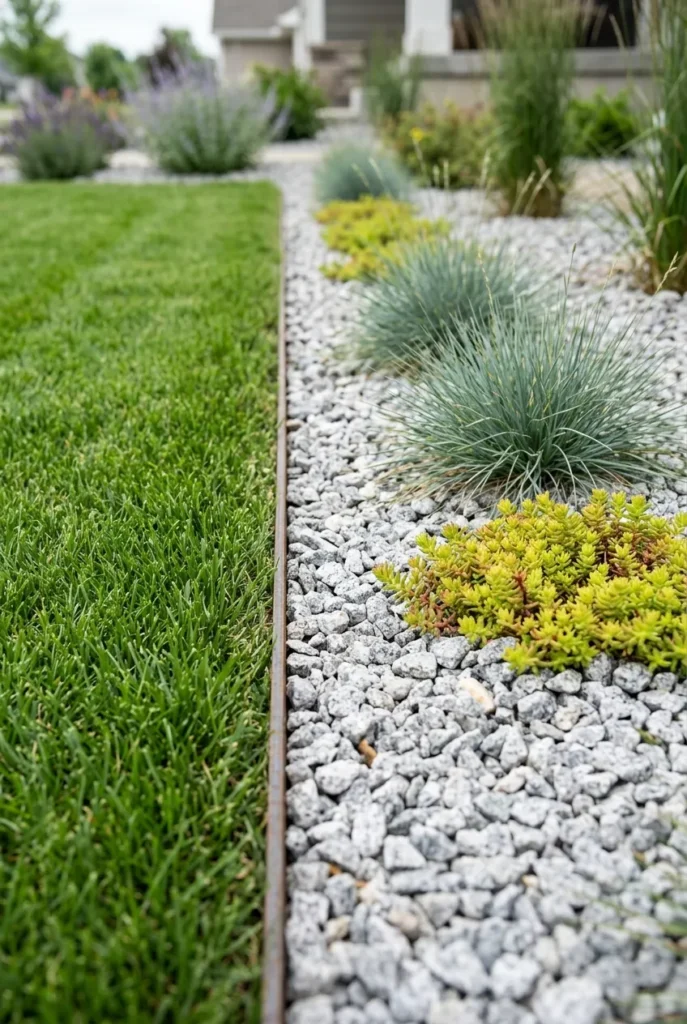
Choose the Right Rock Type First (This Decides Everything)
Before you touch a shovel, pick your stone. The rock type sets the whole look, the price, and how the yard functions.
Here’s the plain-English breakdown of the workhorses.
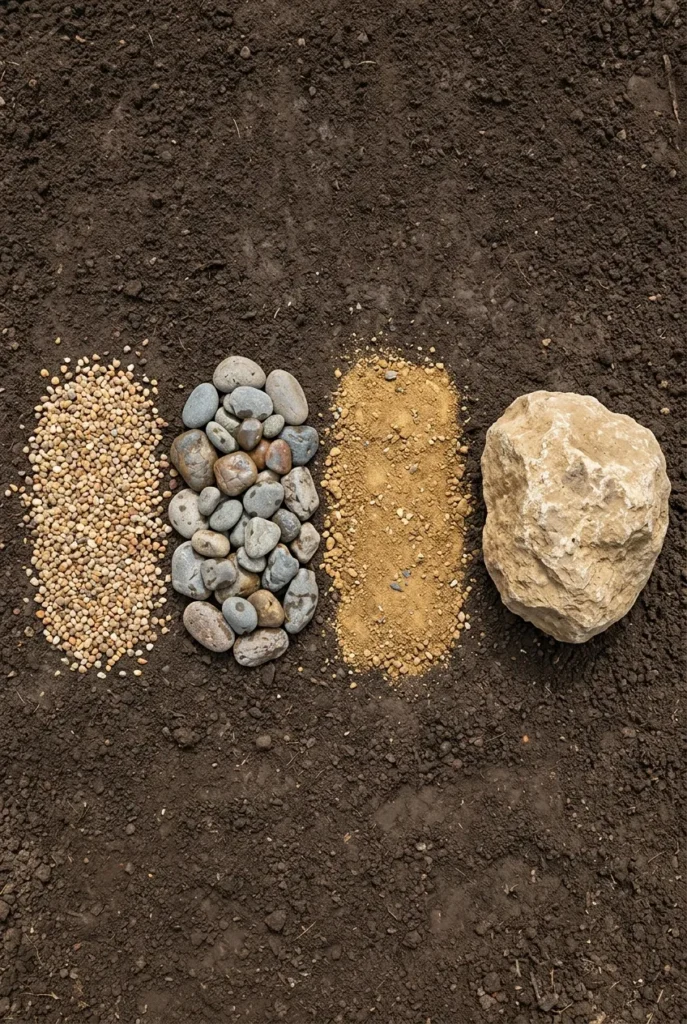
Pea Gravel
Small, rounded, usually 3/8 inch. It’s soft underfoot and cheap, which makes it great for filler and casual paths. The downside: it scatters and needs solid edging to stay put. Expect somewhere around $45 to $65 per cubic yard bagged, though bulk is cheaper.
River Rock
Larger, smooth, one to three inches. This is the star of front yard rock and mulch landscaping ideas because it reads clean and modern and doesn’t wash away. It’s the classic choice for a dry creek bed. River rock runs pricier than pea gravel, often in the $70 to $130 per cubic yard range depending on size and color.
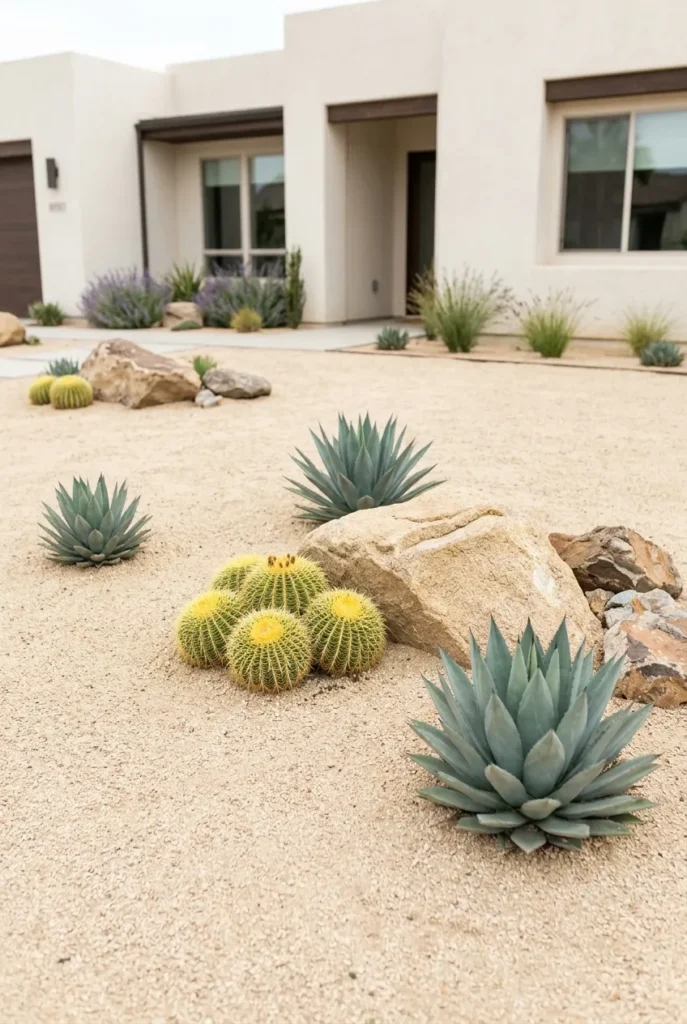
Decomposed Granite
Fine, compactable, tan or gold. It packs down into a firm, walkable surface that feels like a high-end path. We love it under a bench or along a walkway. It does shed a little grit onto shoes, honestly.
Crushed Stone and Boulders
Crushed stone (angular gravel) locks together and stays put on slopes, so it’s the pick for a graded yard. Boulders are the drama. One good anchor boulder can carry a whole bed.
A quick reality check on color: warm tans, buffs, and gold tones are trending hard right now, moving away from the cool blue-gray that dominated a few years back. Pinterest’s top pins lean earth-tone for a reason.
The Square-Foot Rock Rule: How Much Rock and What It Costs
Here’s the framework nobody else gives you. We call it the Square-Foot Rock Rule, and it kills the guesswork that leads to three extra trips to the store.
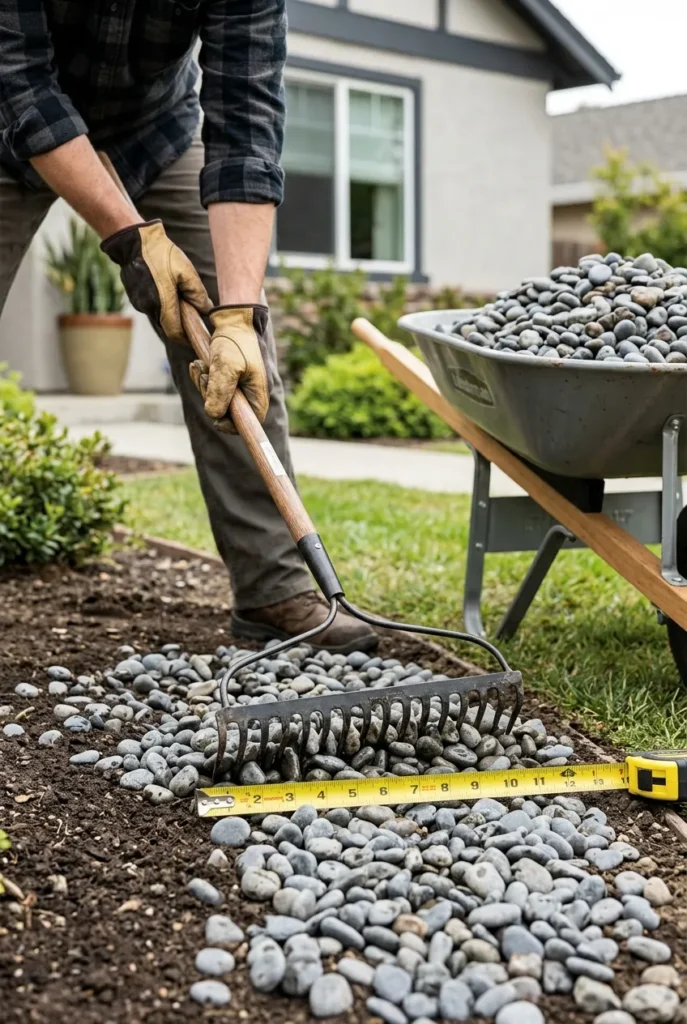
The rule has two parts. First, coverage: one cubic yard of rock covers about 100 square feet at two inches deep, which is the depth you want for a clean look that actually blocks weeds. Second, budget: price your project in tiers by yard, not by vague “it depends.”
Use this mini-table to plan before you buy.
| Bed size | Rock needed (2 in deep) | Rough material cost tier |
|---|---|---|
| Small strip, 100 sq ft | About 1 cubic yard | Budget tier, under $150 |
| Standard bed, 300 sq ft | About 3 cubic yards | Mid tier, roughly $250 to $450 |
| Full no-grass front, 600 sq ft | About 6 cubic yards | Splurge tier, $500 to $900+ |
Screenshot that table before you head to Home Depot or a local stone yard. Buy 10 percent extra. You’ll settle it, you’ll spill some, and running short mid-project is miserable.
For our 300-square-foot front bed we ordered 3 cubic yards of 1-inch river rock and thought we’d nailed it. We were about half a yard short because the bed dipped deeper than we measured near the downspout. One more delivery fee later, lesson learned: measure the low spots too.
Rock and Mulch Combo: The Cheapest Curb Appeal Win
You don’t have to choose stone or mulch. The best-looking front yards use both.
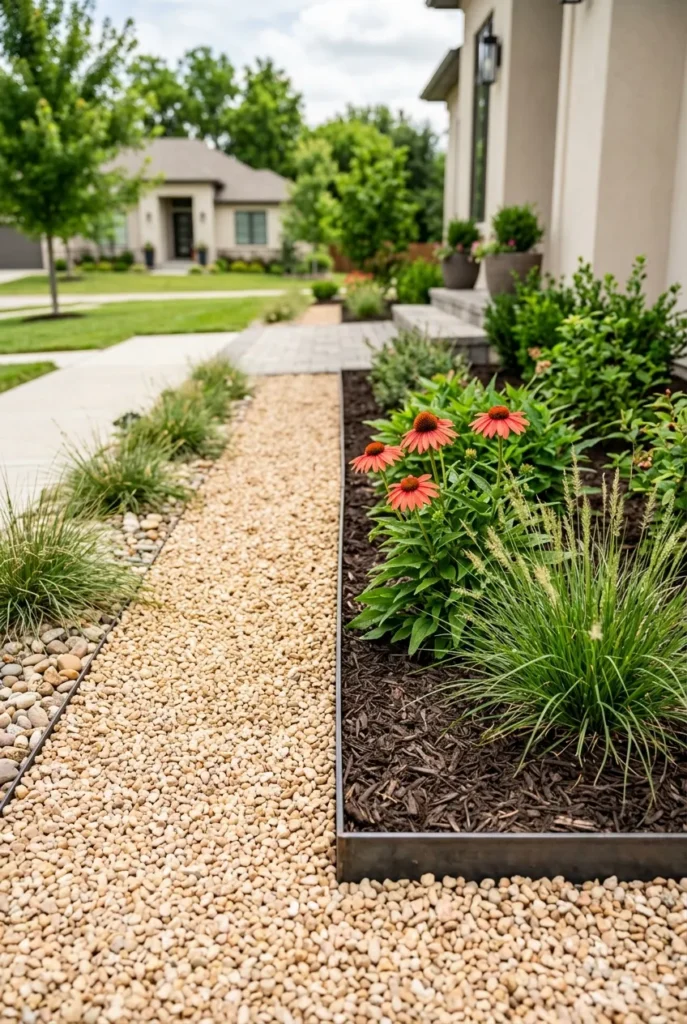
The move is simple. Rock goes where you want permanence and drainage: borders, paths, the strip along the driveway, around downspouts. Mulch goes where plants live and roots want cooler, richer soil. This front yard rock and mulch landscaping approach gives you the crisp modern edges of stone with the plant-friendly softness of mulch, and it stretches your budget because mulch is cheaper to cover big planting areas.
Keep the transition sharp. A steel or aluminum edge between the rock zone and the mulch zone is what separates a designer look from a muddy mess.
Contrast is your friend here. Pale gravel against dark brown mulch, or dark river rock against a light bark, gives that high-contrast, saved-worthy look the top pins all share.
Design Ideas That Photograph Well and Sell the Look
This is the fun part. A few layouts do the heavy lifting.
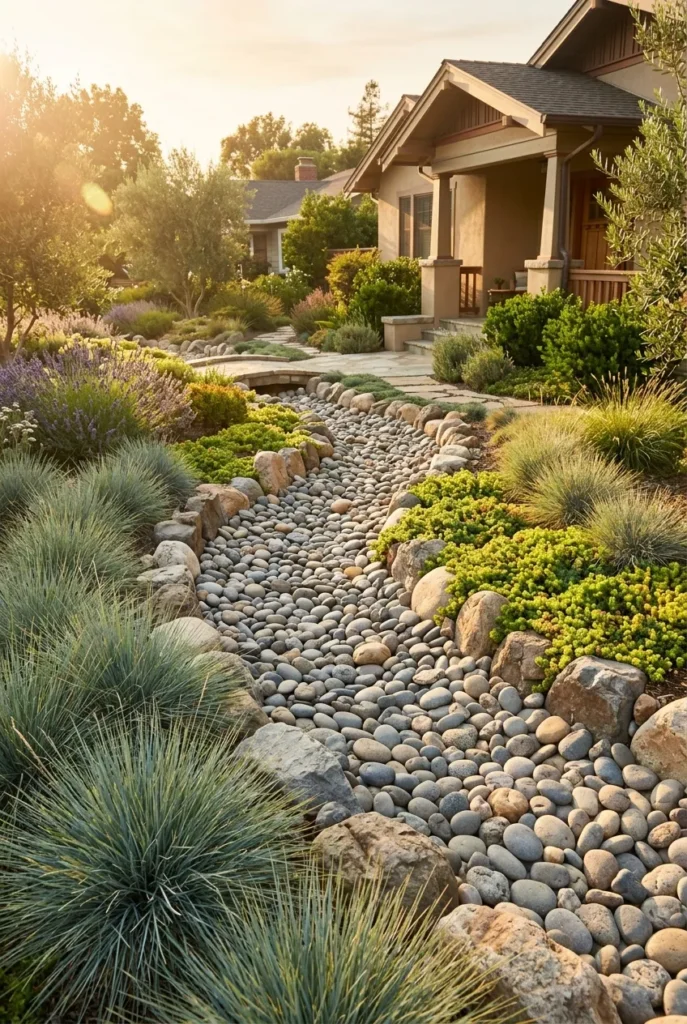
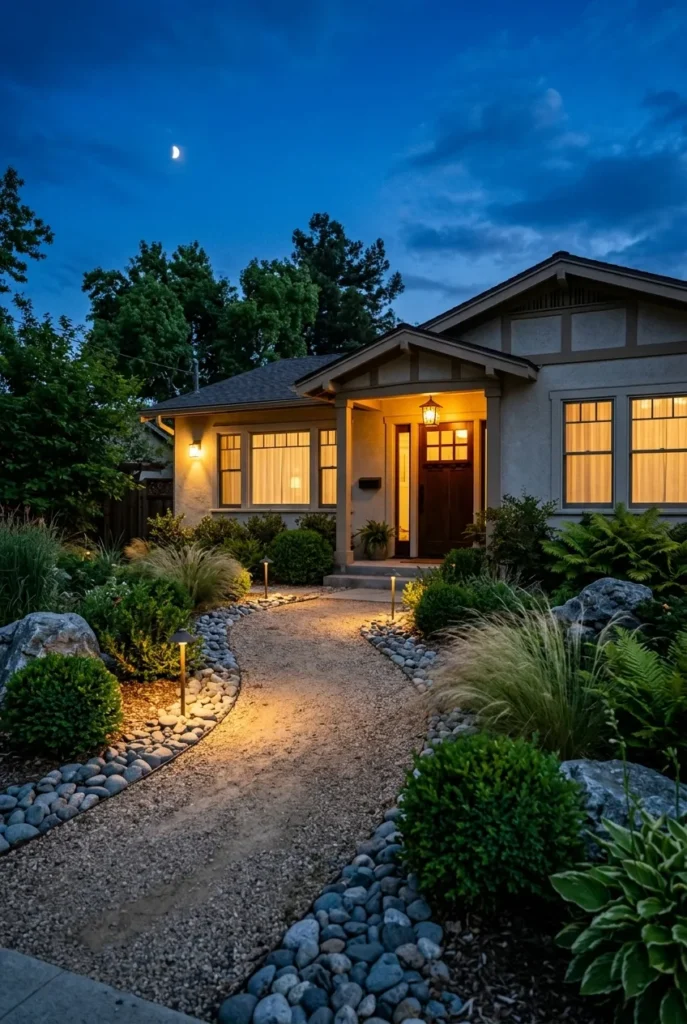
Dry creek bed. A winding channel of river rock that mimics a streambed. It looks intentional, handles runoff from a downspout, and it’s the single most-pinned rock idea for a reason.
Anchor boulder. One large stone, partially buried so it looks like it grew there, with low plants tucked at its base. Never sit a boulder on top of the soil like a marble; bury the bottom third.
Rocks-only, no-grass front. For the full front yard landscaping with rocks no grass look, cover the whole area in stone and let a handful of sculptural plants (agave, yucca, ornamental grasses) do the talking. This is the lowest-water option there is.
Rock border around trees. A tidy ring of river rock around a tree trunk, kept a few inches off the bark, looks clean and stops string-trimmer damage. Do not pile rock against the trunk.
Small-space strip. For a narrow bed between sidewalk and driveway, small front yard landscaping with rocks works beautifully: one rock size, one plant repeated, tight edging. Restraint reads as expensive. The same repeat-one-thing logic that makes small backyard landscaping feel calm applies out front too.
The Mistake That Wrecks Rock Beds (And What to Do Instead)
Here’s the gap almost every article skips: landscape fabric.
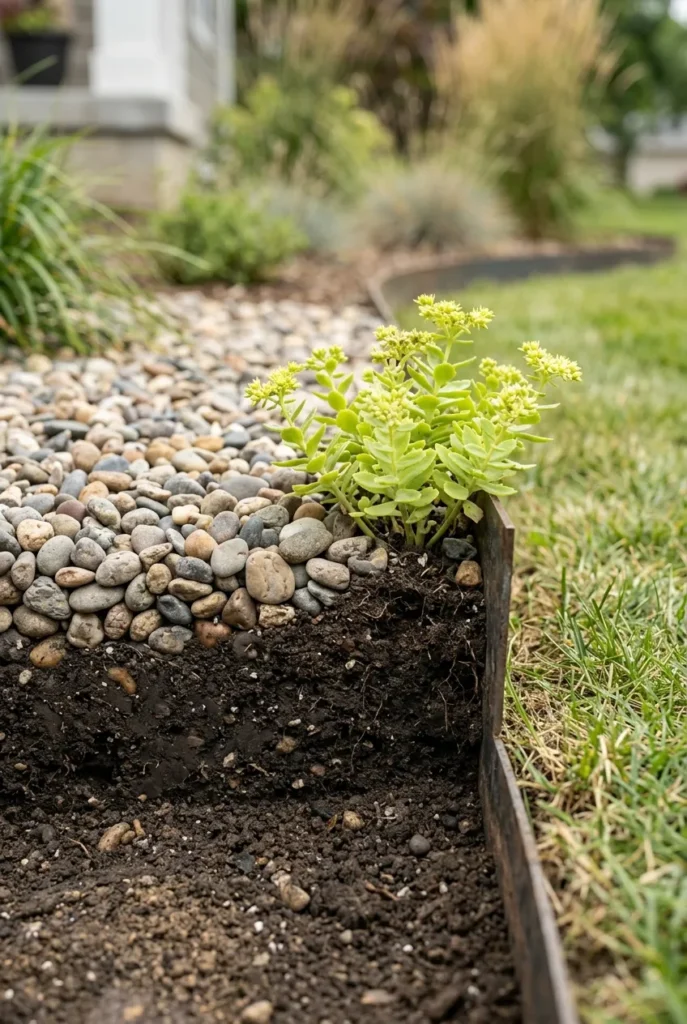
Everyone reaches for that roll of black weed-barrier fabric under their rock. It feels smart. It’s a trap. Within a couple of seasons, dust and organic matter settle into the rock, sit on top of the fabric, and weeds root in that layer anyway. Now you’ve got weeds you can’t pull cleanly because the fabric is tangled around everything, and water sheets sideways instead of draining.
What we do instead: skip the fabric under gravel, grade the soil well, lay rock at a full two inches or more, and spot-treat the occasional weed. For planting areas, use mulch and let the soil breathe.
One exception. A permeable, woven fabric under a pure decomposed-granite path (where nothing will grow) can help it stay firm. For plant beds, leave it out.
We fabric-lined our first river rock bed in the fall and by the following summer we were pulling crabgrass out of the top layer every week. We tore it all out, regraded, and went fabric-free. The second version has needed maybe ten minutes of weeding a season since.
Pick Plants That Survive the Rock (Match Your Zone)
Rock beds get hot. Stone soaks up sun and radiates heat, so thirsty plants struggle. Choose tough ones and match them to your climate.
Check your USDA hardiness zone before you buy a single plant, because a lavender that thrives in Zone 7 can sulk in Zone 5. Most of the country planning these yards sits in Zones 5 through 9, and the frost timing matters: in a typical Zone 5 spring, your last frost lands around mid-May, so hold tender plants until then. Confirm your own last-frost date against the USDA map or your local extension, since it shifts year to year and by microclimate.
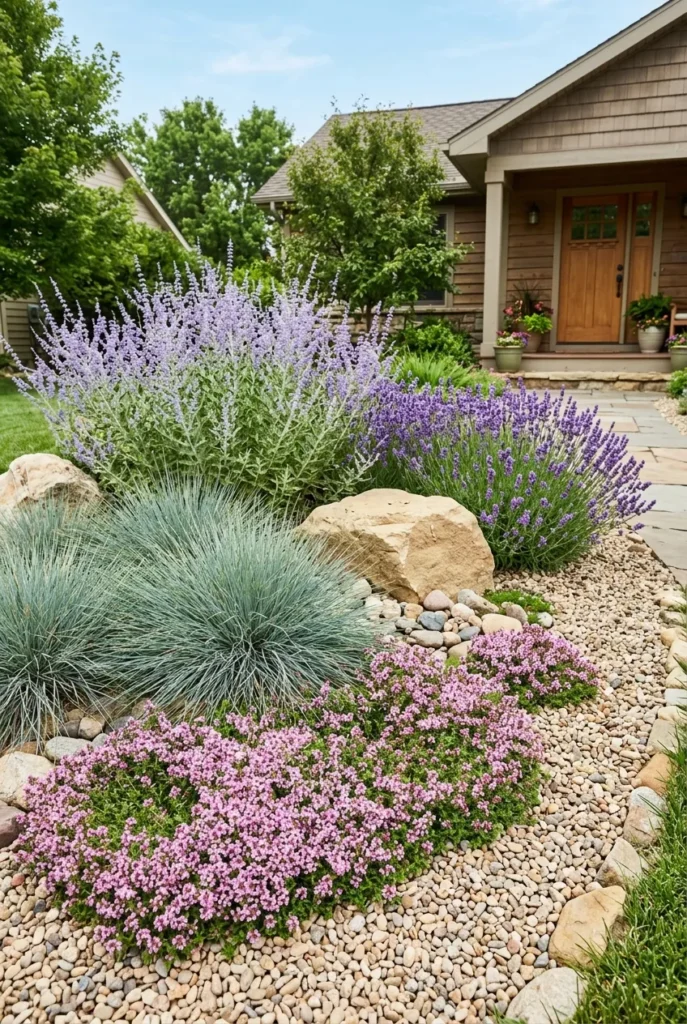
Reliable performers for rocky, sunny front beds: agave and yucca for structure, blue fescue and little bluestem for movement, sedum and creeping thyme for groundcover, lavender and Russian sage for color and scent, and boxwood for tidy evergreen shape.
Plant in fall where you can. The soil is still warm, the air is cool, and roots get a free head start before summer.
Renter, HOA, and Resale Reality Check
Nobody warns you about this part, so we will.
If you rent, go with rock in movable planters and a defined gravel path you can rake back up, not a permanent poured border. You keep the look and your deposit. A simple gravel patio or a portable gravel seating nook gives the same vibe without demolishing anything.
If you have an HOA, read the covenants before you rip out turf. Some neighborhoods cap how much lawn you can replace or require specific rock colors. A quick email to the board saves a costly do-over.
On resale: a tasteful rock front usually helps, since buyers read it as low-maintenance. A full moonscape of nothing but gray gravel can read as cold and hurt you. Balance stone with enough green to feel alive.
FAQ
How do you landscape a front yard with rocks?
Start by choosing one main rock type, then define your zones: rock for borders, paths, and drainage, mulch for planting areas. Grade the soil, set edging, lay rock two inches deep, add a few tough plants, and finish with an anchor boulder or dry creek bed for interest.
What is landscaping with rocks called?
It goes by a few names. Rock gardening or rockscaping is the general term. When it’s specifically about cutting water use with stone and drought-tolerant plants, it’s called xeriscaping. A desert-style version is often just called desert landscaping.
What are the different types of landscaping with rocks?
The common ones are dry creek beds, rock-and-mulch combos, no-grass rock fronts, boulder accents, gravel paths, and rock borders around trees or along driveways. Most yards mix two or three of these.
What counts as front yard landscaping?
Front yard landscaping is any intentional design of the space between your home and the street: plants, hardscape like rock and pavers, walkways, lighting, and edging that together shape your curb appeal.
Do I need landscape fabric under rocks?
Usually not under plant beds. Fabric tends to trap debris that weeds root into, and it blocks drainage. Grade well, lay rock at least two inches deep, and spot-treat weeds instead. A woven permeable fabric under a pure gravel path is the one reasonable exception.
What is the cheapest rock for front yard landscaping?
Pea gravel and crushed stone are typically the most budget-friendly per cubic yard. Buying in bulk from a local stone yard usually beats bagged prices, especially for beds over 200 square feet.
How much does a rock front yard cost?
Plan by the yard. One cubic yard covers about 100 square feet at two inches deep. A small strip can land under $150 in materials, while a full no-grass front of 600 square feet can run $500 to $900 or more before plants and edging.
Your Weekend Starts With One Bed
You don’t have to redo the whole yard at once. Pick one strip, choose one rock, set your edging, and lay it two inches deep. That single finished bed will teach you more than any guide, and it’ll look good enough that you’ll want to keep going.
Save the ideas here that fit your zone and your budget, then tell us in the comments which rock you’re starting with. We read every one, and we love seeing your before-and-afters.