Fall Cozy Backyard Tree and Hedge Ideas: Simple Ways to Start

Most yards don’t feel exposed because they lack furniture. They feel exposed because nothing surrounds you at eye level. These cozy backyard tree and hedge ideas fix that from the ground up, and fall is the time to start, while the soil is still warm and nurseries are clearing out stock.
You don’t need a wall of 50-foot trees or a landscaper’s budget.
You need the right plant in the right spot, spaced so it still looks good in year eight. Most privacy disappointments come down to one of three things: the wrong plant for the lot, plants jammed too close, or a planting that never makes it through its first winter.
Below are nine simple starts for USDA Zones 5 to 9. Test your sight lines from the chair you actually use. Pick trees that fit your lot instead of swallowing it. Ring a patio with a low hedge so it reads like a room, and get every new plant through January in one piece.
We’ll also hand you The Tag-Width Rule, a one-glance spacing table that settles the “how far apart” argument every hedge guide seems to have. Save it before you shop.
The Tag-Width Rule: read the width, not the height
Every nursery tag carries two numbers. Height decides your privacy. Width decides your spacing, and it’s the number people skip. Extension guidance for evergreens you won’t shear is simple: space them no closer than their mature width so the canopies don’t crowd and thin out. Plant tighter only for two cases, a variety bred to knit into one wall or a formal hedge you’re willing to shear several times a season. Keep this table on your phone in the nursery aisle.
| 📏 Plant | Mature width | Space it | Best for |
|---|---|---|---|
| Emerald Green arborvitae | 3 to 4 ft | 3 to 4 ft apart | Narrow side yards, small lots |
| Green Giant arborvitae | 12 to 15 ft | 5 to 8 ft apart, bred to merge | Big, open lots only |
| Sky Pencil holly | 2 to 3 ft | 2 to 3 ft apart | Pots, tight beds, gap filling |
| Autumn Brilliance serviceberry | 15 to 20 ft | One tree, not a hedge | A canopy over your seating |
1. The Rake-Handle Test: Find the Three Spots That Actually Need a Tree
Most people plant along the entire fence. Most yards only need two or three plants in exactly the right places.
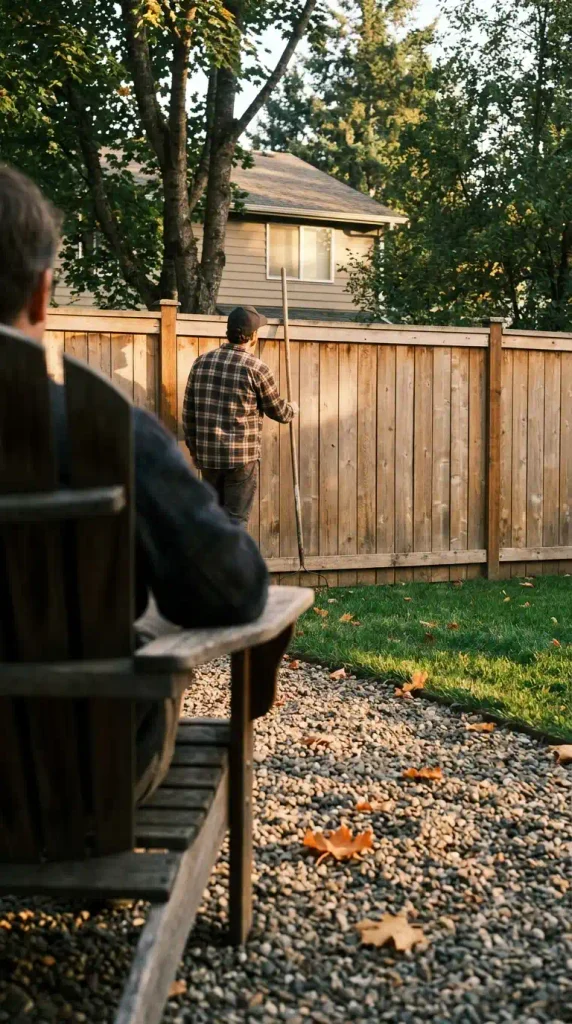
The neighbor’s kitchen window. The second-story deck next door. The low dip in the fence where the street shows through. Those are your real problem spots, and you only find them sitting down, because a view that looks wide open from the back door can be totally private from your chair.
Run the test at the hour you actually use the yard. A sight line at 7 p.m., with the lights on next door, is a different problem than the same view at noon.
Sit in the chair you use most, at the time of day you use it.
Have a helper walk a rake handle or a 10-foot pole slowly along the fence line.
When the pole hides the window or deck, push in a stake and write down how high the pole had to go. That height is your plant target.
You’ll buy fewer plants, keep more open lawn, and still feel tucked in.
2. Plant This Fall, but Let Your Zone Pick What Goes In First
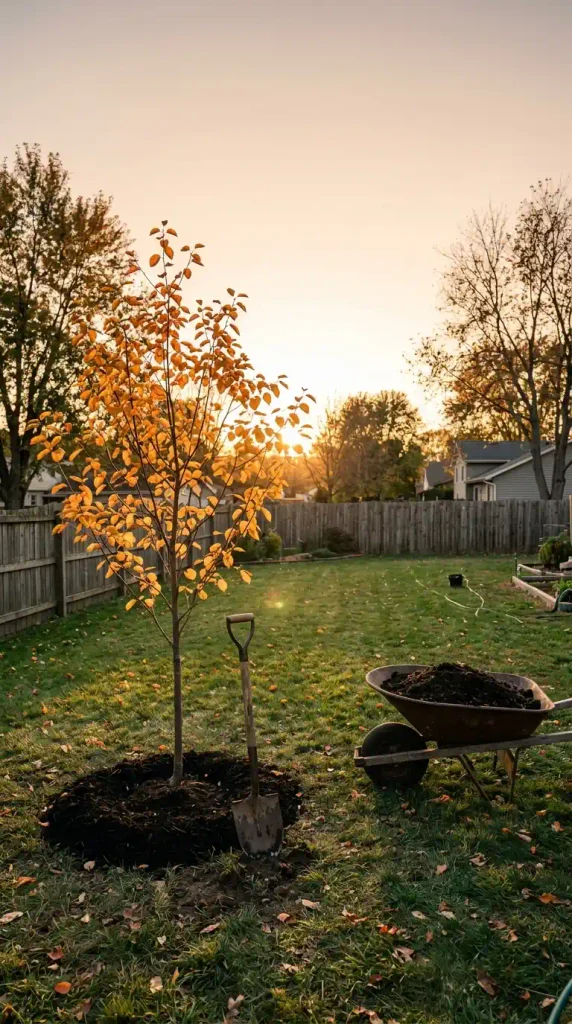
Fall really is prime planting time. Warm soil keeps roots growing after the air cools, and extension horticulturists want trees and shrubs in the ground at least six weeks before it freezes.
Here’s the part most fall lists skip. In colder regions, fall planting guidance from UMass Extension says to get pine and spruce in before the end of September, and to wait until spring for yew and broadleaf evergreens like rhododendron. Deciduous trees and most deciduous shrubs settle in easily in fall.
So by late October, the smart split looks like this:
- Zones 5 and 6: plant deciduous trees and shrubs now, and save evergreens for spring.
- Zones 7 to 9: your window runs later, so evergreens still have time to root.
Not sure where your yard sits? Count back six weeks from when your ground usually freezes, and ask your county extension office if you want the local date.
3. Build an Evergreen Privacy Screen From Three Plants, Not One
A single pest or disease can wipe out a hedge made of one plant. A mixed screen spreads that risk, so one bad year doesn’t leave a gap you wait five years to fill.
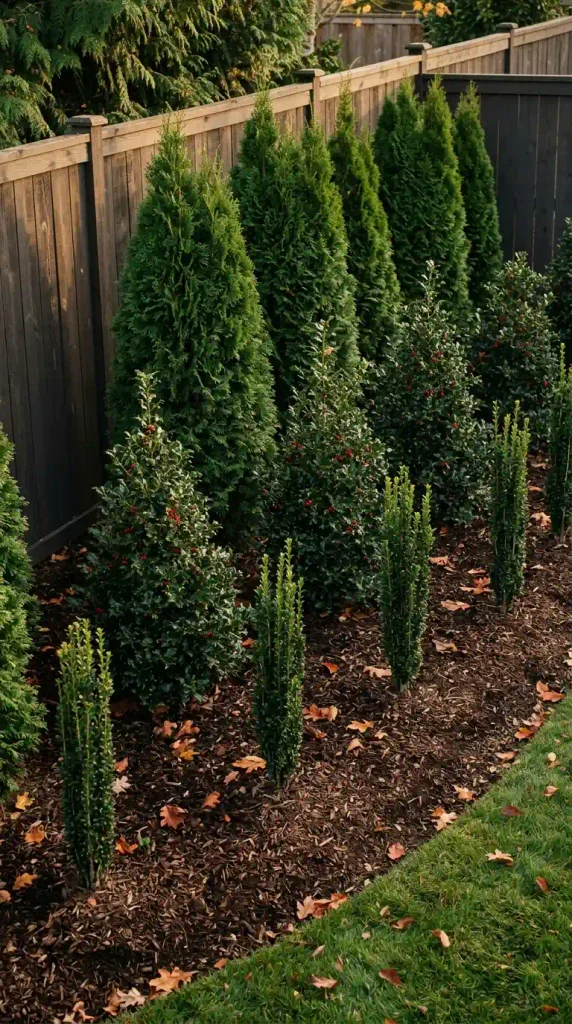
Here’s an easy three-plant mix for Zones 6 to 8:
- Back row, tall: Green Giant arborvitae. A 3-gallon ran about $45 to $55 at Home Depot when we priced it this October.
- Middle, broad: Nellie Stevens holly, a pyramidal broadleaf evergreen that suits smaller yards and carries red berries into winter.
- Front, slim: Sky Pencil holly, narrow columns that plug gaps without eating the lawn.
Stagger them in a loose zigzag instead of a ruler-straight row. Every plant gets light on more sides, and the whole screen reads like it grew there. Space each one by The Tag-Width Rule above.
Repeat each plant at least twice so the mix looks planned, not random.
Zigzag the rows so every plant gets side light.
Ten of one plant in a single straight line.
Spiny-leaf holly beside paths where kids or dogs run barefoot.
4. Skip the Fastest Growing Hedge for Privacy if Your Yard Is Small
Green Giant arborvitae is the hedge everyone recommends for fast privacy, and it earns the reputation. It’s quick and tough. It’s also enormous: Home Depot’s own listing puts it at 30 to 60 feet tall and roughly 12 feet wide at maturity.
On a small lot, that width takes a huge bite out of the yard you were trying to make comfortable.
Look closely at the next nursery tag you pick up. Height gets the big print. Width usually hides in the small print at the bottom, and that’s the number that decides if you still have a lawn in ten years.
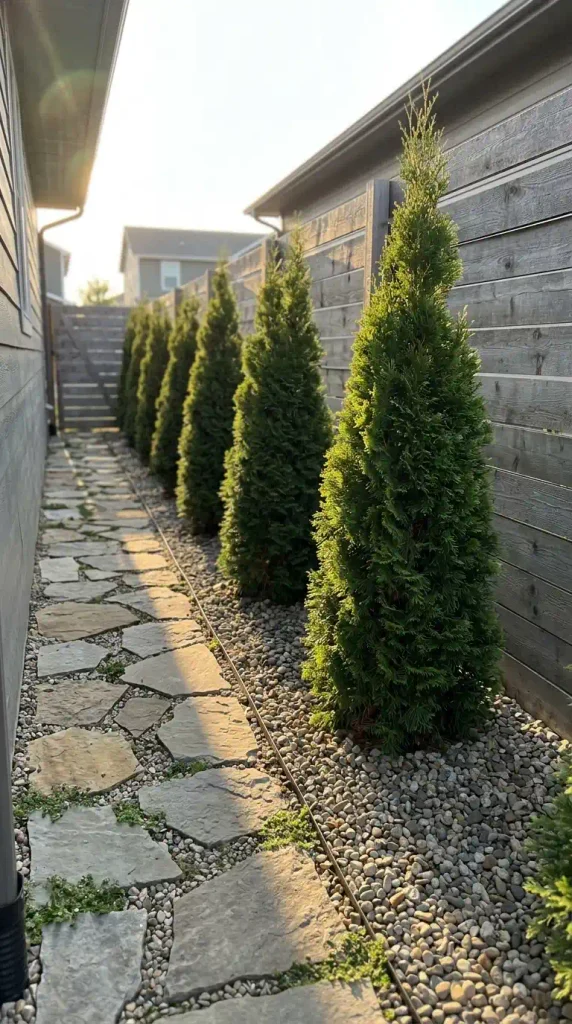
For most small yards, Emerald Green arborvitae is the better call. It tops out around 12 to 15 feet and stays just 3 to 4 feet wide. Slower, yes. So buy the biggest pot your budget allows and let The Tag-Width Rule set the spacing.
Patience costs less than a chainsaw.
| Green Giant | Emerald Green | |
|---|---|---|
| Mature height | 30 to 60 ft | 12 to 15 ft |
| Mature width | 12 to 15 ft | 3 to 4 ft |
| Growth speed | Fast | Moderate |
| Right yard | Big, open lots | Small yards, side strips |
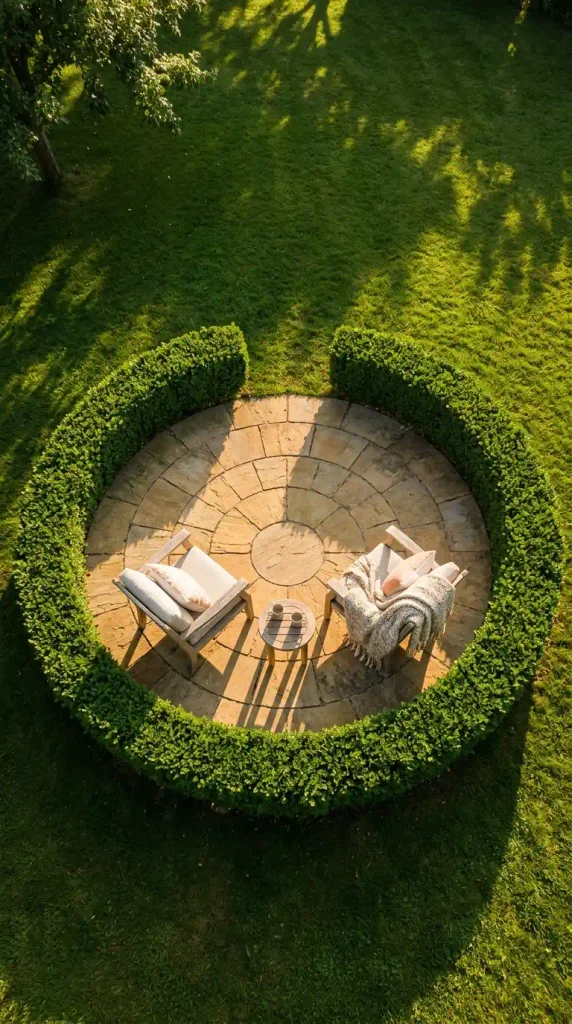
5. Ring the Patio With a Waist-High Hedge So It Feels Like a Room
Enclosure doesn’t need height everywhere. A hedge kept at 3 to 4 feet sits close to eye level once you sit down, so it hides the street from your chair without blocking the sky.
Boxwood or a compact holly both clip neatly into that size.
A low hedge marks the edge of the room. Your eye stops at the green, not at the neighbor’s shed.
Leave one opening, about 3 feet wide, facing the lawn. That doorway is what makes the space feel like a room instead of a pen.
Want the edge to feel even more built? Pair the hedge with one of these garden wall ideas that add real structure, and plant the green on the outside face so it softens the stone.
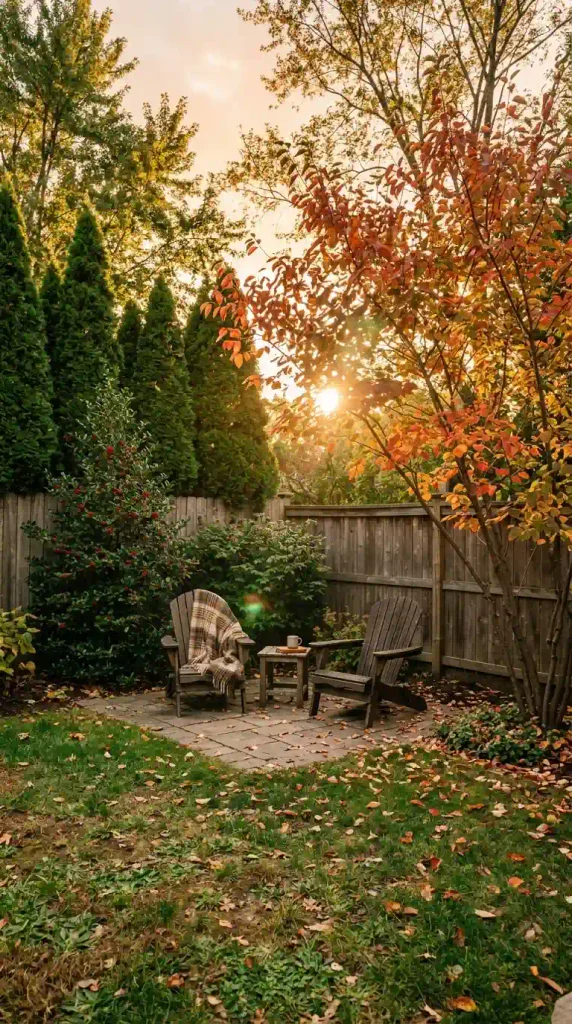
6. One Small Tree Over Your Chair Beats a Row of Privacy Trees in a Small Backyard
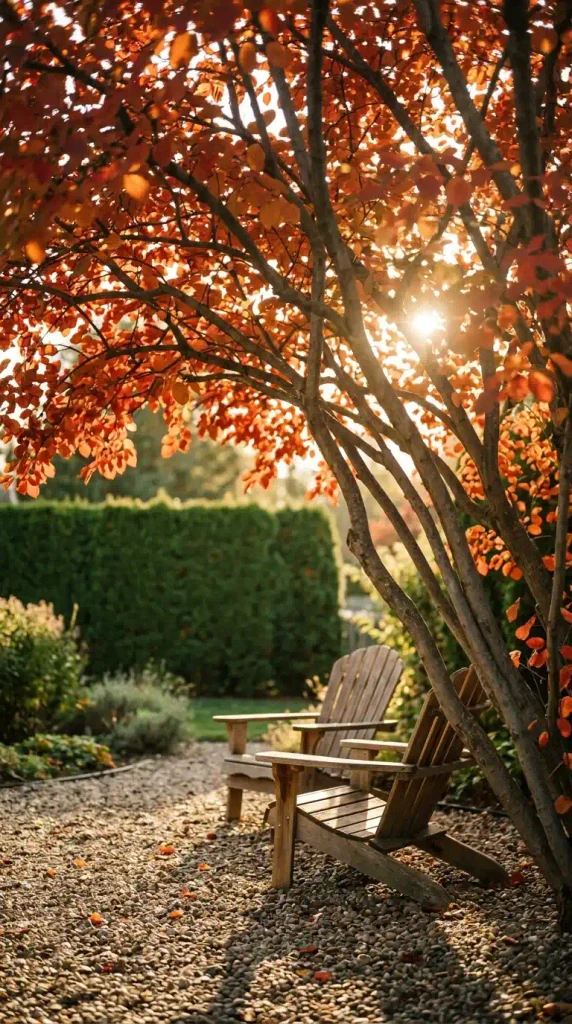
A ceiling does more for that tucked-in feeling than another wall. One small tree arching over your seating spot blocks the view from second-story windows, which no fence can do.
‘Autumn Brilliance’ serviceberry is our pick for Zones 4 to 8. It grows into a multi-stem small tree around 15 to 25 feet tall, flowers white in early spring, sets blueberry-like fruit the birds go after, and turns red-orange in fall. Spring Hill lists a young plant for about $40.
Set it about 6 feet off the patio edge so the canopy reaches over the chairs as it matures. If your seating spot is still bare dirt, start with a step-by-step gravel seating corner and plant the tree beside it.
7. Renter-Friendly Privacy: Grow a Hedge in Pots You Can Take With You
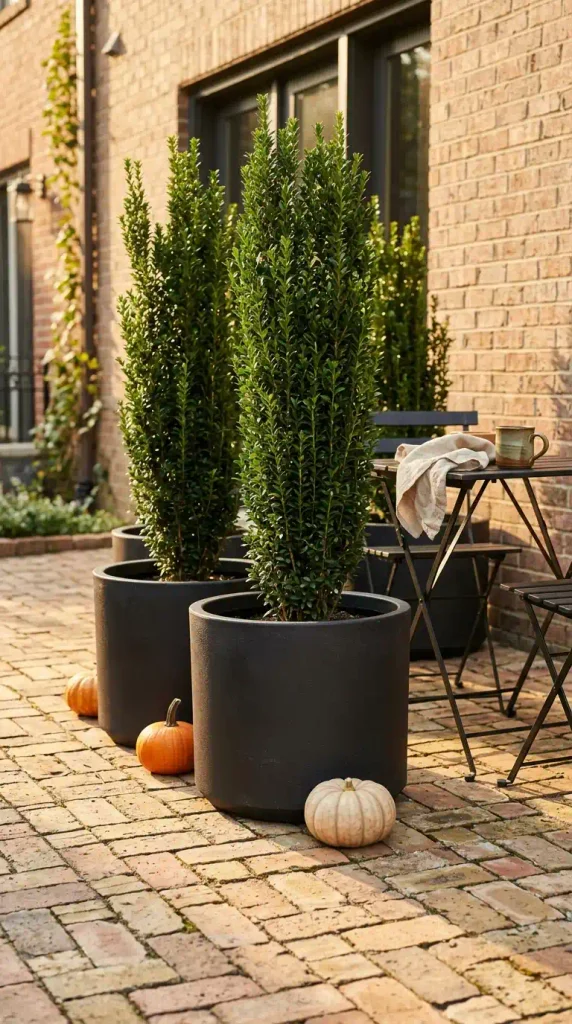
No digging and no landlord conversation. Three or four big pots along a patio edge screen a seating area as well as an in-ground hedge, and they move when you do.
The catch is cold. Roots in a pot sit above ground, so they take winter harder than roots in a bed. Choose plants rated a zone or two colder than yours, and check your number on the USDA plant hardiness zone map before you buy.
Sky Pencil holly is the classic pot hedge in milder zones; a 3-gallon ran about $25 at Tractor Supply and up to about $70 at Home Depot when we checked. Up north, Emerald Green arborvitae is the tougher choice. Space pots by The Tag-Width Rule too, so Sky Pencils sit 2 to 3 feet apart, center to center.
🪴 Renter hedge kit
8. Find the Trunk Flare Before You Dig a Single Hole
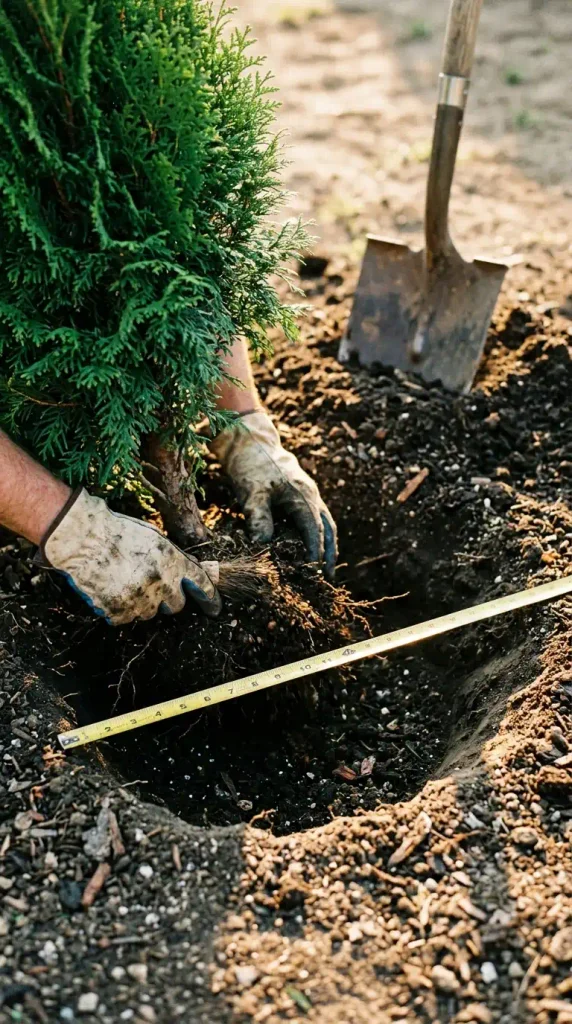
Most potted trees and shrubs come home with extra soil piled over the spot where the trunk widens into the roots. Scrape the top inch or two away with your fingers until you see that flare. That’s your planting line, and planting below it is one of the quickest ways to lose a new tree.
Then plant it the way extension services teach:
- Measure from the flare to the bottom of the root ball and dig only that deep.
- Dig 2 to 3 times wider than the root ball, so new roots push into loose soil.
- Loosen any circling roots. Water halfway through backfilling, let it drain, then finish and water again.
- Mix a starter like Espoma Bio-tone Starter Plus into the backfill. A 4-pound bag runs about $10 to $20 depending on the store. Follow the product label exactly. The label is the law, and more is never better.
Save regular fertilizer for spring.
⚠️ Watch Out
Call 811 a few business days before you dig, even for one shrub. Utility lines can sit just inches down, and the marking is free.
9. Water Deep, Mulch, and Burlap the Windy Side Before the Ground Freezes
Evergreens keep losing water through their foliage all winter, but frozen ground can’t refill them. That’s winter burn, and brand-new plants get hit hardest.
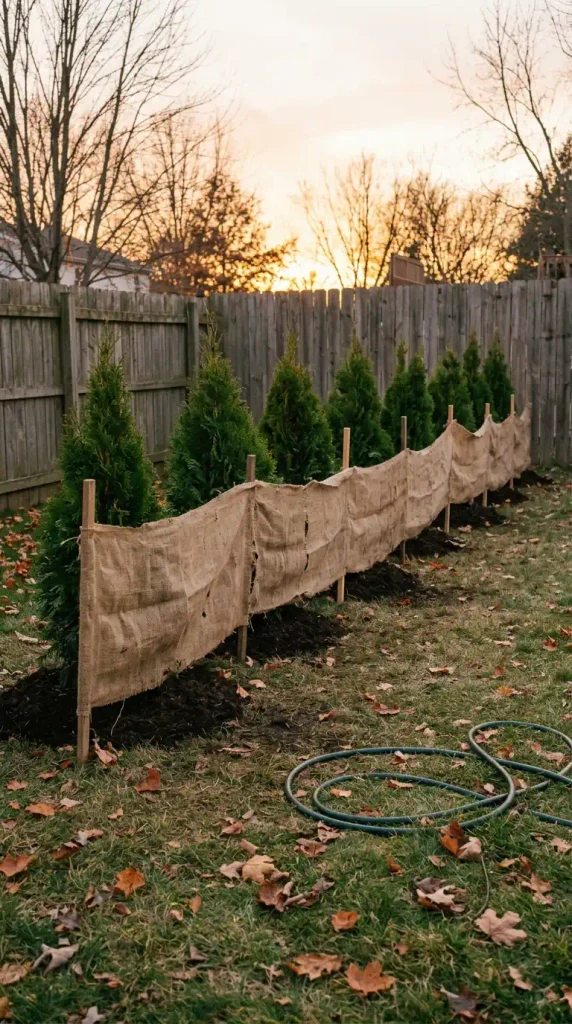
The fix takes one weekend. Keep watering deeply until the ground freezes, enough to wet the top 6 to 8 inches. Spread about 3 inches of mulch, pulled back off the trunk. On exposed sites, staple burlap to stakes on the windward side instead of wrapping the plant tight.
Skip the anti-desiccant spray on arborvitae. Illinois Extension notes some of those products aren’t meant for scale-leaf evergreens.
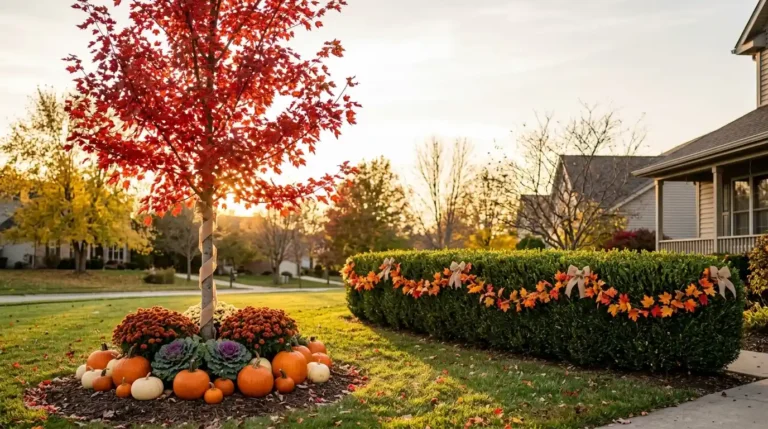
Once the burlap’s up, you can still make the corner look intentional. Our guide to styling fall tree and hedge decor has budget ideas that work around a brand-new planting.
Cozy Backyard Tree and Hedge Ideas Frequently Asked Questions
How far apart should you plant privacy trees?
Use the mature width on the tag. For evergreens you won’t shear, plant them no closer than that width, so Emerald Green arborvitae (3 to 4 feet wide) goes 3 to 4 feet apart. Varieties sold to merge into one wall, like Green Giant, are usually set 5 to 8 feet apart. Plant tighter only if you’re ready to shear a formal hedge several times a season.
What is the best privacy tree for a small backyard?
Pick narrow evergreens over fast giants. Emerald Green arborvitae reaches about 12 to 15 feet tall but stays 3 to 4 feet wide, and Sky Pencil holly stays around 2 to 3 feet wide. For screening second-story windows, one small canopy tree like ‘Autumn Brilliance’ serviceberry, placed over your seating spot, often does more than a full row of trees.
When is the best time to plant a privacy hedge?
Fall works well in most of the US, as long as plants go in at least six weeks before your ground freezes. In colder Zones 5 and 6, deciduous trees and shrubs handle late fall planting best, while yew and broadleaf evergreens often do better planted in spring. In Zones 7 to 9, the fall window runs later and suits evergreens too.
How close to a fence can you plant privacy trees?
Plant at least half the mature width away from the fence, so the back of the plant has room to grow and gets light. That puts a 4-foot-wide Emerald Green about 2 feet off the fence, and a Green Giant 6 feet or more. Check your property line and any HOA rules first, since branches will eventually reach the neighbor’s side.
What privacy trees stay green all year?
Evergreens hold their foliage through winter, so arborvitae, holly, yew, and juniper all screen year-round. Deciduous trees like serviceberry drop their leaves, which opens the view in winter but gives you fall color and spring bloom. Many yards use a mix: evergreens where you need privacy every month, and a deciduous tree where summer shade matters more.
Is a hedge cheaper than a privacy fence?
Plants usually cost less upfront, but you pay in time and care. A 50-foot run of Green Giant arborvitae at 5-foot spacing needs about 10 plants, roughly $450 to $550 at the 3-gallon size we priced, plus mulch and watering. A fence gives privacy on day one, so get a local quote and compare it against the years a hedge needs to fill in.
Start With One Spot This Weekend
Start small this fall. Run the rake-handle test, plant one tree where it actually blocks a view, and let The Tag-Width Rule keep you from crowding the rest. Those three moves beat any long list of cozy backyard tree and hedge ideas, because they fit your yard instead of someone else’s.
Next spring, add the evergreens your zone held back, and the space starts to feel like a room you want to sit in after dinner.
Save this to your fall yard board so the spacing table is on your phone when you’re standing in the nursery aisle.