Apartment Balcony Garden Ideas That Actually Work (For Renters, Any Shade Level, and Any Budget)
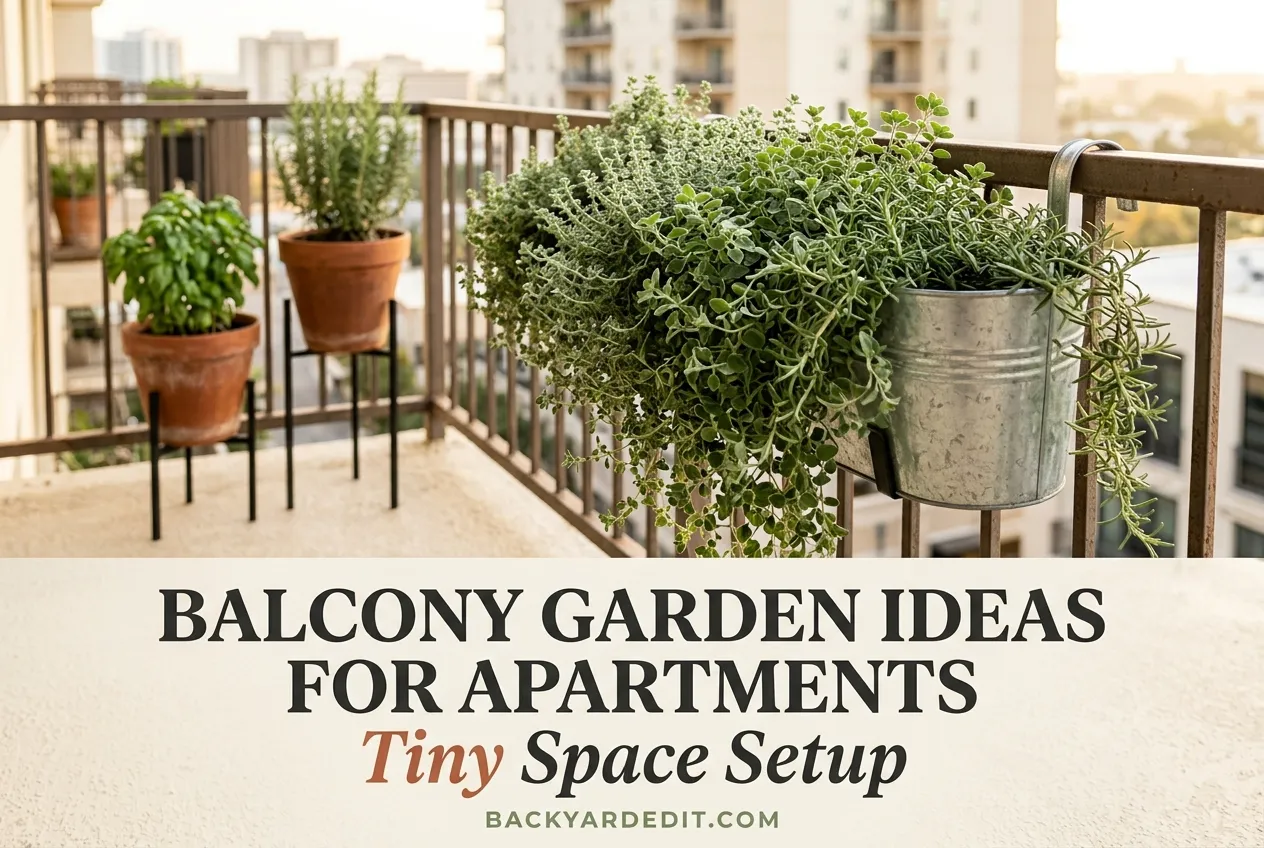
Balcony garden ideas for apartments sound great until you’re actually standing on 40 square feet of concrete, looking at a metal railing and wondering where exactly the garden is supposed to go. My north-facing balcony got 4 hours of morning sun at best, and that single fact rewrote my entire plant list before I spent a dollar on seeds. Here’s what every other guide skips: apartment balconies are some of the most satisfying spaces to garden, precisely because the constraints force smart decisions. No sprawl, no guessing.
You work with what you’ve got. This guide covers the renter-safe, zone-smart balcony garden setup that holds up from March through November, whether you’re working with blazing southern sun or a permanently shaded east-facing slab. Start with our 17 small-space container garden ideas that actually produce food if you want the foundational plant-and-pot thinking before you buy anything.
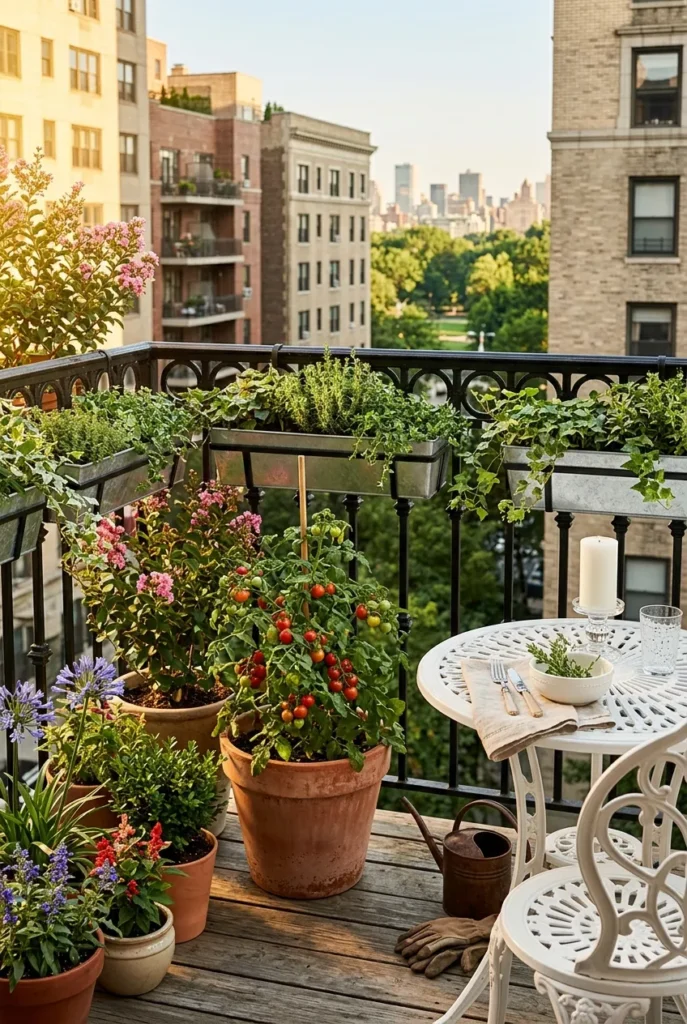
Start With the Sun: Your Entire Plant List Depends on This One Step
Before you buy a single pot or plant, spend one full day tracking where direct sun actually hits your balcony. Most apartment gardeners skip this step, load up on tomatoes and basil, then spend July watching everything burn or go leggy. Four data points are all you need: 9 a.m., noon, 3 p.m., and 6 p.m. Write them down or photograph the shadow line on your floor.
Here’s what each result means for your plant choices:
- 6+ hours of direct sun daily: Cherry tomatoes, sweet peppers, Bonnie Plants Genovese basil, zinnias, marigolds, cucumbers on a vertical trellis, and most culinary herbs are all fair game.
- 3 to 5 hours (partial sun): Lettuce, spinach, cilantro, mint, chives, nasturtiums, pansies, and strawberries will thrive. Most full-sun vegetables won’t.
- Under 3 hours daily: Shade territory. Golden pothos, Boston ferns, peace lily, impatiens, coleus, caladiums, and spider plant all perform well. Vegetables and heat-loving herbs mostly won’t.
The shade category is far bigger than most guides admit. A north-facing balcony doesn’t have to be a dead zone. It becomes a foliage and flower garden instead of a food garden, which is a completely legitimate outcome and one that often photographs better than a struggling tomato setup fighting for 2 hours of afternoon light.
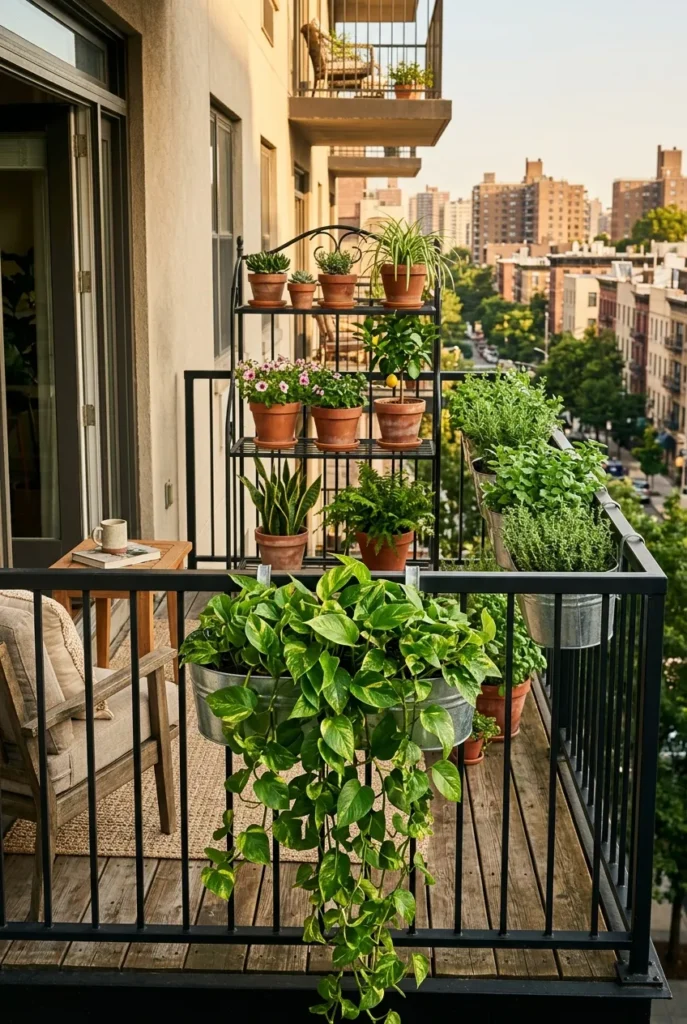
How to Sun-Map Your Balcony in 30 Minutes
Stand at your railing at each of the four time points and photograph the shadow line crossing your floor. You’ll see immediately which zones receive the most light each day. Mark the brightest corner on a rough sketch. That’s your prime real estate. Put your highest-light plants there. Everything else fills in around it based on what shade each species can actually tolerate.
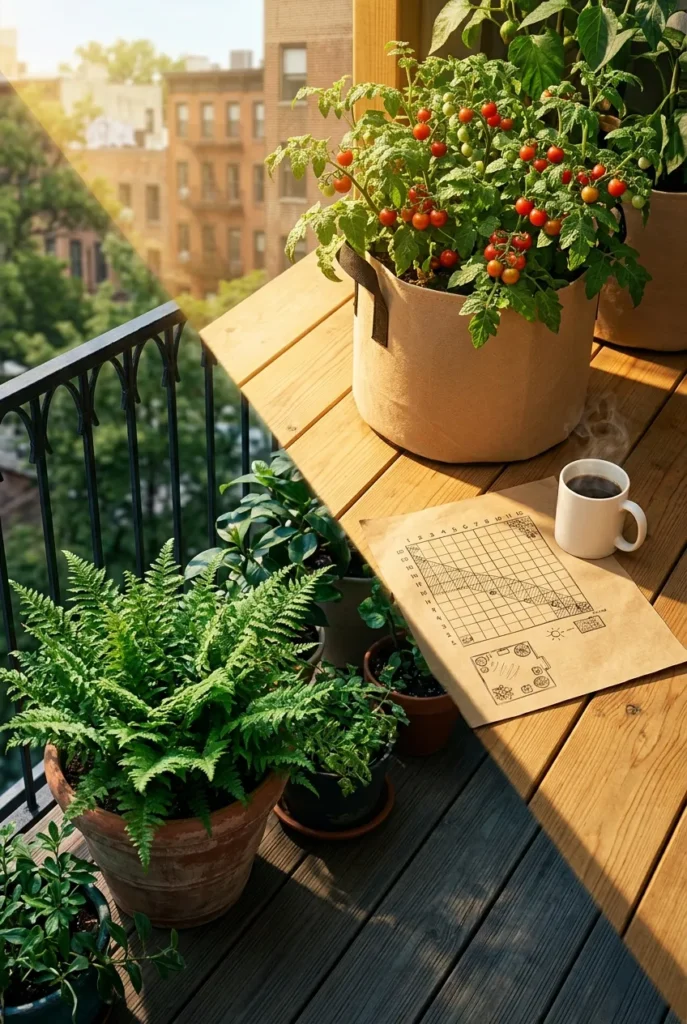
The Renter-Safe Balcony Garden Setup (No Drilling, No Damage, No Lost Deposit)
This is the section no other balcony garden guide writes, and it’s the one apartment renters need most. Most cities and most lease agreements either explicitly prohibit drilling into railings, walls, and fascia boards, or leave it vague enough that any hole costs you money at move-out. The no-drill balcony garden market has gotten genuinely good in the last two years. Here’s how to build a full setup without touching a drill.
- Pressure-fit railing planters: Galvanized steel or rust-resistant aluminum planter brackets clamp onto railings from 1 inch to 4 inches wide. Fill them with 5-gallon fabric grow bags ($3 each in bulk) for herbs or trailing flowers. Zero holes, fully removable on move-out day.
- Over-the-door hook systems: These work on balcony French doors for vertical hanging planters. No installation, no damage, no drama.
- Freestanding tiered plant stands: A 3-tier metal stand takes up about 18 inches of floor space and holds 9 to 12 pots. Leaves zero marks and moves whenever you want.
- Tension rod shelving in door recesses: A heavy-duty tension rod between door frames holds a row of classic 10-inch terra cotta pots ($8 each, Home Depot) with no fasteners at all.
- No-drill privacy panels: Loop heavy-duty zip ties through the top grommets, run them over the railing bar, and cinch tight. Anchor anywhere on the railing without touching a wall.
No-drill privacy panels saved my $300 security deposit the summer I first tried them. They added what felt like 6 feet of green wall on the exposed north side of my balcony, came down in 20 minutes when I moved, and the deposit came back in full.
Railing Planters and Hook Systems That Actually Hold Up
The railing planters worth buying are powder-coated steel with dual-hook brackets, not the plastic clip-ons that crack by August from UV exposure. Pair them with a Bloem Terra 16-inch pot ($12, Walmart) for statement plants, or go lighter with 5-gallon fabric grow bags if your railing has any weight concerns. Your balcony’s load limit matters more than most guides admit.
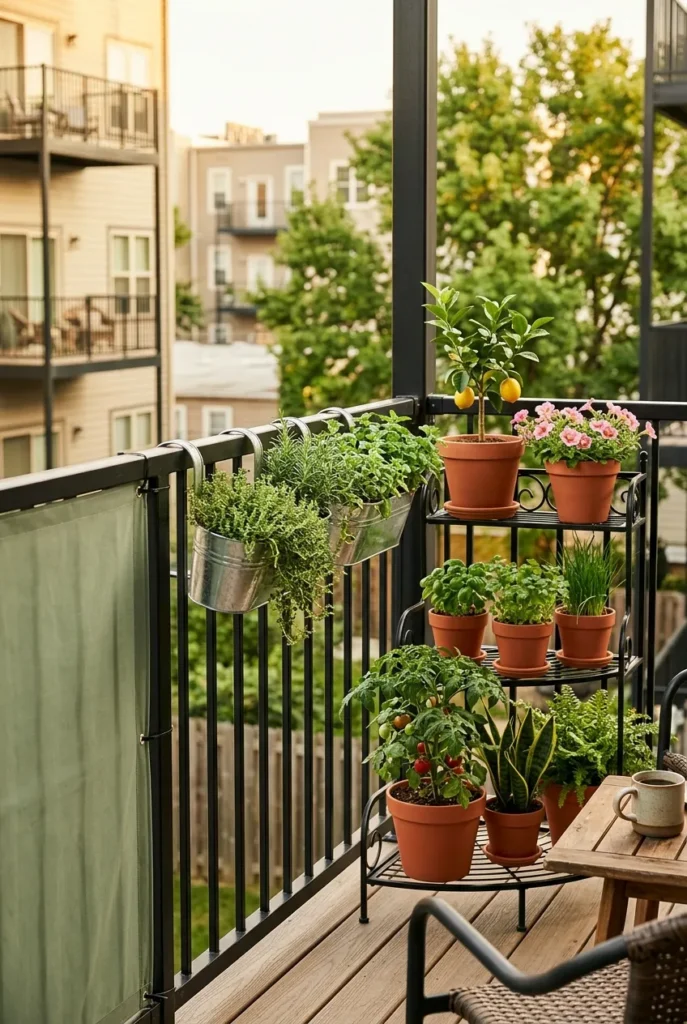
Best Containers for an Apartment Balcony Garden
Container choice on a balcony is mostly a weight and drainage conversation. Most residential balconies are rated for 40 to 60 pounds per square foot. Wet soil is heavy. A single large ceramic pot holding damp soil can weigh 50 pounds on its own. Stack a few and you’ve got a structural concern worth taking seriously.
Here’s the practical breakdown for apartment balconies:
- 5-gallon fabric grow bags ($3 each in bulk): Lightweight, promote air pruning of roots, dry out faster than plastic, and fold flat for winter storage. Best choice for herbs, peppers, and anything you want to move often.
- Self-watering EarthBox ($45): Heavier when full, but one EarthBox replaces three or four individual pots. The sub-irrigation reservoir means watering every 10 to 14 days instead of daily in summer. Worth the weight trade-off for tomatoes. Consumer Reports’ ratings on sub-irrigation container systems consistently rank self-watering planters above traditional pots for yield consistency in container vegetable setups.
- Classic 10-inch terra cotta ($8, Home Depot): Beautiful and breathable, but heavy and thirsty in full sun. Best used for shade-side succulents or herbs on a cooler, lower-light balcony.
- Bloem Terra 16-inch pot ($12, Walmart): Lightweight resin with a realistic terracotta finish. Survives two outdoor growing seasons without fading and weighs a fraction of ceramic equivalents.
For soil, Kellogg Garden Patio Plus potting mix at $12 per 1.5 cubic foot bag (Lowe’s) is the go-to. Skip garden soil completely. It compacts in containers within one season and cuts off the root oxygen that keeps balcony plants alive.
Fabric Pots vs Terra Cotta: What Actually Works Where
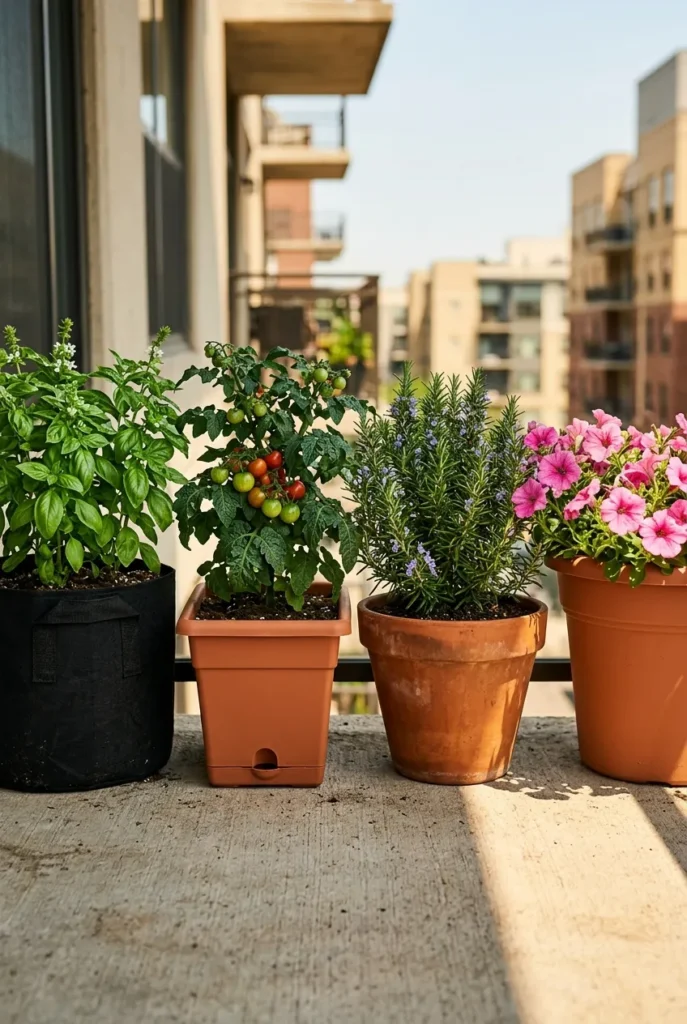
On a balcony that stays cooler because it faces north or sits under an overhang, terra cotta’s breathability is a liability. The unglazed clay wicks moisture away from roots faster than the soil can rehydrate. I killed two rosemary plants in 10-inch terra cotta before figuring out the unglazed clay was pulling water away from the roots within hours of watering in summer heat. Fabric grow bags breathe without that extreme moisture loss, especially packed with a quality potting mix that retains some structure.
What to Grow on Your Apartment Balcony (Sorted by Sun Level)
The fastest path to a dead balcony garden is planting for the wrong light. Here’s a practical plant list organized by how much direct sun your balcony gets each day, calibrated for USDA Zones 5 through 9, the range covering the majority of US apartment renters.
Full sun (6+ hours daily): Cherry tomatoes (Tiny Tim or Tumbling Tom compact varieties), sweet peppers, Bonnie Plants Genovese basil, zinnias, marigolds, bush beans, cucumbers on a vertical trellis
Partial sun (3 to 5 hours daily): Red Sails or Buttercrunch lettuce, spinach, cilantro, mint, chives, pansies, strawberries, impatiens
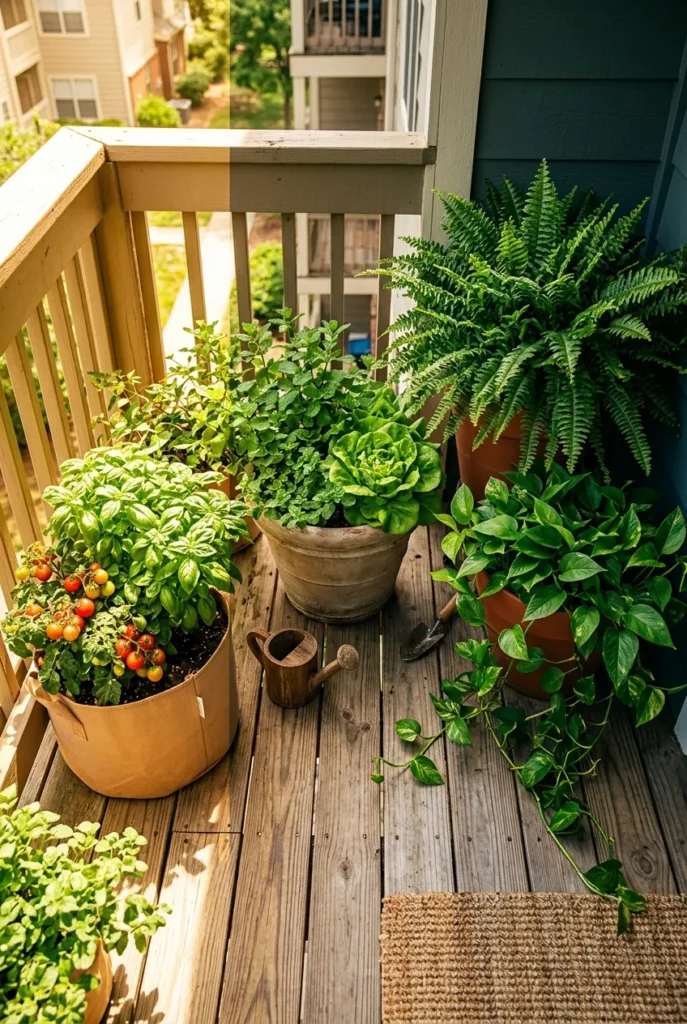
Shade (under 3 hours daily): Golden pothos, Boston fern, peace lily, impatiens, coleus, caladiums, spider plant, hostas, trailing sweet potato vine
If you’re working with a shade balcony and still want something edible, mint and spinach are your most forgiving choices. Both tolerate partial shade better than almost any other food crop you can put in a container. Get the full companion planting and pot-sizing breakdown by herb type in our container gardening herbs guide for patios and balconies.
Best Plants for a Shaded or North-Facing Balcony
Four Boston ferns, a golden pothos in a Bloem Terra 16-inch pot, and two 5-gallon fabric grow bags of impatiens in pink and white will give you a full, lush green balcony with zero sun dependency. It photographs better than a tomato setup struggling for 2 hours of afternoon light, and it requires about half the water. Sometimes the shade list is the better list.
Apartment Balcony Garden Budget Breakdown (Save This Chart)
Here’s the one-screenshot framework for building your balcony garden at any spending level. Prices are 2026 US retail from Home Depot, Lowe’s, Walmart, and Amazon.
| Item | Bare Bones ($25–$75) | Mid Range ($75–$200) | Splurge ($200+) |
|---|---|---|---|
| Containers | 4x 5-gal fabric grow bags ($12) | 2x Bloem Terra 16″ ($24) + 3x grow bags ($9) | EarthBox system ($45) + 3x Bloem Terra ($36) |
| Soil | 1 bag Kellogg Patio Plus ($12) | 2 bags Kellogg Patio Plus ($24) | 2 bags FoxFarm Ocean Forest ($50) |
| Plants | Dollar General seed packets ($8) | 4x Bonnie Plants starts ($16) | 6x Bonnie Plants + 2 perennial herbs ($48) |
| Railing / Vertical | Dollar Tree hook + macrame bag ($3) | Pressure-fit railing planter ($28) | 3-tier metal stand + railing planters ($85) |
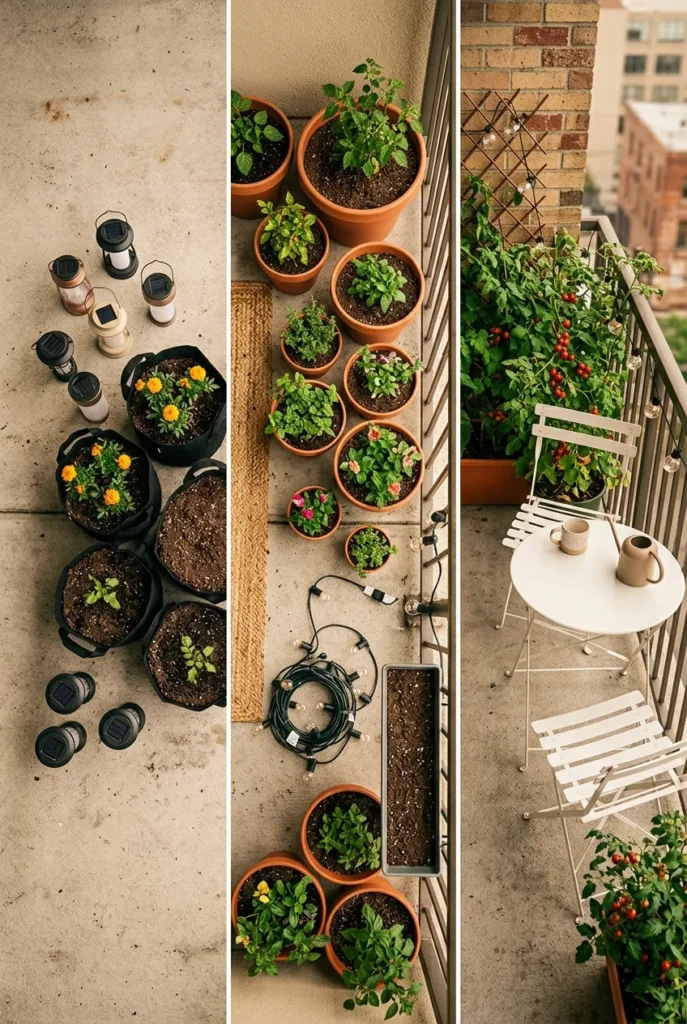
| Lighting | 3x Dollar Tree solar lanterns ($4) | Costco Feit 48-ft string lights ($24) | Brightech Ambience Pro G40 48-ft ($45) |
| Total | ~$39 | ~$101–$120 | ~$224–$264 |
The bare-bones setup works better than it sounds. Three Dollar Tree solar lanterns survived a full summer of Atlanta thunderstorms for me, glowing through July and August until one finally gave up somewhere in September. For $4 total, that’s a serious return on ambiance.
DIY Vertical Garden Ideas for Small Apartment Balconies
Going vertical is the single best move you can make on a small apartment balcony. Floor space is precious. Railing and wall space is basically free real estate. A 6-foot freestanding trellis panel or a tiered wall-pocket system adds 20 to 30 planting square feet to a 40-square-foot balcony without using another inch of floor.
Renter-friendly vertical options that actually hold up:
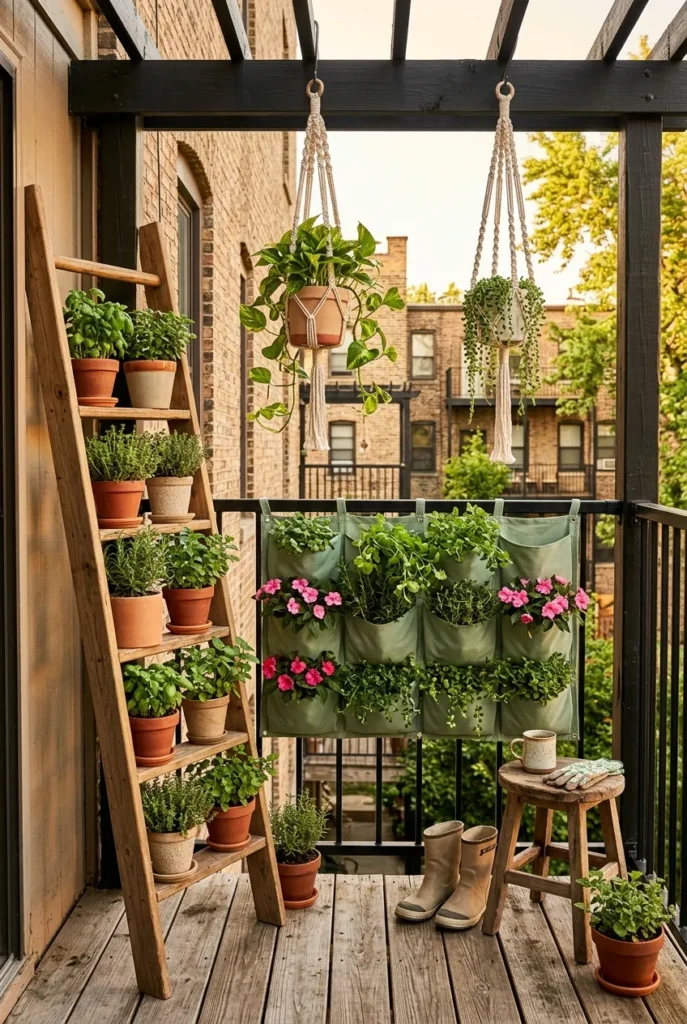
- Freestanding ladder planters: Lean against the wall or railing. No attachment needed. Paint or stain for an instant editorial moment. Move them any time.
- Fabric wall pocket systems: Hang over a railing with zip ties. A 12-pocket panel (about $18 on Amazon) holds an entire herb garden. Each pocket handles one herb or one trailing flower.
- Stacked crate columns: Plastic milk-crate-style stacking bins zip-tied together create a vertical planting column for under $30. Utilitarian but genuinely effective for a boho or DIY aesthetic.
- Hanging macrame planters: Hook an S-hook over an existing overhead bracket or pergola rail. Three planters at staggered heights add boho energy and take up zero floor space.
Wall-Mounted Pocket Planters for Renters (The No-Drill Method)
The trick to hanging fabric pockets without drilling is using the railing itself as your anchor. Run two heavy-duty zip ties through the top grommets of the fabric panel, loop them over the railing bar, and cinch tight. For ceramic or terracotta wall-mount planters, you’d need wall anchors, which means landlord permission. Fabric pockets over the railing win every time for renters who want to keep their deposit.
How to Water a Balcony Garden Without Flooding the Neighbor Below
Drainage is the most underrated topic in apartment balcony gardening, and the one most likely to generate a complaint from the unit downstairs. Water runs where gravity sends it. If your pots drain freely onto a solid balcony floor, that water has to go somewhere.
Three fixes that actually solve it:
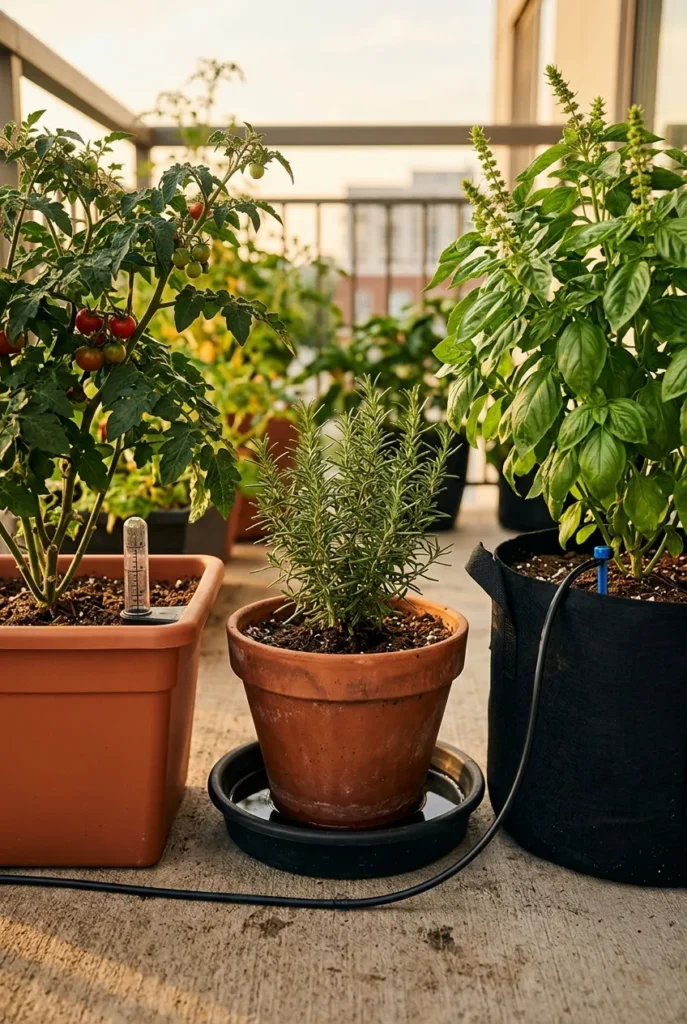
- Rubber drip trays under every pot: Skip cheap plastic saucers that crack in winter. Use 12-inch heavy-duty rubber saucers ($4 each). Stack two under fast-draining containers for extra capacity.
- Self-watering containers: The EarthBox ($45) holds water in a reservoir below the soil and wicks it up through plant roots. Zero runoff. Fill the reservoir every 10 to 14 days in summer heat.
- Drip irrigation on a timer: A $25 Orbit drip timer with quarter-inch tubing and individual drip emitters delivers water directly into each pot’s soil with no splashing or overspray. Per the EPA WaterSense program’s guidance on efficient irrigation, drip systems use up to 30 to 50 percent less water than overhead watering for equivalent plant coverage. That saves on your water bill and keeps the balcony below yours dry.
Zone-Smart Seasonal Planting Calendar for Balcony Gardeners
No competitor covers this section, and it’s the one that will save your plants from a snap frost or a premature buy. What you plant and when you plant it depends entirely on your USDA hardiness zone.
Zone 5 (Chicago, Denver, Boston): Last frost around mid-April. Move containers outdoors safely after May 15. Pull tender plants back inside by mid-October before the first hard freeze.
Zone 7 (Nashville, DC, Atlanta northern half): Last frost early April. Direct sow or transplant in late March. A layer of frost cloth through November extends your season by 4 to 6 weeks.
Zone 9 (Houston, central California, Phoenix): Last frost late January. Plant herbs and greens in January for a spring harvest. Succession-plant heat-tolerant varieties in August for a full fall run.
Check your exact frost dates using the USDA Plant Hardiness Zone Map before you finalize your first round of plants. It takes 30 seconds and keeps you from buying Bonnie Plants basil starts during a warm February week in a Zone 5 winter, watching them die the following weekend in a 28-degree snap.
Make Your Apartment Balcony Look Like a Pinterest Board (the Styling Details)
Here’s the honest truth: a lush apartment balcony garden that reads as beautiful on Pinterest comes down to five styling decisions, and most of them have nothing to do with the plants themselves.
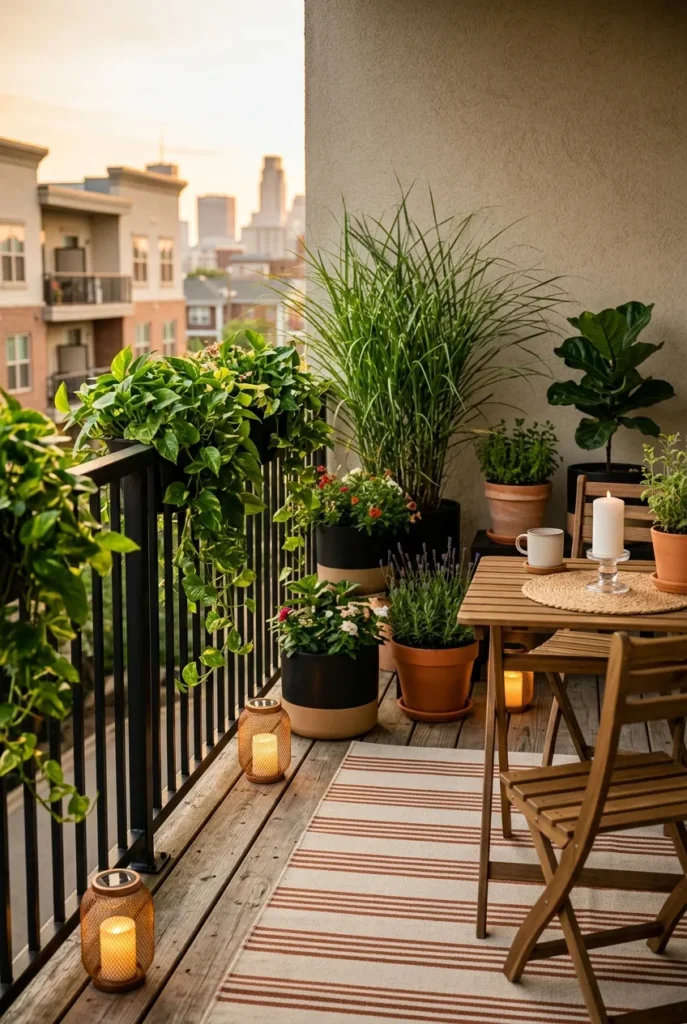
Layer your heights. Tallest plants against the back wall or on the wall side, medium height in the middle, trailing over the railing. That one composition rule gives every balcony a finished editorial look.
Commit to a two-tone pot palette. Either go all-green with varied textures, or pick one accent color (terracotta, matte black, white) and keep every container in that family. Matching doesn’t mean identical. It means cohesive.
Add one ambient light source. Even three Dollar Tree solar lanterns at $1.25 each create the warmth after 8 p.m. that turns a plant shelf into a destination. That’s $3.75 for an entirely different feeling.
Anchor with a rug. A $14 indoor-outdoor rug from HomeGoods defines the seating zone and makes the balcony feel like a room instead of a ledge. One of the highest-impact, lowest-cost moves on any outdoor space.
Edit aggressively. More plants is not always better. A single well-chosen statement planter with three compatible species almost always outperforms 15 mismatched pots crammed against a railing, because the statement planter gets proper water, proper soil volume, and proper light. The cluttered version gets none of those three things right.
For the complete renter-safe surface and furniture playbook scaled to an apartment footprint, our small apartment patio decorating ideas guide covers every finishing detail in depth.
Frequently Asked Questions About Apartment Balcony Gardens
Can I have a garden on a small apartment balcony?
Yes, and 40 square feet is genuinely enough. The key is going vertical with railing planters, tiered plant stands, and fabric wall pocket systems. One 6-foot freestanding ladder planter holds as many plants as four square feet of floor space, with zero footprint against the wall.
How much weight can a balcony hold?
Most residential balconies are engineered for 40 to 60 pounds per square foot. Wet soil is the primary culprit for overloading. Switch from heavy ceramic to Bloem Terra resin pots and 5-gallon fabric grow bags to cut your load significantly. When uncertain, ask your building manager for the load spec before buying any large planters.
What plants grow best on a shaded balcony?
Golden pothos, Boston ferns, peace lily, impatiens, coleus, caladiums, and spider plant all thrive in under 3 hours of direct sun. For edibles in partial shade, mint and spinach tolerate lower light better than almost any other food crop.
How do I add privacy to my balcony without drilling?
No-drill privacy screen panels anchor to the railing with zip ties or hook-and-loop straps. Tall freestanding bamboo screens lean against the wall with no installation at all. Both options are fully removable and deposit-safe.
What vegetables grow best in containers on a balcony?
Cherry tomatoes, sweet peppers, lettuce, spinach, radishes, and bush beans are the top performers. Look specifically for compact or dwarf varieties bred for containers. Bonnie Plants labels their container-ready picks clearly on the pot tag.
How often should you water container plants on a balcony in summer?
In full sun and peak summer heat, most containers need water every 1 to 2 days. A self-watering EarthBox cuts that to every 10 to 14 days. Family Handyman’s container garden watering guide recommends the finger test: if the top inch of soil is dry, water thoroughly until it drains from the bottom.
Do container plants need drainage holes?
Every container needs at least one drainage hole. Roots sitting in standing water rot within days during summer heat. If you love a decorative pot without a hole, drop a drilled nursery grow bag inside it and use the outer pot as a cachepot. Best of both approaches.
Start Small, Build Up, and Let It Get Messy
The best apartment balcony gardens aren’t the most perfectly curated ones. They’re the ones where the pothos grew three feet past the railing by August, where the basil bolted and you let it flower for the bees anyway, where one corner got completely taken over by mint and you stopped fighting it. Start with three containers and one railing planter. Get those right before adding anything else. By the second growing season, you’ll know exactly what your space can handle and what makes you want to go outside every morning.
When you’re ready to think beyond plants, our renter-friendly outdoor furniture ideas for small spaces covers every piece worth adding to that 40 square feet without risking a single dollar of your deposit.