
21 Fall Backyard Play Area Ideas That Look Expensive

Most fall backyard play area ideas land in one of two camps: a giant plastic playset in primary red, or a pile of leaves and a hopeful shrug. Neither looks great from the kitchen window in October.
There’s a middle path, and it costs less than you’d think.
The yards that look high end in fall photos share three habits. They spend on one solid anchor. They lean on natural materials like straw, cedar, and pumpkins. And they swap a few seasonal props each year instead of buying a new wave of toys.
We call that the 1-2-3 Play Corner Rule, and every idea below fits inside it.
You’ll find quick wins under $20, a few weekend builds, and the practical stuff most lists skip: surface depth, tick-smart placement, and lighting for those early November sunsets. Fall changes how a play space works. Wet leaves, shorter days, and colder hardware all matter more now than in July.
Pick three ideas, borrow the color palette, and your yard will look planned by Halloween.
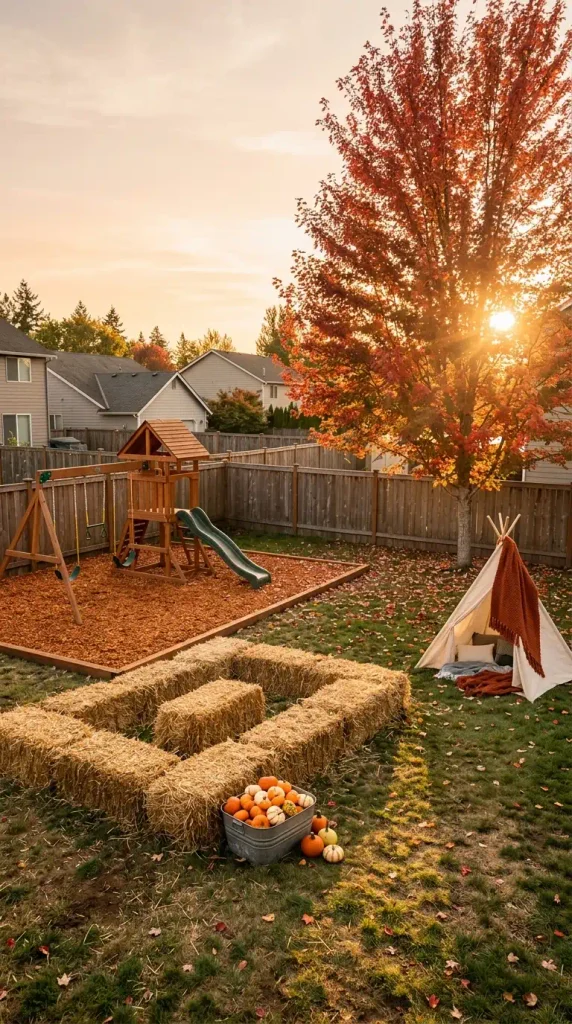
The 1-2-3 Play Corner Rule
Expensive-looking play spaces aren’t about price tags. They’re about restraint.
Spend real money on 1 anchor that does the heavy lifting, usually the ground surface or one sturdy structure. Build around 2 natural materials, like cedar and straw or gravel and galvanized steel, so the corner reads as one design. Then rotate 3 seasonal props each fall, such as mini pumpkins, a wool throw, and a basket of pinecones.
Anything that breaks the rule, like a sun-faded plastic slide or a neon foam sword, gets stored out of sight.
1. Fresh Cedar Chips Under the Swing Set Before You Buy Anything New
Skip the new playset this year. Spend that money on the ground instead.
Summer traffic packs loose fill down hard, and by October most backyard swing sets sit on a thin crust of mud and matted leaves. That’s the fastest way for a play area to look tired. It’s also the biggest safety gap.
The CPSC home playground safety checklist calls for at least 9 inches of wood chips, mulch, or shredded rubber under equipment up to 7 feet tall, spread at least 6 feet out in every direction.
Rake out the old leaves, loosen what’s left, and top it up with fresh playground-grade chips. Warm new wood against red and gold foliage reads like a full redo.
| 🪵 Playground wood chips | ⚫ Shredded rubber mulch |
|---|---|
| Look: natural, warms up next to fall color | Look: uniform, can read industrial |
| Cost: lower per bag | Cost: higher per bag |
| Fall upkeep: rake, fluff, top up yearly | Fall upkeep: blow off leaves, rarely replaced |
| CPSC home guidance: 9 inches for sets up to 7 feet | CPSC home guidance: 9 inches for sets up to 7 feet |
New gear can wait a year. A soft, fresh surface can’t.
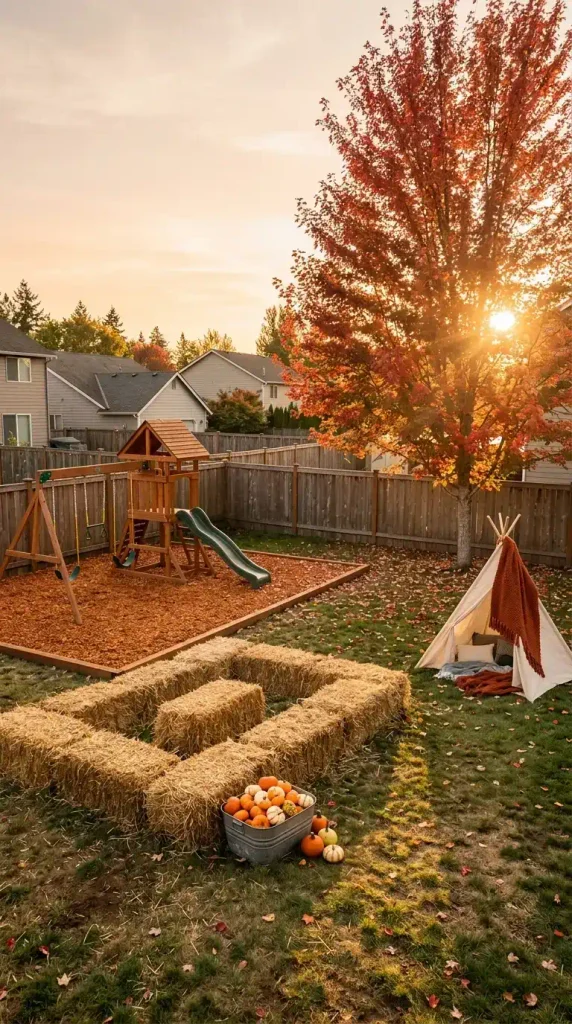
2. A Straw Bale Maze That Turns Into Bench Seating Later
Six straw bales. That’s enough for a small maze little kids will loop through again and again.
Tractor Supply and most garden centers stock straw bales in fall, usually for under $15 each. Pick straw over hay. It’s lighter, less dusty, and doesn’t carry the seed heads that end up in socks for weeks.
Set four bales in a U on flat grass, open end facing the house so you can see inside.
Add two more as a dead end and a secret exit, leaving paths about 2 feet wide.
After Halloween, line the bales up along the play zone as bench seating for parents on the sidelines.
In November, break them open as winter mulch on your garden beds.
Nothing goes to the curb, which is the quiet trick behind a yard that looks planned.
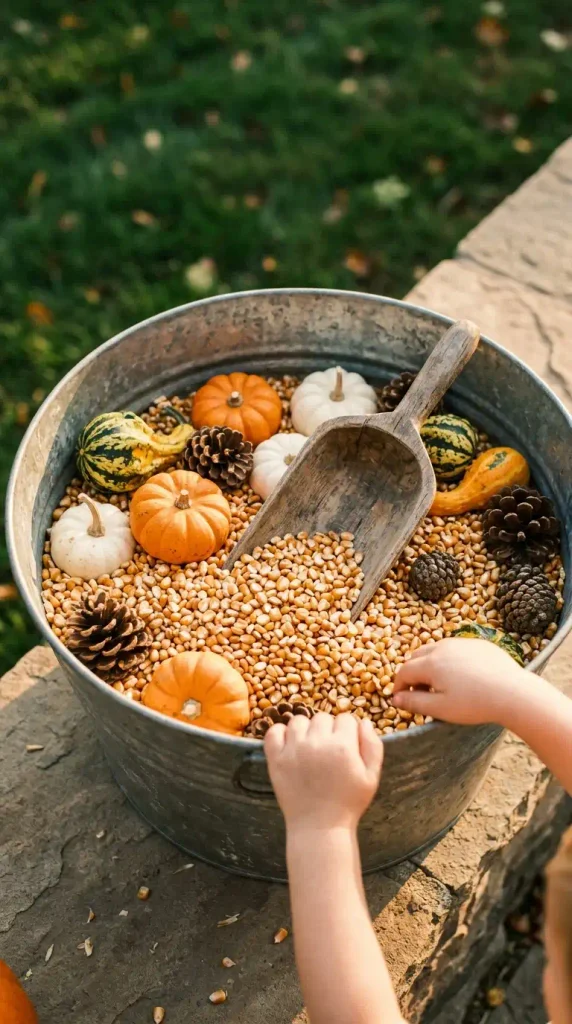
3. Mini Pumpkin Sensory Tub in Galvanized Steel
Plastic bins look like the playroom spilled outside. A 15-gallon galvanized tub looks like it came from a farm stand, and hardware stores usually sell one somewhere in the $25 to $40 range.
Fill the tub
It’s the “3 props” step of the 1-2-3 Play Corner Rule, packed into one tub.
Watch the age range, though. Dried corn and acorns are choking hazards for kids under 3, so swap in larger gourds and wooden spoons for toddlers.
4. A Leaf Pile Landing Zone at the Bottom of the Slide
Wet leaves under a slide turn into a slick brown mat within days. Raked fresh and kept fluffy, the same leaves make the softest landing in the yard.
The fix is timing.
Rake a new pile at the slide exit each afternoon, let the kids crash into it, then spread it back across the lawn or bag it before dinner. You get the jump. You also get the raking done, which might be the best trade in parenting.
⚠️ Watch Out
Check every pile for sticks, rocks, and buried toys before anyone jumps. And don’t let leaves sit against wooden playset posts for weeks, since trapped moisture there invites mildew and rot.
5. Cedar Mud Kitchen With a Fall Menu Board
Store-bought play kitchens tend to come in bright plastic. A cedar version built from fence pickets costs less than many of them and weathers to a soft silver gray that suits a garden.
Most home centers sell 6-foot cedar pickets for a few dollars each, and a simple counter takes about a dozen.
Drop a stainless mixing bowl into a cutout as the sink. Hang thrift-store ladles and a muffin tin from hooks. Then prop a small chalkboard on top with the day’s menu: acorn soup, leaf tacos, pinecone pie.
Kids treat a menu board like a real order pad. Expect to be served a lot of acorn soup.
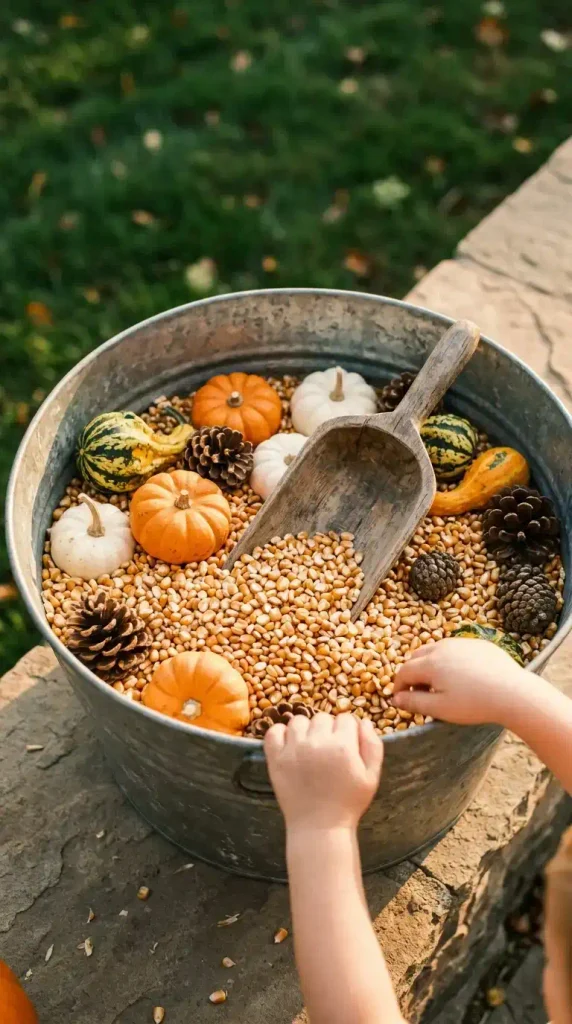
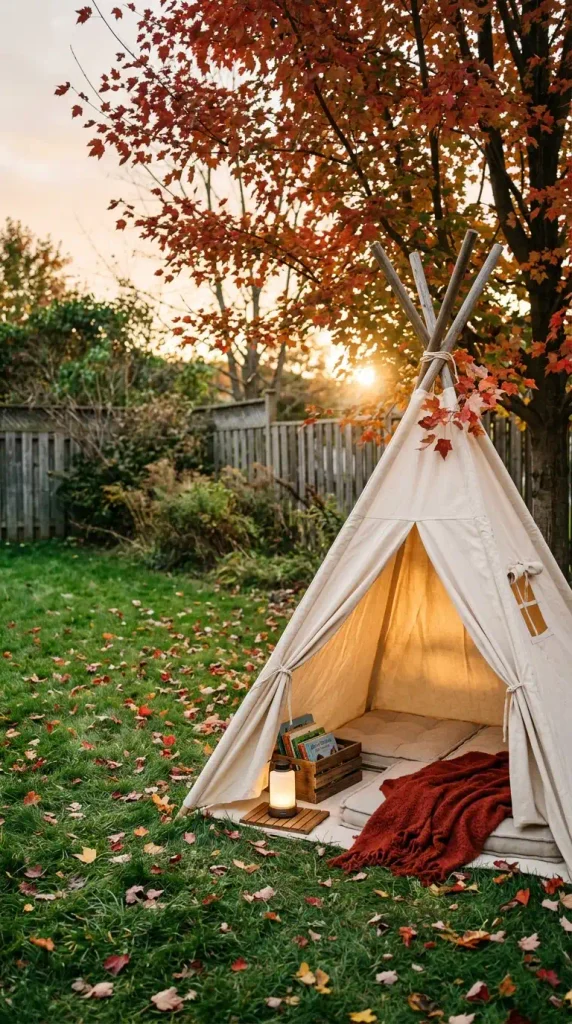
6. A Canvas Teepee Reading Nook With Wool Throws
Quiet play counts too. After an hour of running, most kids want somewhere to flop, and a canvas teepee at the edge of the play area gives them that without sending everyone inside.
Make it look grown-up:
- ▸Natural cotton canvas, not shiny polyester
- ▸A wool or acrylic throw in rust or oatmeal
- ▸A wooden crate of fall picture books
- ▸A battery LED lantern instead of anything with a flame
- ▸A washable outdoor rug underneath to keep the damp off
Dew soaks cotton fast. Bring the cushions and throws in at sunset.
7. A Chalkboard Fence Panel for Leaf Rubbings and Fall Art
Chalk ends up everywhere by Halloween. Giving it one wall fixes that.
Cut a 4 by 4 foot sheet of exterior plywood, roll on two coats of Rust-Oleum chalkboard paint (a quart usually runs under $20), and screw it to a fence at kid height. Add a simple cedar ledge underneath for chalk.
Clip paper to the board with binder clips, and kids can make leaf rubbings with peeled crayons right there.
Art stays on one dark wall instead of creeping across the patio, and a black panel framed in cedar looks planned in a way scattered chalk never will.
8. Café String Lights Over the Play Zone for 5 PM Sunsets
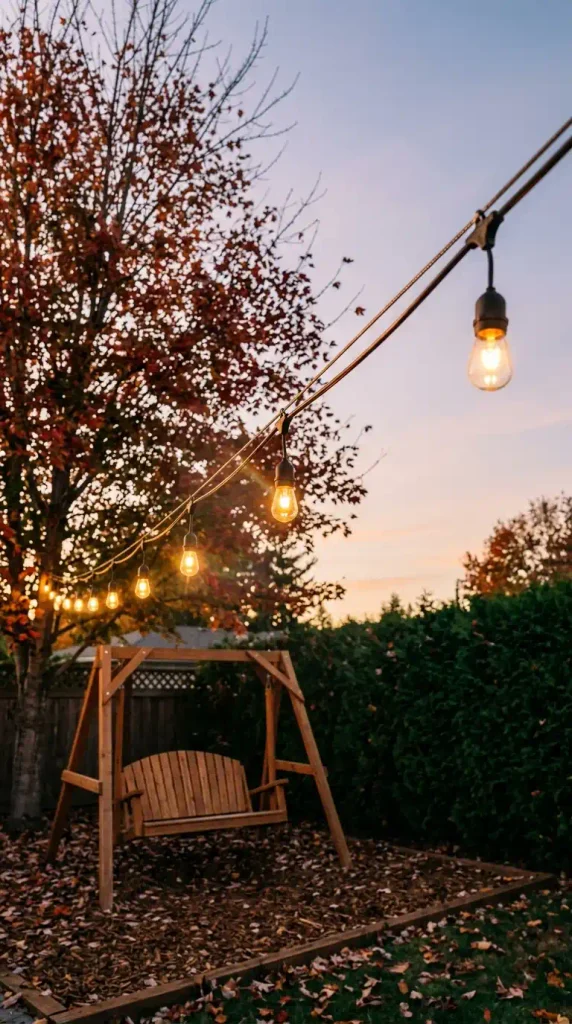
Clocks fall back on Sunday, November 1, 2026. After that, sunset across much of the country lands around 5 PM, and play time shrinks fast unless the yard has a glow.
A single strand of café string lights solves most of it. Feit and Brightech both sell shatter-resistant LED strands, usually somewhere around $30 to $60 for 48 feet.
Run the strand on a steel guide wire between the house and a sturdy post, high enough that no swing, climber, or tossed ball can reach it. Warm 2700K bulbs read amber, which matches fall leaves far better than cool white.
⚠️ Watch Out
Use outdoor-rated, UL-listed lights and cords on a GFCI outlet. Anything beyond plugging into an existing outlet is a job for a licensed electrician. Keep every cord off the ground inside the play area.
9. A Wood Chip Border That Keeps Ticks Out of the Play Zone
Ticks love leaf litter, and fall yards are full of it. Exposure can happen year-round, so placement matters as much as the gear itself.
The CDC tick prevention guidance for yards suggests a 3-foot strip of wood chips or gravel between lawn and wooded areas, plus keeping playground equipment away from yard edges and trees. A clean chip border also happens to look like professional landscaping.
Put the swing set in the sunniest open spot you have.
Lay a 3-foot chip or gravel strip along any wooded edge.
Rake leaf litter out of the play zone every week.
Tucking the playhouse against the back tree line.
Leaving leaf piles beside the play area for weeks.
After play, check behind knees, around ears, and along the hairline. Thirty seconds, every time.
10. Pumpkin Bowling Lane on the Patio
Ten pins, one pie pumpkin, a straight run of pavers. Done.
Paint ten empty 2-liter bottles cream (Krylon Fusion bonds to plastic), pour an inch of sand into each so they don’t blow over, and set them in a triangle at the far end of the patio. A small pie pumpkin with its stem trimmed rolls better than you’d expect, and grocery stores usually sell them for a few dollars each.
Keep score on the chalkboard panel from idea 7. When the neighbor kids wander over, the lane doubles as the anchor game for our fall backyard party ideas.
Keep a spare pumpkin handy. They split when they hit pavers hard.
11. Cedar Round Stepping Path Into the Play Corner
Kids walk differently on a path. They slow down, hop, and count, and suddenly the play area has a front door.
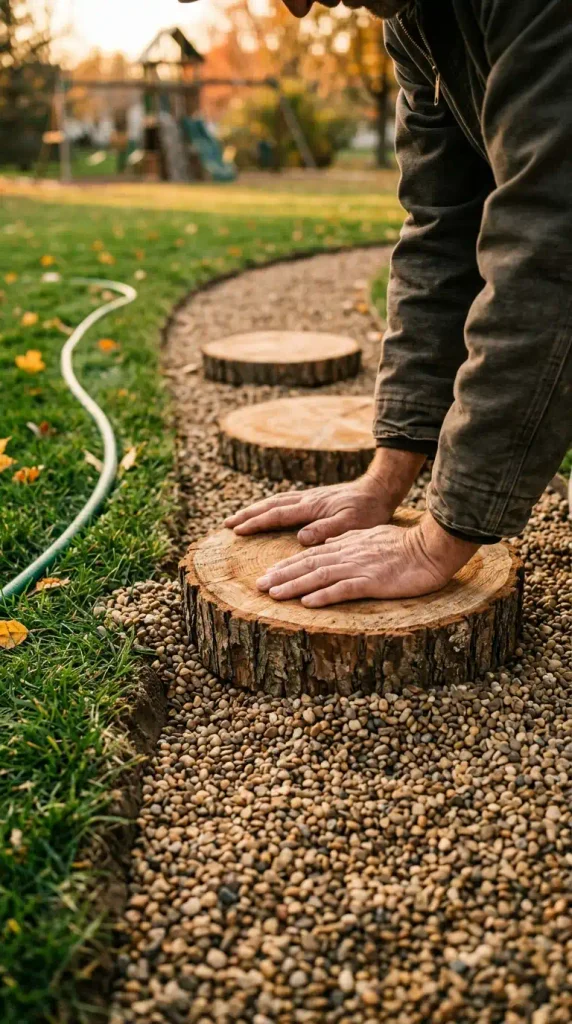
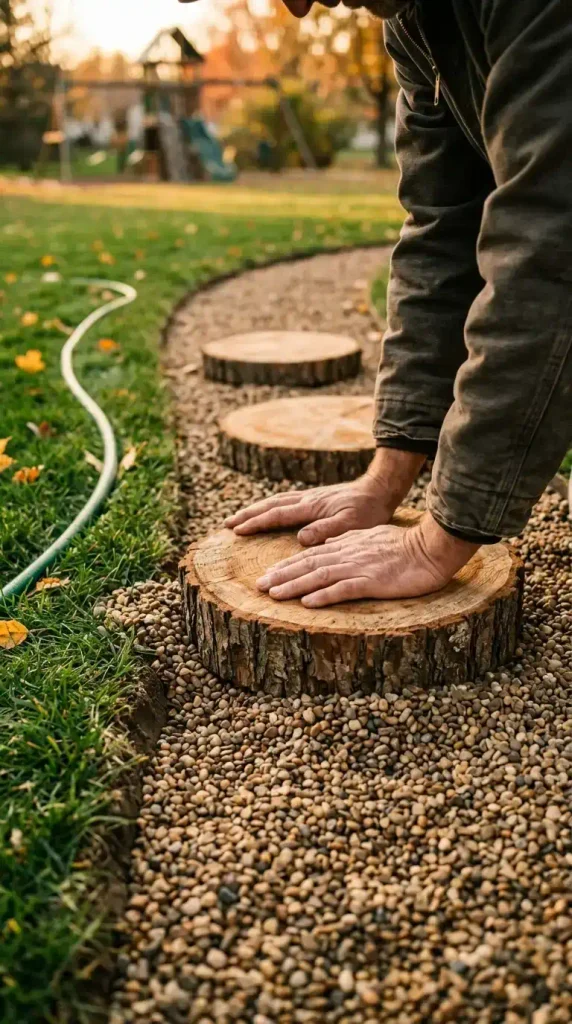
Cedar or oak rounds about 2 to 3 inches thick work best. Craft stores and Amazon sell bundles, and a local tree service will sometimes hand out rounds for free.
Lay a garden hose in a gentle curve to mark the route.
Dig shallow pockets and add 1 to 2 inches of pea gravel so the wood never sits in mud.
Set rounds about 12 to 18 inches apart, close to a small kid’s stride.
Sweep leaves off weekly. Wet wood gets slick.
A handful of rounds, and the corner looks like it was always meant to be there.
12. Backyard Campout Corner With a Dome Tent and Wool Blankets
Fall nights were made for tents.
A Coleman 4-person dome tent typically costs around $60 to $100 and goes up quickly, so you can pitch it after school and still have daylight left.
Pack the campsite
Watch the overnight lows. First frost in Zone 5 usually arrives by mid October, so daytime campouts work there all fall, while true sleepovers make more sense in Zones 7 to 9. Check your local forecast before anyone plans to stay out past bedtime.
13. Loose Parts Nature Tray on a Low Wooden Table
Pinecones beat plastic more often than you’d guess.
Set out a shallow wooden tray, or an old muffin tin, filled with acorns, pinecones, seed pods, smooth river stones, and a magnifying glass. Kids will sort, build, and invent stories for a surprisingly long stretch. A thrifted coffee table with its legs cut down makes a sturdy station at kid height. Keep the small pieces for kids 3 and older.
It’s the “2 natural materials” part of the 1-2-3 Play Corner Rule doing double duty. It’s decor when nobody’s playing and a project when they are.
Natural loose parts have no single right use, so the same tray becomes a fairy village on Monday and a squirrel grocery store by Friday.
14. A Natural Obstacle Course Built From Logs, Bales, and Hoops
Logs, bales, and a few hoops do everything a boxed agility kit does, and they look far better sitting in the yard afterward.
Run it in this order. Hop across five cedar rounds. Crawl under a broomstick resting on two straw bales from idea 2. Walk a 2×6 board laid flat on the grass. Finish by tossing a mini pumpkin into a bushel basket, then post the best time on the chalkboard.
| 📦 Boxed plastic kit | 🌿 Backyard materials |
|---|---|
| Bright primary colors | Wood, straw, and rust tones |
| New purchase | Mostly free or reused |
| Needs a storage bin | Bales and rounds can stay out as decor |
| Same course every time | Kids rearrange it each weekend |
Rust and cream hula hoops cost about the same as neon ones. Hunt for them.
15. A 30-Minute Fall Tune-Up for the Wooden Playset
Wood swing sets age fastest in the off season. Rain, packed leaves, and freeze cycles all go to work on cedar once the weather turns.
Gorilla Playsets suggests resealing every 1 to 2 years and names early fall as one of the best windows. Here’s the full routine:
Pull fabric canopies, flags, and cushions, and store them somewhere dry.
Sweep leaves and debris away from every post base.
Tighten bolts, make sure swing hooks are fully closed, and sand any splinters.
If the wood looks gray and dry or feels rough, reseal on a dry afternoon.
Once ice or snow shows up, the set is off limits until it melts.
16. Lidded Storage That Hides the Neon Toys
Every expensive-looking play corner hides a secret. Nobody can see the bright plastic.
- ▸A resin deck box from Keter or Suncast in a brown wicker look, often around $100 to $150
- ▸A lidded galvanized trash can for balls, usually under $40
- ▸Black iron fence hooks for helmets and jump ropes
- ▸Seagrass baskets only under a covered porch, since they mildew in fall rain
The 1-2-3 Play Corner Rule only works when the off-palette stuff has a home. Give it one, and the whole yard calms down.
17. A Parent Corner Close Enough to Watch, Far Enough to Rest
Kids play longer when a grown-up is nearby. So give that grown-up a real chair.
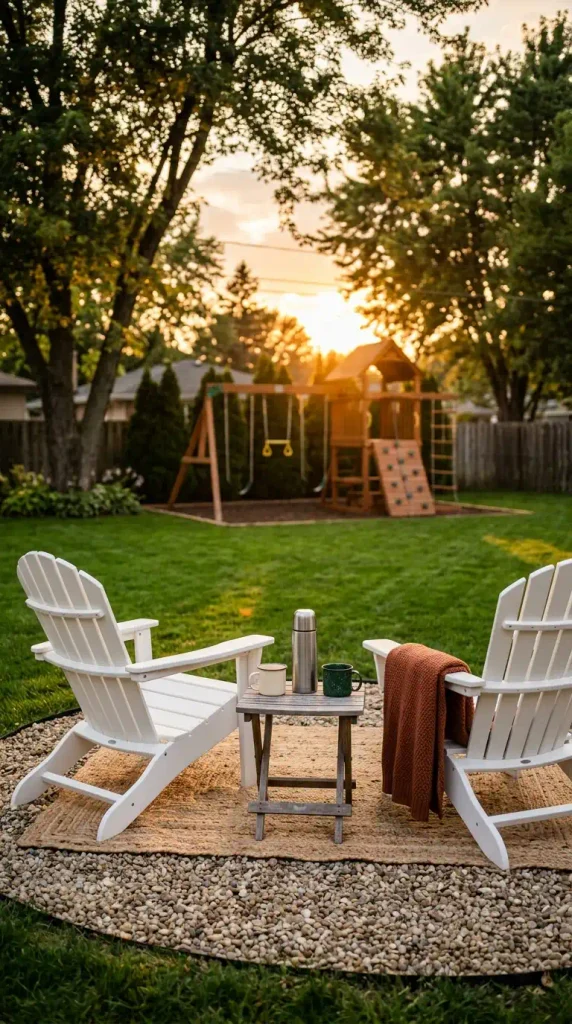
Two Adirondack chairs on a small gravel pad, an outdoor rug, and a side table for a thermos of cider are all it takes. Polywood resin chairs cost more upfront but shrug off fall rain, while budget resin versions at Walmart or Home Depot cost far less.
Starting the pad from bare lawn? Our gravel seating corner step by step walks through the whole build.
Face the chairs toward the play zone, not away from it.
Keep the corner within easy talking distance.
Putting a fire pit right beside the play area.
Glass-top side tables in ball-throwing range.
18. Scarecrow Dress-Up Crate
Old flannel shirts deserve a second life.
Toss them in a wooden apple crate (craft stores sell them for roughly $15 to $25) with straw hats, bandanas, and a pair of kid work gloves. Parked by the back door, the crate passes for fall decor between play sessions.
Then take it one step further and build the real thing:
Build the scarecrow together
Kids who stuffed the scarecrow will defend it all season.
19. Leaf Stencil Hopscotch on the Patio
Real maple leaves make the best stencils. Lay one flat on the pavers, trace the outline in chalk, and fill each square of a hopscotch grid with a different leaf shape.
For richer color, dip Crayola sidewalk chalk (usually under $10 a bucket) in water before drawing. Or mix a quick sidewalk paint: equal parts cornstarch and water, plus a few drops of food coloring, brushed on with foam brushes.
Cornstarch paint usually washes off, but test a small spot on stained or sealed concrete first.
20. Bird-Watching Station With Pinecone Feeders
Juncos tend to show up at backyard feeders across much of the US once the weather cools, along with chickadees and nuthatches. Kids notice them fast.
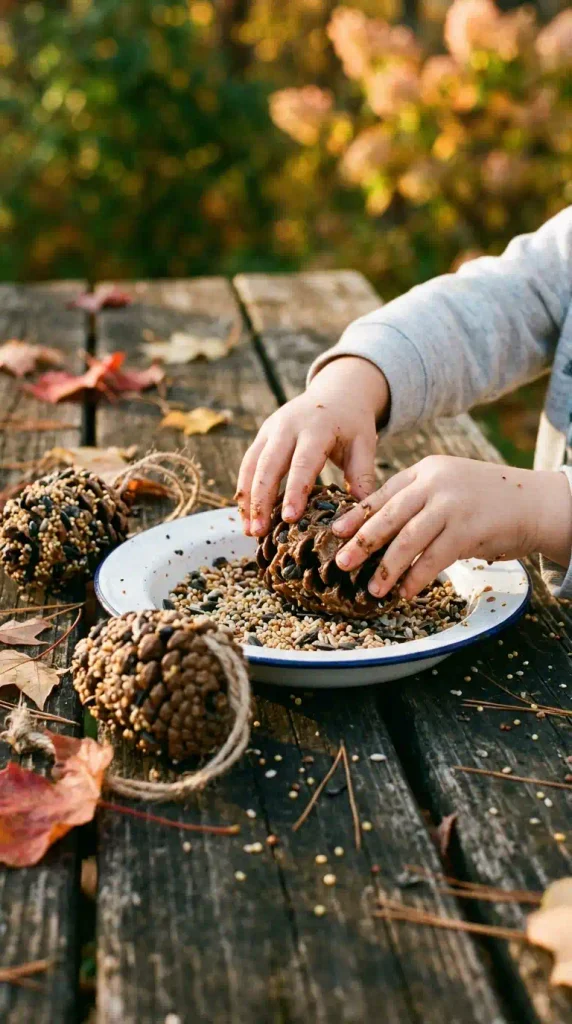
Roll open pinecones in sunflower seed butter, which sidesteps peanut allergy worries, then press them into birdseed. Hang them with jute twine from a shepherd’s hook at kid eye level, ideally where you can see them from a window. Add a pair of kids’ binoculars and a printed bird card.
Hang the feeders well away from the swing set. Bird droppings and slides don’t mix.
21. Edit the Palette to Rust, Cream, and Natural Wood
Color is the cheapest upgrade on this list. Pick three shades and let everything else go into storage.
Rust, cream, and natural wood work in almost any fall yard. Add plants that match. A whiskey barrel planter of orange pansies and ornamental kale near the play zone looks finished, and pansy flowers are edible, so a curious toddler isn’t an emergency. In Zones 7 to 9, pansies often carry right through winter, while in Zones 5 and 6 they usually fade after a hard freeze.
For the trees and hedges that frame the space, our guide to burlap-wrapped fall tree and hedge decor works in the same palette.
One anchor worth spending on, two natural materials, three seasonal props, and everything else out of sight.
Frequently Asked Questions
What is the safest ground cover for a backyard play area?
Loose fill like playground wood chips, wood mulch, or shredded rubber works best under swing sets and climbers, and rubber safety mats are another option. Grass and dirt look soft but don’t cushion falls well. For home equipment up to 7 feet tall, CPSC guidance calls for at least 9 inches of loose fill, so plan on topping it up every fall as it packs down.
How much space does a swing set need around it?
Keep a clear zone of at least 6 feet around a swing set or climber, covered in protective surfacing. Swings need more room: the surfacing should reach twice the height of the swing beam in front of and behind the swings. In practice, fences, sheds, trees, and patio furniture all need to sit outside that ring.
Can kids use a wooden swing set in fall and winter?
Yes, as long as the set gets a quick seasonal check. Pull fabric canopies and flags, clear leaves from around the posts, tighten hardware, and sand any rough spots. Keep kids off when it’s icy or snow-covered, since frozen slides and rungs get slick fast. Many cedar sets also benefit from fresh sealant on a dry early fall afternoon.
How do I keep ticks away from my kids’ play area?
Put the play area in an open, sunny part of the yard instead of along a tree line. The CDC suggests removing leaf litter, mowing often, and laying a 3-foot strip of wood chips or gravel between lawn and wooded edges. After outdoor play, check kids behind the knees, around the ears, in the hair, and around the waist.
What are cheap fall activities for kids in the backyard?
Leaf piles, pumpkin bowling, leaf stencil hopscotch, a straw bale maze, a pumpkin sensory tub, and pinecone bird feeders all cost very little. Most use things you already own or can pick up for a few dollars at a grocery store, Dollar Tree, or Tractor Supply. Rotate two or three each week so the yard keeps feeling new.
How do I make a kids’ play area look nice instead of cluttered?
Limit the palette to two or three colors, like rust, cream, and natural wood, and store anything off-palette in lidded bins or a deck box. Define the area with a border or a stepping path so it reads as a planned corner. Then rotate a few seasonal props instead of leaving every toy out at once.
Start With One Anchor This Weekend
Fall play weather doesn’t last long in most of the country, so start small. Pick one anchor from these fall backyard play area ideas, maybe the fresh wood chips or the straw bale maze, then add two quick props this weekend. You’ll see the difference from the kitchen window right away.
Keep the palette tight. Keep the neon stuff in a bin. Let the leaves do some of the work.
Your yard doesn’t need more stuff. It needs fewer, better choices.
Save this list to your fall backyard board so it’s ready for your next free Saturday, and pin the one idea your kids would pick first.