How to Choose Outdoor Furniture Cushions That Survive Full Sun
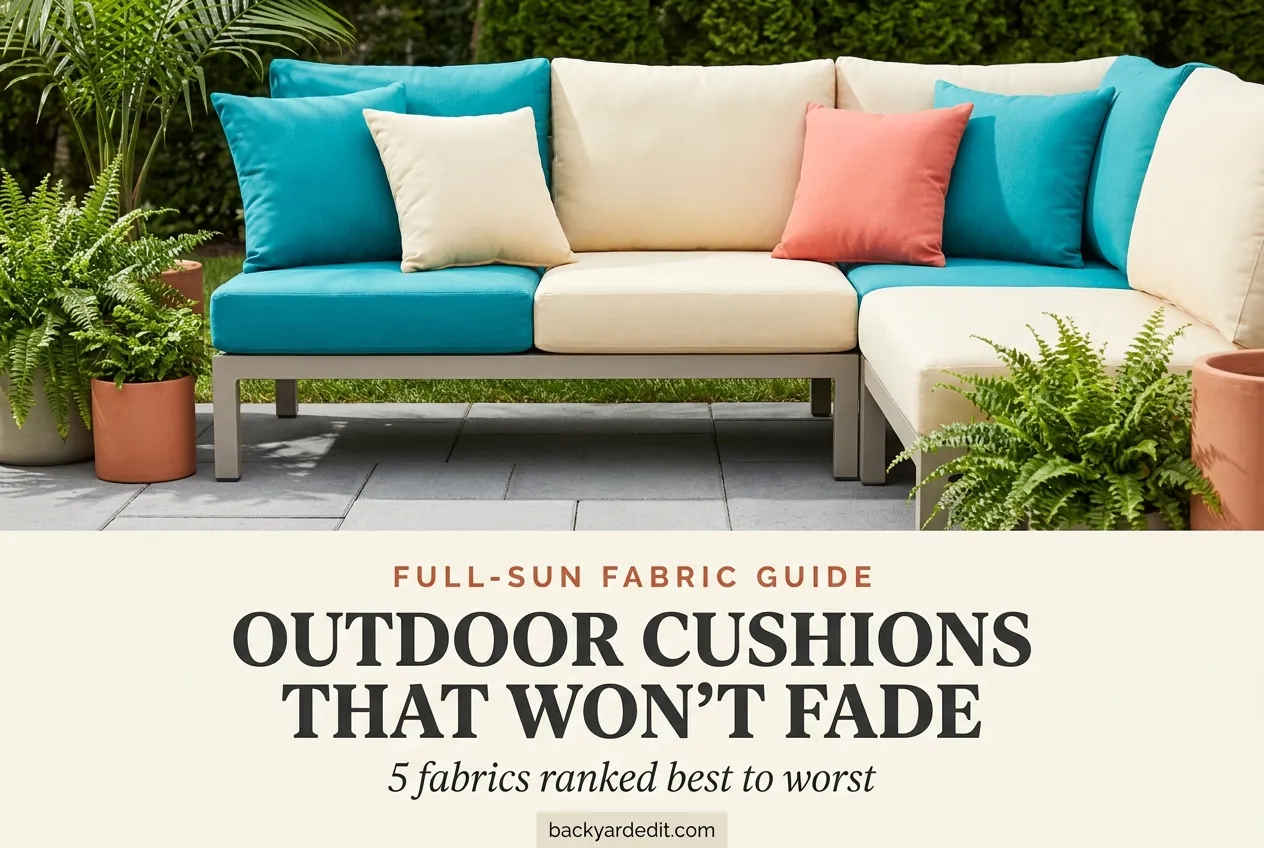
Outdoor furniture cushions have one real job: stay comfortable and keep their color while sitting in weather that would wreck almost anything else. Most of them flunk it. You buy a beautiful set in May, and by late August the color looks chalky, the seams feel crispy, and the whole thing smells like a damp basement.
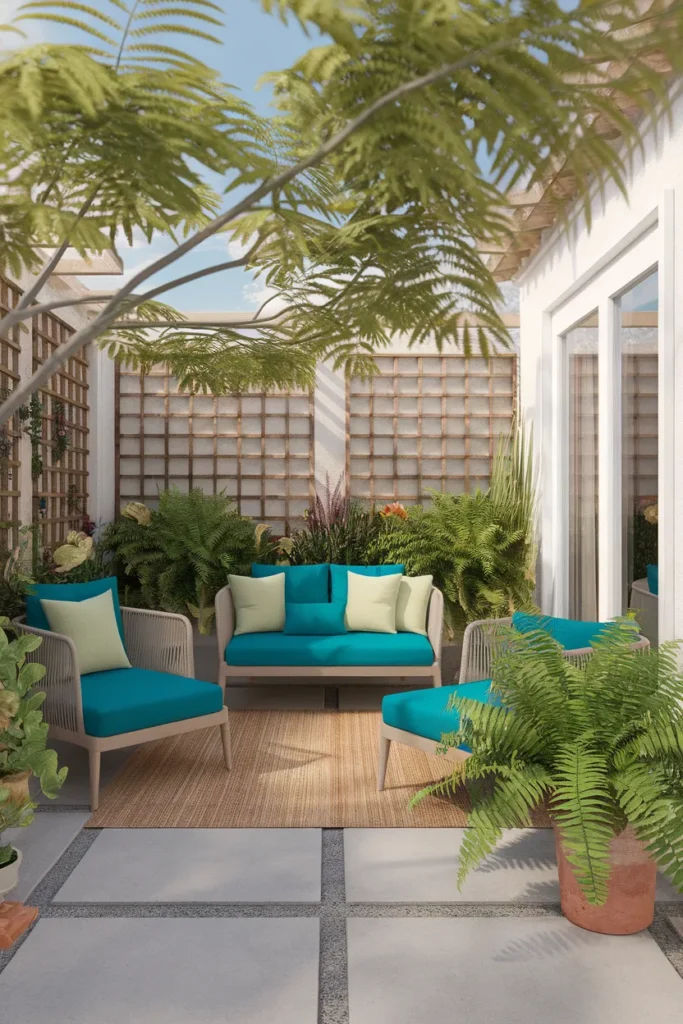
Here is the part nobody tells you at the store. The fabric decides everything, far more than the price tag or the brand name on the label.
So this guide does three things. It ranks the fabrics that actually hold up in strong sun, shows you how to confirm that on the tag before you pay, and walks through the care habits that stretch any set into a five year cushion instead of a one summer regret. If you have squeezed a bistro set onto a balcony or a full sectional onto a deck, the same fabric rules apply to your small patio furniture and your big pieces alike.
Why Full Sun Wrecks Cushions Faster Than Rain
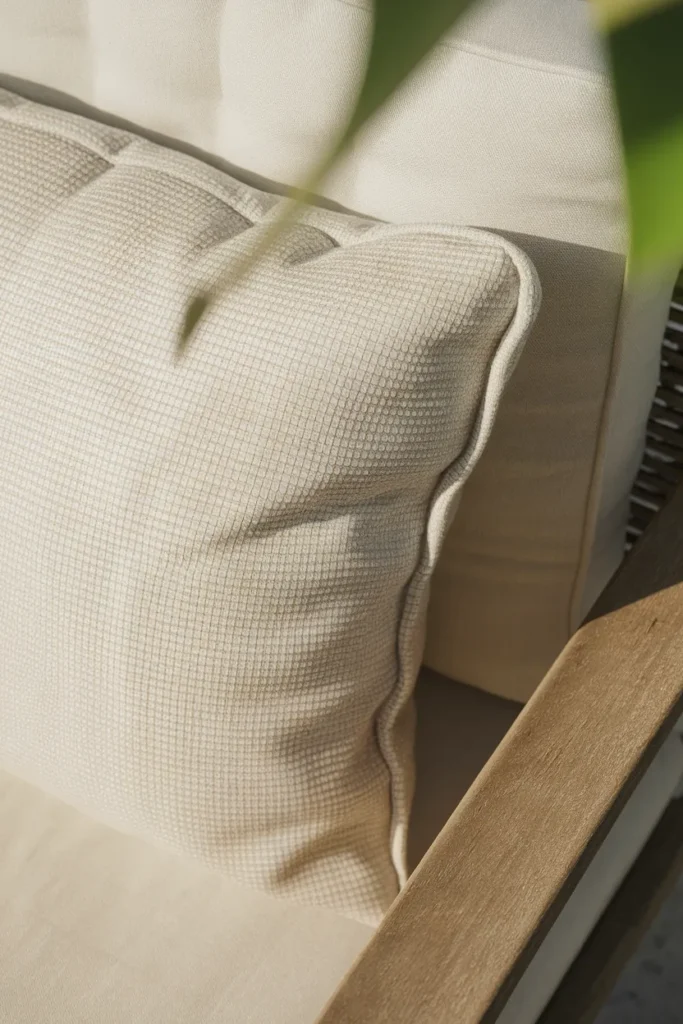
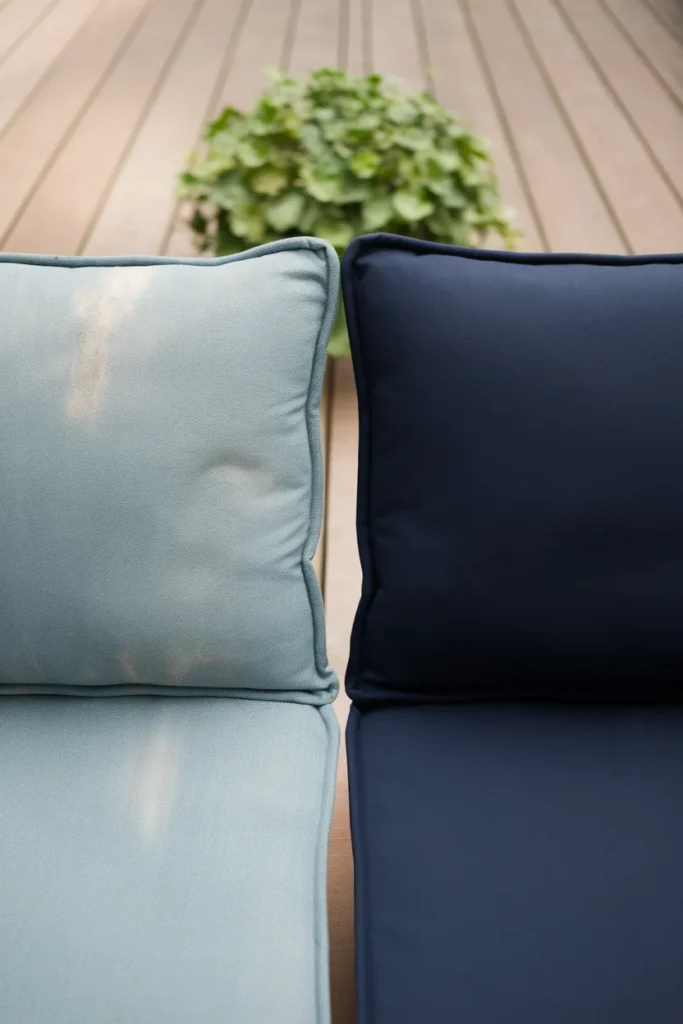
Rain gets the blame. Sun does the damage. Ultraviolet light breaks down the dye and the fibers themselves, which is why fading and that stiff, brittle feel always show up on the sunniest outdoor furniture cushions first. A cushion parked under a covered porch can outlive an identical one in an open yard by years.
Water is still a problem, but mostly because of what grows in it. Mildew does not actually eat acrylic or olefin fiber. It feeds on the film of pollen, dust, sunscreen, and body oil that settles on the surface, then roots into a damp cushion that never gets to dry. Keep a cushion clean and let it breathe, and mildew loses most of its footing.
Heat piles on too. Daily cycles of blazing afternoons and cool damp nights make fabric expand, contract, and hold moisture, which speeds up both fading and that musty smell.
Counterintuitive truth worth sitting with: for a sunny patio, fade resistance matters more than being fully waterproof. A waterproof cushion that bleaches to a pale ghost in one season is still trash by fall. Sun resistance is the trait that protects your money.
If you have gardened through a hot Zone 8 or 9 summer, you already know what eight to ten hours of daily sun does to anything left outside. Fabric is no exception, it just fails more quietly than your tomatoes.
The Full-Sun Fabric Ladder: Five Fabrics, Ranked
Time for the framework this whole guide leans on. The Full-Sun Fabric Ladder ranks the five fabrics used in outdoor furniture cushions from most to least sun-worthy, so you can skip the marketing and buy by rung. Rung one shrugs off years of sun. Rung five belongs indoors. Screenshot the table, take it shopping.
| Rung | Fabric | Sun survival | Cost tier | Best for |
|---|---|---|---|---|
| 1 (best) | Solution-dyed acrylic (Sunbrella) | 5 to 7+ years, barely fades | $$$ | Full-sun decks, coastal, long haul |
| 2 | Olefin (solution-dyed polypropylene) | 3 to 5 years | $$ | Best value in strong sun |
| 3 | Solution-dyed polyester | 2 to 4 years | $$ | Part-sun patios on a budget |
| 4 | Printed or piece-dyed polyester | 1 to 2 seasons | $ | Shade, covered porches, short term |
| 5 (worst) | Cotton, canvas, duck cloth | Fades and molds fast | $ | Indoors or deep shade only |
Rung 1: Solution-dyed acrylic
This is the fabric to beat. In solution-dyed acrylic, the color is added while the fiber is still liquid, so the pigment runs all the way through instead of sitting on the surface. Sunbrella is the name most people know, and its performance line typically carries a five year fabric warranty, with many sets looking good well past that.
Expect to pay for it. Premium acrylic seat cushions often land in the $150 to $400 range per seat, and a full custom set climbs from there. For a full-sun deck you plan to keep, it is usually the cheapest fabric per season once you do the math later in this guide.
Rung 2: Olefin (polypropylene)
Olefin is the value pick I steer most people toward. It is solution-dyed like acrylic, resists fading and stains well, and costs noticeably less. It does not quite match acrylic on lifespan under brutal all-day sun, but for three to five seasons it punches far above its price. Plenty of mid-range replacement cushions from Wayfair, Target, and Amazon use it.
Rung 3: Solution-dyed polyester
Polyester is where the label reading really matters, because two very different fabrics share the name. Solution-dyed polyester, with pigment locked into the fiber, holds up decently for two to four years on a part-sun patio and keeps prices friendly. It is a reasonable middle path if acrylic is out of budget.
Rung 4: Printed or piece-dyed polyester
This is the fabric inside most bargain cushions, the $25 to $60 sets stacked by the front door at big-box stores every spring. The pattern is printed onto or dyed onto the surface, so full sun lifts the color fast. On a shady porch it can look fine for a couple of years. In an open, sun-blasted yard, plan on replacing it every season or two.
Rung 5: Cotton, canvas, and duck cloth
Beautiful in the showroom, heartbreaking on the deck. Natural cotton, canvas, and duck cloth soak up water, dry slowly, fade quickly, and grow mildew given half a chance. The mistake almost everyone makes once is buying gorgeous cotton-canvas cushions because they feel soft in the store, then watching them spot and fade by midsummer. Keep these for indoor rooms or deeply shaded, covered spaces only.
Read the Tag Before You Pay
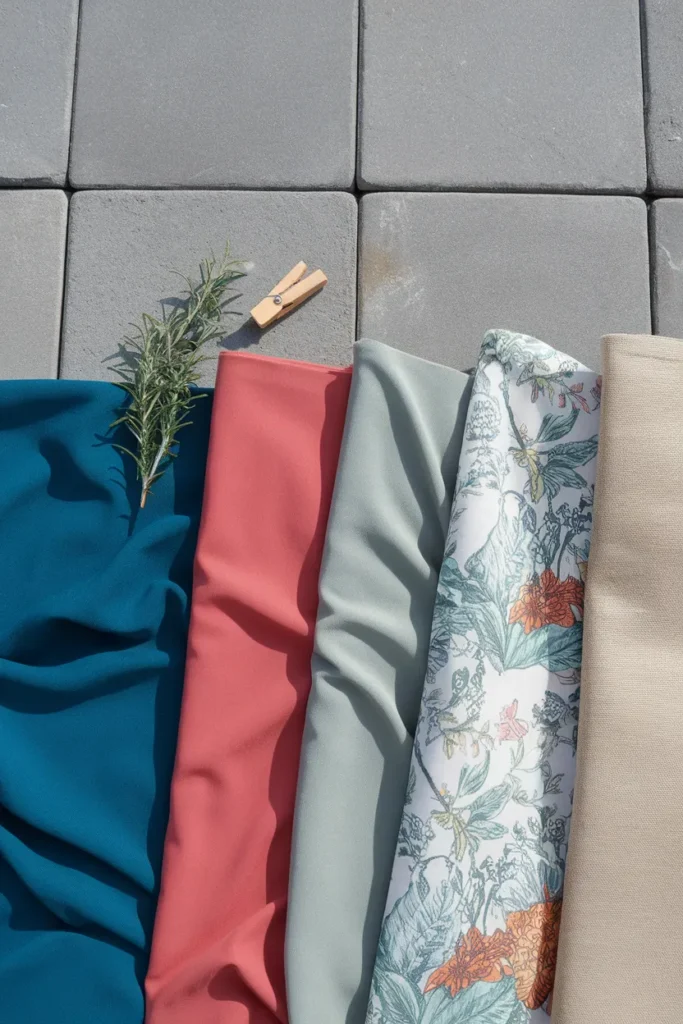
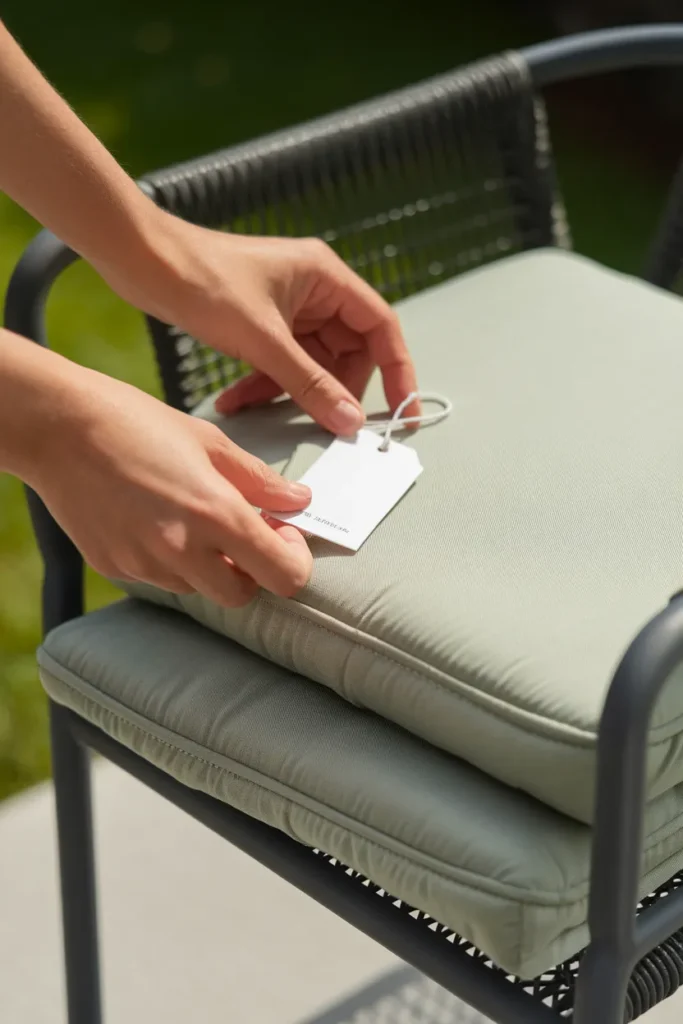
Store lighting hides everything and salespeople love the word “weatherproof,” which means almost nothing on its own. The tag on your outdoor furniture cushions tells the truth, and it takes about ten seconds to check. Flip the hangtag or peek at the sewn-in label and hunt for three things.
First, the fiber content. You want the words “solution-dyed” in front of acrylic, olefin, or polyester. No “solution-dyed” anywhere usually means printed fabric that will fade.
Second, any lightfastness or UV rating. Better fabrics brag about it, often citing hours of tested sun exposure or a fade warranty in years. Silence on sun resistance is itself an answer.
Third, the fill and the cover construction, which we cover next, plus whether the cover unzips for washing.
Quick gut check you can run in the aisle: pinch a fold of the fabric and rub it hard between two fingers for a few seconds, then look at your fingertips. Cheap printed fabric can leave a faint chalky or colored residue and feels thin and slick. Performance fabric feels dense and springs back. This is also where solid frames matter, since good cushions deserve good bones, whether that is teak, powder-coated aluminum, or the all-weather resin in these wicker patio furniture ideas.
Don’t Skip the Foam Inside
Almost every buying guide stops at the cover and forgets the part you actually sit on. The foam matters just as much, especially if it rains where you live.
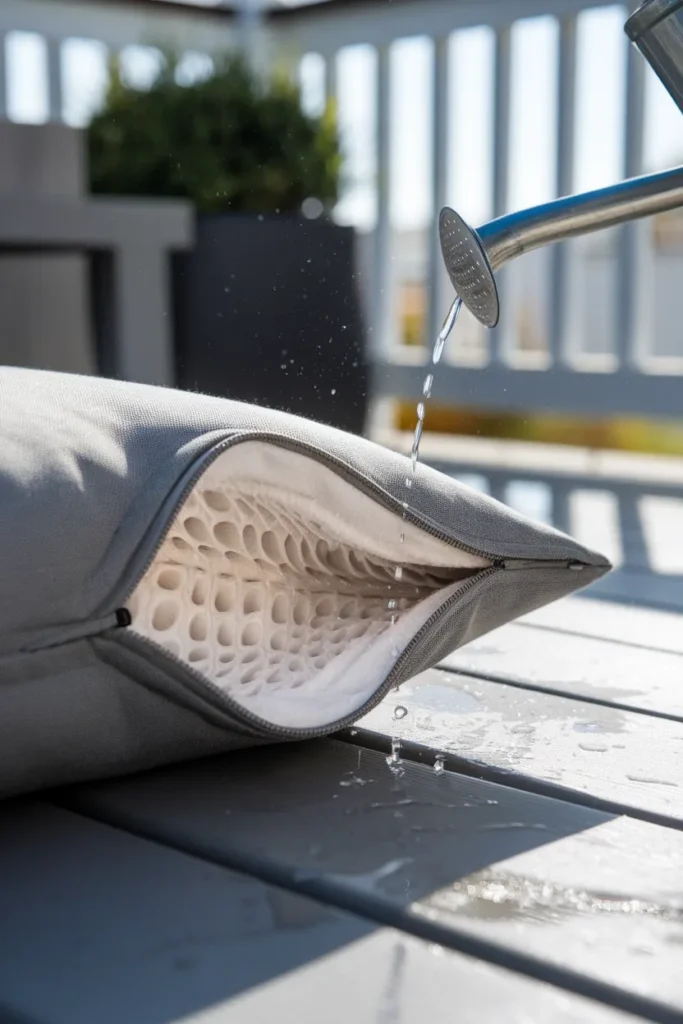
Cheap cushions use standard open-cell foam. It acts like a sponge, holds water in the core for days, and turns into a mildew farm you cannot see from the outside. You dry the cover, sit down, and it squishes out cold water. Not great.
What you want is quick-dry reticulated foam. The cells are open and connected on purpose, so water passes straight through and air moves in to dry the core in hours instead of days. Many quality seat cushions wrap that foam in a breathable inner liner too.
One more thing to check: a mesh drainage panel or grommets on the bottom of the cushion, which let trapped water escape. If you built a pallet outdoor furniture sofa and are buying cushions to fit it, this is your chance to spec quick-dry foam from the start rather than fighting soggy seats later.
Fast foam field test: press the cushion firmly, hold three seconds, and let go. Quick-dry foam rebounds fast and evenly. Mushy, slow, uneven foam will hold water the same lazy way.
Match the Fabric to Your Sun
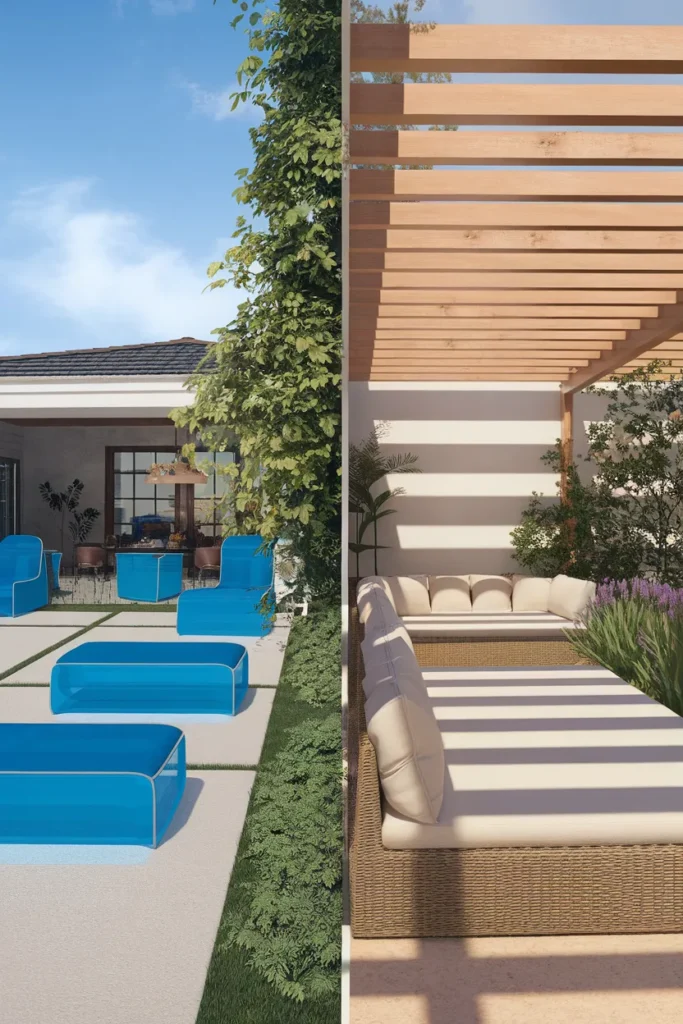
The right outdoor furniture cushions are not the same for everyone, because your sun is not everyone’s sun. Walk your space at noon and count the hours of direct light that seating actually gets, then buy to match.
Full sun, six or more hours of direct light, especially in hot, high-UV regions: go rung one or two, acrylic or olefin, no shortcuts. Anything lower fades on a schedule.
Part sun, three to six hours, or a spot shaded by an afternoon pergola: solution-dyed polyester at rung three can work and save you money.
Deep shade or a covered porch: you have room to prioritize looks and softness, since even rung four printed polyester lasts longer out of the direct beam.
Coastal and humid Southeast yards add salt and moisture on top of sun, which pushes you back up the ladder toward acrylic and makes quick-dry foam close to mandatory. Desert patios punish color hardest of all, so lean acrylic and lighter shades that show fade less.
What Outdoor Furniture Cushions Really Cost
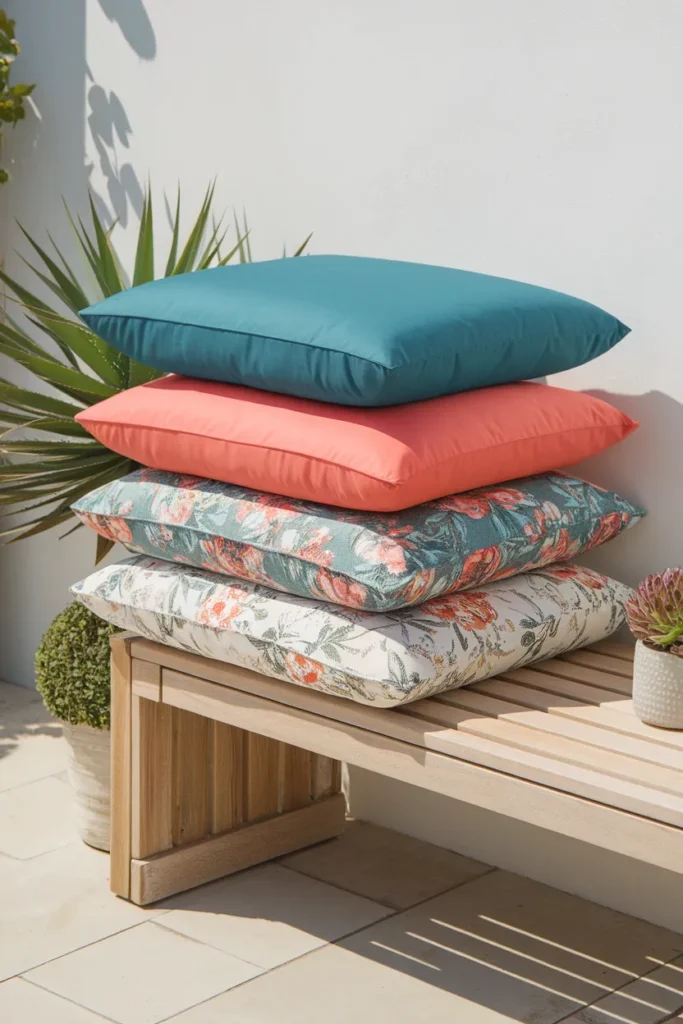
Sticker price lies. The number that matters is cost per season, and it flips the usual budget logic on its head.
Run the math. A budget printed-polyester set around $50 that dies in one to two seasons costs you roughly $25 to $50 a season, every season, forever, plus the annoyance of shopping again each spring. A solution-dyed acrylic set around $600 that lasts six years costs about $100 a season and looks good the whole time.
Over six years, replacing cheap cushions can quietly cost as much as the premium set, sometimes more, and you never once get the good version. That is the case for spending up on rung one or two if the space gets real sun.
Here is how I usually split it. Full-sun seating you use constantly earns the acrylic. A rarely used corner chair or a shaded reading nook is a fine place to save with olefin or budget polyester. You do not have to buy the best fabric for every seat, just for the seats the sun attacks.
A few real product tiers to anchor your budget, prices as rough 2026 ballparks: big-box replacement seat cushions run about $25 to $60 each, mid-range olefin and solution-dyed polyester sets land near $60 to $150 per seat, and premium Sunbrella or custom cushions sit around $150 to $400 and up per seat. A quality deck box to store them, like a Keter or Suncast, adds roughly $80 to $200 and pays for itself in extended cushion life.
Keep Them Alive: Cleaning, Mildew, and Storage
Even rung-one fabric fails early if you neglect it, and even a mid-tier set lasts surprisingly long if you treat it right. The habits are simple.
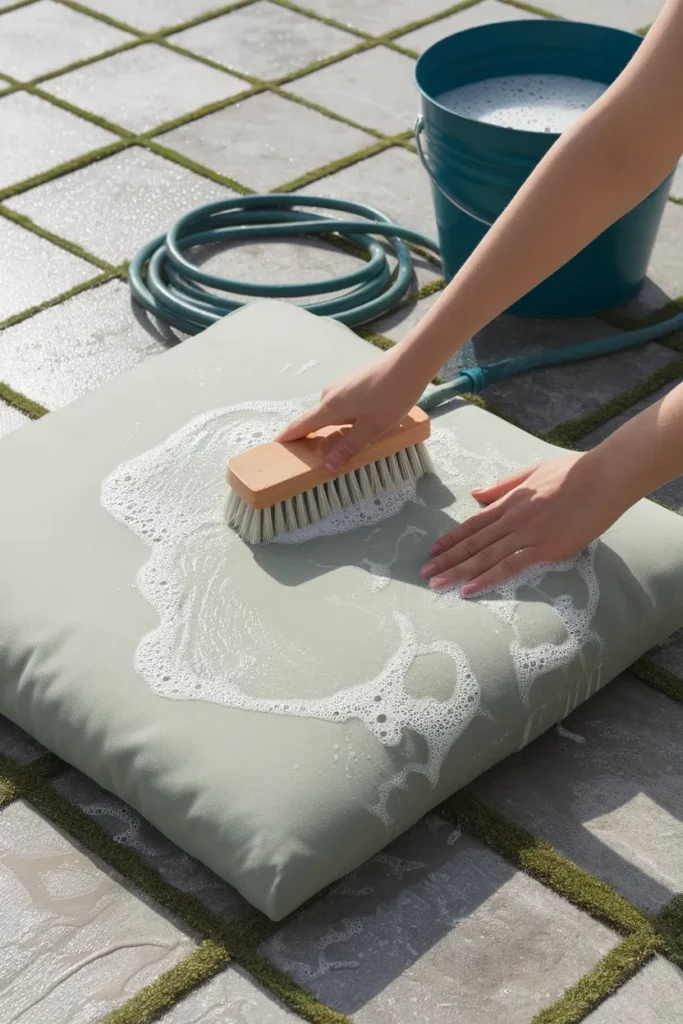
Clean gently and often. For routine dirt, mix a little dish soap into a gallon of lukewarm water, brush the fabric with a soft brush, rinse thoroughly, and let it air dry fully before storing. For performance acrylic you can follow the official Sunbrella cleaning guide, which even okays a diluted bleach solution on their fabric for tougher jobs. Always rinse until the water runs clear, since leftover soap attracts dirt and, ironically, more mildew.
Hit mildew early and by the label. If spots appear, brush the dry cushion off outdoors first so you are not spreading spores, then treat the stain. For a fabric-safe, expert-backed method, the University of Georgia Extension’s mildew stain-removal steps walk through soaking and laundering options, and stress testing any cleaner on a hidden corner first. Sunscreen and body oil are mildew’s favorite food, so a rinse after a pool day genuinely helps.
Re-waterproof once a season. Washing slowly strips the factory water repellency. A spray-on fabric protector such as 303 High Tech Fabric Guard restores beading and buys you drier, cleaner cushions. Reapply on a clean, dry cushion, ideally in spring.
Store smart in the off-season. Sun is the top killer, but months of winter damp finish off what sun started. Stash cushions dry in a ventilated deck box, or bring them indoors, and never seal a damp cushion in plastic where it will mildew in the dark.
Your 60-Second Cushion Buying Checklist
Screenshot this and run it in the store or on the product page before you spend a cent.
- Fiber says “solution-dyed” acrylic, olefin, or polyester, in that order of preference.
- There is a real UV or fade rating, or a multi-year fabric warranty.
- The fill is quick-dry reticulated foam, not plain open-cell.
- The cushion bottom has a mesh drainage panel or grommets.
- The cover unzips so you can wash it.
- The fabric matches your actual hours of direct sun (see the Ladder).
- You checked cost per season, not just the sticker price. Hit five or more and you are buying cushions that survive the summer, not just the showroom.
Frequently Asked Questions
What fabric is best for outdoor cushions in full sun?
Solution-dyed acrylic, such as Sunbrella, is the top choice for full sun because the color runs through the fiber and resists fading for five to seven years or more. Olefin is the best value runner-up. Skip printed polyester and any cotton or canvas in an open, sunny yard.
How do I keep my patio cushions from fading?
Buy solution-dyed fabric first, since printed fabric fades no matter what you do. Then reduce sun exposure when cushions are not in use by storing them in a deck box or under a cover, rinse off sunscreen and pollen regularly, and refresh the factory water repellency each spring with a fabric protector.
Can outdoor cushions be left outside in the rain?
Performance acrylic and olefin cushions can handle rain, but the fill decides whether that is fine or miserable. Quick-dry reticulated foam sheds water and dries in hours, while cheap open-cell foam stays wet for days and grows mildew. Even good cushions last longer if you store or cover them during long wet stretches.
How do you clean outdoor cushions that are attached to furniture?
Vacuum or brush off loose dirt, then scrub in place with dish soap and lukewarm water using a soft brush, working the whole cushion so you do not leave a clean ring. Rinse thoroughly with a hose until the water runs clear, blot excess water, and prop the furniture so air reaches the cushions and dries them fully.
How long do outdoor furniture cushions last?
It depends almost entirely on fabric and sun. Budget printed-polyester sets often last one to two seasons in full sun, solution-dyed polyester two to four years, olefin three to five, and solution-dyed acrylic five to seven years or beyond with good care.
Are Sunbrella cushions worth the money?
For seating in real sun that you plan to keep, usually yes. The higher upfront price spreads across many more seasons, so the cost per season can beat cheaper cushions you replace yearly. For a shaded nook or rarely used chair, a mid-tier olefin set is often the smarter spend.
Can you dye or reupholster faded outdoor cushion covers?
You can, with limits. Outdoor fabric sprays and dyes can refresh a lightly faded cover for a season, though results are uneven on badly bleached fabric. For a cleaner fix, many cushion covers unzip and can be replaced, or you can wrap the foam in new outdoor fabric using a no-sew method with fabric-safe adhesive and simple tucked corners.
The Bottom Line
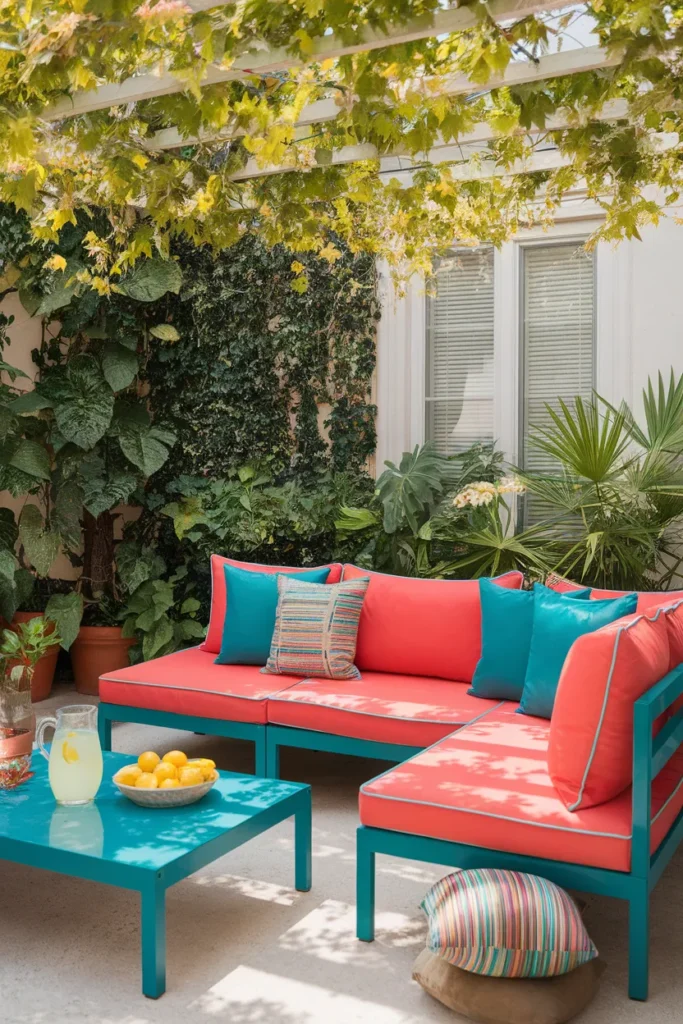
Outdoor furniture cushions are not a gamble once you know the rule: buy the fabric, not the photo. Solution-dyed acrylic or olefin, quick-dry foam inside, a quick tag check at the register, and a little seasonal care will carry a set through years of sun that would flatten a cheap cushion by fall.
Start with the seats your sun hits hardest, work down the Full-Sun Fabric Ladder for the rest, and put the savings toward the space itself. If you are ready to build the whole scene around those cushions, our pallet outdoor furniture ideas are a satisfying, budget-friendly place to begin. Grab a set that survives the summer, then go enjoy it.