Backyard Ideas for Kids That Actually Get Used Every Single Day
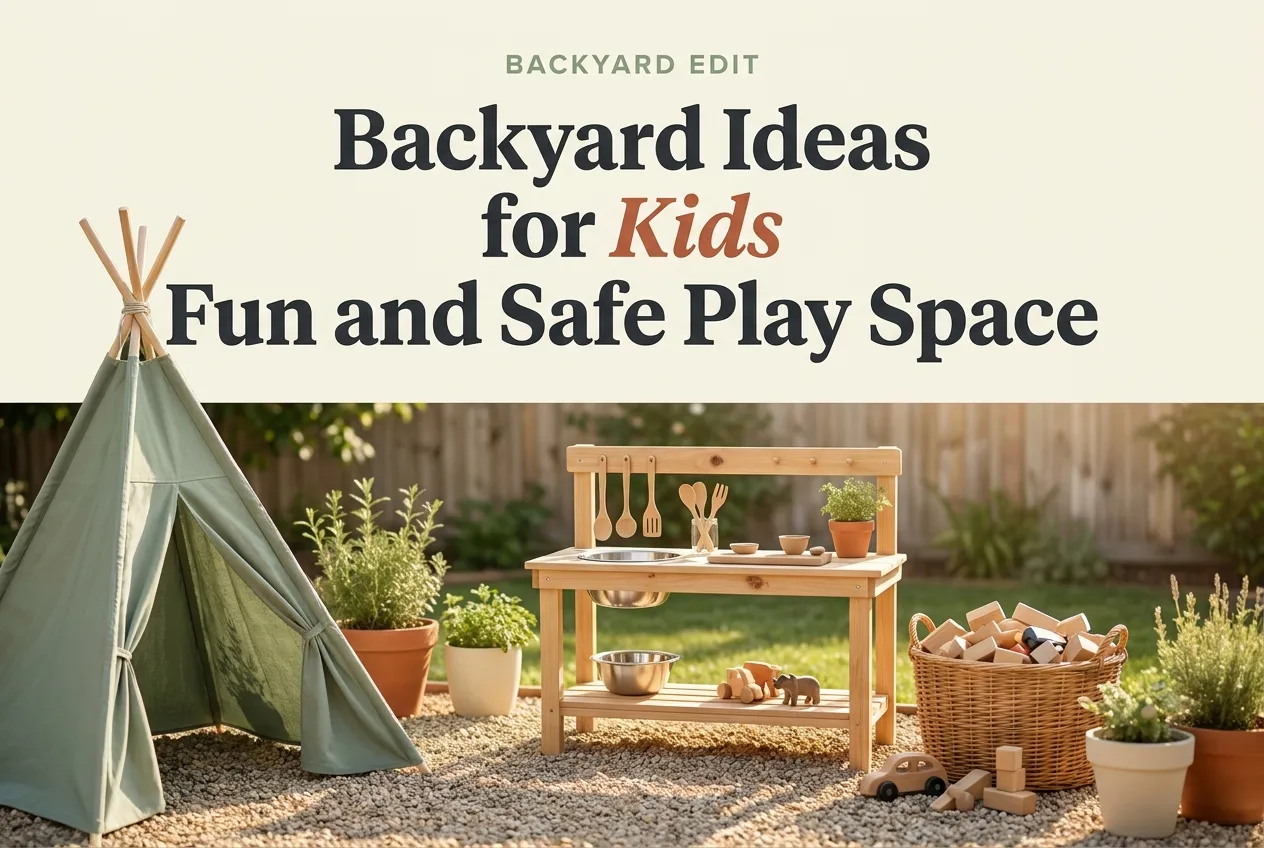
You step out the back door with your coffee, and there it is again. A flat patch of grass, one faded plastic slide tipped on its side, a tangle of sidewalk chalk dissolving in last week’s rain, and three kids inside on tablets because the yard, honestly, looks boring. The yard isn’t broken. It just has no plan. These backyard ideas for kids are the fix, and we’ve organized them by yard zone so you can build a kid-friendly backyard that works for a toddler, a second grader, and a tween at the same time, on any budget, even if you rent.
We’ve tested most of these in our own yards and our neighbors’ yards over three summers. You’ll get budget swaps, splurge picks, rental-safe versions, and a few ideas none of the top-ranking guides bother to mention.
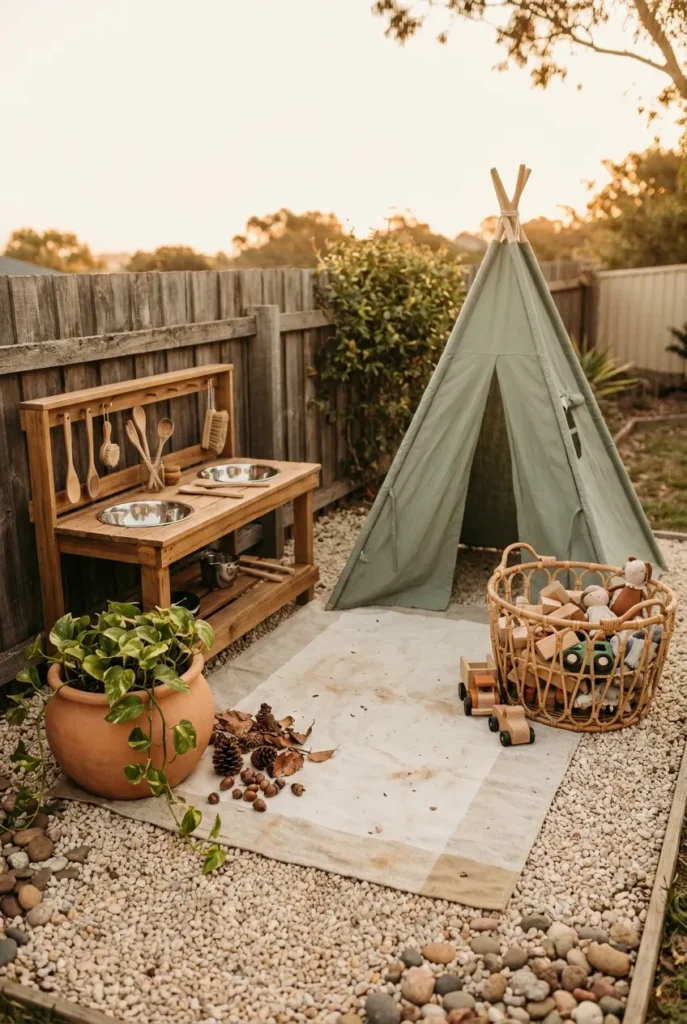
Who This Is For
- Renters who need ideas with zero drilling and zero landfill at move-out.
- Homeowners in small yards (under 400 square feet) who feel like there’s no room for any of this.
- Budget-conscious parents who want a magazine-looking backyard play area for under $200 total.
- Multi-age families with kids spanning toddler to tween who keep outgrowing every setup.
- Parents of kids and pets (dog families especially) who need the space to work for both.
If you have a giant lot and an unlimited budget, you’ll still get value here, but our bias is real spaces and real money.
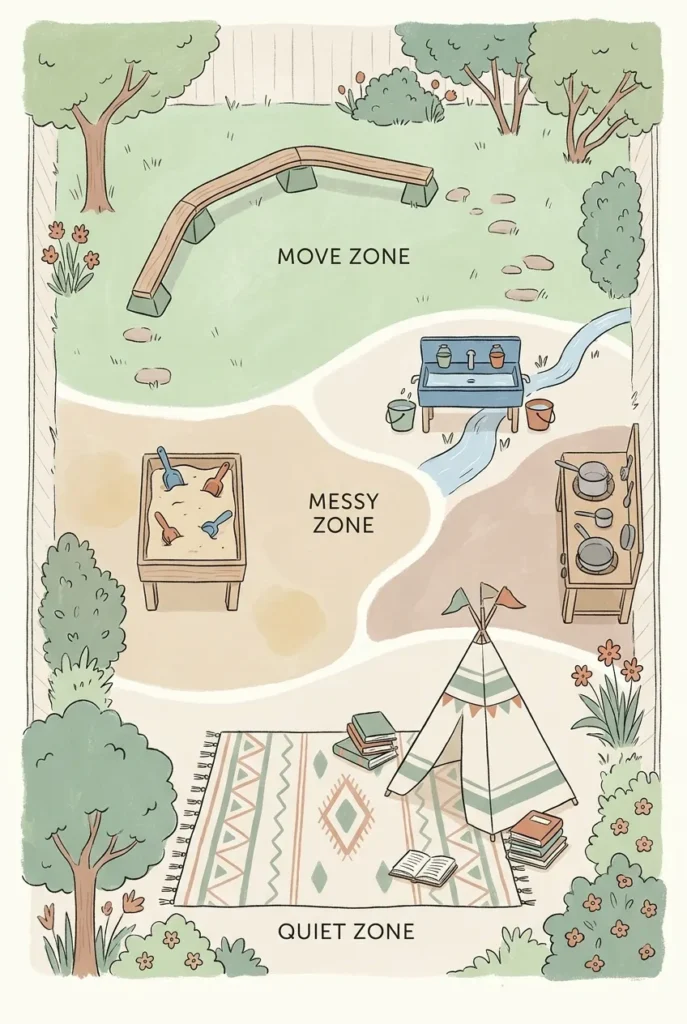
The 3-Zone Yard Map (Our Organizing Method)
Before you buy a single thing, divide your yard into three zones. Every idea in this guide drops into one of them. It’s the cheapest fix you’ll ever make because it stops you from buying random stuff that doesn’t fit a plan.
- Move Zone: open running, climbing, balancing, ball play. Needs grass or rubber mulch and clear sight lines.
- Messy Zone: water, sand, mud, paint, sensory bins. Needs a hose nearby and a forgiving ground cover like pea gravel or pavers.
- Quiet Zone: reading, fort play, snack picnics, screen-free hangout. Needs shade and soft surfaces.
A 12 by 16 foot yard can still fit all three. We’ve done it. You just shrink the proportions.
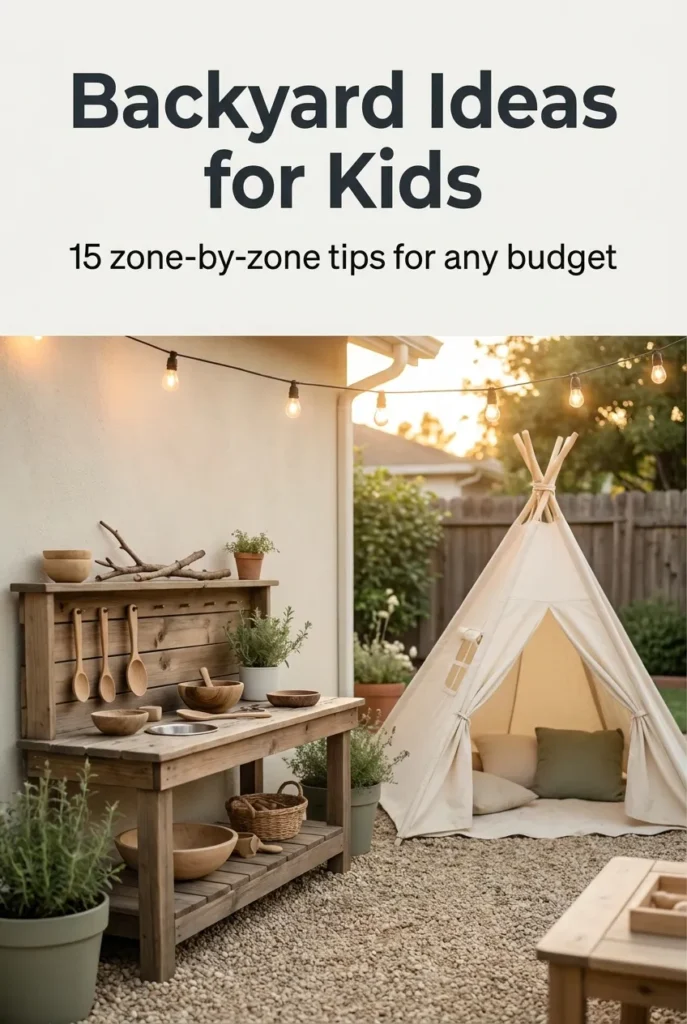
1. Build a Mud Kitchen From Pallet Wood
What it is: a low outdoor counter with a sink basin, a few shelves, and a bin of pots, wooden spoons, and stainless cups. Kids “cook” with mud, water, leaves, and acorns.
Why it works: open-ended sensory play covers ages 2 to 10, which is rare. Toddlers stir, big kids invent recipes. The American Academy of Pediatrics points to unstructured outdoor play as one of the strongest drivers of healthy development, and a mud kitchen is the easiest way to make it happen daily.
How to execute it:
- Budget version ($0 to $25): one free pallet from a local hardware store, a $4 stainless mixing bowl from Dollar Tree set into a cutout, a handful of wooden spoons from a thrift store.
- Mid-range ($60 to $90): IKEA DUKTIG play kitchen weatherproofed with two coats of exterior sealer.
- Splurge ($180+): a cedar mud kitchen from a small Etsy maker, roughly 36 inches wide, 20 inches deep.
Rental-friendly flag: fully freestanding, lifts onto a hand truck on moving day.
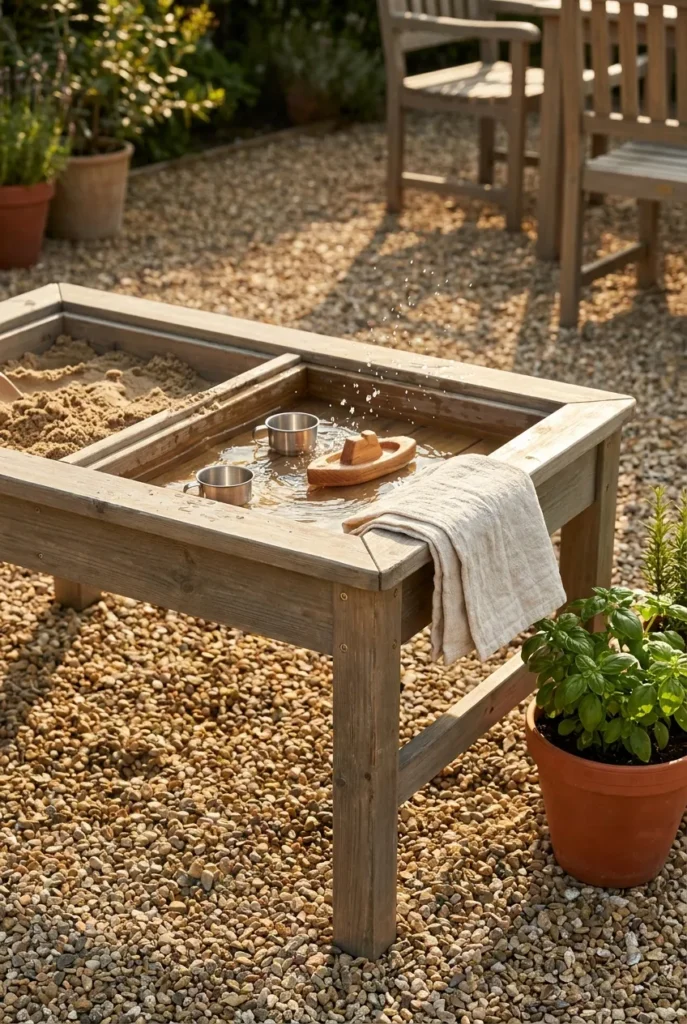
2. Add a Sand or Water Table to the Messy Zone
What it is: a waist-high table for toddlers (about 18 to 22 inches tall) or a ground-level model for bigger kids, filled with kinetic sand, water beads, or plain water and cups.
Why it works: it concentrates the mess into one footprint, which means the rest of the yard stays usable. It also buys you 40 minutes of focused play on a hot afternoon, which is a real metric.
How to execute it:
- Place it within 8 feet of a hose bib so refilling isn’t a project.
- Drill four pencil-sized drainage holes in the bottom corners so you’re not breeding mosquitoes.
- Cover with a fitted outdoor tablecloth or a $7 shower curtain when not in use.
Budget pick: Step2 Rain Showers table around $55 at Target. Splurge pick: a cedar planter-style sand box with a hinged lid, around $180.
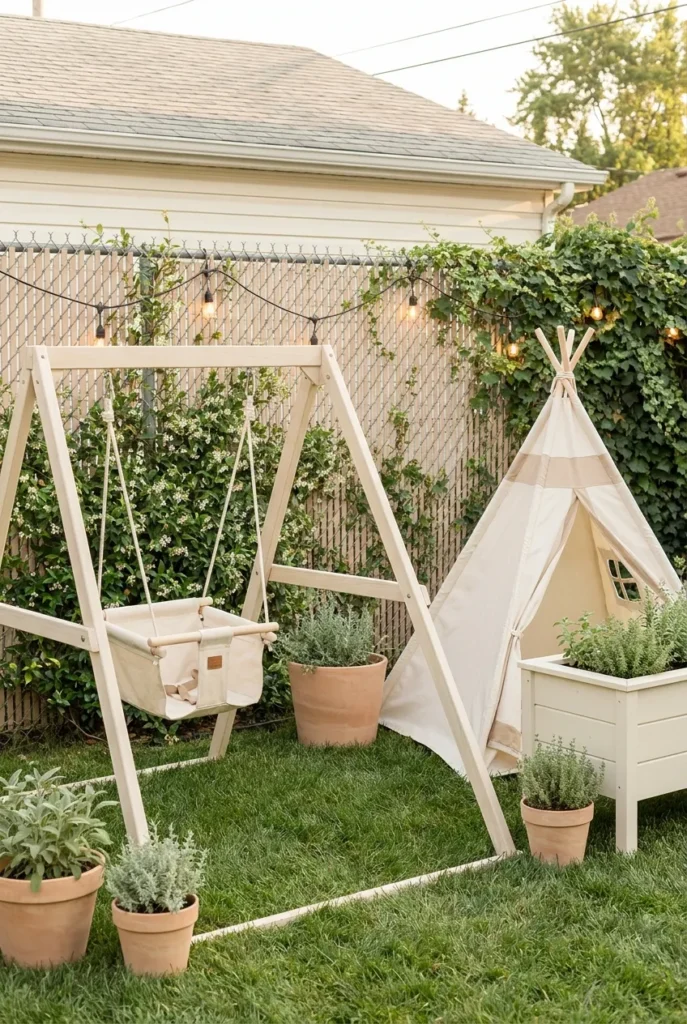
3. Hang a Tree Swing or Doorway Swing (No Tree Required)
What it is: a single rope swing, a sling swing, or a hammock swing for kids ages 3 and up.
Why it works: repetitive swinging calms the nervous system and gives kids vestibular input, which is parent code for “they sleep better at night.”
How to execute it:
- If you have a sturdy tree branch at least 8 inches thick, use a $20 hanging kit and rated tree straps.
- If you don’t, a freestanding A-frame swing stand from Costco or Amazon (about $230) sits on grass, no digging required. Rental-safe.
- For tiny patios, a doorway swing rated to 110 pounds installs into the doorframe in 10 minutes with no permanent damage.
Pinterest readers love this one. It’s the single most “saved” idea in family backyard pins because the image reads instantly.
4. Make a Pea Gravel Play Patio in Place of a Sandbox
What it is: a 6 by 8 foot rectangle of pea gravel, edged with cedar boards or steel landscape edging, set right in the middle of the messy zone.
Why it works: pea gravel drains in minutes after rain, doesn’t track inside like sand, hides spilled mud, and doubles as a base for the mud kitchen, water table, and a couple of stools. It’s the most forgiving surface in a kid-friendly backyard.
How to execute it:
- Roll out landscape fabric, dump 2 inches of gravel, rake flat. Two hours of work.
- Budget: about $85 for materials at Home Depot for a 6 by 8 foot zone.
- For more layout strategy on tight spaces, see our small backyard ideas guide where we break down 14 by 16 foot rectangles step by step.
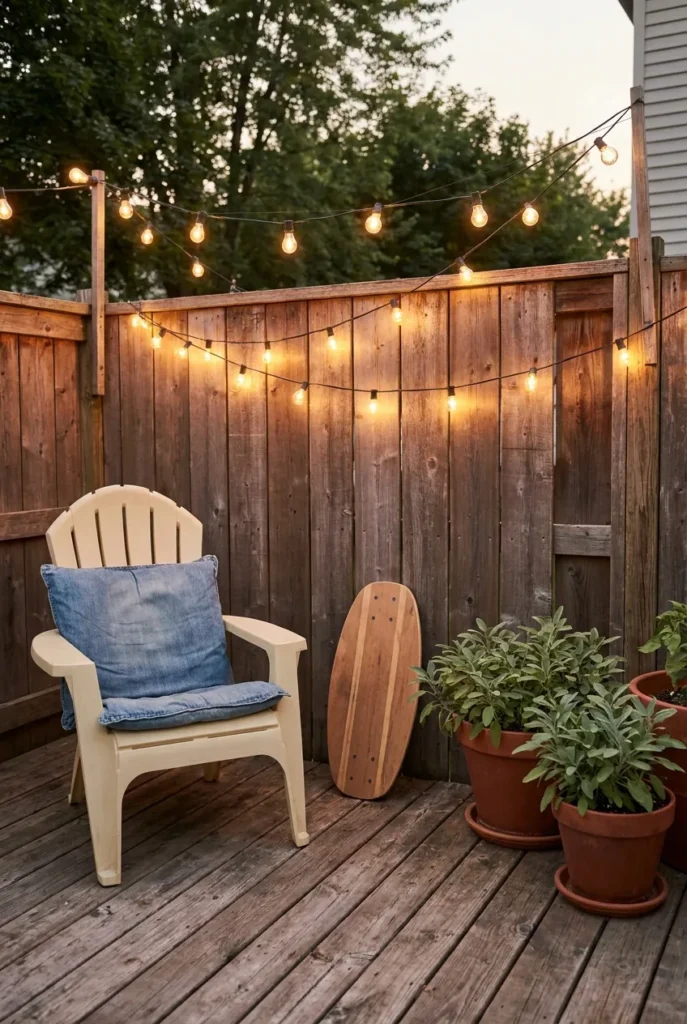
5. String Up Café Lights for After-Dinner Play
What it is: two strands of warm-white outdoor café lights crisscrossed above your seating area or play patio.
Why it works: the magic-hour kid effect. Lights extend usable yard time by two hours in summer, which is gold when the sun doesn’t set until 9 p.m. They also dial up the “cozy” factor on every Pinterest pin you’ll ever take of the space.
How to execute it:
- Budget pick: Costco 48-foot LED café strand, around $35.
- Mounting in a rental: 3M outdoor command hooks every 4 feet along a fence top. No drilling, no holes.
- Run them on a $12 outdoor smart plug so they go on at sunset automatically.
6. Set Up a Reading Teepee in the Quiet Zone
What it is: a four-pole canvas teepee, about 5 feet tall, lined with a sheepskin, two floor cushions, and a small basket of weatherproof books.
Why it works: kids need a screen-free retreat outside, not just inside. A teepee turns reading into a destination instead of a chore. Bonus: it’s the prop that makes the whole zone photograph beautifully.
How to execute it:
- Budget: four 6-foot bamboo poles ($4 each at Home Depot) tied at the top with twine, draped with a $15 painter’s drop cloth from the paint aisle.
- Mid-range: Target’s kids teepee with cotton canvas panels, around $70.
- Splurge: a Pottery Barn Kids canvas teepee with star print, $179.
Bring it indoors during storms so it lasts three to four seasons.
7. Plant a “Kid Garden” They Actually Own
What it is: a 2 by 4 foot raised cedar bed where the kids choose, plant, water, and harvest. Cherry tomatoes, strawberries, basil, and sugar snap peas are the most forgiving picks.
Why it works: ownership flips the dynamic. A child who plants a strawberry will eat a strawberry. It also doubles as a calm-down activity on tough afternoons.
How to execute it:
- Budget: a $35 cedar kit from Home Depot, $20 of soil, $8 in seedlings from a local nursery.
- Place the bed inside the messy zone so muddy hands and the hose are already nearby.
- Each kid gets one labeled section. Wood plant markers from Dollar Tree, $1.25 each.
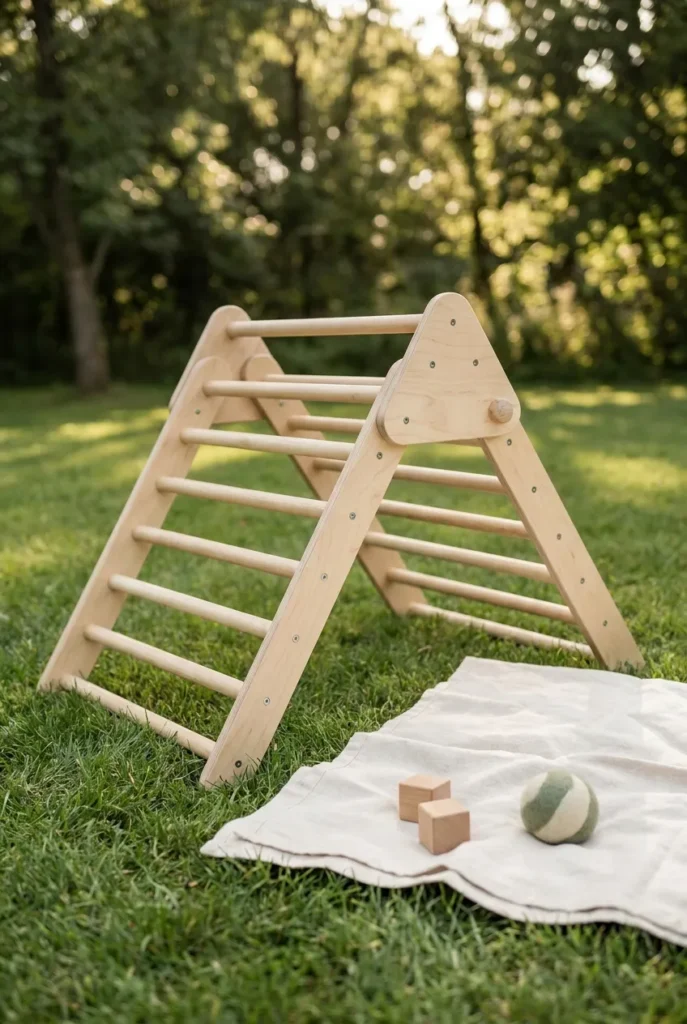
8. Install a Climbing Triangle or Pikler-Style Frame
What it is: a Montessori-inspired wooden climbing triangle, sometimes paired with a ramp or rocker board.
Why it works: climbing builds grip strength, spatial planning, and confidence. It’s also the rare piece that grows with the child from 18 months to about age 6.
How to execute it:
- Budget: a used one from a local Facebook Marketplace listing, often $80 to $120.
- Splurge: a Lily & River Little Climber, around $325, folds flat for storage.
- Place on grass or a 4-inch foam mat for safety. Per the CPSC home playground safety handbook, the surface under climbing equipment matters more than the equipment itself.
9. Paint a Hopscotch or Twister Pattern on the Patio
What it is: a temporary or permanent painted game grid on concrete, pavers, or even an outdoor rug.
Why it works: structured games pull kids outside who normally drift indoors. It works for ages 4 to 12, which is the hardest range to design for.
How to execute it:
- Renter-safe version: outdoor chalk markers (Crayola Washable Sidewalk Chalk, $4) on plain concrete. Hoses off in a minute.
- Homeowner version: outdoor patio paint from Behr, around $30 a quart, with stencils from Etsy ($15).
- Outdoor rug version: a $40 polypropylene rug from Walmart with painted-on shapes. Lifts and rolls up at move-out.
10. Add a Splash Zone (No Pool Required)
What it is: a hose-fed sprinkler mat, a splash pad, or a 4-foot inflatable kiddie pool on hot afternoons.
Why it works: searches for “backyard ideas for kids with pool” and “backyard ideas for kids summer” spike every June. Most families don’t want the maintenance of a real pool. A splash zone gives the experience without the upkeep.
How to execute it:
- Budget: a $25 sprinkler splash pad from Target.
- Mid-range: an Intex 8-foot inflatable pool, $55, holds 6 inches of water for toddlers.
- Splurge: a freestanding fiberglass splash pad with recirculating pump, $400+.
- Always supervise. Drain after every use. CPSC reports the leading cause of pool injury in kids under 4 is brief, unobserved access.
Multi-Age Layering: The One Trick Nobody Talks About
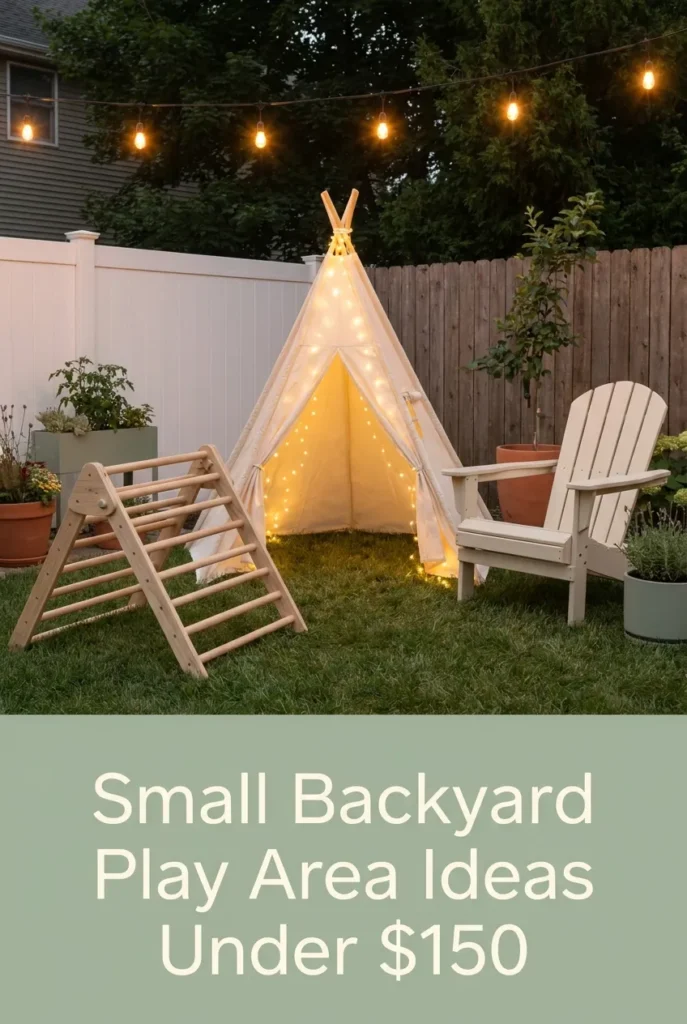
The reason backyards stop working is that you build for the youngest child, and 18 months later they’ve outgrown it. The fix is layering.
In each zone, stack one toddler element, one big-kid element, and one tween-friendly element. A single Messy Zone can hold a toddler water table, a big-kid mud kitchen, and a tween-aged garden bed. The space gets denser, not bigger, and you stop replacing things every year.
| Zone | Toddler (1 to 4) | Big Kid (5 to 9) | Tween (10 to 13) |
|---|---|---|---|
| Move | Push wagon, balance beam | Trampoline, swing | Spikeball net, slackline |
| Messy | Sand table | Mud kitchen | Garden bed, paint easel |
| Quiet | Reading teepee | Fort with fairy lights | Hammock with paperbacks |
Screenshot this. It saves three years of trial and error.
Backyard Ideas for Kids and Dogs (Yes, You Can Have Both)
About a third of readers searching backyard ideas for kids also have a dog. A few rules from our own yard:
- Use pea gravel or rubber mulch in the messy zone. Both rinse clean of dog mess; wood chips trap odor.
- Skip cocoa mulch. It’s toxic to dogs.
- Build a 3 by 3 foot “digging pit” filled with sand in a corner. The dog and the kids both use it, and the rest of the lawn stays intact.
- Fence off the kid garden bed with a 24-inch wire border. Dogs flatten unfenced strawberries within a week.
Rental-Friendly Backyard Ideas for Kids
Every top-ranking guide assumes you own the house. We don’t. Here’s the rental-safe version of this whole article:
- All play equipment is freestanding, on grass or pavers.
- String lights mount with command hooks, never staples or nails.
- Mud kitchen is a freestanding pallet build, lifted onto a hand truck at move-out.
- Pea gravel patio sits on landscape fabric inside a removable cedar frame. Rakes back up in two hours.
- Raised garden bed is unanchored and sits on top of the existing surface.
For a deeper renter-friendly playbook, our budget DIY backyard makeover guide walks through 20 projects under $100 with the same constraints.
Budget vs Splurge: Side-by-Side Swap Chart
| Idea | Budget Version (under $25) | Mid-Range ($25 to $100) | Splurge ($100+) |
|---|---|---|---|
| Mud kitchen | Free pallet + Dollar Tree bowl | IKEA DUKTIG, sealed | Etsy cedar build, $180 |
| Climbing structure | Marketplace used Pikler, $80 | Costco A-frame swing, $230 | Lily & River climber, $325 |
| Reading teepee | Drop cloth + bamboo, $20 | Target canvas, $70 | Pottery Barn Kids, $179 |
| Splash zone | Sprinkler mat, $25 | Intex pool, $55 | Recirculating splash pad, $400+ |
| Lights | $35 Costco strand | Target Smith & Hawken, $60 | Brightech 50-foot LED, $115 |
Pick one splurge and surround it with budget items. That’s the formula every styled Pinterest yard quietly uses.
Layout Tips for Small Yards and Long Narrow Yards
If your yard is under 400 square feet, scale every zone to 4 by 6 feet. If your yard is long and narrow (think a 12 by 35 foot side yard), break it into three back-to-back zones along the long axis instead of side by side. We dig into long, skinny layouts in our narrow backyard ideas guide with specific dimensions for paths and play areas.
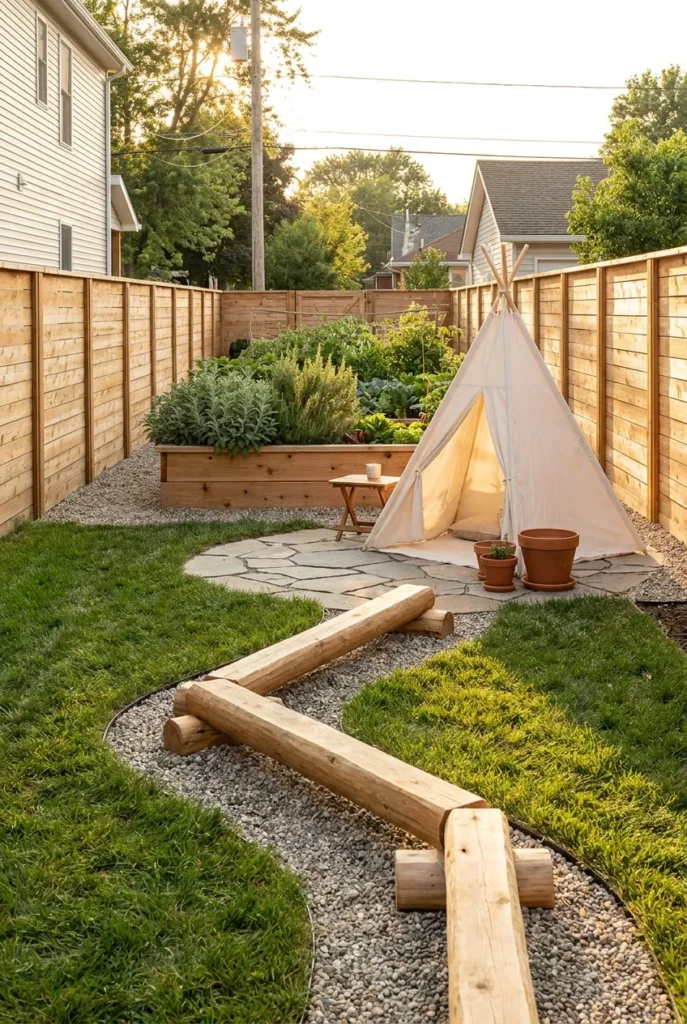
Common Mistakes to Avoid
- Buying the giant plastic playset first. It’s the most expensive piece, the hardest to move, and the one kids outgrow fastest. Build the zones first, add the big-ticket gear last.
- Forgetting adult seating. A backyard play area without a comfortable adult bench becomes the spot you supervise from a folding chair, which means you stop going out there. Add a cedar bench or two Adirondacks day one.
- Ignoring shade. Most plastic equipment hits 140 degrees Fahrenheit in direct July sun. Even a $40 8 by 10 foot shade sail solves it.
- Loose-fill safety surface gaps. CPSC recommends at least 9 inches of loose-fill material under any play equipment over 4 feet tall. Most home setups have 1 to 2 inches and don’t realize it.
- Designing for one child only. Plan for the age your kids will be in three years, not today.
- Skipping a hose bib map. If the messy zone is more than 25 feet from a hose, you’ll resent it within a month.
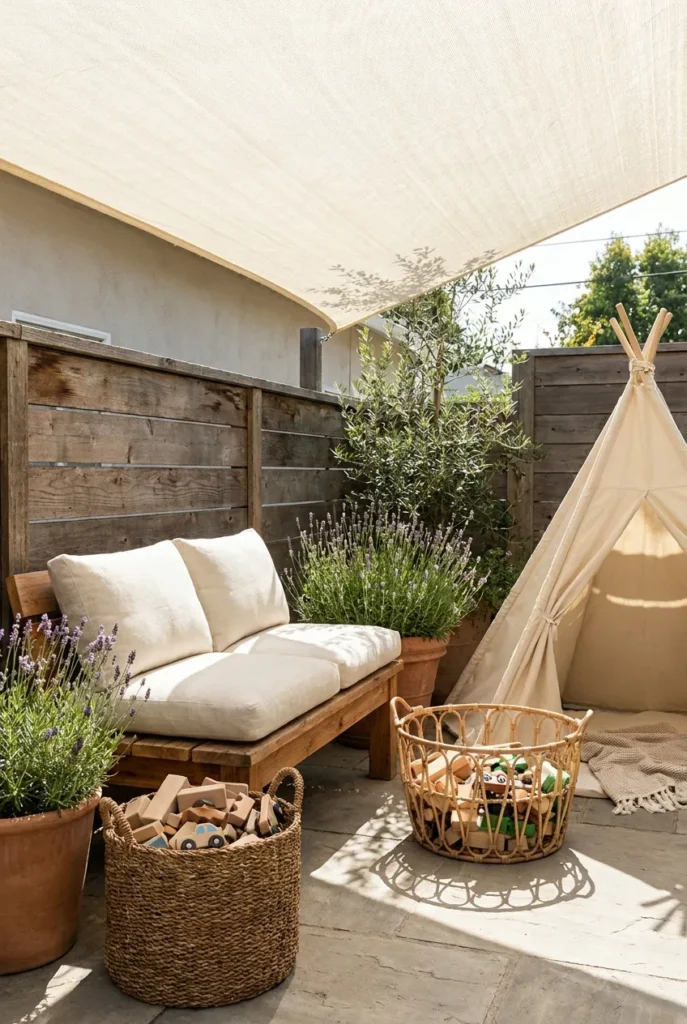
Backyard Ideas for Kids on a Budget: Our Under $150 Build
Here’s the actual receipt from a recent build we did in a 16 by 18 foot yard.
- Free pallet mud kitchen with $4 Dollar Tree bowl: $4
- Drop cloth and bamboo teepee: $22
- 6 by 8 foot pea gravel patio materials: $85
- Marketplace Pikler triangle, used: $95 (skip if budget is tight)
- Costco café lights strand: $35
Subtotal without climber: $146. It looks like a $1,000 setup. We have the pin to prove it.
FAQ
How do I create a fun kids backyard play area in a small space or rental?
Use the 3-Zone Yard Map, shrink each zone to a 4 by 6 foot footprint, and pick only freestanding pieces (A-frame swing stand, mud kitchen on a hand truck, teepee, pea gravel inside a removable cedar frame). Everything lifts and leaves with you. No drilling, no digging.
What is the budget version of a backyard for kids?
A complete starter setup runs about $145 total: a free pallet mud kitchen, a drop-cloth teepee for $22, a 6 by 8 foot pea gravel zone for $85, and a $35 strand of café lights. Add a sprinkler mat for $25 in summer.
How do I make my backyard safe for kids?
Start with the surface under any climbing or swinging equipment. CPSC recommends at least 9 inches of loose-fill material like pea gravel, sand, or wood chips, or a rubber mat rated for the fall height of the equipment. Check sight lines from your kitchen window, latch any gates, drain water features after each use, and store hose nozzles and tools out of reach.
What are good backyard playground alternatives?
A mud kitchen plus a climbing triangle plus a swing covers everything a $1,200 plastic playset does, for about a quarter of the price, with better aesthetics and longer age range. Add a sand or water table for toddlers and a hopscotch grid for big kids.
How long does it take to build a backyard play area for kids?
A full small-yard build (mud kitchen, pea gravel zone, teepee, lights, swing) takes a single focused weekend, about 12 to 16 hours total. The pea gravel zone is the longest piece at 3 to 4 hours including the trip to Home Depot.
How do I make a backyard work for kids and dogs together?
Pea gravel or rubber mulch in the messy zone, a fenced 24-inch border around the garden bed, a dedicated 3 by 3 foot sand digging pit in a corner, and zero cocoa mulch anywhere on the property.
Will these ideas work for tweens, not just little kids?
Yes if you layer. Add a hammock in the quiet zone, a slackline or Spikeball net in the move zone, and a paint easel or garden bed in the messy zone. The same yard works for ages 2 through 13 with thoughtful layering.
Save This for Your Spring Yard Refresh
Pin the image you liked most from this post so you can pull it up at Home Depot this weekend. The whole 3-zone plan is the kind of thing that’s easy to forget halfway down a paint aisle. Next, head to our small backyard ideas guide to see exact layout dimensions for yards under 250 square feet, then come back here and pick your first zone to build.