Small Backyard Landscaping Ideas (No Contractor Needed)
You step out the back door with your iced coffee, and there it is again. A patchy 16 by 20 foot rectangle of grass, one sun-bleached plastic chair, the neighbor’s chain-link fence staring you down, and a mulch corner that washed out two summers ago. The yard isn’t broken. It’s just doing nothing for you.
Here’s the good news. You don’t need a contractor, a six-figure budget, or a half-acre lot to make a small backyard feel like a destination. You need a layout, the right plants for your square footage, and maybe one good Saturday. This guide walks you through the small backyard landscaping ideas I’ve personally tested in three rentals and one starter home, organized by price tier so you can stop at whatever level fits your weekend and your wallet.
Who This Guide Is For
This is for you if:
- You rent or own a small yard (anywhere from 150 to 800 square feet).
- You want DIY-friendly small backyard landscaping ideas, not contractor quotes.
- You are working with a budget anywhere from $50 to $1,500.
- You live somewhere with seasonal weather (Northern Hemisphere, US-style spring through fall).
- You want it to look pulled together, not Pinterest-perfect-fake.
If you are landscaping 2 acres or building a retaining wall on a steep grade, this isn’t your article. Everyone else, keep reading.
The 3-Zone Layout Rule (Start Here Before Anything Else)
Every small backyard layout that works has three zones, and most that fail try to cram in four or five. Pin this part. It will save you hundreds of dollars.
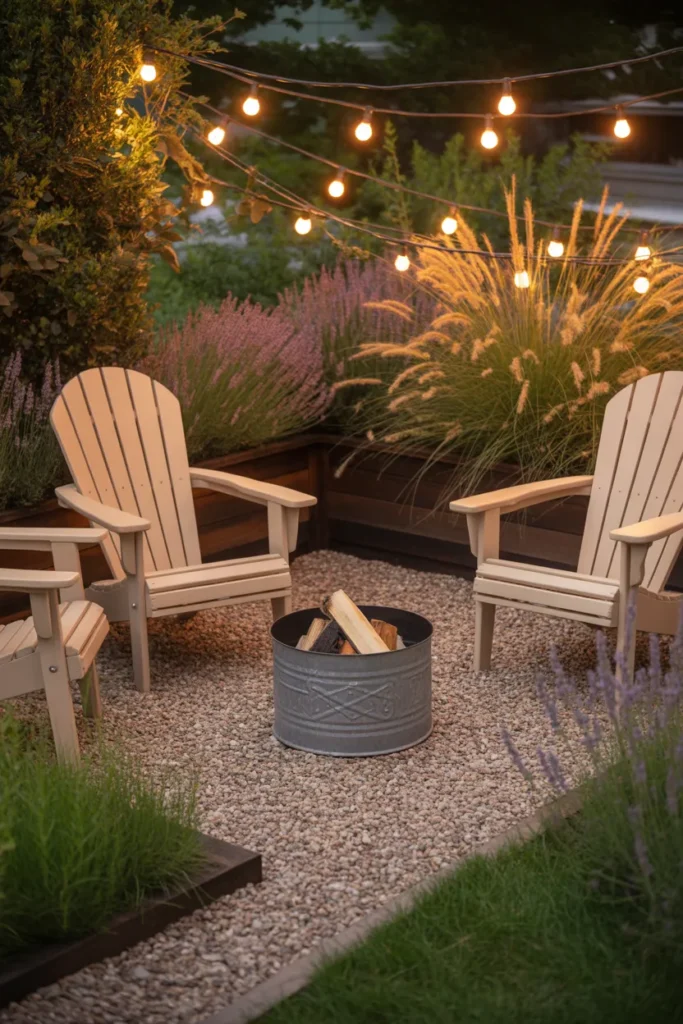
Zone 1: The Anchor (50% of your space) One main hangout area. A patio, a deck, or a gravel pad with seating. This is where humans land. For a 200 sq ft yard, your anchor is roughly 10 by 10 feet.
Zone 2: The Green Frame (30% of your space) Plant beds, containers, and a privacy element along the edges. This is what makes the yard feel finished instead of bare.
Zone 3: The Moment (20% of your space) One small focal point. A fire pit, a bistro set under a tree, a water feature, a single statement planter. Just one. Pick the wrong number here and the yard reads as cluttered.
That’s it. If you remember nothing else, remember the 3-Zone Rule. Most small yard landscaping disasters happen because people try to fit a dining area, a fire pit, a hot tub, a vegetable garden, and a play set into 300 square feet. Pick one anchor, one frame, one moment.
For more on getting the basic footprint right before you spend a dollar, check out our deeper walkthrough on how to make a tiny yard feel twice as big.
Start With Hardscape Before You Buy a Single Plant
Hardscape is the bones. It’s the patio, the path, the gravel border, the edging. If your bones are wobbly, no amount of pretty plants will save the yard.
What it is: The non-plant structure of your yard. Pavers, gravel, stepping stones, edging, retaining blocks.
Why it works: Hardscape eats square footage that would otherwise need mowing, watering, and weeding. In a small backyard, every paver is one less square foot of grass you have to baby.
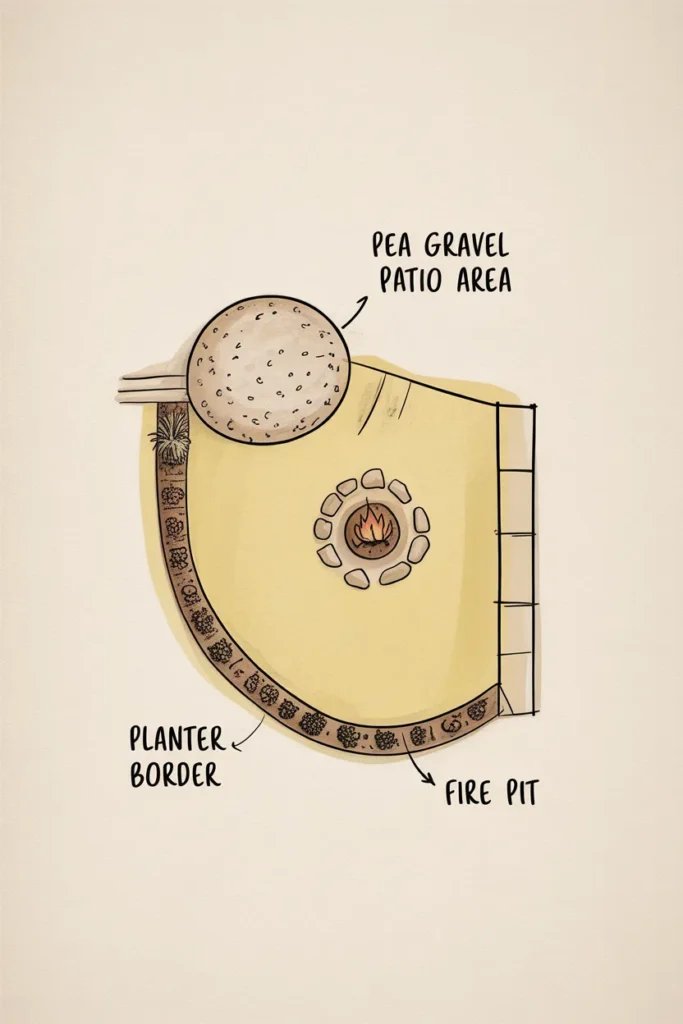
How to execute (budget version): Pea gravel patio. A 10 by 10 foot pea gravel patio costs around $60 to $90 in materials from Home Depot or Lowe’s (5 bags of pea gravel plus a landscape fabric underlayer). Frame it with cheap pressure-treated 2x4s or steel landscape edging. One Saturday. No tools beyond a shovel, a rake, and a tamper.
How to execute (splurge version): Concrete pavers in a soft gray or warm sand color from a local stone yard, set on a base of compacted gravel. $400 to $900 for a 10 by 10 patio depending on the paver. Still DIY-able with a YouTube tutorial and a friend who owes you a favor.
Rental-friendly flag: Pea gravel laid on landscape fabric is fully reversible. Rake it back into bags when you move. Your landlord won’t even know.
Use Vertical Space, Not Just Floor Space
This is where most people leave money on the table. A small yard has roughly 200 sq ft of ground, but it also has hundreds of vertical square feet on fences, walls, and posts that no one uses.
What it is: Trellises, wall-mounted planters, hanging baskets, tall narrow planters, climbing vines.
Why it works: Plants on a fence pull the eye upward, which tricks your brain into reading the space as taller and roomier. It also gives you a full garden without sacrificing any floor area for furniture.
How to execute:
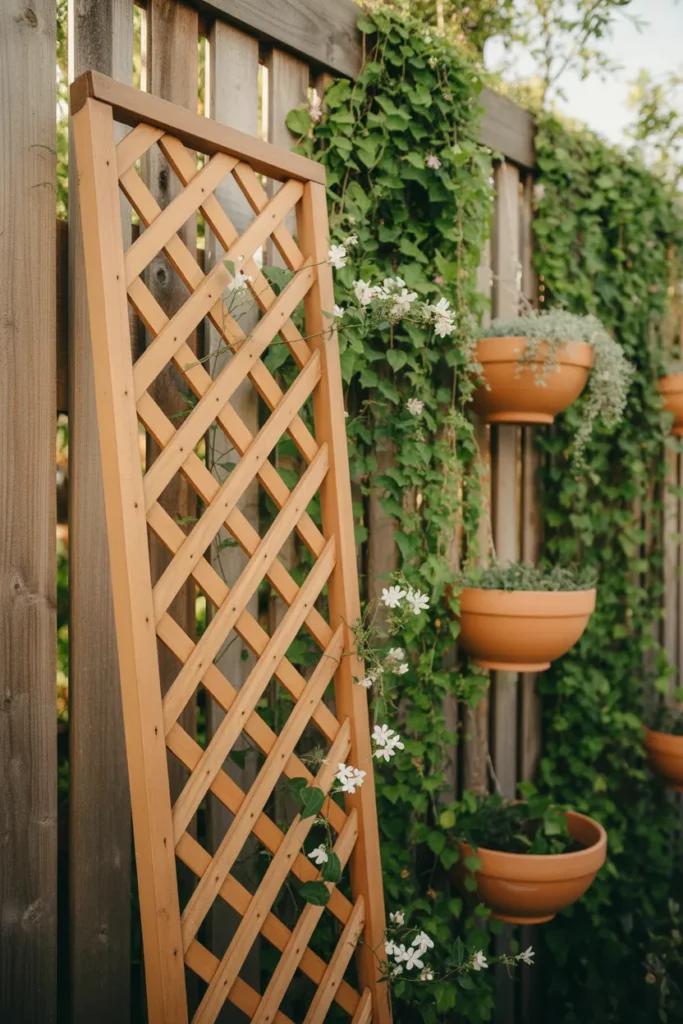
- Mount a $20 wood lattice trellis from Home Depot to a fence post and plant climbing jasmine, clematis, or a Carolina jessamine at the base.
- Hang three terracotta wall planters in a vertical line. Plant trailing ivy, string of pearls, or pothos.
- Install a $40 narrow IKEA SKARPÖ planter against a blank wall and pack it with herbs.
Rental-friendly flag: Skip drilling into the fence and use a freestanding wood trellis ($35 to $80 at Lowe’s) or a tension-rod-mounted planter system. Removable, no holes.
Build a Privacy Layer Without a Six-Foot Fence
Half the reason small backyards feel small is the neighbor problem. You see their windows. They see your dinner. Nobody relaxes.
What it is: A soft visual barrier between you and whatever you don’t want to look at. Plants, panels, screens, or a mix.
Why it works: Privacy doesn’t have to be solid. The eye reads any layered visual interruption as “private,” even if there’s still air and light passing through. This is the secret behind why a row of ornamental grasses feels just as cozy as a wood fence in a small space.
How to execute (budget tier, under $25 each):
- Three tall ornamental grasses (Karl Foerster feather reed grass is the workhorse) at $12 to $15 each from a local nursery. Plant in a staggered row.
- Bamboo roll fencing at Home Depot, $25 for a 6 by 16 foot roll, zip-tied to an existing chain-link fence.
How to execute (mid-range, $25 to $100):
- Three large privacy planters (West Elm dupes from Target or Wayfair, around $40 each) packed with boxwood or arborvitae.
How to execute (splurge, $100+):
- A pair of slatted cedar privacy panels from a local lumberyard or Lowe’s, around $150 to $250 each. Cleanest modern look. Anchor with concrete planters so they’re freestanding (rental-safe).
Plant in Layers, Not Lines
The single biggest beginner mistake in small backyard landscaping is planting everything in a straight line at the same height. It reads as a hedge, not a garden.
What it is: Layered planting means tall plants in the back, medium in the middle, low and trailing in the front, all in the same bed.
Why it works: Layers create depth, which makes a small bed feel like a real garden. Your eye travels from short to tall, which adds perceived space the way a wide-angle lens does.
How to execute the layered formula (works in any zone):
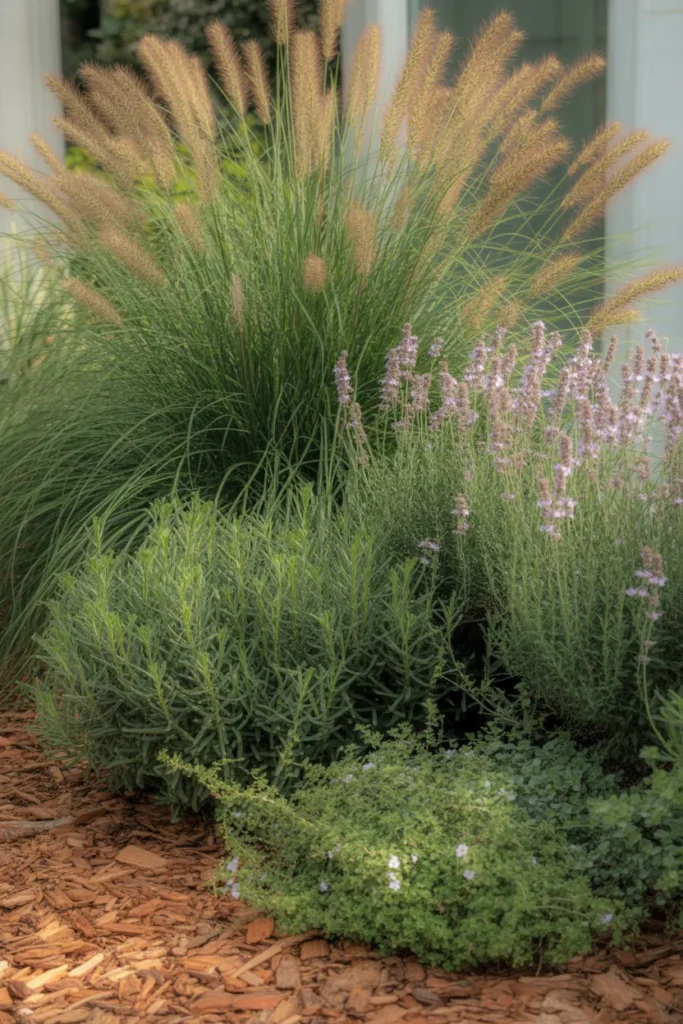
- Back layer (3 to 5 ft tall): Karl Foerster grass, dwarf hydrangea, or a slim cypress.
- Middle layer (1 to 2 ft tall): Lavender, salvia, coneflower, or dwarf boxwood.
- Front layer (under 1 ft): Creeping thyme, sweet alyssum, or sedum.
Stick to a three-color palette across the bed. White, purple, and silver-green is hard to mess up. If you want a deeper guide on plant pairings and which combinations stay healthy together, the Old Farmer’s Almanac plant compatibility chart is a free resource I keep bookmarked.
Add a Fire Pit (Even in 200 Square Feet)
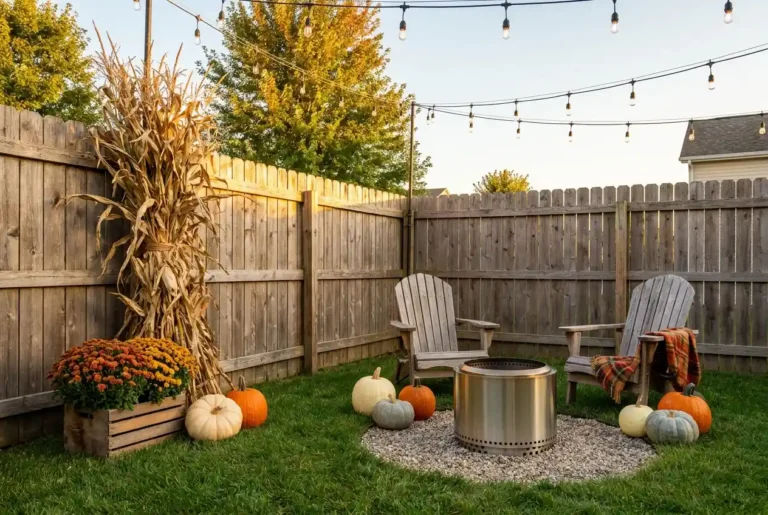
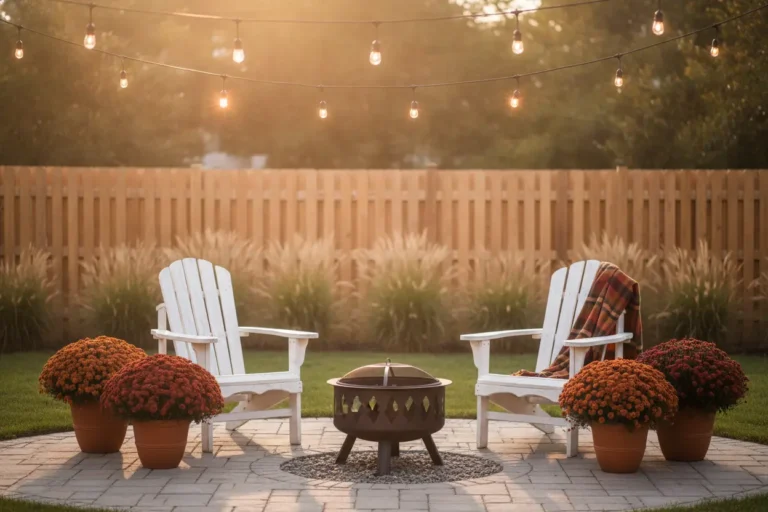
A fire pit is the highest-ROI small backyard landscaping idea on this list. Pinterest pin saves prove it, but so does real life. A fire pit turns a yard from “I sit out here sometimes” to “we hang out here every weekend.”
What it is: A contained outdoor fire feature, either wood-burning or propane.
Why it works: It gives the yard a center of gravity. Furniture wants to be near it. Conversation wants to be near it. Even one chair next to a fire pit reads as intentional.
How to execute (budget, under $50):
- Solo Stove Ranger dupe at Walmart or Lowe’s, around $40 to $60.
How to execute (mid-range, $80 to $200):
- Solo Stove Bonfire 2.0 at Amazon or Target, around $200 with sales.
How to execute (splurge, $300+):
- Crate & Barrel or Pottery Barn concrete propane fire bowl, $350 to $700.
Sizing note: A 4 to 5 foot clearance around the fire pit is the safe minimum. That means the fire pit itself takes up roughly a 10 foot diameter circle in your yard. If your anchor zone is only 8 feet wide, downsize to a smaller tabletop fire bowl instead.
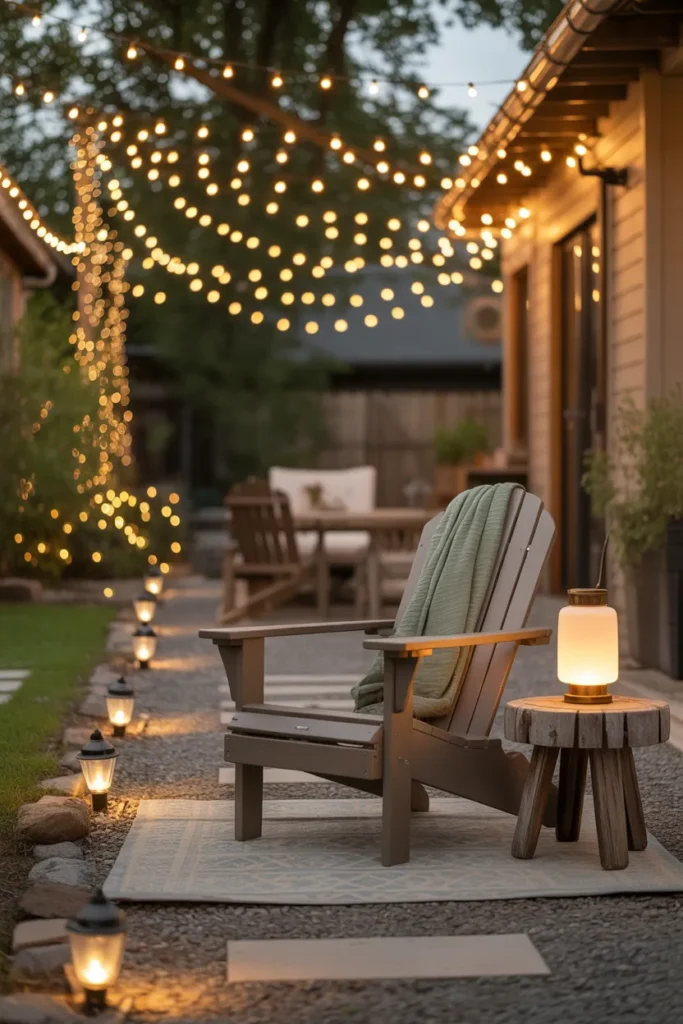
Light It Like a Restaurant Patio
Lighting is the difference between a yard you use until 6 pm and a yard you actually use after dinner.
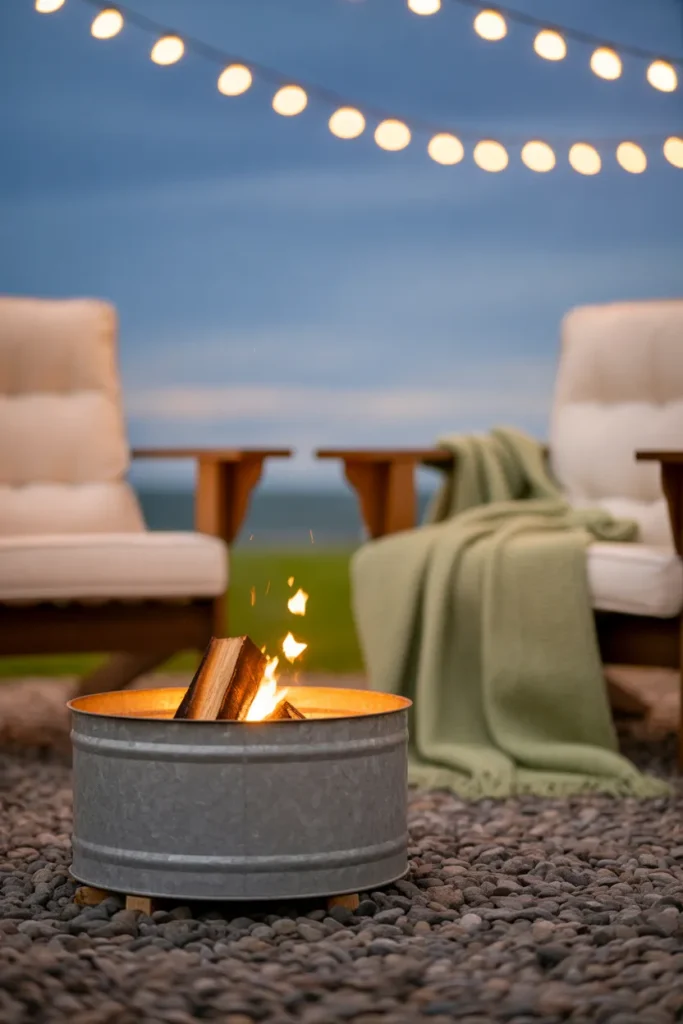
What it is: Layered outdoor lighting at three heights. Overhead (string lights), eye level (lantern or sconce), and ground (path lights).
Why it works: A single overhead light source feels like a parking lot. Three layers feels like a restaurant patio. The math is that simple.
How to execute:
- Overhead: A single strand of 48 ft Brightech Ambience Pro string lights (around $60 on Amazon) zigzagged between two posts. Use Edison-style warm bulbs, never blue-white.
- Eye level: Two lantern-style sconces from Target, around $25 each, or a pair of solar lanterns hung from shepherd hooks ($15 each at Walmart).
- Ground: Four to six solar path lights from Home Depot, around $20 for a pack of six.
Rental-friendly flag: All solar lighting and any string lights mounted with cup hooks on existing fence posts. No wiring, no permits, no holes that matter.
Skip the Lawn With a No-Grass Layout
This is one of the search terms I see climbing fastest in 2026, especially in drought-prone states. A no-grass small backyard is lower maintenance, lower water bills, and frankly easier to make beautiful.
What it is: A small yard with zero turf grass. Everything is hardscape, gravel, ground cover, or planted beds.
Why it works: Grass is a needy tenant. It demands water, fertilizer, mowing, and patches every spring. In a small yard, you get all the labor and almost none of the visual payoff.
How to execute (budget): Pea gravel patio extended to 60% of the yard, planted borders on the edges, creeping thyme or Irish moss filling the gaps. Roughly $150 to $300 in materials for a 200 sq ft yard.
How to execute (splurge): Flagstone patio with decomposed granite filler joints, perennial borders, and a small ornamental tree as the focal point. $1,200 to $2,500 DIY.
Use Containers as a Cheat Code
Containers are the single most underrated tool in compact landscaping. They give you a full garden, full color, and full flexibility without a single shovel-dig.
What it is: A planted garden made entirely of pots, planters, and raised containers.
Why it works: You control the soil, the location, the depth, and the look. Renters get a real garden. Homeowners get to test layouts before committing. Bad year for one plant? Move the container.
How to execute:
- Budget cluster ($25 or less): Three terracotta pots from Home Depot ($6 to $12 each) grouped in odd numbers. Plant one with lavender, one with rosemary, one with trailing sweet potato vine. Total cost: $24 plus a $7 bag of potting mix.
- Mid-range cluster ($25 to $100): Two large 16-inch glazed ceramic planters from Target or Wayfair ($35 to $60 each). One holds a dwarf citrus tree (Meyer lemon if you’re in zones 8 to 11), the other a cluster of three perennials.
- Splurge cluster ($100+): A trio of West Elm or Crate & Barrel concrete planters in graduated sizes ($120 to $250 each). Plant with an olive tree and underplant with rosemary.
Sizing note: In a 200 sq ft yard, 3 to 5 containers is the sweet spot. More than 7 and the space reads as cluttered.

Add One Water Feature (Not Two)
Sound matters more than size. A 12-inch tabletop fountain in the right spot does more for the vibe than a sprawling pond in the wrong spot.
What it is: A small, often self-contained water source. Tabletop fountain, wall fountain, or birdbath with a solar bubbler.
Why it works: Moving water masks street noise, attracts birds, and instantly registers as “this person knows what they’re doing.” It’s the single hack that makes a small yard feel curated.
How to execute:
- Budget: Solar fountain pump kit from Amazon ($20) dropped into a thrifted ceramic bowl from HomeGoods ($15). Total around $35.
- Mid-range: Smart Solar tabletop fountain from Wayfair or Target, around $80.
- Splurge: Wall-mounted cast stone fountain from Anthropologie or West Elm, $250 to $500.
One water feature only. Two in a small yard is the auditory equivalent of two competing playlists.
Plant a Privacy Vine on a Trellis
For renters who can’t put up a fence and homeowners who don’t want one. A fast-growing vine on a trellis fills in a 6 ft tall, 4 ft wide privacy wall in one growing season.
What it is: A climbing perennial vine trained vertically on a freestanding or mounted trellis.
Why it works: Living walls feel softer than solid panels and add fragrance, flowers, and bird activity. They also cost roughly 10% of a built privacy wall.
Best vines for small backyards:
- Star jasmine (zones 8 to 10) for fragrance, white flowers, evergreen.
- Clematis (zones 4 to 9) for big purple or white blooms.
- Carolina jessamine (zones 7 to 10) for early spring yellow flowers.
- Climbing hydrangea (zones 4 to 8) for shaded fences.
Skip honeysuckle and English ivy. Invasive, regret-inducing, and a nightmare to remove.
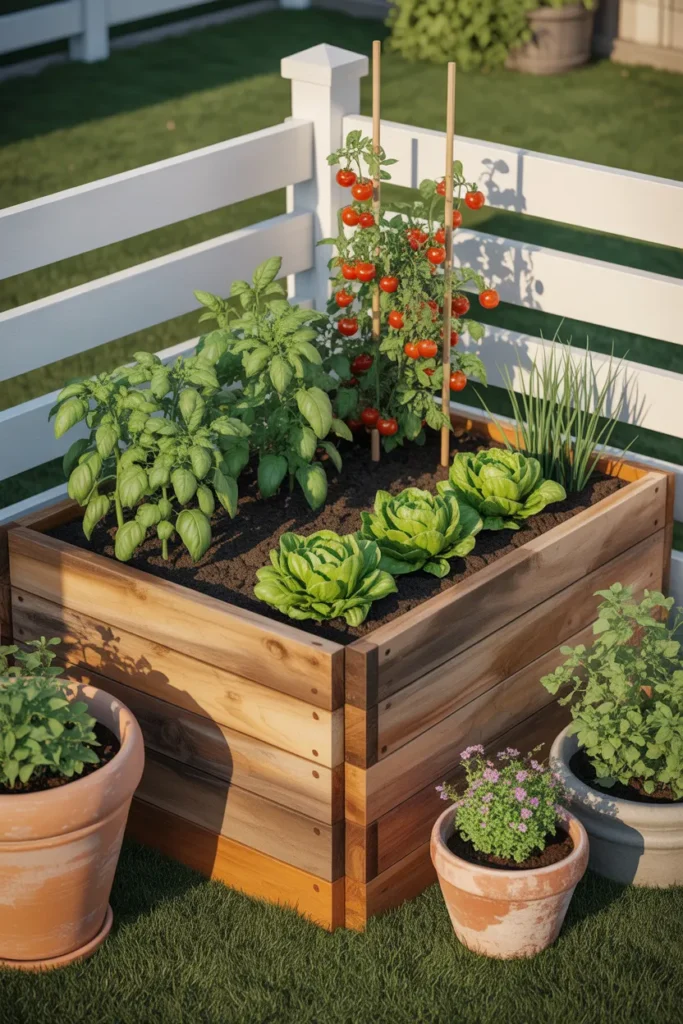
Build a Tiny Edible Garden in the Corner
Even a 4 by 4 foot square in the sunniest corner can produce real food, not just garnish.
What it is: A small raised bed or in-ground vegetable plot tucked into a back corner.
Why it works: Edible gardens earn their square footage twice. They look beautiful and they feed you. A 4 by 4 ft raised bed can produce $200 to $400 of vegetables per season at supermarket prices.
How to execute:
- Budget: A 4 by 4 ft raised bed from cedar fence pickets at Home Depot ($30 in lumber, $20 in soil). Plant cherry tomatoes, basil, lettuce, peppers.
- Mid-range: A pre-built galvanized steel raised bed from Vego Garden or Birdies, around $130 for a 17 in tall x 4 ft x 4 ft kit.
- Splurge: Cedar raised bed with built-in trellis from Williams Sonoma Agrarian or a local builder, $300 to $600.
For a deeper breakdown of what to plant the first time so you don’t kill everything by July, our guide on budget backyard ideas that look expensive has a starter veggie list at the bottom.
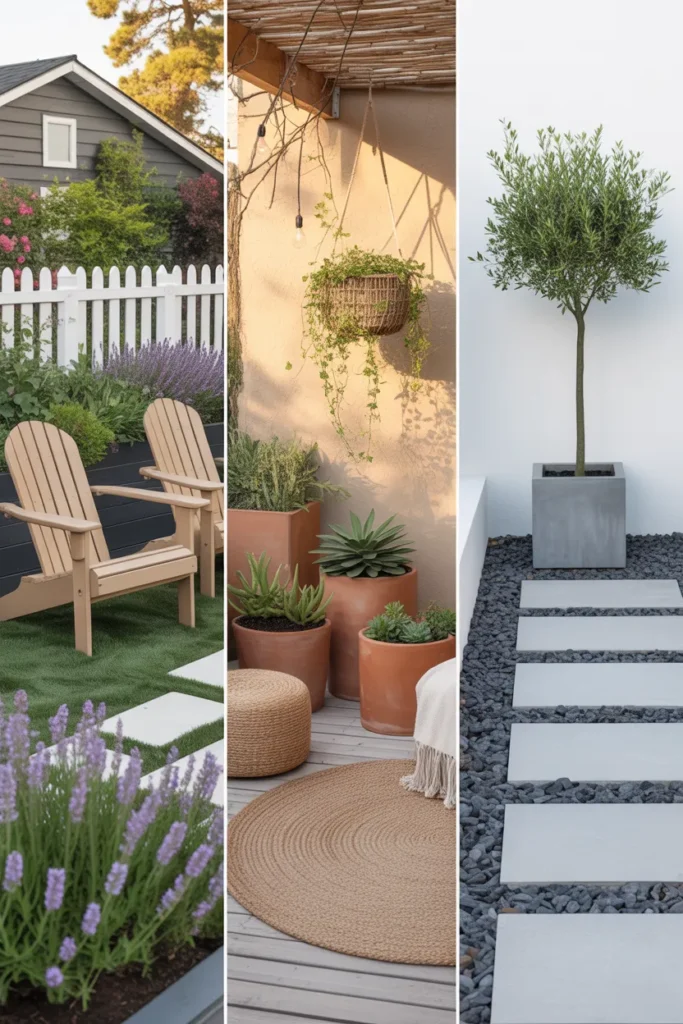
Style Note: Pick One Aesthetic and Commit
Pin too many style boards and your yard ends up looking like four yards in a blender. Here are three that work in small spaces with US-grown plants:
- Modern Farmhouse: Cream and warm wood, galvanized planters, lavender, boxwood, white string lights.
- Boho: Terracotta, woven outdoor rug, mixed textures, ornamental grasses, jewel-toned cushions.
- Japandi: Smooth gray gravel, one specimen tree, cedar bench, sedum ground cover, near-zero color palette.
Pick one. Commit. Buy everything in that lane. The yard will feel pulled together for a fraction of what an undecided yard costs.
Budget vs Splurge: A Side-by-Side
| Element | Budget (under $25 to $100) | Splurge ($100+) |
|---|---|---|
| Patio | Pea gravel ($60 to $90) | Concrete pavers ($400 to $900) |
| Fire pit | Walmart steel pit ($40 to $60) | Crate & Barrel concrete bowl ($350+) |
| Planters | Home Depot terracotta ($6 to $12 each) | West Elm concrete ($120 to $250) |
| Lighting | Amazon Brightech string lights ($60) | Hardwired bistro lights ($400+) |
| Privacy | Bamboo fence roll ($25) | Cedar slat panels ($150 to $250 each) |
| Water feature | DIY solar bowl ($35) | Anthropologie wall fountain ($250+) |
| Edible garden | DIY cedar 4×4 bed ($50) | Cedar with trellis ($300 to $600) |
You can build a full small backyard makeover on the budget column for under $400. The splurge column lands closer to $2,500 to $4,000 and still doesn’t require a contractor.
Common Mistakes to Avoid
After three years of trial-and-error in my own yards and a hundred reader emails, these are the small backyard landscaping mistakes I see the most.
- Trying to fit five zones into 200 square feet. Pick three. Use the 3-Zone Rule.
- Buying mature-size shrubs. A boxwood labeled “compact” can still hit 6 feet wide in 5 years. Read the tag.
- Mixing more than three hardscape materials. Pavers plus gravel plus brick plus flagstone plus a stamped concrete border equals chaos.
- Overplanting in year one. Plants double or triple in size in 18 months. Leave space.
- Skipping mulch. It’s the cheapest visual upgrade in landscaping. 2 inches of cedar mulch transforms a bed.
- Choosing the wrong-zone plants. Look up your USDA hardiness zone before you buy anything. The USDA Plant Hardiness Zone Map is free and updated.
- Putting the fire pit too close to the fence. 4 to 5 ft minimum clearance, more if your fence is wood.
- Adding a play set, a dining table, AND a fire pit. Small yards force you to choose. Choose.
Seasonal Tip: Plant in Fall, Not Spring
Spring feels like the right time to plant. Fall is actually better in most US zones. Roots establish in cool weather, plants come back stronger the next spring, and nurseries clearance everything 40 to 60 percent off in September and October. I bought $400 worth of perennials for $130 last October at a local nursery clearance.
FAQ
What is the cheapest way to landscape a small backyard?
The cheapest path is a pea gravel patio ($60 to $90), three terracotta containers ($25 total), a string of solar fairy lights ($25), and a thrifted bistro chair set ($30). You’re at roughly $150 and the yard already looks intentional. Then add plants from cuttings or end-of-season clearance.
How do I make a small backyard look nice without spending a lot?
Run the 3-Zone Rule first. Define one hangout area with hardscape (gravel works), frame the edges with layered plants in three heights, and add one focal point. Skip variety, commit to one aesthetic, and use warm string lights at night. Most yards look 80% better just from those four moves.
What is the rule of three in landscaping?
The rule of three says to plant in odd-numbered groupings (3, 5, 7) instead of pairs or even rows. Three plants of the same variety read as a clump. Two plants read as a mistake. The eye naturally finds groups of three more balanced and intentional. It applies to plants, planters, and even seating.
How do I do this in a small space or rental?
Lean on containers, gravel laid on landscape fabric, freestanding privacy panels anchored with concrete planters, and solar lighting. Everything is reversible. You can lift the entire setup and move it to your next place. No drilling required for any item in this guide except the trellis (and even that has freestanding alternatives).
What if I don’t have a fence?
A row of three to five tall ornamental grasses (Karl Foerster or pampas) creates instant soft privacy. Or anchor two freestanding cedar privacy panels in heavy concrete planters. Either solution is fence-free and movable.
How long does a small backyard landscaping project take?
A budget pea-gravel-and-containers refresh takes one weekend. A mid-range project with a small raised bed, lighting, and a fire pit takes two weekends. A full splurge layout with pavers and built planters takes three to four weekends if you’re DIY-ing alone.
Is no-grass small backyard landscaping cheaper long-term?
Yes, significantly. You skip the cost of a mower, lawn fertilizer, irrigation, and the time spent mowing weekly from March through October. Average US household lawn care spending runs $500 to $1,000 a year. A gravel-and-perennial yard costs almost nothing after year one.
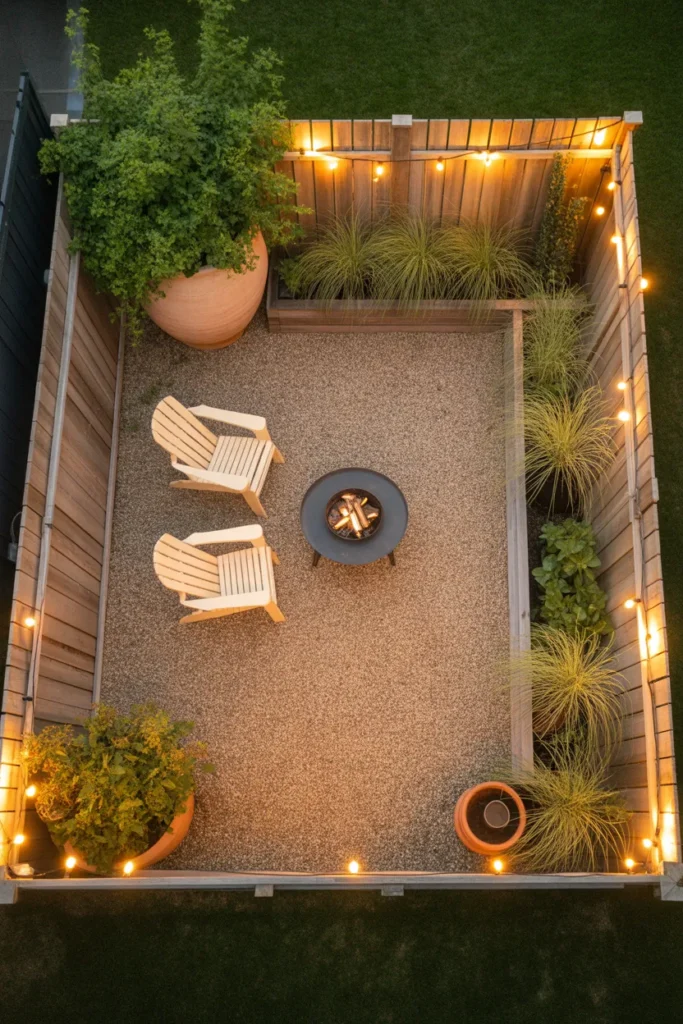
Final Layout: What I’d Build in a 200 sq ft Yard for $500
If someone handed me a 10 by 20 foot rectangle and $500, here’s exactly what I’d do:
- 10 by 10 ft pea gravel patio (Zone 1): $80
- Two cream Adirondack chairs from Walmart: $130 (pair)
- Solo Stove Ranger dupe fire pit: $50
- Three Karl Foerster grasses along the back fence (Zone 2): $40
- Two large terracotta planters with lavender and rosemary: $50
- 48 ft of warm string lights overhead: $60
- One thrifted ceramic bowl with solar bubbler (Zone 3): $35
- Cedar mulch and edging for plant beds: $55
Total: $500. One Saturday. No contractor. Looks like a $5,000 yard.
Save This Before Your Next Yard Weekend
Small backyard landscaping isn’t about doing more. It’s about doing less, but doing it on purpose. Pick your three zones, commit to one aesthetic, and start with the bones (hardscape and one good fire pit) before you touch a single plant.
If you want before-and-after proof that real yards can be transformed on weekend timelines, our roundup of real backyard makeover transformations with costs shows exactly what people pulled off in their own yards.
Pin the layout diagram above to your Backyard Plans board so you have it next time you’re staring at that patchy lawn with your coffee. Which zone are you starting with first?