15 Rustic Fire Pit Ideas (and Everything You Need to Know Before You Build)

Most rustic fire pit ideas on Pinterest look great in a photo and a little scary in a real backyard. Log walls wrapped around live flame. Railroad ties stacked into a square. A wine barrel with a fire burning inside it.
We love the look too. Rough stone, dark steel, crunchy gravel and a half circle of wood benches is about as good as a backyard gets on a cold October night.
The catch is that the rustic part and the fire part need to live in different places, and almost nobody explains that.
So this guide does. You’ll get 15 ideas grouped by material, a simple placement rule we call the Three-Ring Rule, the firewood habits that cut the smoke, and three real budgets priced at Home Depot and Tractor Supply this fall. Every idea is doable for a weekend DIYer. Every one keeps stone and steel at the flame and wood where it belongs.
Let’s start with what “rustic” actually means once the fire is lit.
What Makes a Fire Pit Look Rustic (and What Quietly Ruins It)
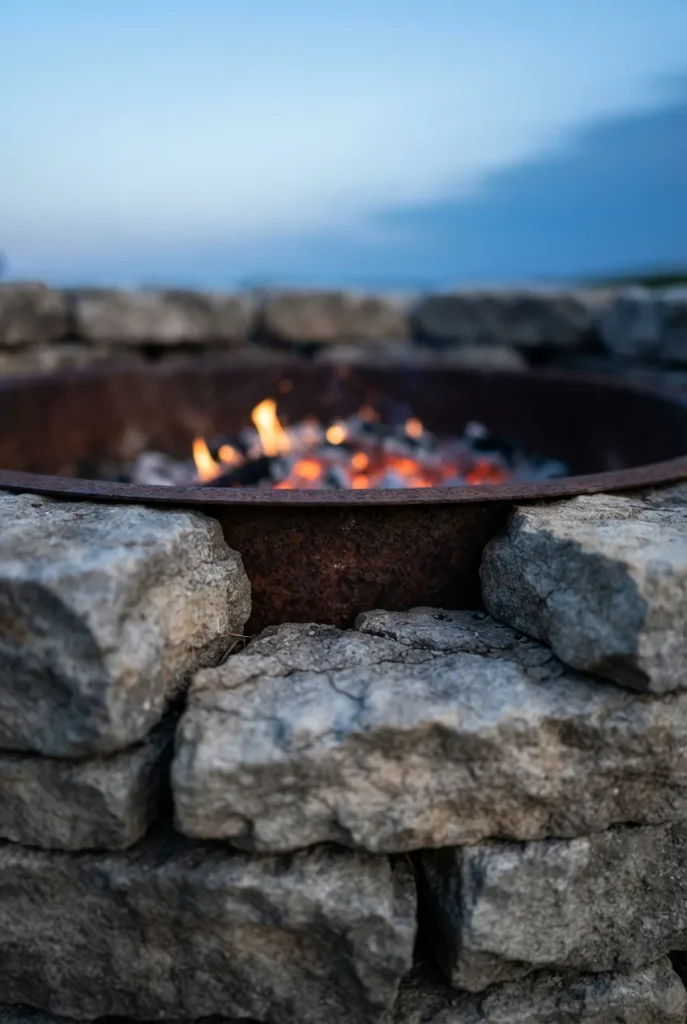
Rustic comes down to texture. Stone that wasn’t cut by a machine, steel that’s allowed to rust, gravel that crunches underfoot, and wood that still looks like it came off a tree.
Color matters almost as much. Warm grays, tan fieldstone, rust orange and bark brown all sit well together at dusk, when the fire does most of the decorating anyway.
So what quietly ruins it? Glass fire beads, mirror-polished stainless, loud cushion prints and poured concrete with razor-sharp edges. None of that is wrong. It just pulls the space toward modern.
Here’s the part nobody mentions. The most rustic material on the list, wood, is also the only one that burns. Every good idea below works around that single fact.
A quick test for any design: look at it from your back door. Rough edges, earthy colors and a fire clearly held by stone or steel means you’re there. A shiny bowl sitting alone on the lawn needs a gravel floor and some wood benches around it, which is exactly what ideas 8, 9 and 12 fix.
The Three-Ring Rule: Where Every Rustic Material Belongs
Think of your fire pit area as three circles, one inside the next. Each ring gets its own list of materials, and the lists never cross over.
Ring 1 is the fire. Only stone, concrete block and steel live here. Nothing that burns, and nothing that holds water.
Ring 2 is the buffer. Pea gravel, flagstone or pavers, with a clear lane to walk around the fire without stepping over anyone’s feet. Skip wood mulch here. Mulch can smolder for hours after a stray ember lands in it, and you might not notice until morning.
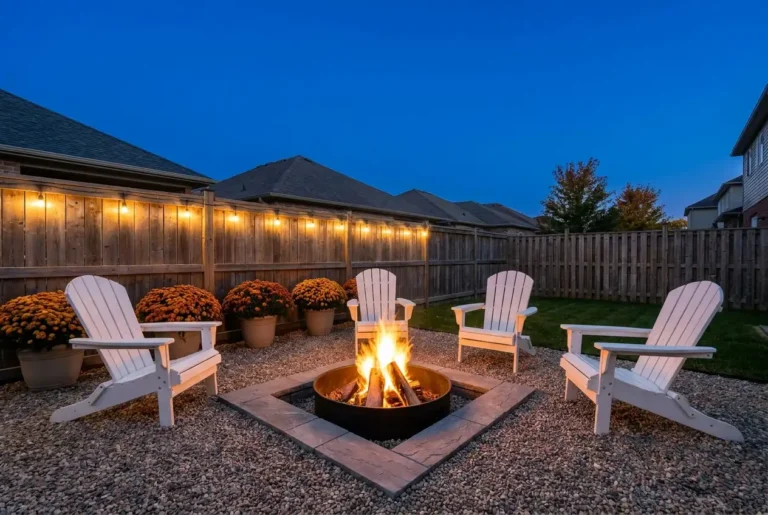
Ring 3 is the seats. This is where wood finally gets its moment: split-log benches, stump tables, Adirondack chairs, a cedar screen, planters. All the texture people pin, parked out where stray sparks rarely land.
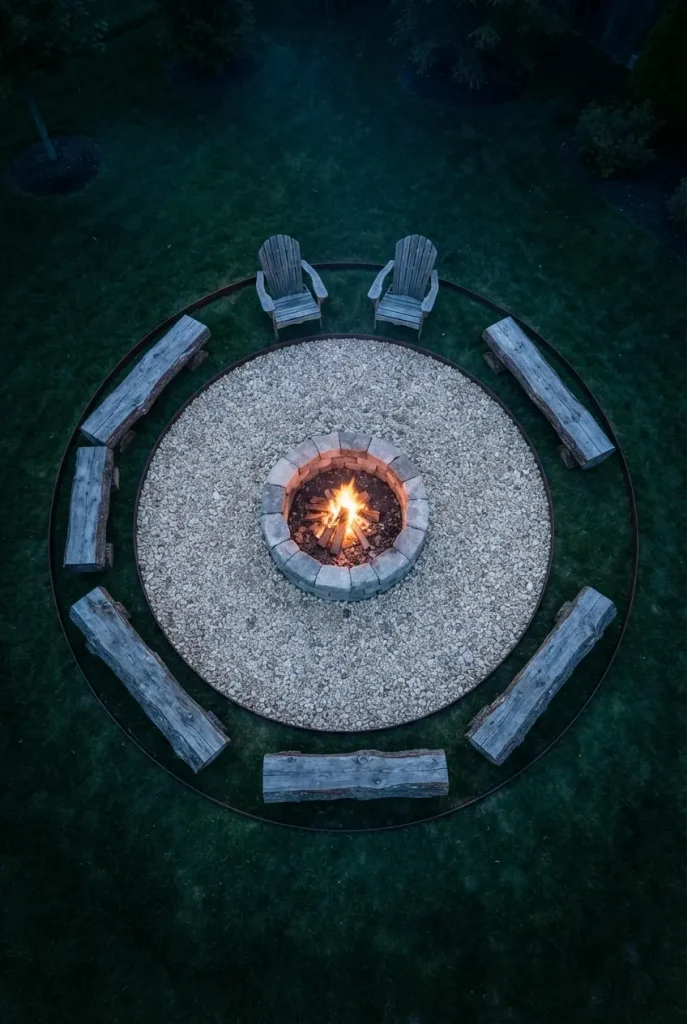
The whole setup also sits at least 10 feet from the house. More on that in the safety section.
This rule is why we’d pass on three designs that show up constantly on Pinterest: log walls built around the flame, tree stumps hollowed into fire bowls, and squares made from old railroad ties. Railroad ties are typically pressure treated with creosote, and treated wood sits on every burn-safety list of things you shouldn’t put in a fire. Move the wood one ring out and you keep the whole look without the risk.
📏 The Three-Ring Rule
🏠 Around all three: at least 10 feet of open space between the fire and your house.
Stone Fire Pit Ideas With Real Rustic Texture
Stone is the fastest way to make a fire pit look like it’s been in the yard for 40 years. Here are four ways to use it.
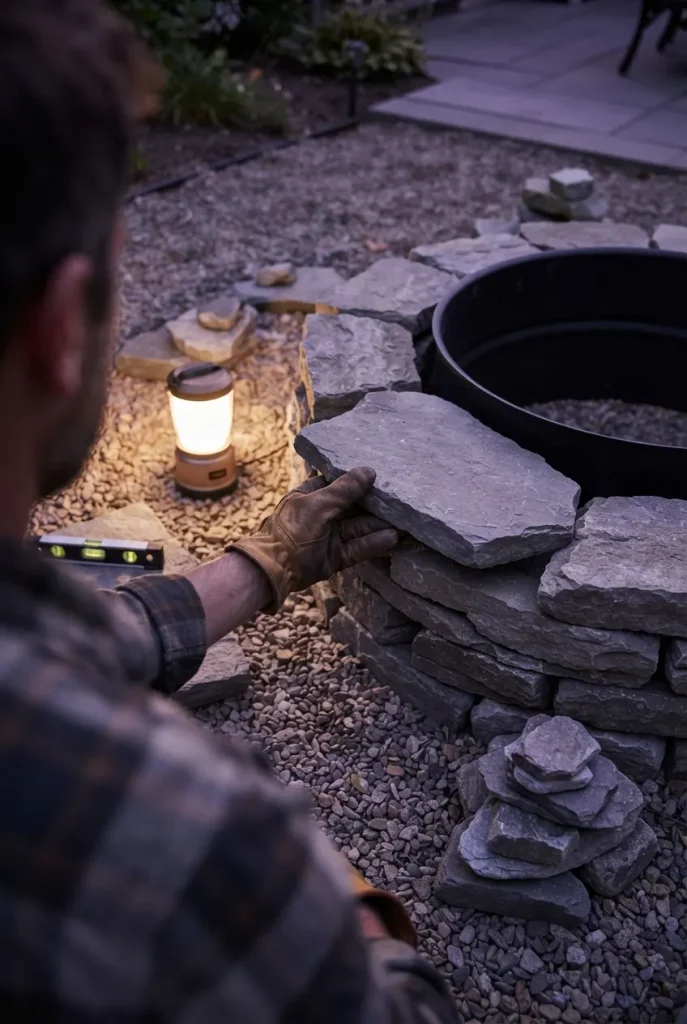
1. A Dry-Stacked Fieldstone Ring
Fieldstone is the rounded, weathered rock farmers pull out of their fields, and many local stone yards sell it by the ton. Stack it dry, with no mortar, around a steel ring liner.
The liner takes the direct heat, so the stone keeps its looks longer. The small gaps between rocks let air feed the fire from the sides.
Bring your liner’s outside diameter with you to the stone yard. The staff can help you estimate how much stone a ring that size needs.
2. A Block Kit Ring With a Steel Insert
For zero guesswork, let a kit do the math. The Pavestone RumbleStone kit at Home Depot stacks into a 46-inch round, 10.5 inches tall, using tumbled concrete blocks and a steel insert, with no cutting.
It was listed around $790 when we checked prices in September 2026. That’s steep for concrete. What you’re paying for is edges that already look worn and a ring that comes out level on the first try.
3. A Flagstone Cap for Mugs and Boots
Lay wide, flat flagstones across the top course of a block or fieldstone ring, letting them hang a little past the outside edge. You get a ledge for a mug of cider and a spot to prop cold boots.
It also hides the uneven top of a dry-stacked ring, which is the part that usually looks unfinished.
4. A Sunken Gravel Fire Pit
Dig the whole fire area down a few inches, fill it with gravel and set a steel ring in the middle. Sunken pits block wind and feel tucked away.
The tradeoff is water. A low spot collects rain, so give it a thick gravel base and skip this idea where your yard already puddles. Call 811 before you dig anything. It’s free, and it’s how you find out where the gas line runs before your shovel does.
One stone rule covers all four ideas: never line a fire pit with river rock or rocks pulled from a creek. Water trapped inside them can turn to steam once the fire gets hot, and the rock can crack or pop apart.
🧰 Dry-stack a fieldstone ring in one weekend
Call 811, then mark the center and trace a circle a little wider than your liner’s outside edge.
Strip the sod inside the circle and rake a level bed of gravel.
Set the steel liner in the center and check it with a level.
Stack the biggest, flattest fieldstones first and stagger the joints like brick.
Finish with a flagstone cap and a layer of gravel inside the ring. No river rock.
Rustic Outdoor Fire Pit Ideas in Iron and Steel
Metal pits get written off as the modern option. Pick the right finish, though, and steel looks more at home in a rustic yard than brand-new stone does.
5. A Cast Iron Kettle Bowl
Cast iron picks up a brown rust patina over its first season outdoors, and that’s the point. A kettle-style bowl on short legs reads farmhouse right away and lifts the fire off the ground.
It’s heavy. You’ll grumble about that on moving day and appreciate it on a windy night.
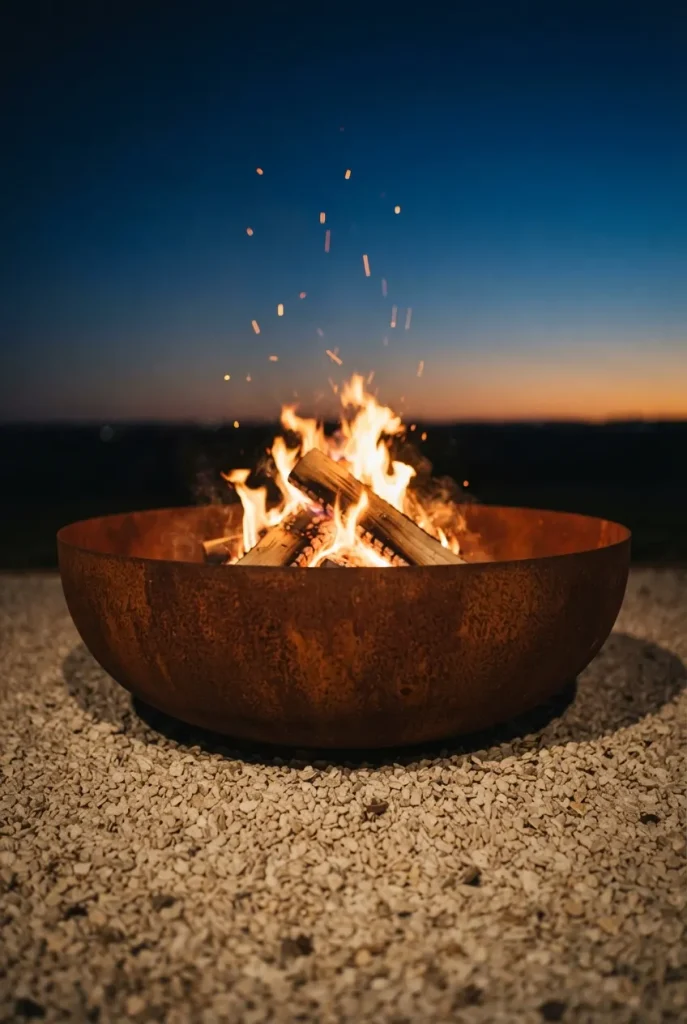
6. A Weathering Steel Bowl
Weathering steel, often sold as Corten, rusts on purpose. It builds a stable orange-brown layer that protects the metal underneath.
Here’s what the listings rarely mention: while that patina forms, rain can wash rust onto concrete or pavers and stain them orange. Set it on gravel until the surface settles and the stains won’t matter.
7. A Steel Ring Liner Set in Gravel
This is the workhorse behind ideas 1, 3 and 4. The Sunnydaze 36-inch heavy-duty ring at Tractor Supply is 2 mm steel, 36 inches across inside and 42 inches outside, and 10 inches tall. It comes in four pieces with no bottom.
It was listed around $200 in September 2026. Use it bare inside a gravel circle for the plainest version, or hide it inside stone.
8. A Smokeless Pit, Dressed Down
Renters, this one’s yours. The Solo Stove Bonfire 2.0 is 19.5 inches wide and 14 inches tall, made of stainless steel with a removable ash pan, and it sold for about $250 at Home Depot when we checked.
On its own, stainless looks sleek rather than rustic. Set it on a flagstone pad inside a ring of pea gravel, pull split-log benches around it, and from the back door it reads rustic. When you move, it comes with you. Check the maker’s surface guidance before you set it anywhere new.
| Metal option | Rustic look | Best for | Cost |
|---|---|---|---|
| Cast iron kettle | Dark, rusts to brown | Farmhouse yards, windy spots | Mid |
| Weathering steel bowl | Orange-brown patina | Gravel floors, not pavers | Mid to high |
| Steel ring liner | Plain, or hidden in stone | DIY stone builds | Around $200 |
| Smokeless stainless | Sleek until you dress it | Renters, small yards | Around $250 |
Rustic Fire Pit Seating: Wood Belongs Out Here
Ring 3 is where all the wood you wanted around the fire finally goes. It’s also where most of the rustic feeling lives, because it’s the part people actually touch.
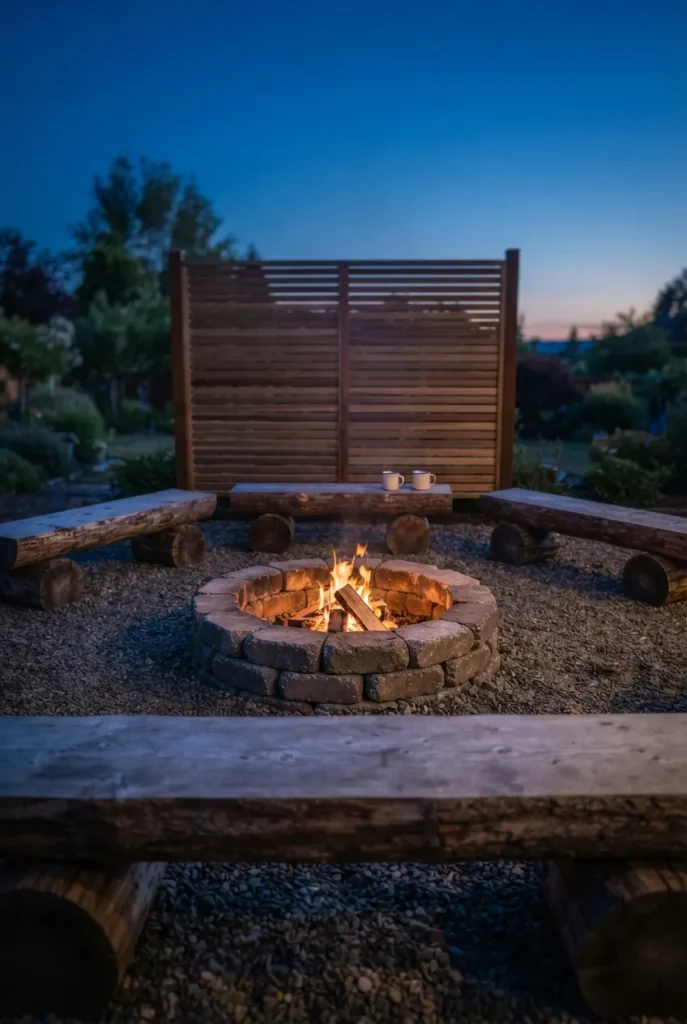
9. Split-Log Benches in a Half Circle
Two short stumps and a half log make a bench that looks like it came with the house. Build three or four and set them in a half circle, not a full one.
Leave the open side facing where smoke usually drifts in your yard. Nobody wants to spend the night rubbing their eyes.
Peel the bark off before you build. It loosens on its own after a season outdoors and tends to hide bugs underneath.
10. Stump Side Tables
Short, wide rounds of hardwood make side tables for mugs, a bowl of marshmallows or a lantern. Sand the tops flat and give them a coat of exterior sealer.
Keep them in Ring 3 with the benches. Never pull them up to the rim.
11. A Cedar Screen Behind the Seats
A slatted cedar screen behind the benches blocks wind, hides the neighbor’s garage and bounces a little firelight back onto the seats. Keep it in Ring 3, well back from the flame. Our roundup of budget backyard privacy ideas has more ways to screen off a corner of the yard.
If splinters aren’t your thing, POLYWOOD’s Classic Adirondack chair is made of HDPE lumber, folds flat, and was about $250 at Home Depot in September 2026. In black or sand it sits well next to rough stone.
Stone and steel hold the fire. Wood waits at the seats. You keep every bit of the rustic look, and nothing you built ends up as kindling.
Firewood Is Part of the Rustic Look
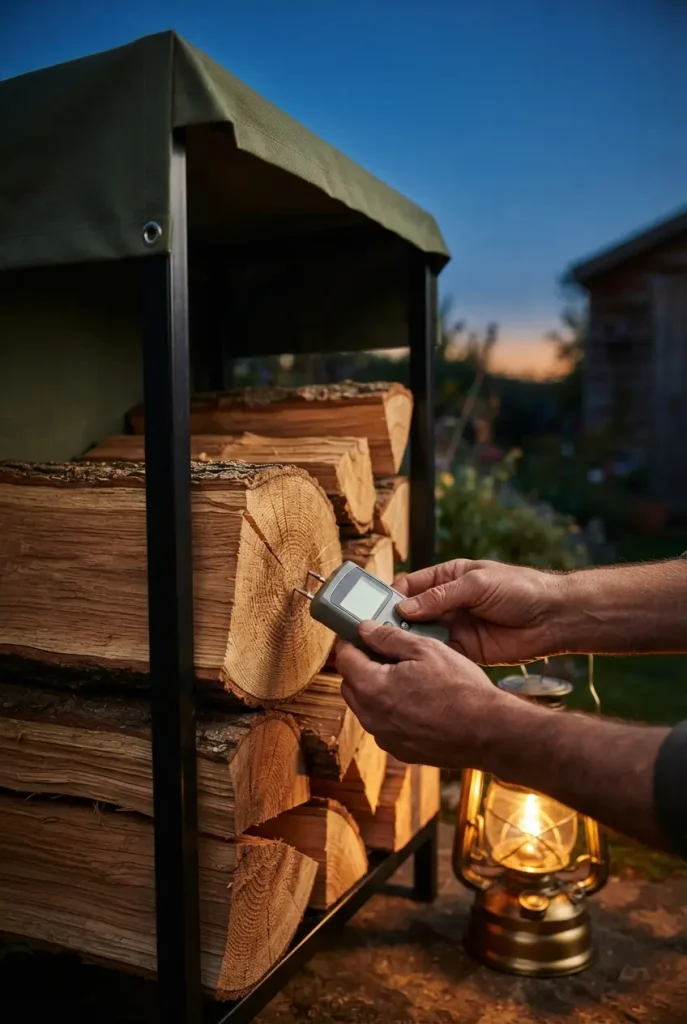
A tidy stack of split oak in a steel log rack is one of the best-looking things you can put near a fire pit. Dry wood also burns hotter and cleaner, which means less smoke in everyone’s hair and jackets.
The EPA’s rule of thumb is simple: wood burns best under 20 percent moisture, and it needs at least six months of seasoning to get there. The agency’s guide to best wood-burning practices also says to store firewood off the ground with only the top covered, because covering the sides traps moisture.
You don’t have to guess. A pin-type meter like the General Tools MMD4E was about $40 at Home Depot in September 2026. Split a log and press the pins into the fresh inside face. The outside dries first, so it reads drier than the wood really is.
Buy firewood cut close to home, too. Hauling it long distances can carry tree pests into your area.
And skip the pallets, even though a stack of them looks rustic by the fire. You can’t always tell how a pallet was treated, and most are held together with nails you’ll be raking out of the ash for weeks.
Dry, split hardwood that reads under 20 percent on a meter.
Wood seasoned at least six months, stored off the ground.
Newspaper, dry kindling or natural fire starters to get it going.
Painted, stained or pressure-treated wood, including railroad ties.
Plywood, particle board, pallets and wet or moldy logs.
Gasoline, kerosene or charcoal starter fluid.
The Ground and the Glow: Gravel, Paths and Café Lights
Finish the ground and the whole fire pit starts to look rustic. These three ideas handle Ring 2 and the walk out to it.
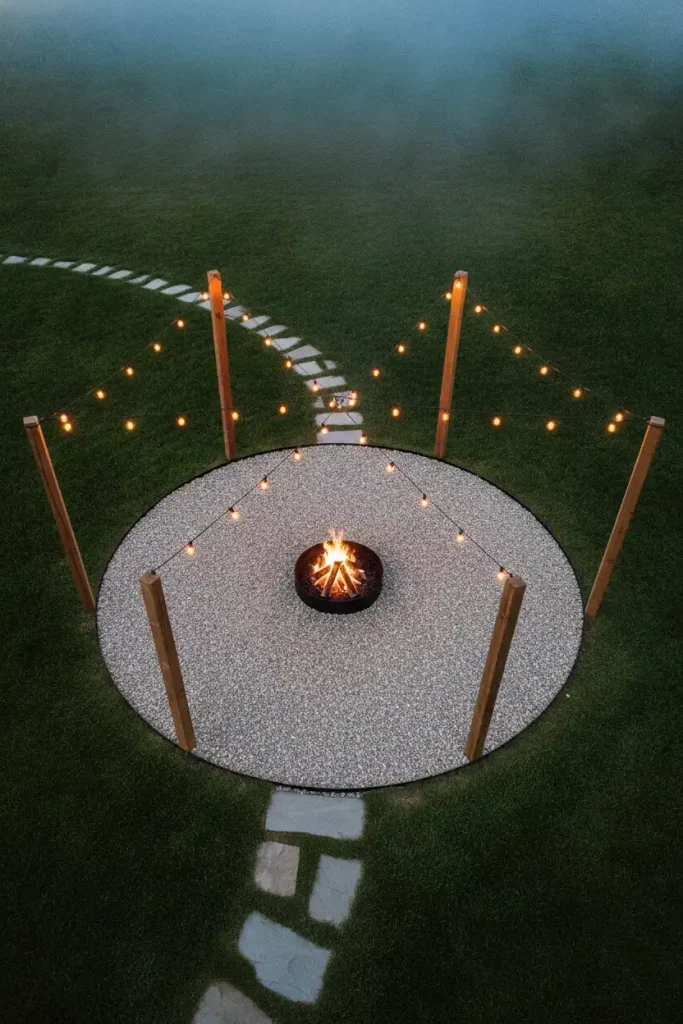
12. A Pea Gravel Floor With Steel Edging
Pea gravel is the cheapest way to make the whole area look done. Vigoro 0.5 cubic foot bags worked out to about $12 to $13 each at Home Depot in September 2026 (the listing is priced by the 64-bag pallet).
Lay landscape fabric first, then pin steel edging around the circle so the gravel doesn’t wander into the lawn. Weighing gravel against pavers for the rest of the yard? Our backyard patio ideas on a budget are a good next read.
13. Café Lights on Cedar Posts
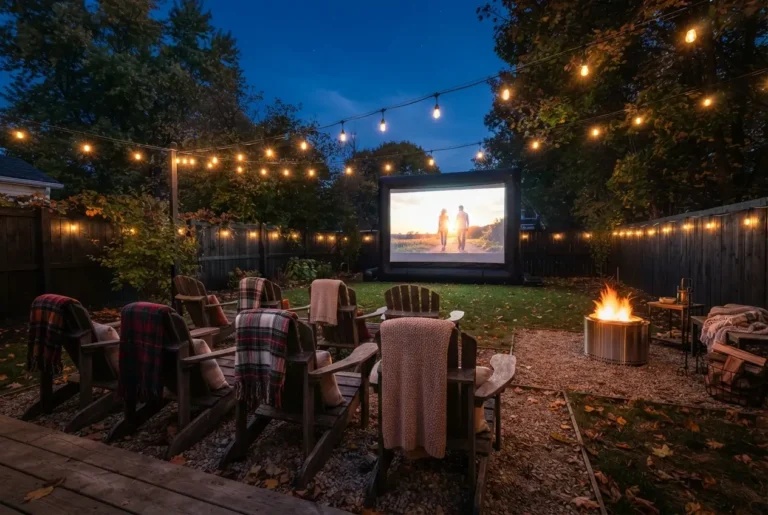
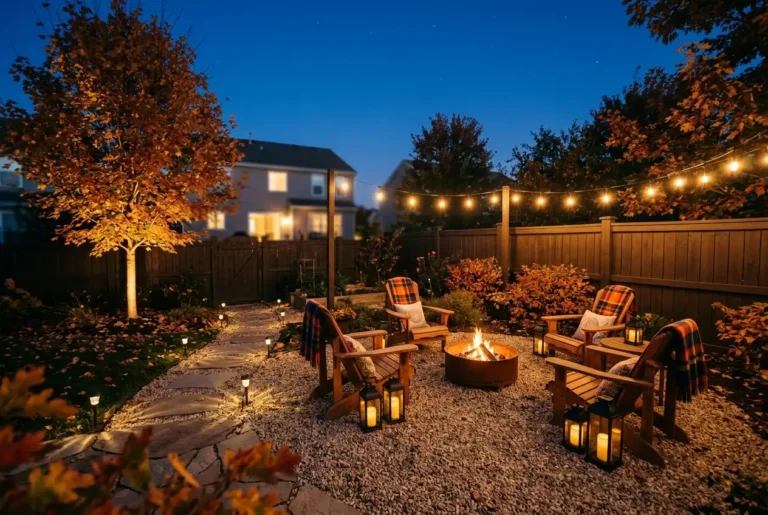
Warm café lights strung overhead do a lot of the heavy lifting for a rustic evening. Feit’s 48-foot LED strand has 24 sockets spaced 2 feet apart, with 2200K filament bulbs that glow amber, and it’s rated for wet locations.
Run the strands around the edge of Ring 2, not straight over the fire, where heat and soot will dull them fast. Use outdoor-rated, UL-listed lights and cords on a GFCI outlet. Anything beyond plugging into an existing outlet is a job for a licensed electrician.
14. A Flagstone Path Out to the Fire
Nobody wants to cross wet grass at night holding a hot mug. A simple line of flagstone steppers between the back door and Ring 2 fixes that. It also frames the fire as a place you walk to, not an afterthought at the edge of the yard.
Solar stake lights along one side keep ankles safe without adding another cord.
- 🌙 Gravel pad, layer by layer
- ▸Scrape off the sod and rake the dirt level.
- ▸Roll out landscape fabric so weeds stay put.
- ▸Pin steel or stone edging around the circle.
- ▸Pour pea gravel a couple of inches deep and rake it smooth.
- ▸Set the fire ring last, then lay flagstone steppers out to the patio.
Placement, Size and Safety Before the First Fire
Distance comes first. The U.S. Fire Administration says fire pits belong at least 10 feet from your home or anything that can burn, and it recommends a metal screen over wood fires to keep sparks in. Its outdoor fire safety tips also cover putting the fire out before you leave the yard.
Many towns set bigger distances than that, and some ban wood fires on dry or windy days. Check your local rules before you pick a spot.
Look up, too. Overhanging branches count as “anything that can burn,” even when they seem high.
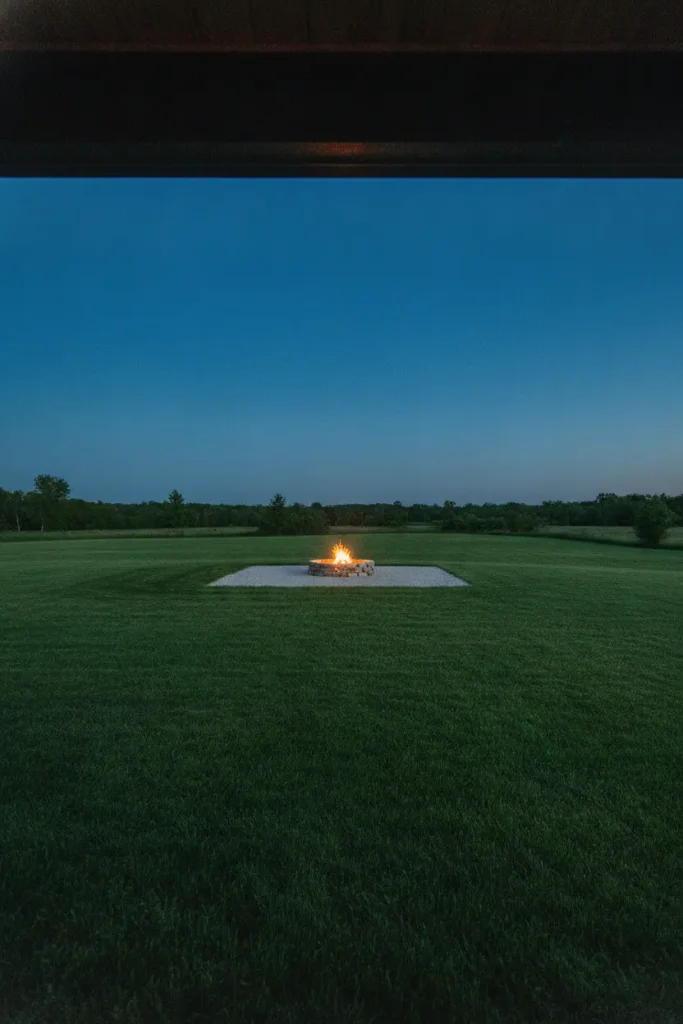
For size, a common rule of thumb is a 24 to 36 inch pit for 2 to 4 people, 36 to 44 inches for 4 to 6, and 48 inches or more for a bigger crowd. Plan on roughly 18 to 24 square feet of space per seat so chairs aren’t jammed knee to knee.
Don’t set a wood-burning pit straight on the lawn. The heat cooks the grass roots underneath, and you’ll have a dead circle within days. A gravel pad or pavers underneath solve it.
Wood decks are a harder no for most wood-burning pits. If you’re set on a deck fire, read the manual first and only consider models the maker specifically rates for deck use.
⚠️ Watch Out
Check your city’s burn rules before you light anything, keep the clearance from structures and branches that your fire pit’s manual and local code call for, and never leave a fire unattended.
Idea 15: A Safety Kit That Looks Like It Belongs
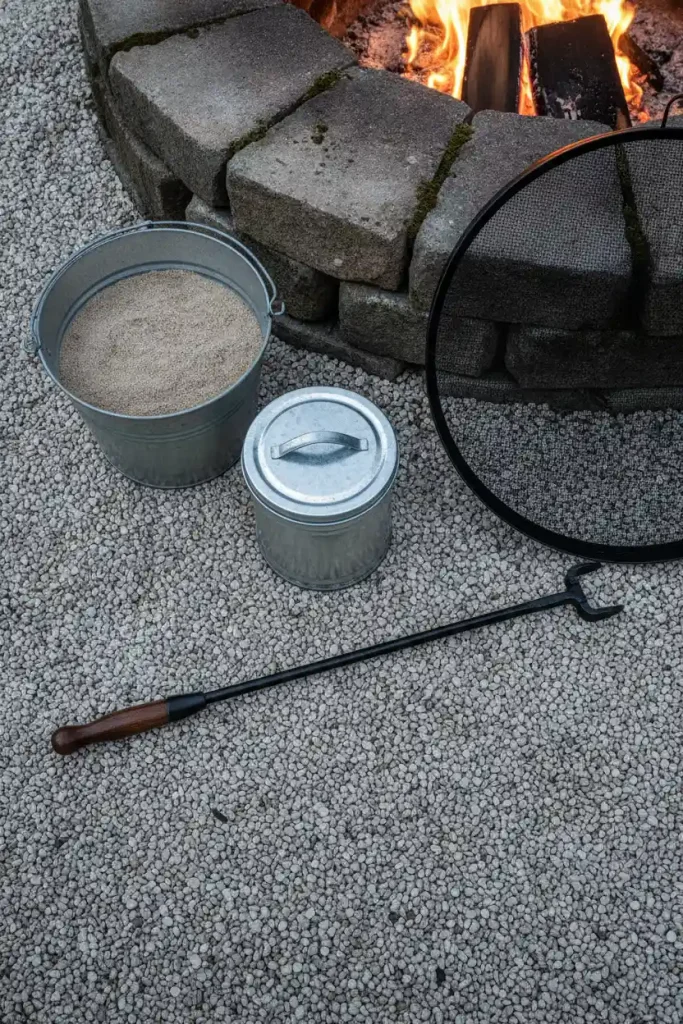
Every pinned fire pit photo leaves out the same things: the bucket of sand, the ash can, the extinguisher. They’re not optional, so make them part of the look.
15. The Rustic Safety Kit
A galvanized bucket of sand beside the benches doubles as decor and gives you a fast way to smother a runaway ember. Next to it goes a metal ash can with a tight lid, since the EPA advises keeping ashes in a covered metal can outdoors on a nonflammable surface.
Tuck a fire extinguisher into a wooden crate in Ring 3, out of sight but within arm’s reach. Add a steel spark screen for the fire itself and a long poker with a wood handle.
Then add the small things that make people want to stay: enamel mugs, a lantern or two, a basket for kindling. Our Dollar Tree backyard decor ideas are a cheap place to start.
🧰 The rustic safety kit
What These Rustic Fire Pit Ideas Cost: Three Real Budgets
The prices below come from retailer listings we checked in September 2026. They move with sales and vary by store, so treat them as a starting point, not a quote.
The cheapest build here isn’t the worst-looking one. A plain steel ring with good fieldstone and patient stacking can look more rustic than a $790 kit, because every stone is a different shape. The pricier builds buy you speed and even edges, not character.
Frequently Asked Questions
What is the cheapest way to build a rustic fire pit?
Set a steel fire ring liner in a circle of pea gravel and surround it with fieldstone or split-log benches you source locally. A 36-inch ring was around $200 at Tractor Supply in September 2026, and a few bags of pea gravel add about $50. Skip the mortar and the pavers, and let rough stone and wood do the rustic work.
How far should a fire pit be from the house?
The U.S. Fire Administration says at least 10 feet from your home or anything that can burn, and that includes fences, sheds and overhanging branches. Many cities and HOAs require more, often 15 to 25 feet, so check your local fire code before you pick a spot. When in doubt, go farther out and extend the path.
Can you put a fire pit on grass?
You can, but the grass under it won’t survive. Heat from a wood fire cooks the roots and leaves a dead circle within days. For a portable pit, set it on pavers or a heat-rated mat and move it around. For a permanent spot, strip the sod and build a gravel pad with steel edging.
Can you use river rocks in a fire pit?
No. River rocks and stones from creeks can hold water inside them. When a fire heats them, that water turns to steam and can crack the rock or pop it apart. Use dry fieldstone, concrete block made for fire pits, or a steel liner at the flame, and save river rock for garden beds.
What do you put in the bottom of a fire pit?
For an in-ground or ring-style pit, a few inches of gravel or sand is the usual choice. It drains rain, protects the ground and makes ash cleanup easier. Follow your kit’s instructions if it came with one. Skip river rock, and don’t let old ash pile up, since wet ash holds moisture against a steel liner and speeds up rust.
Can you put a fire pit on a wood deck?
Most wood-burning fire pits shouldn’t go on a wood deck. Sparks and radiant heat can scorch or ignite the boards, and many manufacturers say so in the manual. If you want a fire on your deck, look at models the maker specifically rates for deck use, add the protection it calls for, and confirm your local code allows it.
Stone at the Flame, Wood at the Seats
All 15 rustic fire pit ideas above follow the same quiet logic. Stone and steel hold the fire. Gravel gives it room. Wood, the part everyone pins, waits in the seats where it can look good for years.
Start small if you need to. A steel ring, a few bags of gravel and two log benches make a real fire pit by next weekend. The flagstone cap, café lights and cedar screen can come later, one paycheck at a time.
Save this guide to your backyard board so the Three-Ring Rule is right there on your phone when you’re standing in the stone yard trying to remember it.