How to Protect Outdoor Furniture in Summer (Quick Guide)
The first summer I left my Walmart Better Homes & Gardens cushions uncovered, the seams chalked out by mid August and the cream piping turned the color of weak tea. That single $39 mistake is why I now talk about how to protect outdoor furniture in summer brings to a backyard the way other people talk about retirement: with strong opinions and a written plan. Sun, rain, pollen, humidity, mower dust, and the 140°F surface heat radiating off concrete pavers all gang up between Memorial Day and Labor Day. The fix is mostly one smart material decision plus a two-minute weekly habit. Here’s the cozy quick guide I wish I’d had then.
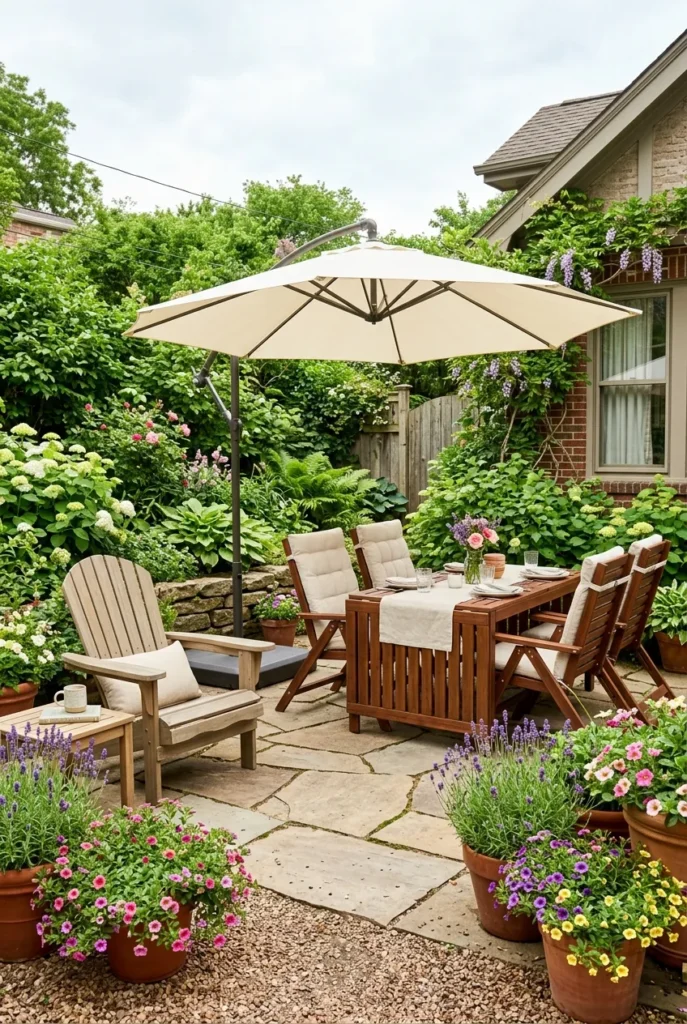
Why “Outdoor” Doesn’t Mean “Bulletproof”
The word outdoor on a furniture tag gets tossed around like a guarantee. It isn’t. Most patio sets are built to a one to three year fade rating, not a ten year one. If you’re still building out the patio underneath, our budget patio playbook for backyards on a tight budget walks through the placement decisions that protect everything else from day one. Sunbrella’s solution-dyed acrylic carries a 5-year warranty against fade. Polywood’s lumber holds a lifetime guarantee.
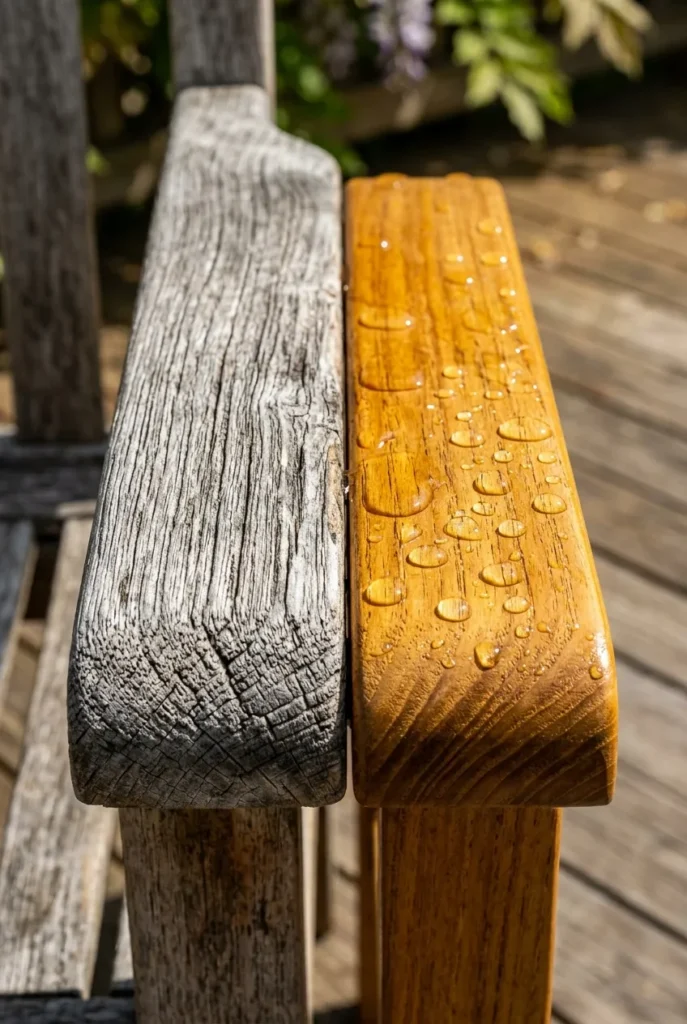
Those two are the outliers. Aluminum frames pit at the welds. Iron rusts where the paint chips. All-weather wicker (which is polyethylene wrapped around a steel skeleton) goes brittle after two unprotected seasons in concentrated UV. Even teak, the gold standard, weathers to a soft silver gray and develops surface cracks called checking if it goes three summers without a single coat of oil.
Here’s the part nobody mentions. Heat. A concrete patio in direct July sun routinely hits 130 to 145°F (pavement runs 40 to 60°F hotter than the air temperature according to data tracked by the National Weather Service). That heat radiates up into the underside of your cushions and the bottom rails of your frames, baking out moisture and accelerating UV damage from below. Shade matters. Placement matters more than people think. Skip those two and the spray bottle of protectant won’t save you.
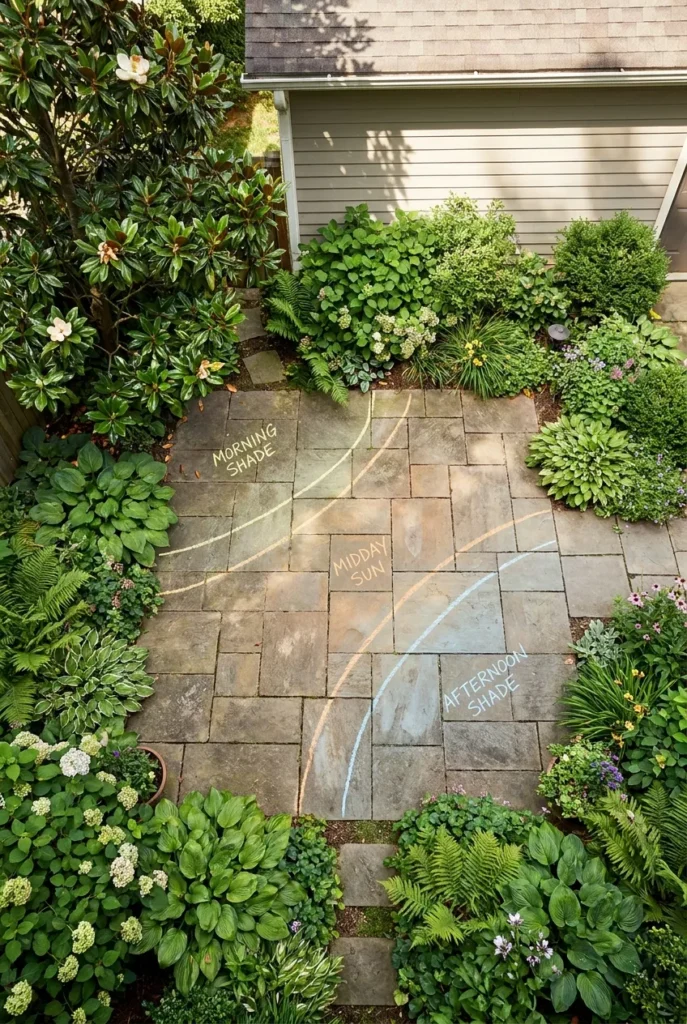
Read Your Yard Before You Spend a Dollar
Before you buy a $42 cover or a $28 jug of sealer, walk your patio at three times of day: 9 a.m., 1 p.m., and 6 p.m. Note where the sun lands. Note where rain pools after a storm. Note which corner the wind whips through. A 12-inch shift in placement can drop your cushion’s annual sun exposure by 30 percent. Same furniture. Same yard. Different outcome.
Here’s the move most people miss. Pull furniture 18 to 24 inches off any south or west-facing wall. Heat reflects off siding and stone and bakes the back of your chairs harder than direct overhead sun. I learned this when a $14 indoor outdoor rug from HomeGoods anchored my entire patio seating area and the cushions closest to the brick wall faded a full shade darker than the ones in the open. That was a wall I’d never thought twice about.
A Material-by-Material Summer Protection Cheat Sheet
The single biggest factor in how hard you have to work all summer is what your furniture is made of. Here’s the matrix I keep in my notes app, refined over four backyards across three USDA zones.
| Material | Summer Enemy | The Move | Frequency | Best Product |
|---|---|---|---|---|
| Teak | UV, checking, mildew | Oil or let it go gray | May and August | Star brite Premium Teak Oil ($24) |
| All-weather wicker | UV brittleness, pollen | Rinse and UV spray | Monthly | 303 Aerospace Protectant ($18) |
| Powder-coated aluminum | Salt air, chip rust | Rinse and touch-up | Twice a season | Rust-Oleum touch-up pen ($7) |
| Wrought iron | Joint rust, scratches | Sand, prime, paint | Yearly | Rust-Oleum Stops Rust spray ($9) |
| Polywood / HDPE | Almost nothing | Soap and water | Monthly | Mild dish soap |
| Cedar / pine | Rot, splintering | Stain and seal | Every 2 years | Thompson’s WaterSeal ($24) |
| Sunbrella cushions | Mildew, bird droppings | Brush, rinse, dry | Weekly | Sunbrella fabric cleaner ($14) |
| Polyester cushions | Fade, pilling | Cover when not in use | Daily | Cover from Walmart ($25) |
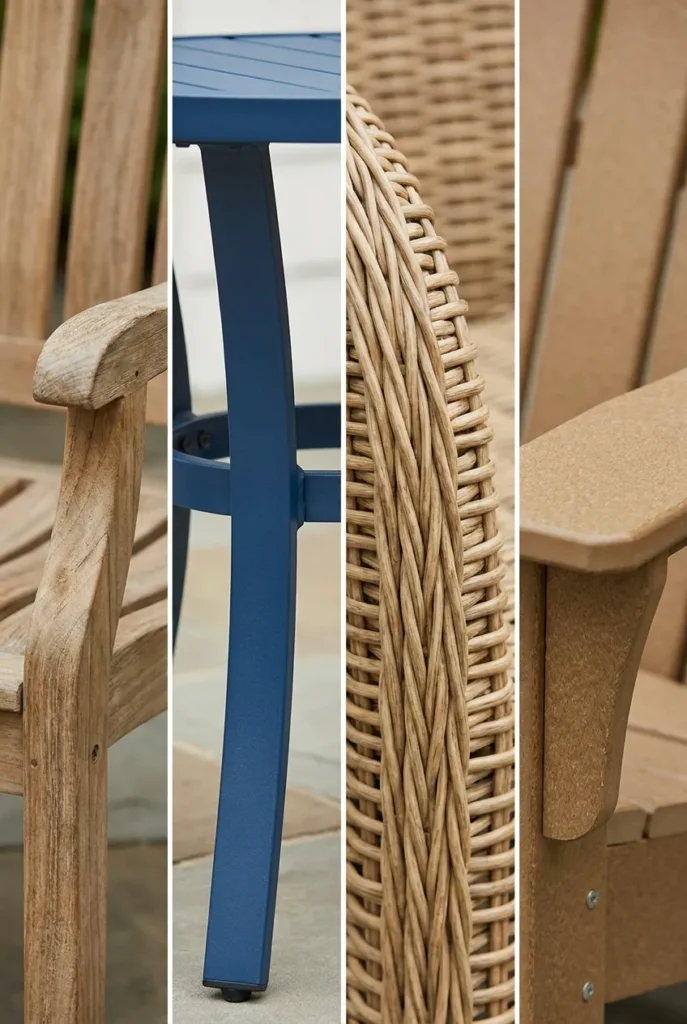
Teak: Pick a Side and Commit
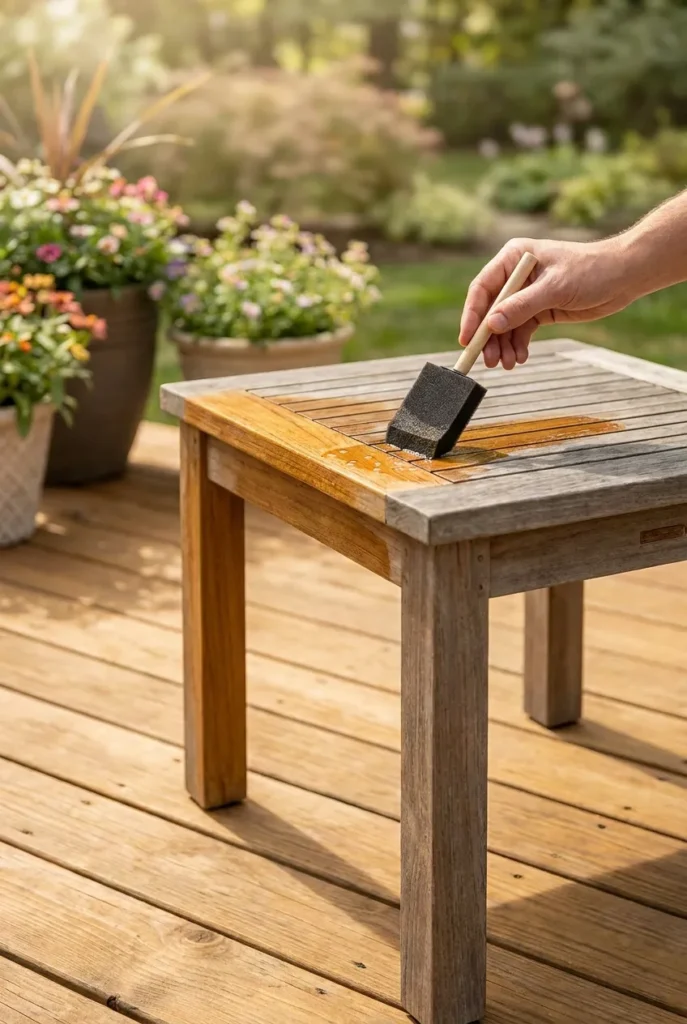
Teak owners split into two camps. Camp one oils every May to keep the warm honey tone. Camp two lets the wood weather to driftwood silver and calls it a feature. Both are correct. The mistake is half-committing: oiling once, skipping next year, then oiling again. That’s how you get a blotchy chair. Pick a side in March and stick with it for at least three seasons. If you oil, do it in dry weather between 60 and 80°F, two thin coats with a foam brush, wiped down 15 minutes after each pass. Star brite Premium Teak Oil at $24 a quart is what I keep on the shelf.
All-Weather Wicker: The Spray-and-Walk-Away Champion
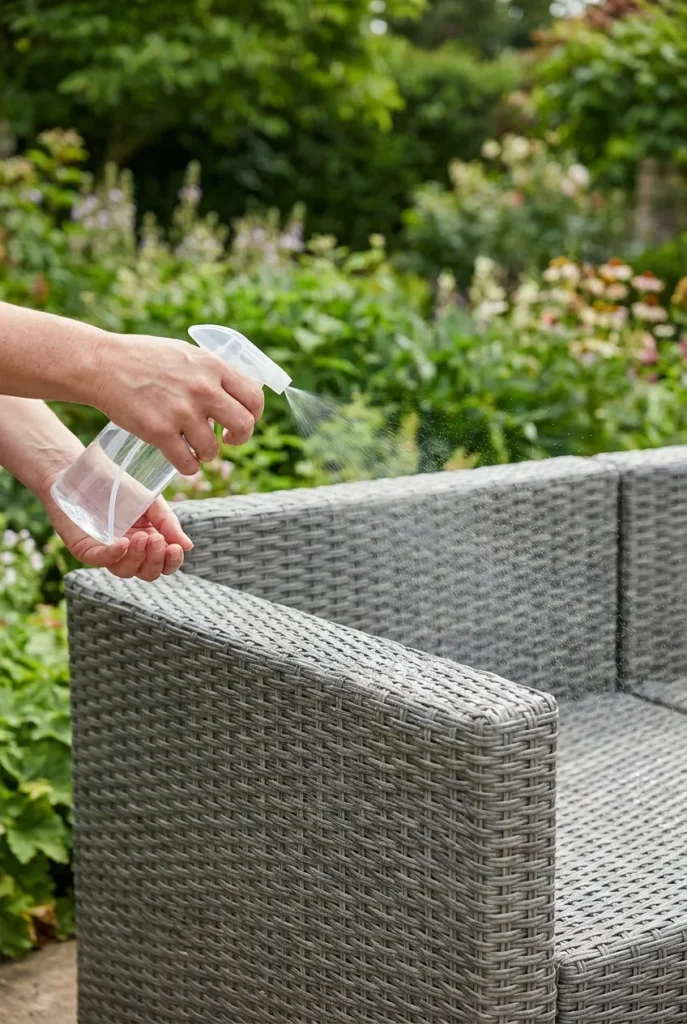
Resin wicker is the lowest maintenance frame material if you remember one product: 303 Aerospace Protectant. It’s an $18 spray that car detailers use on dashboards, and it works the same way on synthetic wicker. Blocks UV, repels dust, leaves no film. Apply once a month from May through September. Rinse off pollen and bird debris with a garden hose every other week and you’ll get a full decade out of a $499 sectional.
Metal: The Joint Line Is Where Everything Fails
Aluminum doesn’t rust but its powder coat can chip, and once moisture works under that paint it bubbles out within a season. Iron will rust at any weld or joint where the original primer has worn thin. Walk both materials every spring and every September. Hit any chip with a Rust-Oleum touch-up pen (a $7 item that has saved me three full repaint jobs) and sand any visible rust spot before it spreads.
Polywood and HDPE: The Boring Winner
The Polywood Adirondack I bought in 2022 has stayed outside through four Wisconsin winters without warping, fading, or cracking. It cost $249 up front, which felt steep until you compare it to the $79 wood Adirondack I replaced twice. Polywood needs a soap and water wipe down once a month. That’s the whole summer protection routine.
The Cover Question (And When You Don’t Need One)
The honest answer is more nuanced than “yes, always cover.”
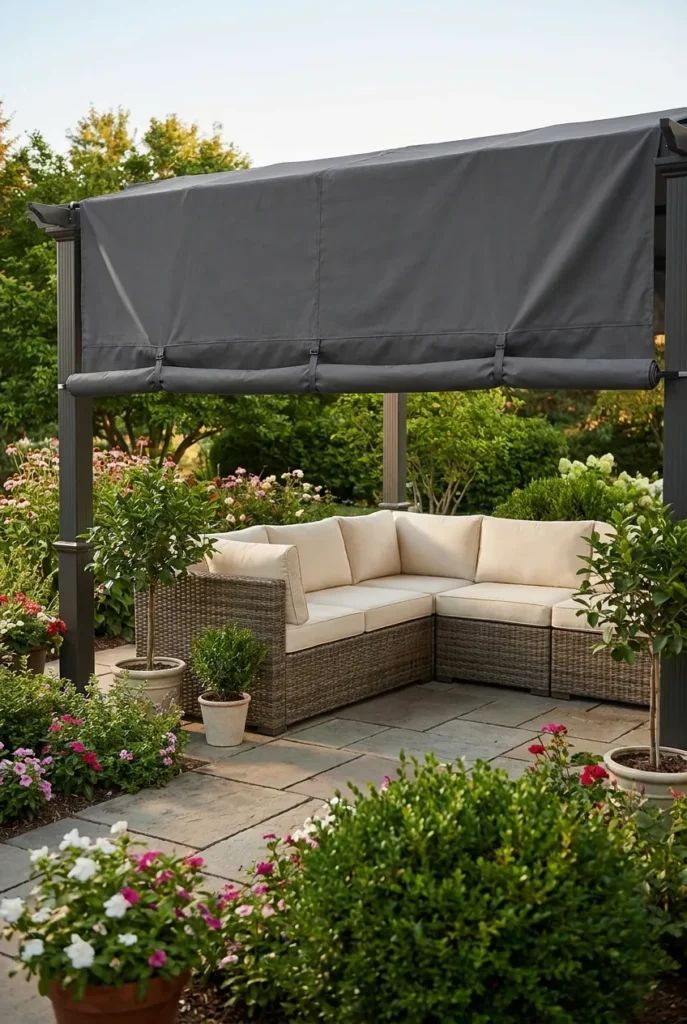
Cover your furniture if any of these are true: you live in a humid summer climate (Atlanta, Houston, Charleston, the Gulf Coast), your set sits under a tree that drops sap or berries, you have polyester cushions instead of Sunbrella, or your patio sees heavy pollen from April through June. Skip the cover if your set is Polywood or aluminum with Sunbrella cushions and your climate is dry. Trapped humidity under a cover in a dry zone causes more mildew than the open air would.
Look for a cover with these specs: 600 denier polyester, water resistant coating, corner vents (vents stop the wind from ballooning the cover off), and tie-down straps. Amazon Basics covers run $25 to $45. Classic Accessories Veranda covers run $50 to $90 and last twice as long. Skip anything thinner than 600 denier; it will shred in one strong storm.
If you’re outfitting on a tight budget, the dollar store backyard finds that look expensive post has the cover-weight bungee, storage bin, and weatherproof hook hacks I lean on every season.
Cushions, Fabrics, and the Truth About Scotchgard
The biggest gap between cheap and premium outdoor sets is the cushion fabric. Polyester is fine for shaded spots and limited sun. Sunbrella is solution-dyed, meaning the color is in the fiber itself instead of painted on the surface, so it doesn’t fade the way regular fabric does. Sunbrella cushions cost double up front but mine survived three summers of rain that destroyed my last polyester set in one season. Consumer Reports has tested patio cushion durability across major brands for years and Sunbrella consistently wins the fade and mildew tests.
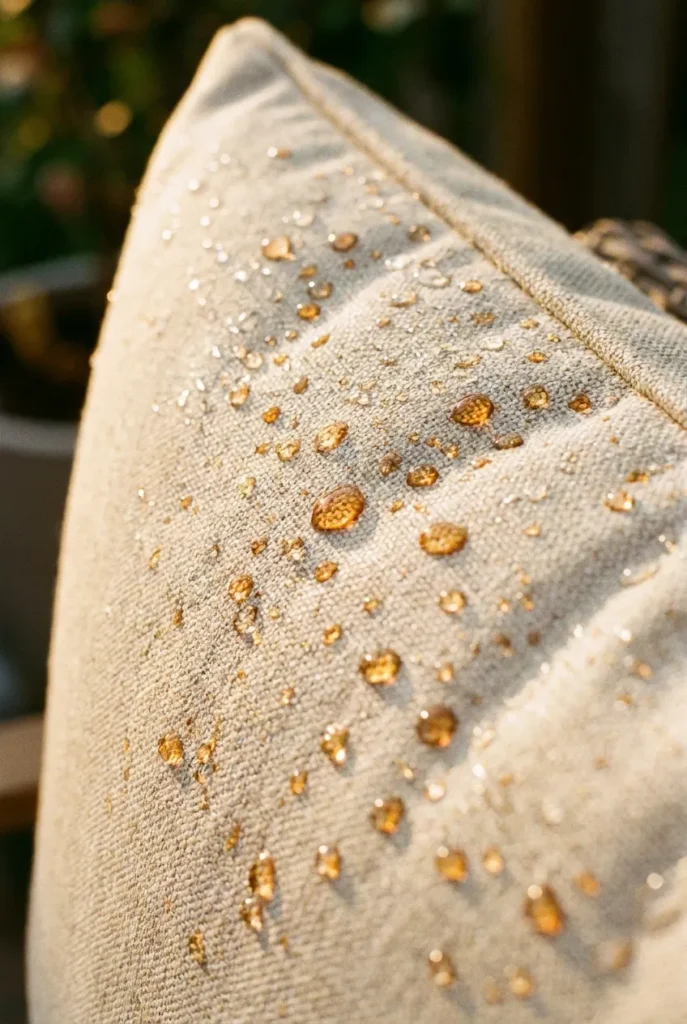
Scotchgard 5020 Heavy Duty Water Shield does work on polyester cushions, but you have to reapply after every three or four rainstorms. Soap, rain, and sun all break down the coating. It’s not a one-and-done. Spray outdoors on a 65 to 75°F day, two light coats, fully dry between. Plan on $14 for the can and 30 minutes for a full six-piece set.
Skip Scotchgard on Sunbrella. The fabric is already treated and a topical layer can darken the color and trap mildew underneath.
Sealers, Oils, and the Wood Treatment Debate
Oil vs varnish vs sealer is the most-asked wood question in the SERP, and most blogs give a wishy-washy answer. Here’s the straight take.
Use oil (teak oil, tung oil, linseed oil) when you want a natural matte finish and you’re willing to reapply every year. Oils penetrate the wood, feed the grain, and let the surface breathe. They never peel because there’s nothing on top to peel.
Use varnish or spar urethane when the piece sits in heavy weather and you want a three to five year glossy seal. Varnish forms a hard film. The downside: when it finally fails, it cracks and peels in flakes, and you have to sand the whole piece down before you start over.
Use a penetrating sealer like Thompson’s WaterSeal for fence-grade or pressure-treated wood that lives in full weather. Simplest protection on the list: spray, walk away, redo in two years. Family Handyman has a deeper guide on sealing outdoor wood that breaks down the chemistry if you want to nerd out.
Chalk paint refresh is the underrated move for tired metal or wood pieces. A coat of outdoor-rated chalk paint plus a wax topcoat gives a thrifted set five more years of life for under $30. I’ve done it twice on flea market chairs.
Shade Tricks That Actually Lower Surface Temps
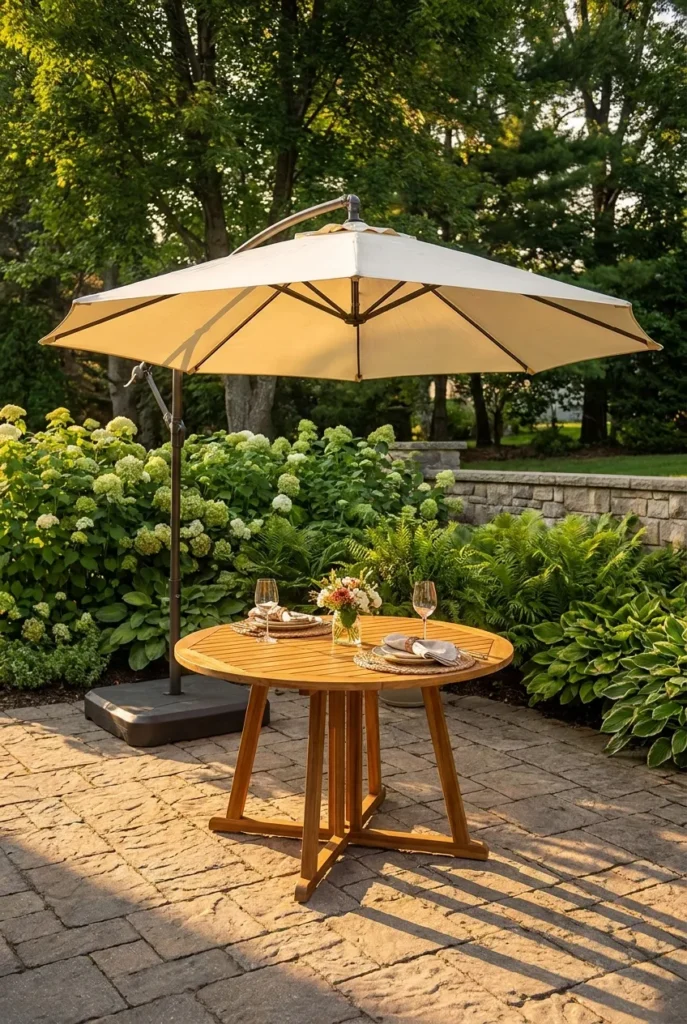
A 9 ft cantilever umbrella over a dining set drops the surface temperature of cushions by 15 to 25°F. A pergola with a clear weatherproof canopy does the same and adds rain protection. A sail shade is the cheap version (a 12×12 ft Coolaroo sail runs about $50) and blocks 95 percent of UV. Pick one. Any of the three beats nothing.
A few smaller moves stack on top:
- Place light-colored furniture on the south and west sides, since dark colors absorb 20 percent more heat
- Move umbrellas to track the sun (most people set them at noon and forget)
- Close umbrellas before any storm with sustained winds over 20 mph; one gust will fold the ribs
- Add a row of potted ornamental grass behind west-facing seating; a 4 ft grass screen blocks late-day sun without permanent landscaping
The Two-Minute Weekly Habit That Saves Everything
Most patio sets fail not from one big storm but from the slow accumulation of pollen, sap, bird droppings, and dust. The fix is a two-minute walk-around once a week.
Here’s the routine:
- Hose off any pollen, dust, or visible debris
- Spot wipe bird droppings (they’re acidic and etch finishes within 48 hours)
- Check umbrella ribs and tightening knobs
- Look at cushion underseams for the start of mildew (gray dots)
- Pull furniture 6 inches from any wall once a month to let the back breathe
Do this every Sunday at golf-cart speed and you’ll add three or four years to any set.
Protect Outdoor Furniture in Summer FAQs
Should you cover outdoor furniture in the summer?
Sometimes. Cover polyester cushions, sets in humid climates, and anything under a sappy or messy tree. Skip covers in dry climates if your set is Polywood or aluminum with Sunbrella, since trapped humidity under a cover causes more mildew than the open air.
Is it better to oil or varnish outdoor furniture?
Oil for a natural matte finish you’ll refresh yearly. Varnish or spar urethane for a 3 to 5 year glossy seal that will eventually need a full sand and recoat. Penetrating sealer for fence-grade pressure-treated wood that lives in heavy weather.
Should you Scotchgard outdoor furniture?
Yes on polyester cushions, no on Sunbrella. Polyester cushions benefit from Scotchgard 5020 reapplied every three or four rainstorms. Sunbrella is already treated and a topical spray can darken the color and trap moisture.
What is the best protectant for outdoor wood furniture?
For teak: Star brite Premium Teak Oil ($24). For cedar and pine: Thompson’s WaterSeal ($24). For pressure-treated wood: any penetrating exterior sealer rated for ground contact.
How do you protect outdoor wicker furniture in summer?
Rinse with a garden hose every other week and apply 303 Aerospace Protectant once a month from May through September. Keep resin wicker off direct concrete in full sun, since radiated heat can warp the weave over time.
How do you protect metal outdoor furniture from rust?
Walk the set every spring and fall. Hit any paint chips with a Rust-Oleum touch-up pen ($7) and sand visible rust before priming and repainting. Joints and welds fail first.
Can you leave outdoor furniture out all summer?
Yes if it’s built for it (Polywood, Sunbrella, all-weather wicker, properly sealed teak). Even then, place it 18 to 24 inches off any south or west-facing wall and run the two-minute weekly habit to add years of life.
Wrapping Up
The thing nobody tells you about how to protect outdoor furniture summer brings to a backyard is that the work is small but it has to be steady. One good cover, the right cushion fabric, a smart placement decision, and a weekly hose-off do 90 percent of the job. The rest is matching the product to the material. Save this guide, screenshot the comparison table, and you’ll never lose another set to a hot August again. If you want the full reset version with paint, plants, and a budget breakdown, head over to our DIY backyard makeover on a budget walkthrough next.