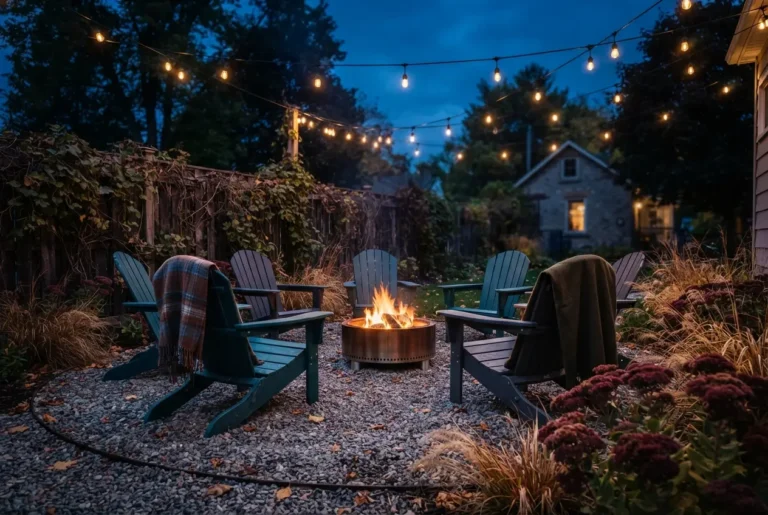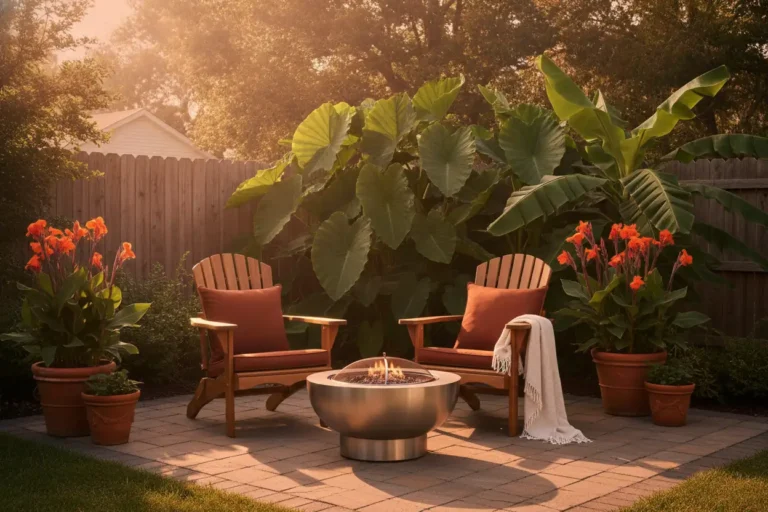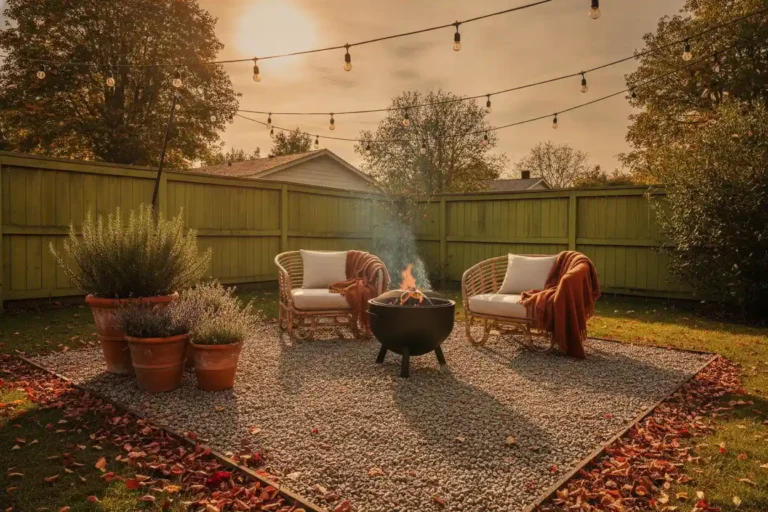
17 Cozy Covered Patio Ideas on a Budget (DIY Shade Without the Contractor Bill)
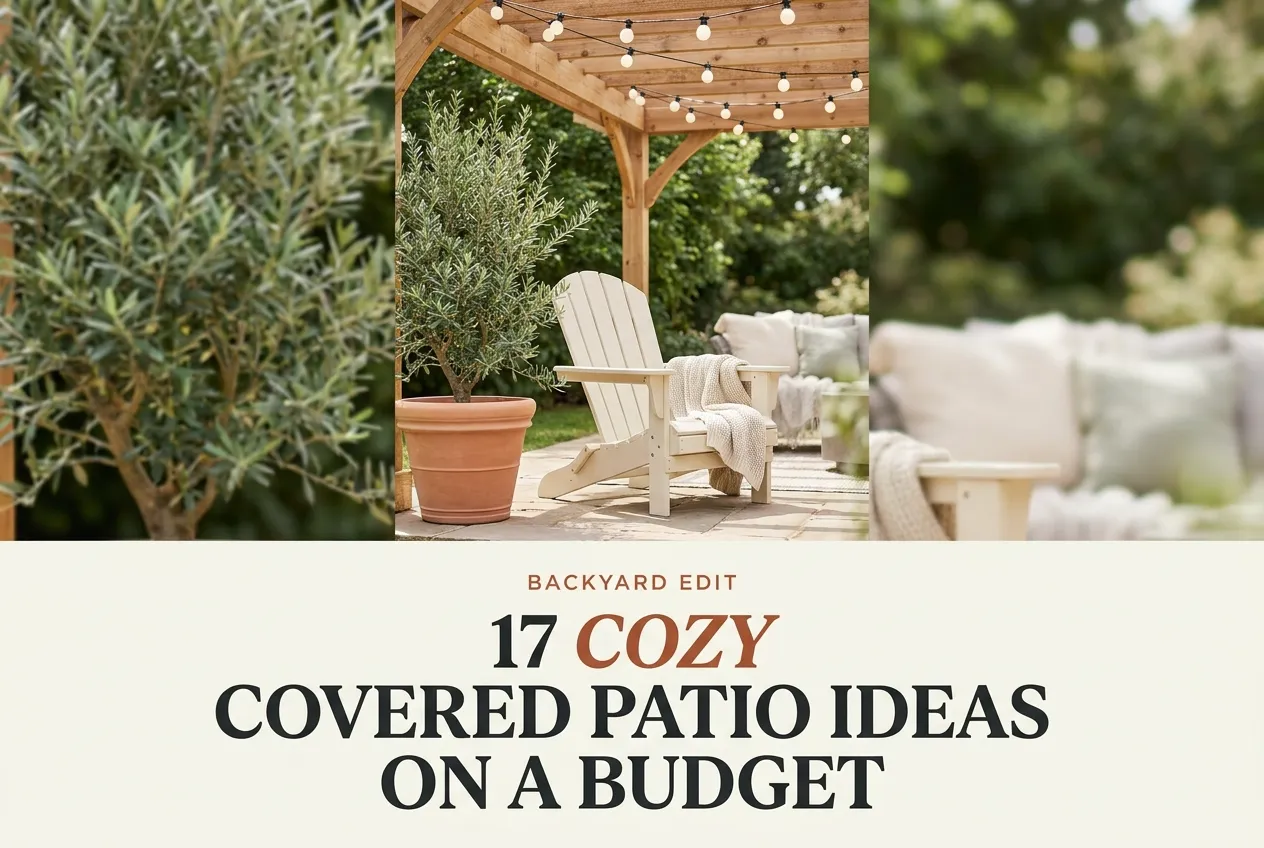
You slide open the back door with your coffee, and the patio is just sitting there in full sun by 10 a.m. Nobody wants to sit on it. The chairs are hot to the touch by noon and a surprise drizzle sends everyone inside. That bare slab has potential. It just needs a roof of some kind, and the good news is that a cover does not require a contractor or a five-figure quote. These covered patio ideas on a budget start at the price of a pizza and climb only as far as your weekend ambition does. If you want the floor under that cover handled too, our roundup of budget backyard patio ideas pairs perfectly with everything here.
Eight summers of trial, error, and one shade sail that tried to fly away taught me what actually works. Let’s get you some shade.
Start Cheap: Covered Patio Ideas That Skip the Contractor
The cheapest cover is the one you already half own. Before you price out lumber, look up. A wall, a fence line, or two sturdy posts can carry most budget covers without a permit or a pour.
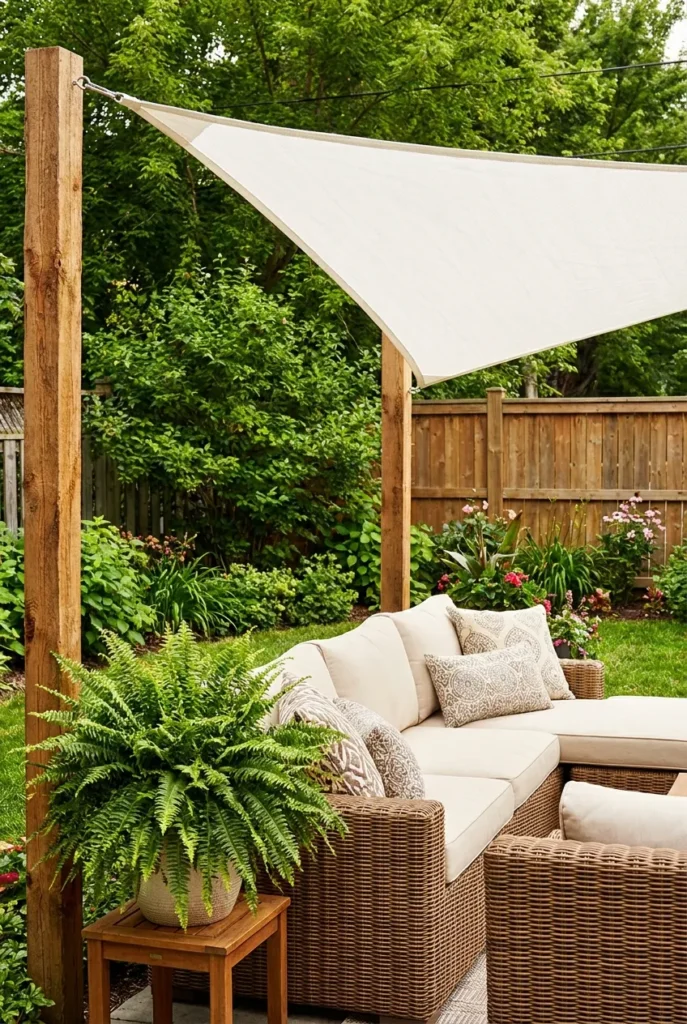
Shade sails and canopies under $100
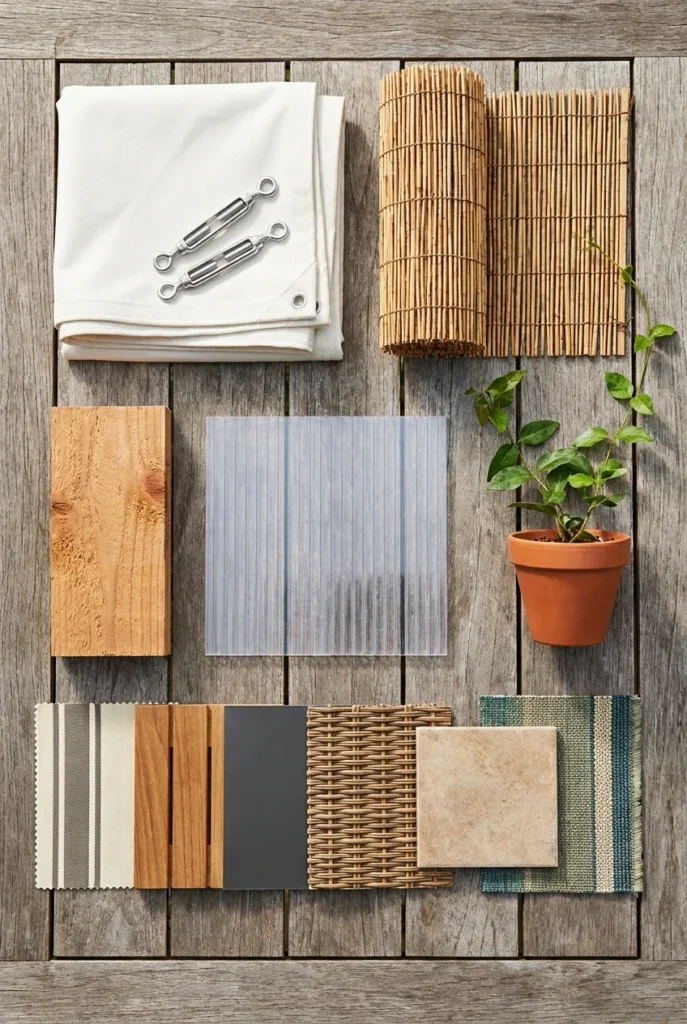
A shade sail is the fastest win in this whole list. The $34 sail I strung over our patio in June 2023 looked perfect until the first August thunderstorm ripped one corner loose, because I had skipped the turnbuckles. I re-hung it with three $6 turnbuckles from the hardware aisle and it rode out two more summers without a wobble. Buy the sail one size larger than your space, anchor each corner to a post or eave, and tension it tight so rain sheds instead of pooling. For a no-build option, a pop-up gazebo with a real vented canopy does the same job and folds away before a windstorm.
Pergolas you can build in a weekend
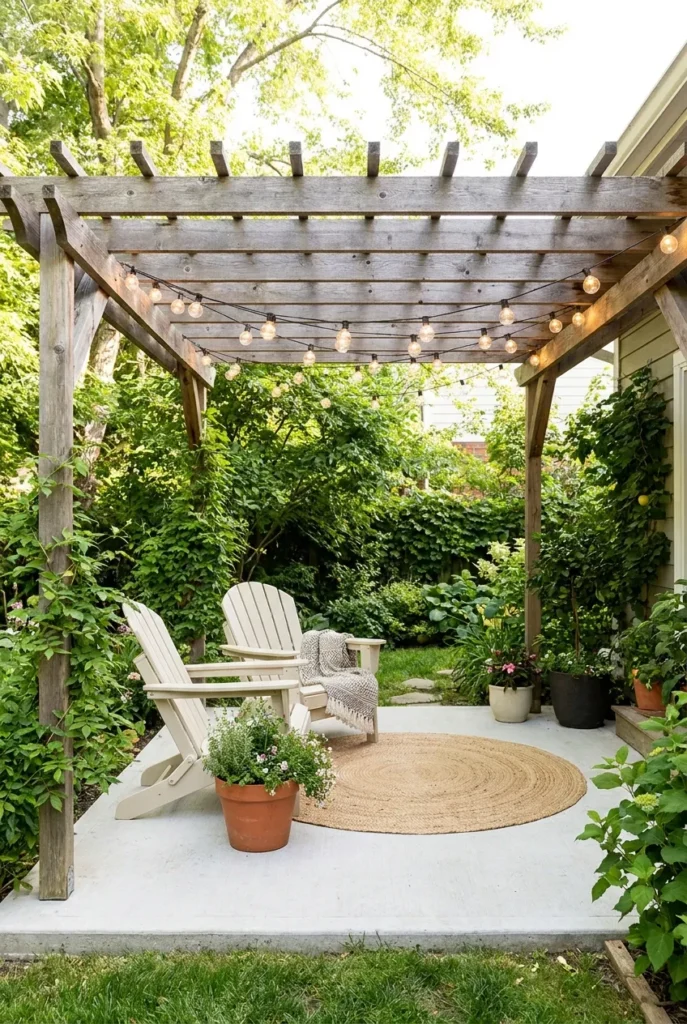
A pergola is the classic covered-patio look, and a kit makes it beginner friendly. Pressure-treated 2x6x8 cedar runs about $14 to $22 a board at Lowe’s, so a simple four-post frame is doable for a couple hundred dollars in materials. Top it with a shade sail, a roll of reed fencing, or polycarbonate panels for rain coverage. Want full rain protection from day one? Skip the open lattice and go straight to solid panels, which brings us to the trade-offs.
Covered Patio Ideas Attached to the House (No Demo Required)
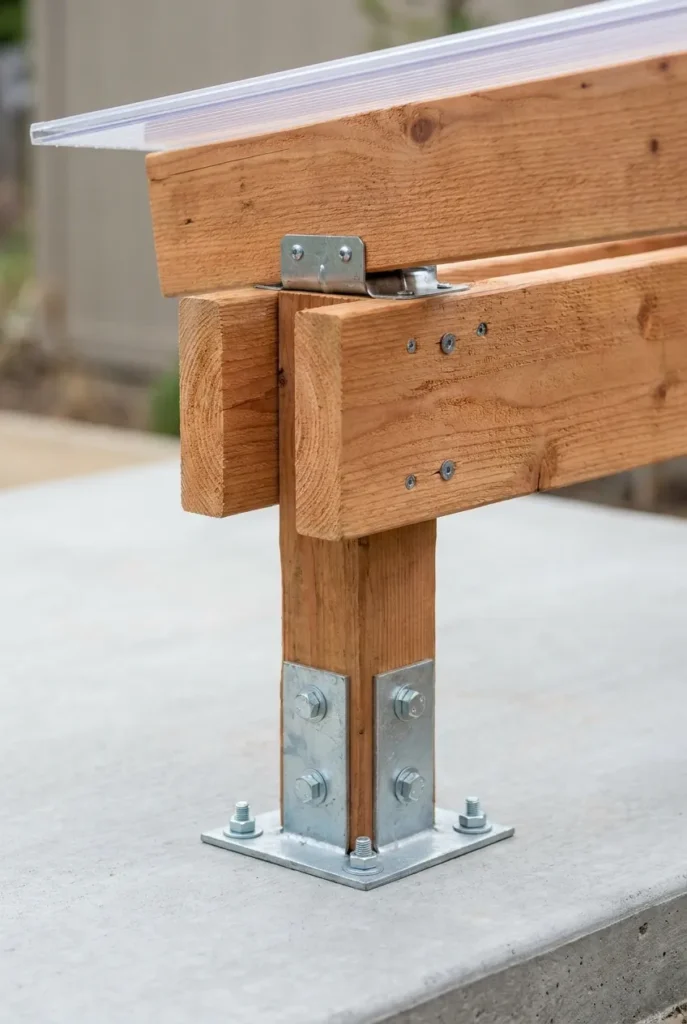
Attaching the cover to your home is the most-searched version of this project, and for good reason. A ledger board bolted to the house wall carries one whole side, so you only set posts on the outer edge. That halves your lumber and your dig work.
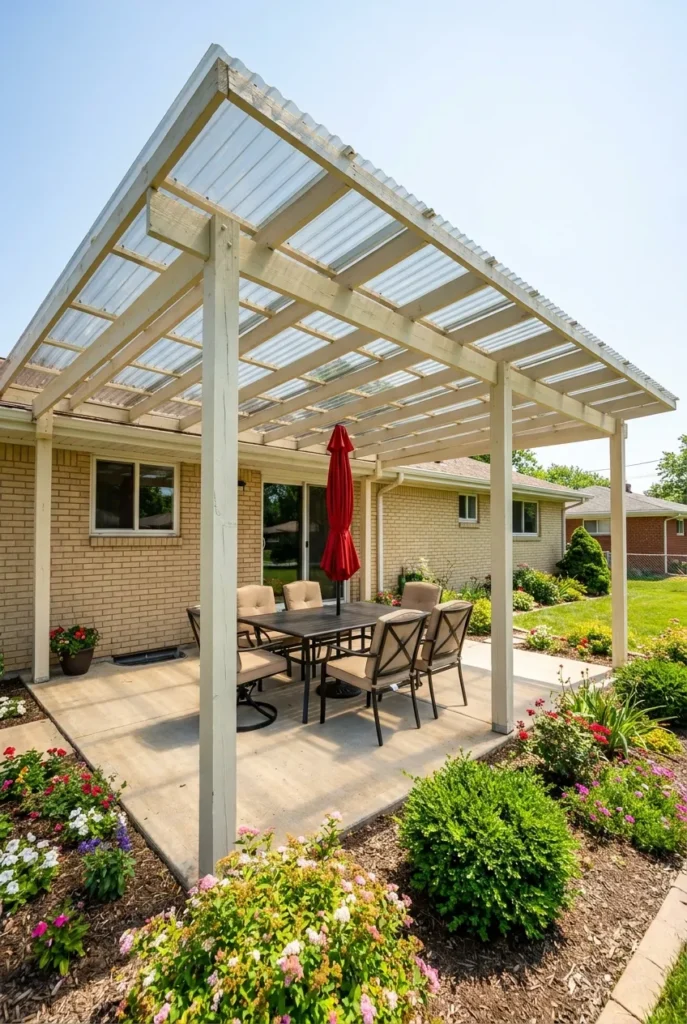
The attached look reads built-in even on a budget. A simple shed-style roof of corrugated polycarbonate, sloped away from the house for drainage, keeps rain off the back door and your furniture dry. Paint the posts to match your trim and it looks like it came with the house. One honest warning: anything bolted to the structure needs proper flashing where it meets the wall, or water finds its way inside. Get that one detail right and the rest is straightforward carpentry.
Detached and Freestanding Covered Patio Ideas
No back wall to work with? Build out in the yard instead. A freestanding cover gives you flexibility on placement, so you can chase the afternoon shade or anchor a fire-pit corner away from the house. Four posts and a flat or gently pitched top is all the structure you need.
Freestanding covers do cost a little more, since the roof has to support itself without leaning on the house. The payoff is a true outdoor room. Set yours over a solid floor first, because a wobbly base undoes a beautiful cover. The compacted gravel and paver method in our budget paver patio ideas post is the foundation I trust under any standing structure. Our first 12×12 paver patio heaved twice before we tore it up and laid 4 inches of compacted gravel base in 2024, and there has been zero movement since.
Grow Your Own Shade: The Slow, Cheap, Pretty Option
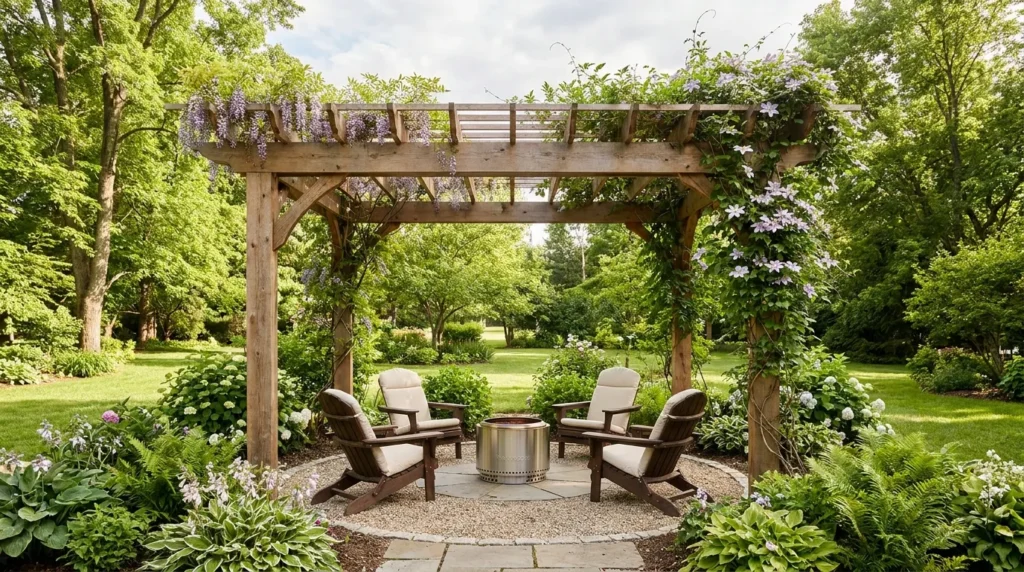
Here is the contrarian take nobody on page one will give you: the best budget cover is sometimes a plant. A bare pergola throws thin shade. Train a vine across the top and within two seasons you get a living roof that costs a few dollars in nursery starts and gets denser every year.
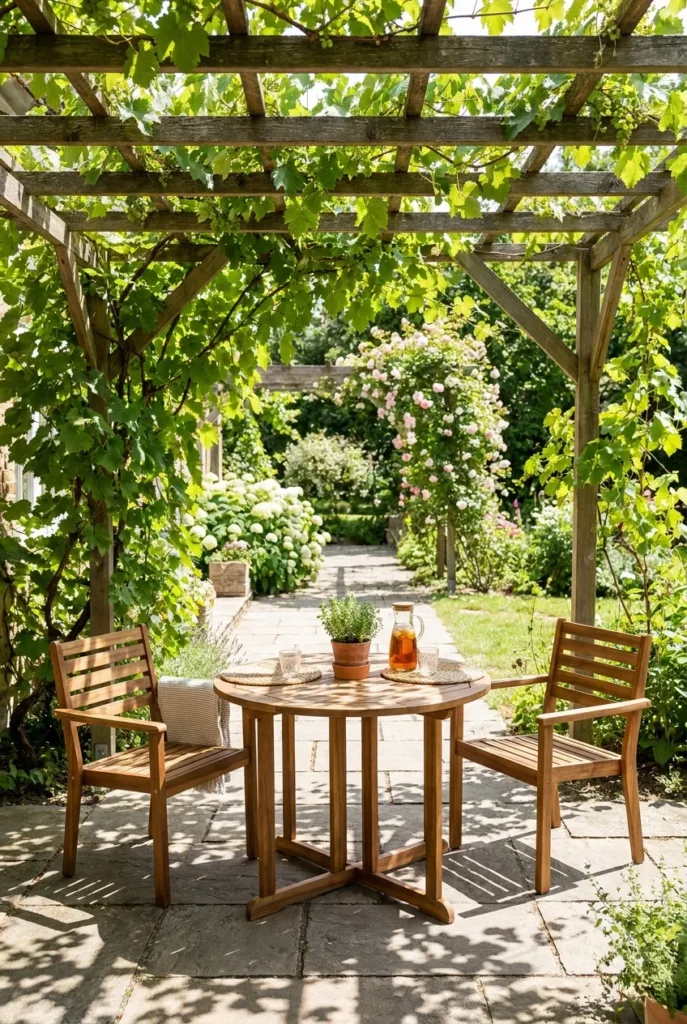
Grapevines are the workhorse. The University of Minnesota Extension’s guide to training grapevines over an arbor for shade notes that an arbor over a patio is one of the classic supports, and that you can prune lightly for leaf cover rather than fruit. Plant after your last frost (mid-April in Zone 5 Chicago, late January in Zone 9), water deeply the first year, and let the canopy fill in. Climbing roses, clematis, and trumpet vine work too, though most flower best in full sun, so match the plant to how much light your frame actually gets.
The Real Cost: What a Covered Patio Actually Runs
People always ask how much it costs to cover a 20×20 patio, and the honest answer is: it depends entirely on what you call a cover. A professionally installed solid roof over 400 square feet can run well into five figures. The same footprint with DIY shade sails and a few cedar posts can come in under $300. The gap is enormous, so here is the cheat sheet I wish I had when I started. According to This Old House’s breakdown of patio roof costs, prefab pergola kits and simple canopies are the realistic DIY tier, while permanent attached roofs are the splurge tier that usually needs a pro.
Covered patio cover types compared
| Cover type | DIY upfront cost | Lifespan | Shade / rain | Best for |
|---|---|---|---|---|
| Shade sail (with turnbuckles) | $30 to $90 | 3 to 5 yrs | Shade only | Cheapest fast fix, renters |
| Pop-up gazebo with canopy | $80 to $250 | 2 to 4 yrs | Shade + light rain | No-build, movable |
| Reed or bamboo over a frame | $60 to $150 | 2 to 3 yrs | Dappled shade | Boho budget look |
| DIY cedar pergola kit | $200 to $600 | 8 to 15 yrs | Open (add a top) | Weekend builders |
| Polycarbonate roof on posts | $400 to $900 | 10 to 20 yrs | Full shade + rain | Year-round use |
| Climbing vines on a frame | $20 to $60 in plants | Decades | Seasonal dappled | Patient, pretty, cheapest long term |
Screenshot that table before you buy a single board. It answers the question the galleries skip.
Cozy It Up: Lighting, Decor, and Year-Round Use
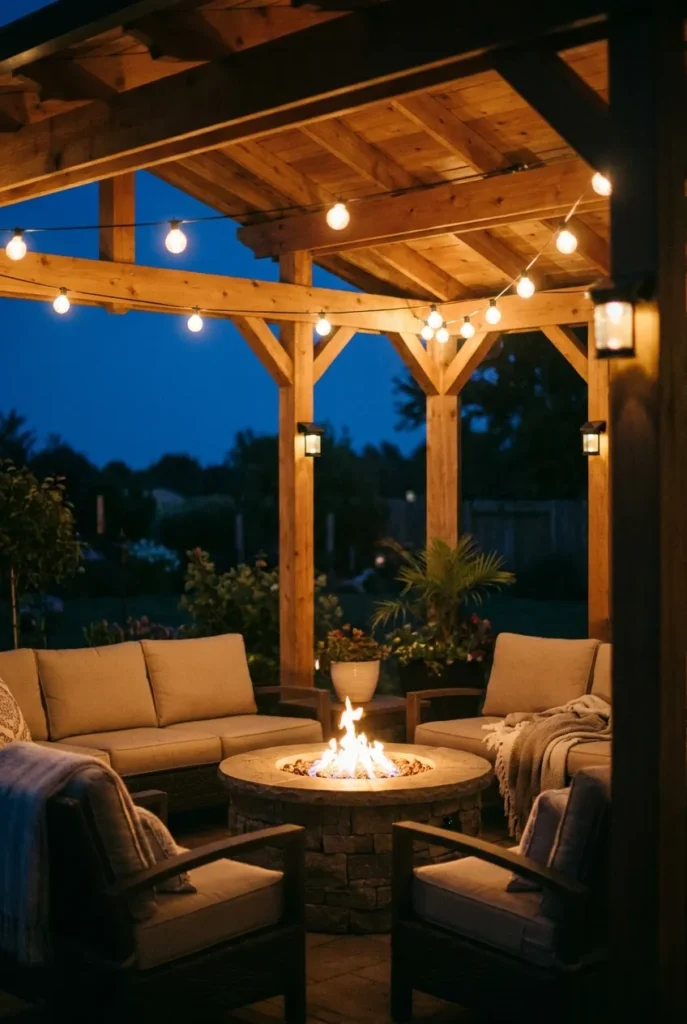
A cover is the structure. Warmth is what makes people stay out past dark. String lights under a pergola are the single highest-impact dollar you will spend. A Brightech Ambience Pro G40 set runs about $45 for 48 feet on Amazon, and the seasonal Costco Feit Electric 48-foot set at $24 has outperformed pricier strands on my own deck two summers running.
A few low-cost layers that punch above their price:
- Lights with a real anchor. The first summer I hung G40 globes, I screwed hooks straight into a cedar fence post and the strand sagged by Memorial Day. A 2 mm guide wire fixed it overnight. A $35 Hampton Bay string light pole from Home Depot solves the no-anchor problem under any cover.
- Soft, weatherproof seating. Sunbrella cushions cost double up front but survive rain that destroys cheaper sets in one season. A $499 Walmart Better Homes & Gardens Belle Haven sectional plus good cushions reads far more expensive than the receipt.
- Cheap glow. Dollar Tree solar lanterns at $1.25 each line a pergola beam beautifully, and a quick concrete patio makeover underneath (stain or paint) ties the whole cozy look together.
Renter-Friendly Covered Patio Ideas (No Drilling, No Permits)
Renting does not mean roasting. Every cover here has a deposit-safe version. Freestanding shade sail stands, weighted pop-up gazebos, and bolt-free pergola kits with footed bases give you a covered patio that packs up when the lease ends.
The rules I follow on a rental: no holes in the structure, nothing into the ground that I can’t backfill, and everything light enough to move solo. A freestanding canopy on filled umbrella bases, a rolling bamboo screen for the open side, and battery or solar lighting get you the attached-to-house look without touching the house. Check your lease and your city before any post goes in, since some areas treat even a freestanding cover as a permitted structure above a certain size.
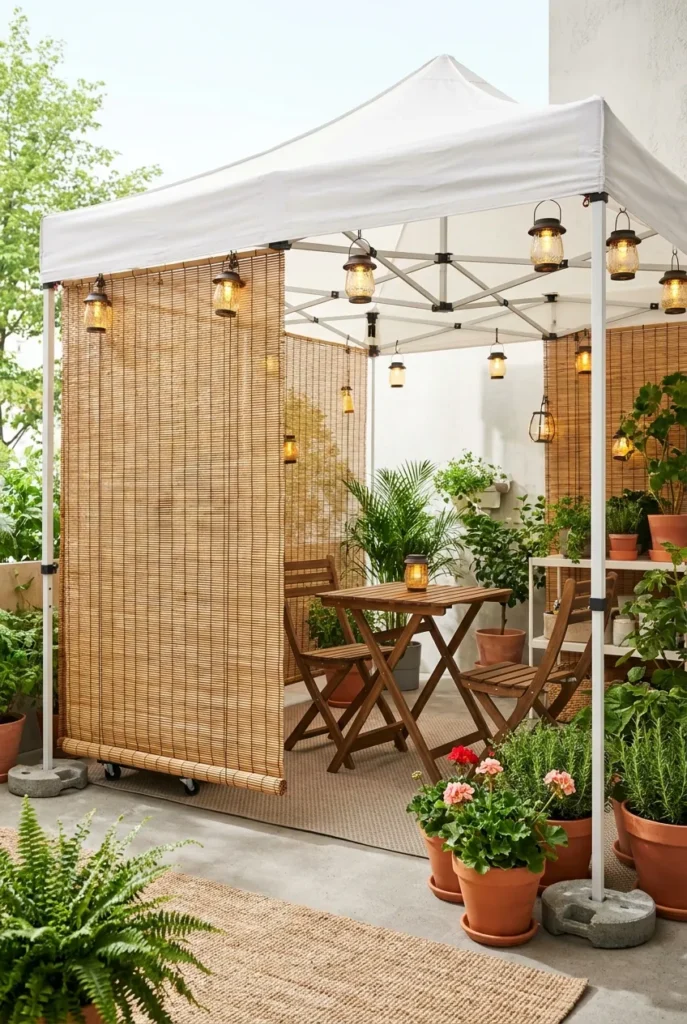
Pick your tier, handle the floor, add light, and you have a room that works from the first warm weekend through fall fire-pit season.
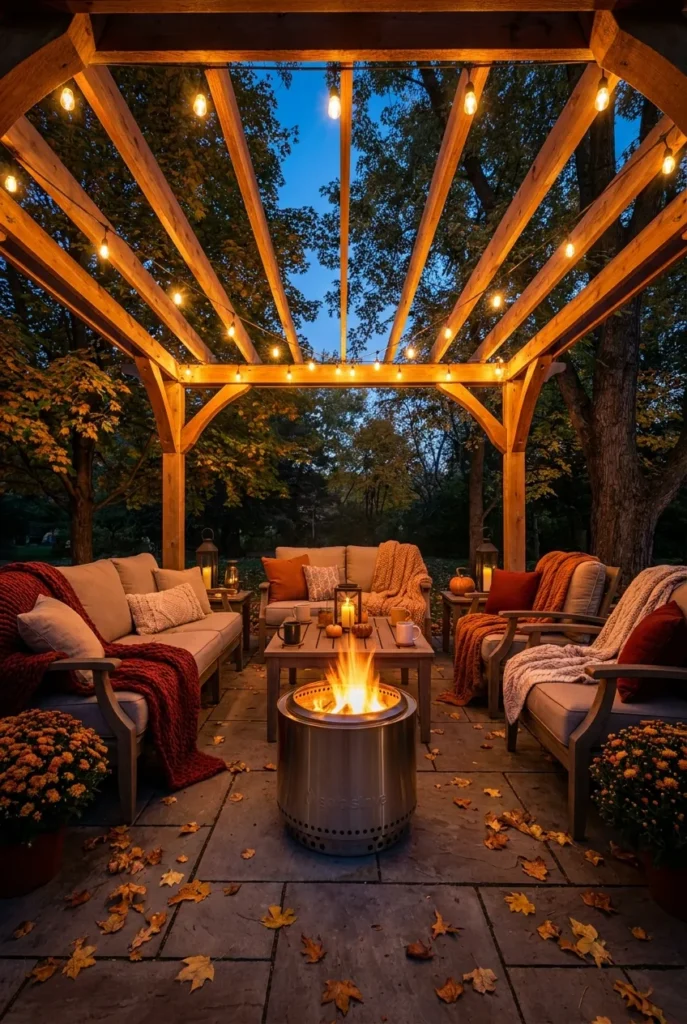
Frequently Asked Questions
How can I cover my patio cheaply?
A shade sail is the cheapest real cover. For $30 to $90 plus a few turnbuckles, you can anchor a sail to a fence, an eave, or two posts and get instant shade. A pop-up gazebo or a roll of reed fencing over a simple frame are the next steps up, both still under $250.
What is the cheapest way to build a patio cover?
Use what you already have as one anchor. A cover attached to a house wall with a ledger board needs posts on only one side, which cuts lumber roughly in half. A four-post cedar frame topped with a shade sail or polycarbonate panels is the cheapest true build, often $200 to $600 in materials.
How much does it cost to cover a 20×20 patio?
It swings hard by type. A pro-installed solid roof over 400 square feet can run into five figures at $20 to $60 per square foot or more. The same footprint covered DIY with shade sails and a few posts can land under $300. Decide on shade-only versus full rain protection first, because that choice drives the whole budget.
Do I need a permit for a patio cover?
Often yes for anything permanent or attached to the house, and sometimes for large freestanding covers too. Rules are local. Small shade sails and pop-up canopies usually need nothing. Call your city or check the permit page before you set a post.
What is the best patio cover for rain?
Solid panels win. Corrugated polycarbonate on a sloped frame sheds water, lets light through, and costs far less than a shingled roof. Shade sails and open pergolas handle sun but not a real downpour, so add panels or a fixed roof if rain coverage matters.
Can I add a covered patio to a rental without drilling?
Yes. Freestanding shade sail stands, weighted pop-up gazebos, and footed pergola kits give you a cover with no holes in the structure. Pair with a rolling bamboo screen and solar lighting for the built-in look, deposit intact.
What is the cheapest material for a DIY patio cover?
Reed or bamboo fencing rolled across a frame is the lowest-cost shade material, usually $60 to $150 for a small patio. For long term, climbing vines beat everything: a few dollars in plant starts that get denser and free-er every season.
Conclusion
A covered patio on a budget is less about money and more about picking the right tier for how you actually live outside. Renters grab a shade sail. Weekend builders set a cedar pergola. Patient gardeners plant a vine and let time do the work. Start with the floor, add the cover that fits your sun and your wallet, then layer in warm light so the space pulls you outside after dark. If you want the full low-cost playbook, our cozy backyard ideas under $200 post is the natural next read.
Related read: once your cover is up, how to hang string lights without trees walks through the anchoring trick that keeps the whole strand from sagging.