11 Paver Patio Ideas on a Budget That Actually Last
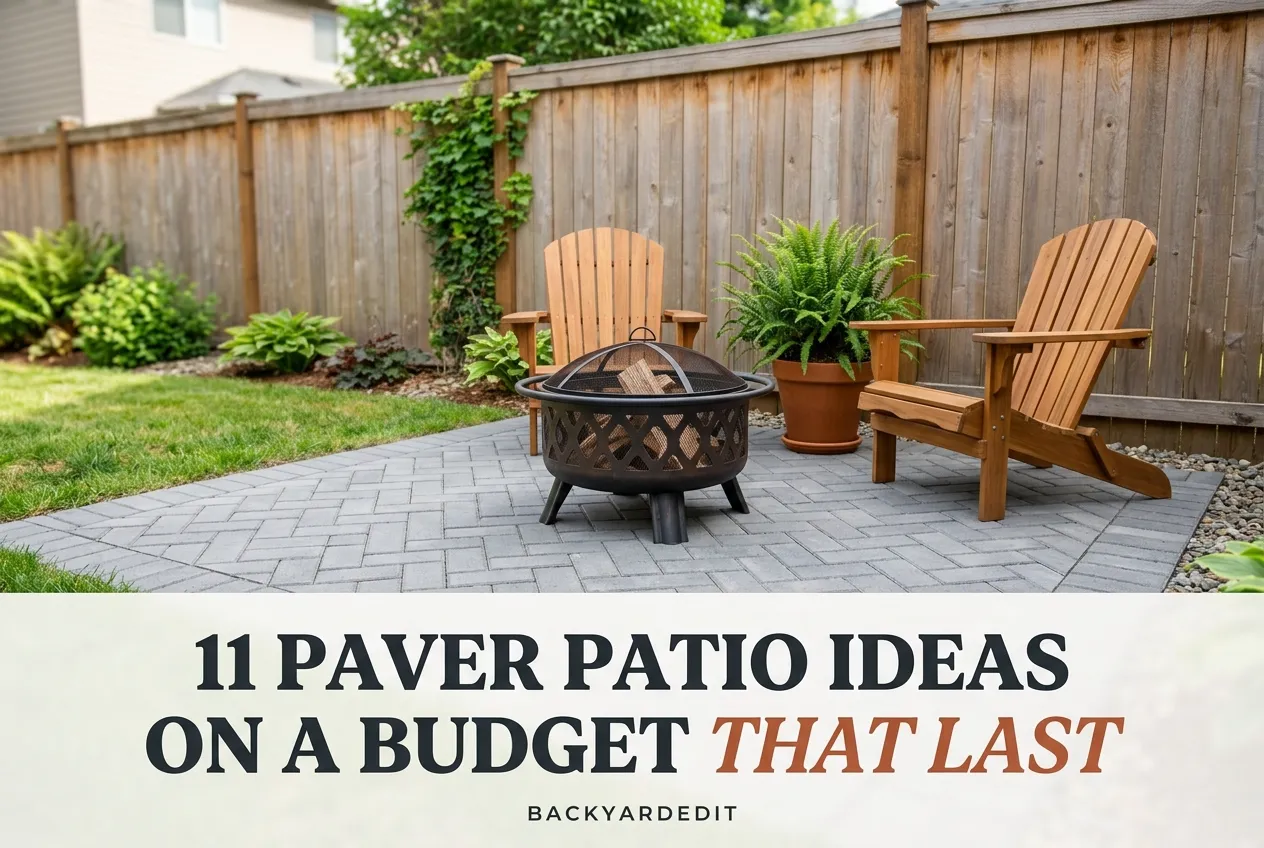
Here’s the thing nobody selling you patio inspiration will say out loud: a cheap paver patio that skips the base will look amazing for one summer, then heave, tilt, and sprout weeds by the next. We learned that the slow way. Our first 12×12 paver patio heaved twice before we tore it up and laid 4 inches of compacted gravel base in 2024, and it hasn’t budged since.
So this guide is the one we wish we’d had. Real paver patio ideas on a budget, real dollar amounts, and the prep that makes a $250 patio outlast a $2,000 one. If you want more ways to stretch a small outdoor budget, our budget patio playbook we built around $200 pairs well with everything below.
What a Budget Paver Patio Actually Costs
Let’s kill the vague stuff first. Most “cheap patio” posts never give you a number. So here’s a real one.
A 10×10 DIY paver patio runs about $300 to $700 in materials if you do the labor yourself. The pavers themselves are often the cheapest part. The base gravel, paver sand, and edging restraint are where the money quietly goes. According to Family Handyman’s paver patio cost breakdown, the base layer is also where most DIY patios fail, because people skimp on it to save $80.
For comparison, hiring out that same 10×10 runs $1,800 to $3,500. The DIY savings are real. So is the back labor. Worth it? For most small yards, yes.
The Budget Breakdown That Makes It Real
This is the part to screenshot. Same 10×10 patio, three budget tiers, real 2026 store prices.
| Tier | What You Buy | Rough Cost | Where |
|---|---|---|---|
| Bare Bones ($25–$150) | Reclaimed/clearance pavers, pea gravel base, leftover sand | $120–$150 | Facebook Marketplace, Home Depot clearance |
| Mid Range ($150–$400) | Standard 12×12 concrete pavers, crushed gravel base, paver sand, plastic edging | $300–$400 | Lowe’s, Home Depot |
| Splurge ($400+) | 24×24 large-format pavers, polymeric sand, steel edging restraint | $500–$700 | Lowe’s, Menards |
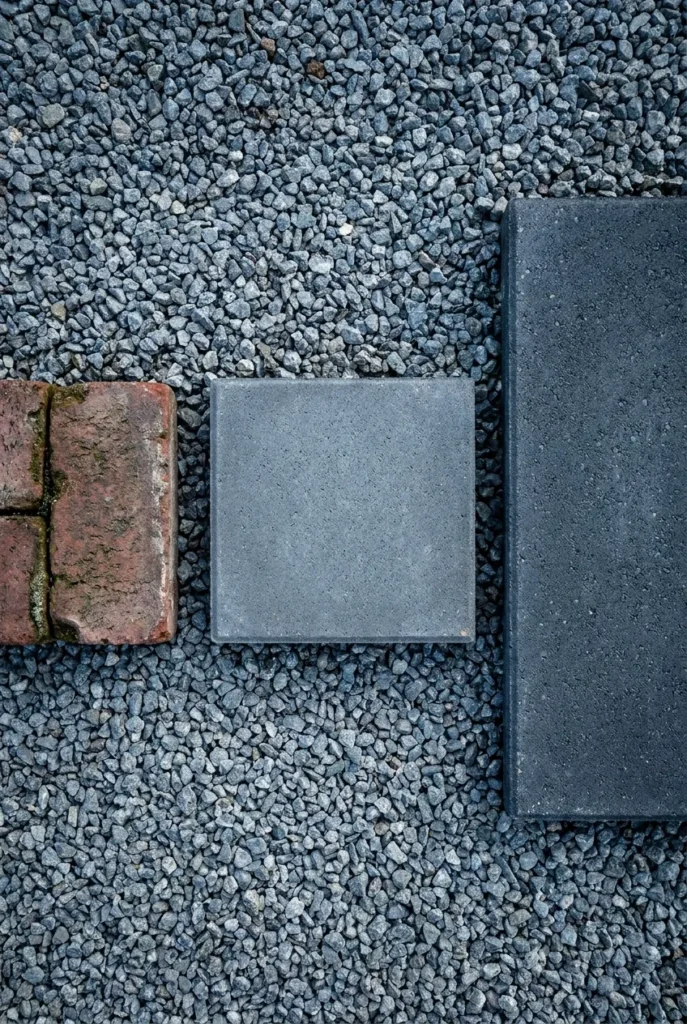
The cheapest path that still lasts: standard 12×12 concrete pavers at around $1.50 to $3 each, a real compacted gravel base, and polymeric sand. Skip the polymeric sand and you’ll be pulling weeds from the joints all summer. I tried the bargain $0.98 pavers from the big box once, and three cracked the first frost. Lesson paid for.
The Base Layer Nobody Talks About
If you remember one thing, remember this. The patio you see is only as good as the base you don’t.
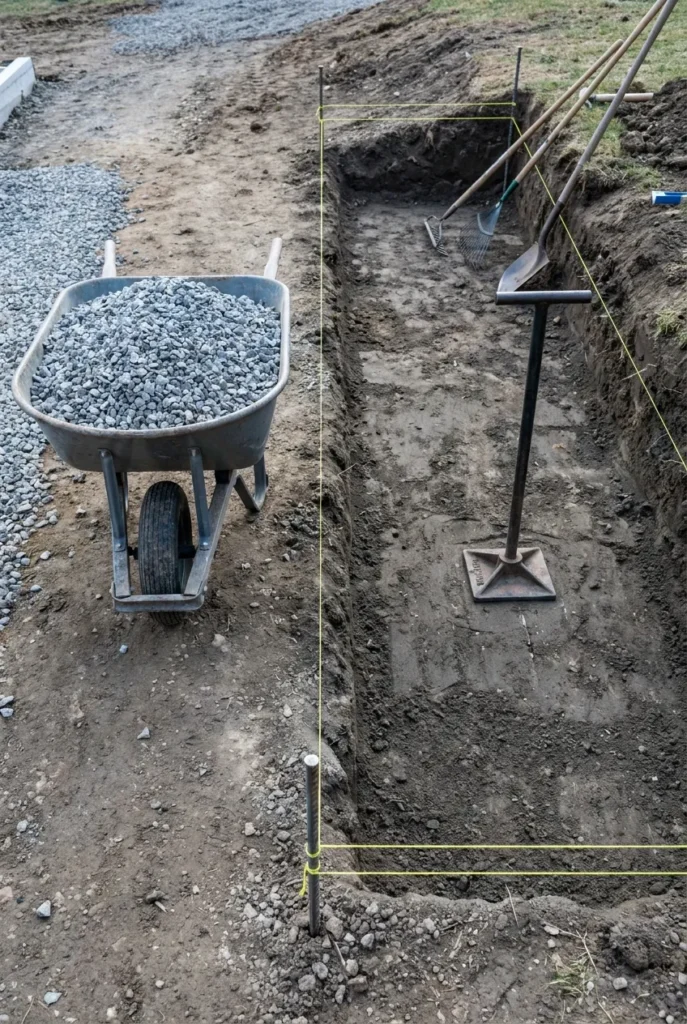
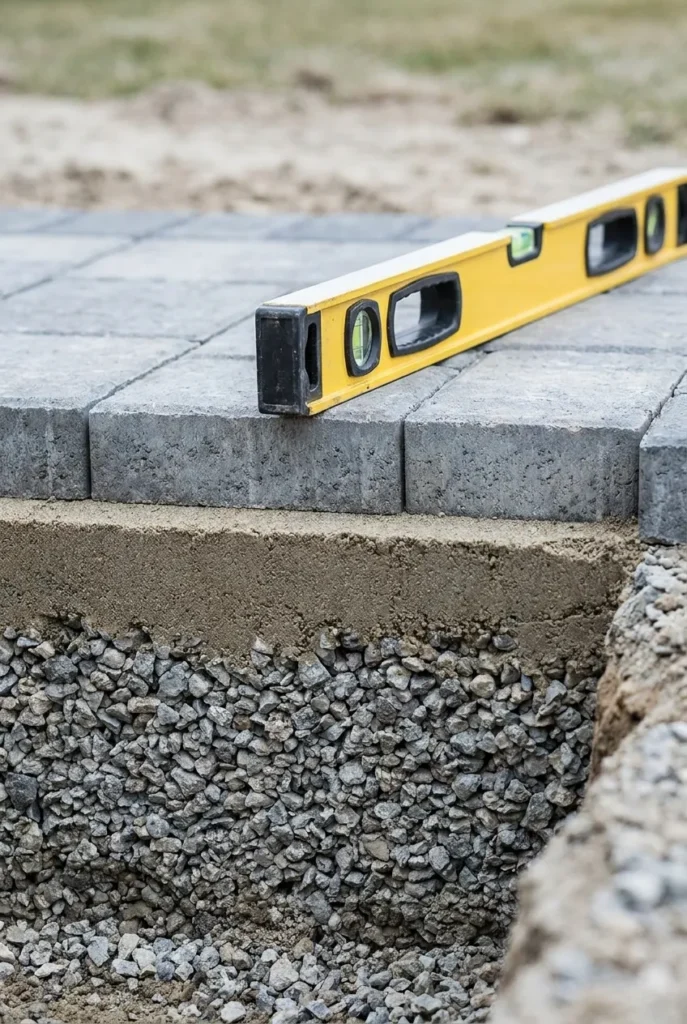
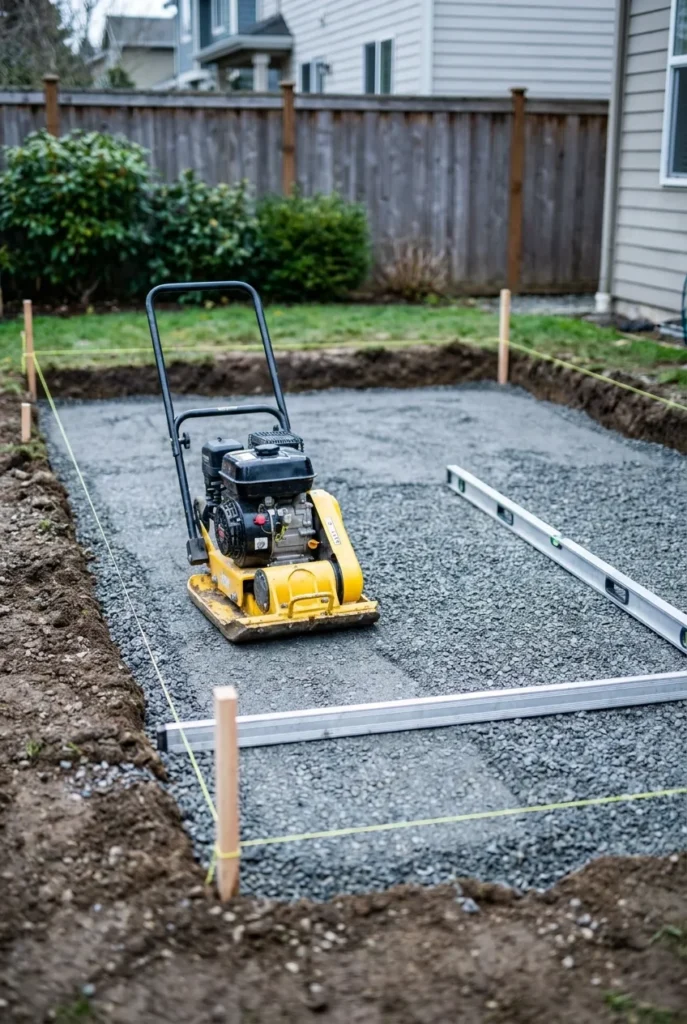
Pavers laid straight on dirt will sink, tilt, and trap water. Pavers laid on 4 inches of compacted crushed gravel topped with an inch of paver sand will stay flat for a decade. The difference costs about $80 in gravel. That $80 is the whole ballgame.
You also need a slight drainage slope, about a quarter inch of drop per foot, running away from your house. Polymeric sand changed my paver gaps from a weed factory into a clean finished joint in one afternoon. Skip it and water pools, joints wash out, and frost does the rest.
Can You Lay Pavers Without Digging?
Sort of. For a light-use path or a temporary renter setup, you can level the ground, lay landscape fabric, add 2 inches of pea gravel, and set pavers on top. It won’t survive a hard freeze the way a dug base will, but for a flat Zone 8 or 9 yard with no frost, it can hold a season or two. For anything you want to keep, dig the base.
If permeable drainage matters in your area, the EPA’s guide to permeable pavers explains how the right base lets stormwater soak through instead of pooling, which also keeps your joints cleaner.
11 Paver Patio Ideas on a Budget Worth Stealing
Now the fun part. These are the layouts and looks that punch above their price.
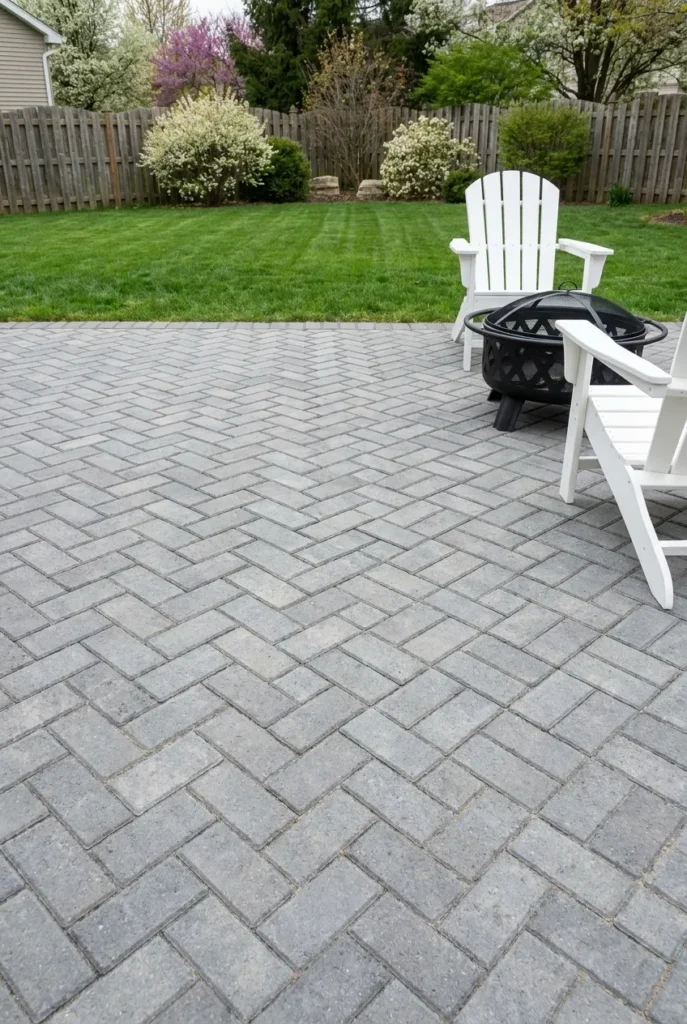
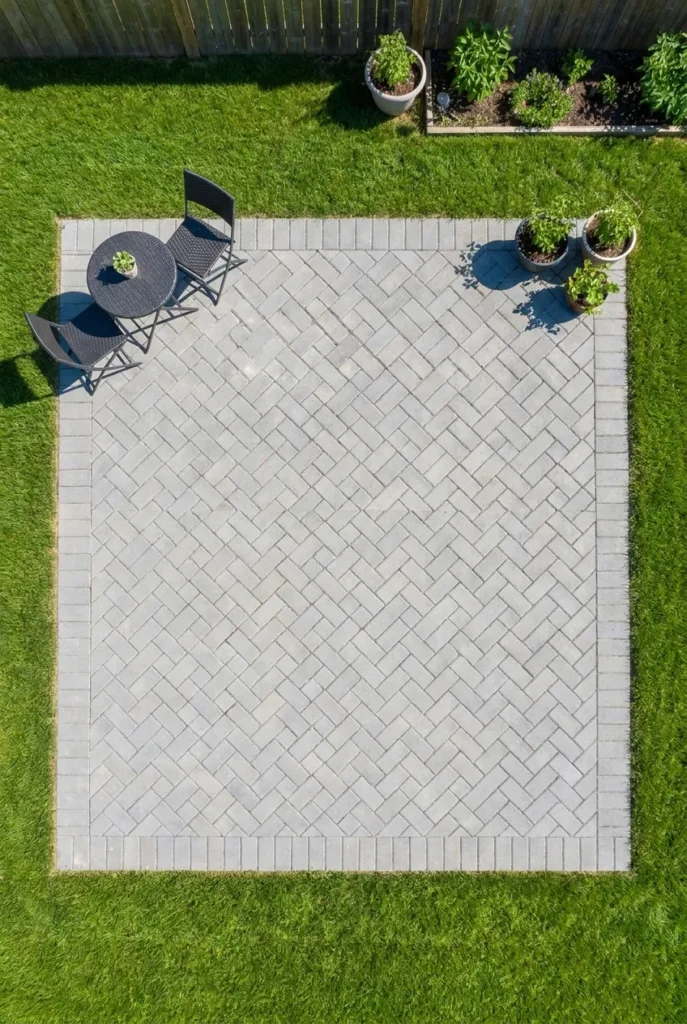
- Herringbone in standard 12×12 pavers. The pattern looks custom, the pavers cost the least. Best bang for the buck.
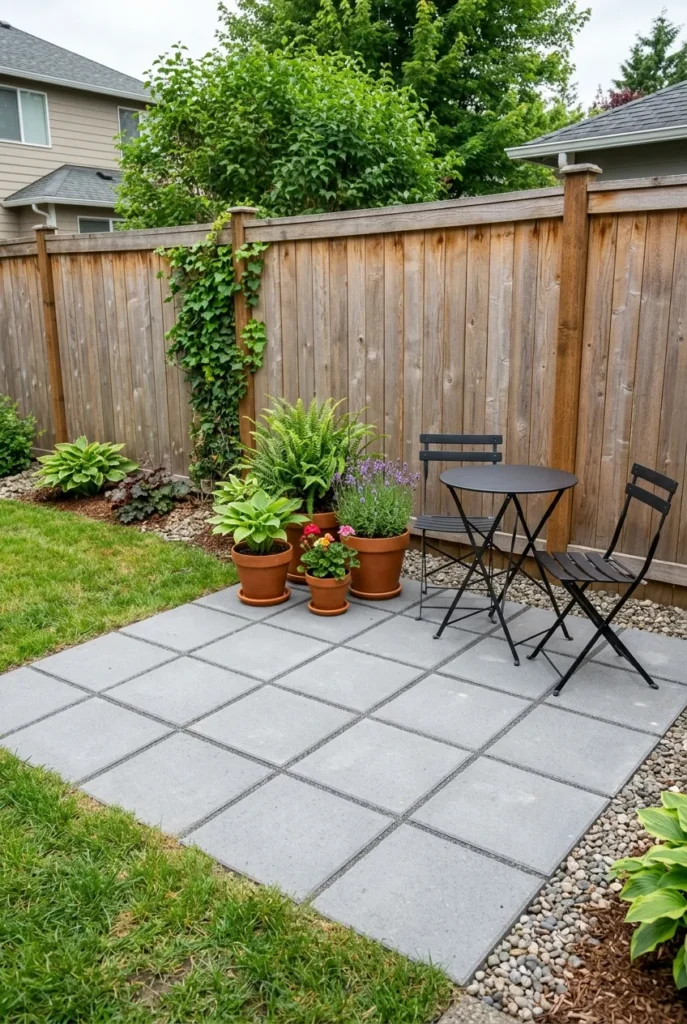
- A square 24×24 paver grid with gravel joints. Modern, fast to lay, fewer pieces to set.
- Reclaimed brick patio. Marketplace brick plus your labor. Charming, nearly free, ages beautifully.
- Paver and pea gravel mix. Set pavers as stepping stones in a sea of pea gravel. Cuts paver count by half.
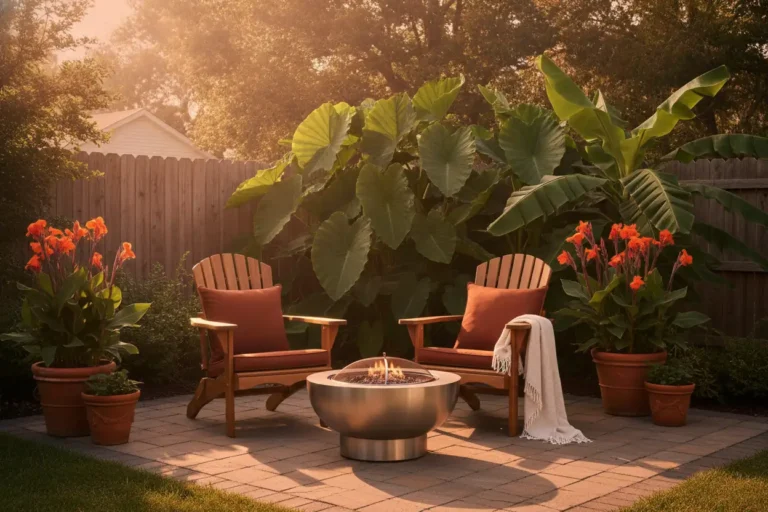
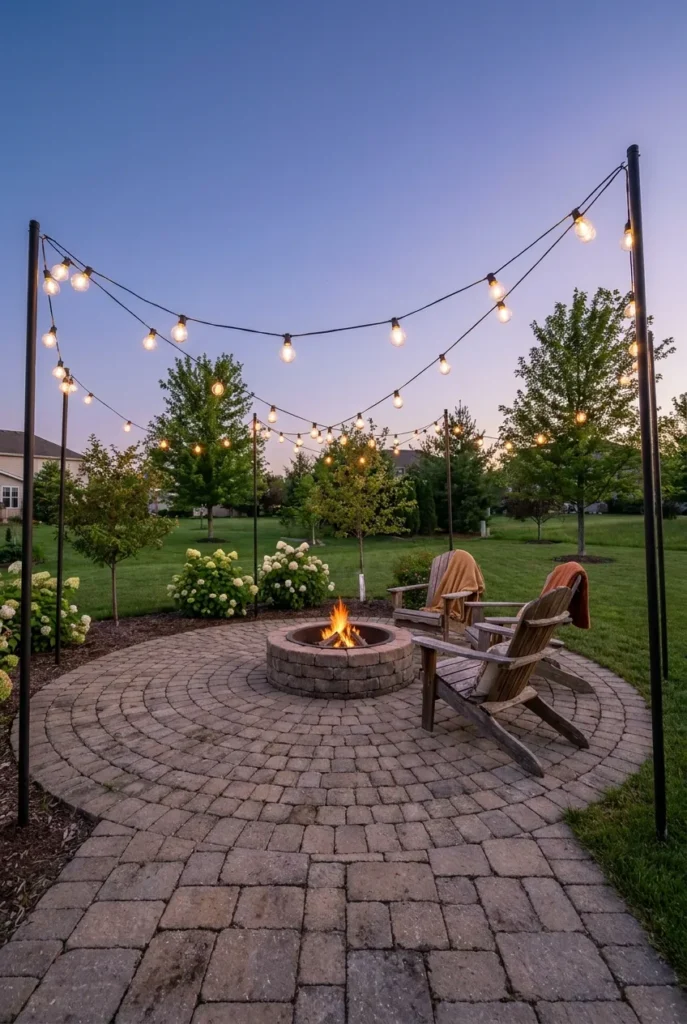
- A small fire pit patio. A 10-foot circle of pavers around a Walmart Mainstays 28-inch steel fire pit ($69). Instant gather spot.
- Patio next to the deck. Extend usable space cheaply by laying pavers right off the deck stairs.
- A narrow walkway-to-patio combo. Great for skinny yards. See our small-space outdoor fixes for dressing it up cheap.
- Circular paver patio. Kits make the curve easy, and circles feel intentional.
- Mixed-size pattern. Combine 12×12 and 6×6 pavers for a designer look at builder-grade cost.
- Grass-joint pavers. Leave inches between pavers and let grass grow through. Soft, green, cheap.
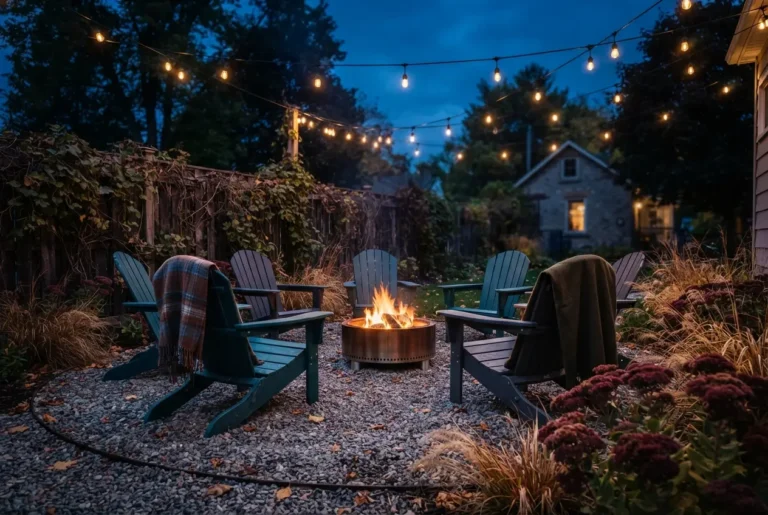
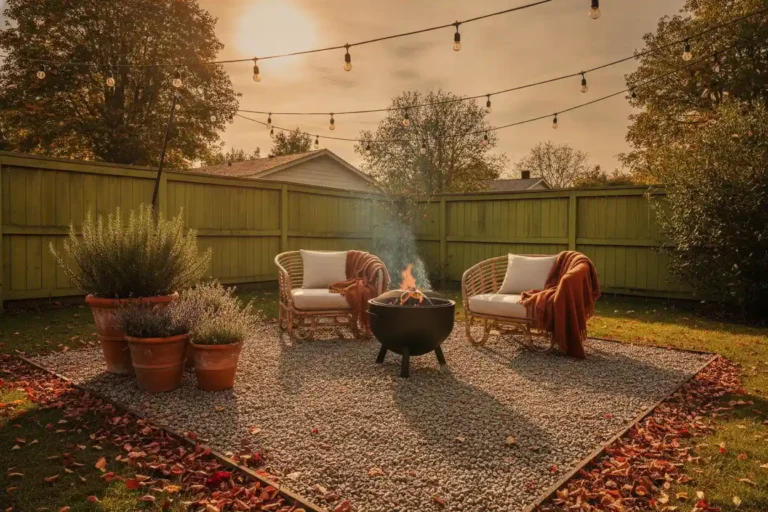
- The fire-pit-plus-string-lights combo. Add warm white G40 globe bulbs overhead. Total vibe, low spend.
Small Yard and Renter-Friendly Layouts
Small yards win with pavers. You’re covering less square footage, so material costs stay low and a tight 8×10 patio can feel like a whole room.
Keep the pattern simple in a small space. Busy patterns shrink a yard visually. A clean square grid or a single herringbone field reads bigger. For renters, the pea-gravel-and-stepping-stone approach lifts out when you leave and protects your deposit.
Dressing It Up Without Spending More
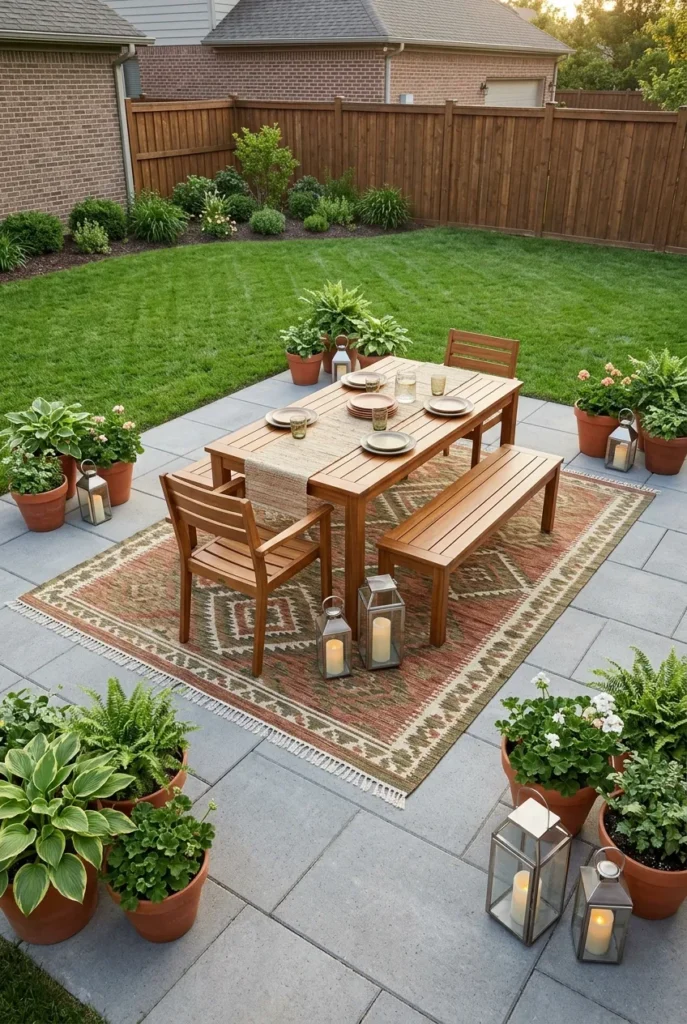
A finished patio doesn’t need expensive furniture to look pulled together. A $14 indoor outdoor rug from HomeGoods anchored my entire patio seating area, and a few Bloem Terra pots ($12, Walmart) along the edge softened the hard lines.
Our full budget backyard before-and-after breaks down where every dollar went on a weekend patio refresh, including the thrift-store dining set we refinished for under $100.
A Realistic Weekend Build Plan
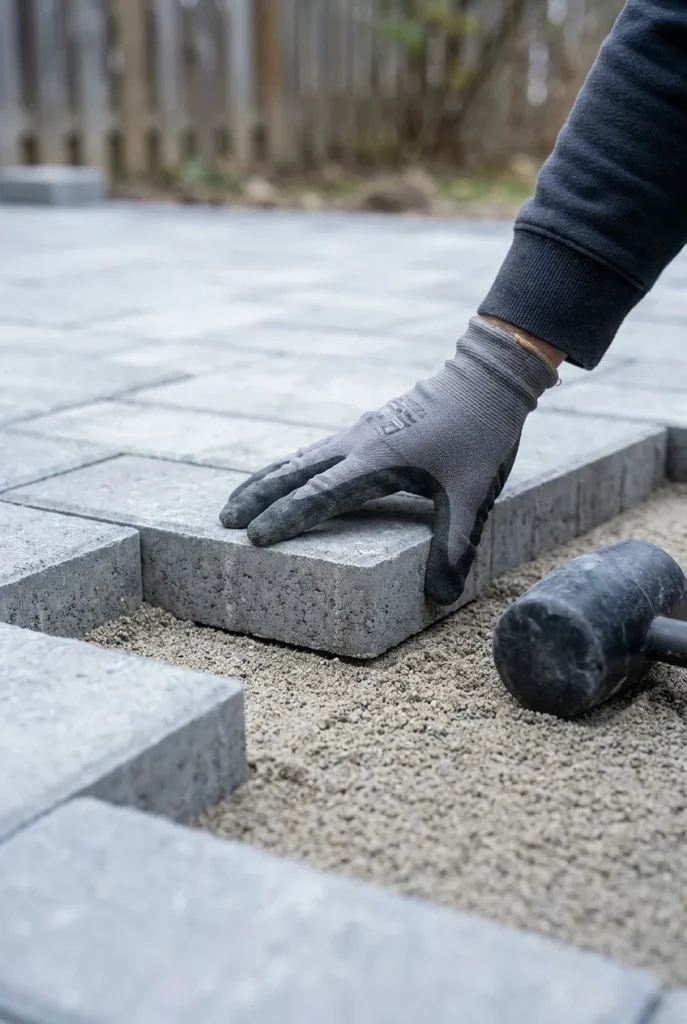
You can lay a small paver patio in a weekend if you prep right. Friday evening: mark the area and gather materials. Saturday morning: excavate and lay gravel base. Saturday afternoon: compact, add sand, screed level. Sunday: set pavers, add edging, sweep in polymeric sand, mist to set.
Don’t rush the compacting. Rent a plate compactor for about $70 a day. Hand-tamping a base this size will wreck your weekend and your back.
Frequently Asked Questions
How much does a 20×20 paver patio cost?
A 20×20 (400 sq ft) DIY paver patio runs roughly $1,200 to $2,800 in materials, depending on paver choice and base depth. Hiring it out pushes that to $6,000 to $14,000. Doing the labor yourself is where the real savings live.
Can I lay pavers straight on dirt?
You can, but they won’t last. Pavers on bare dirt sink, tilt, and trap water within a season. A 4-inch compacted gravel base plus paver sand is what keeps them flat. In frost zones, skipping the base guarantees heaving.
What is the least expensive way to make a patio?
Pea gravel over landscape fabric is the cheapest real patio, often under $150 for a small space. For a paver look on the same budget, set reclaimed Marketplace pavers as stepping stones in pea gravel.
Is it cheaper to build a patio with pavers or concrete?
Poured concrete is usually cheaper upfront for large areas. Pavers cost a bit more but are easier to DIY, easier to repair, and don’t crack the way a concrete slab does. For small budget patios, pavers win on flexibility.
What is the best base for a paver patio?
Four inches of compacted crushed gravel topped with about an inch of paver sand. Add a quarter inch of slope per foot for drainage, and finish joints with polymeric sand.
How do I keep weeds out of my paver joints?
Polymeric sand. Sweep it into the joints and mist it to harden. It locks the pavers and blocks most weed growth far better than regular sand.
Bottom Line
Beautiful paver patio ideas on a budget aren’t about finding the cheapest pavers. They’re about spending your money in the right order: base first, pavers second, decor last. Get the gravel base and polymeric sand right, pick a simple layout, and a $300 patio will outlast plenty of pricey ones.
Ready to keep going? If you’re styling the whole space next, our budget backyard ideas roundup is the natural next read.